RURAL…COSTA RICA

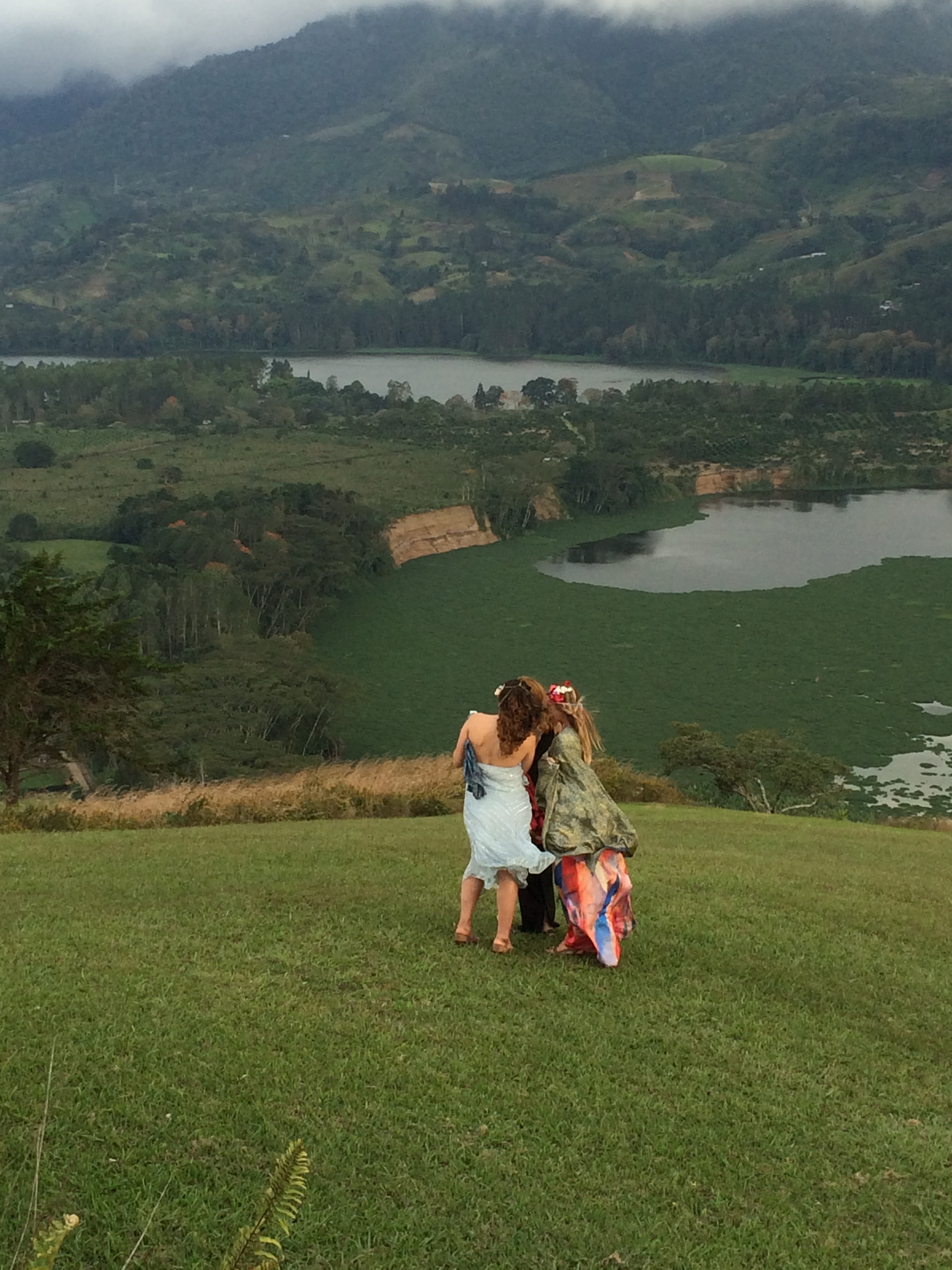
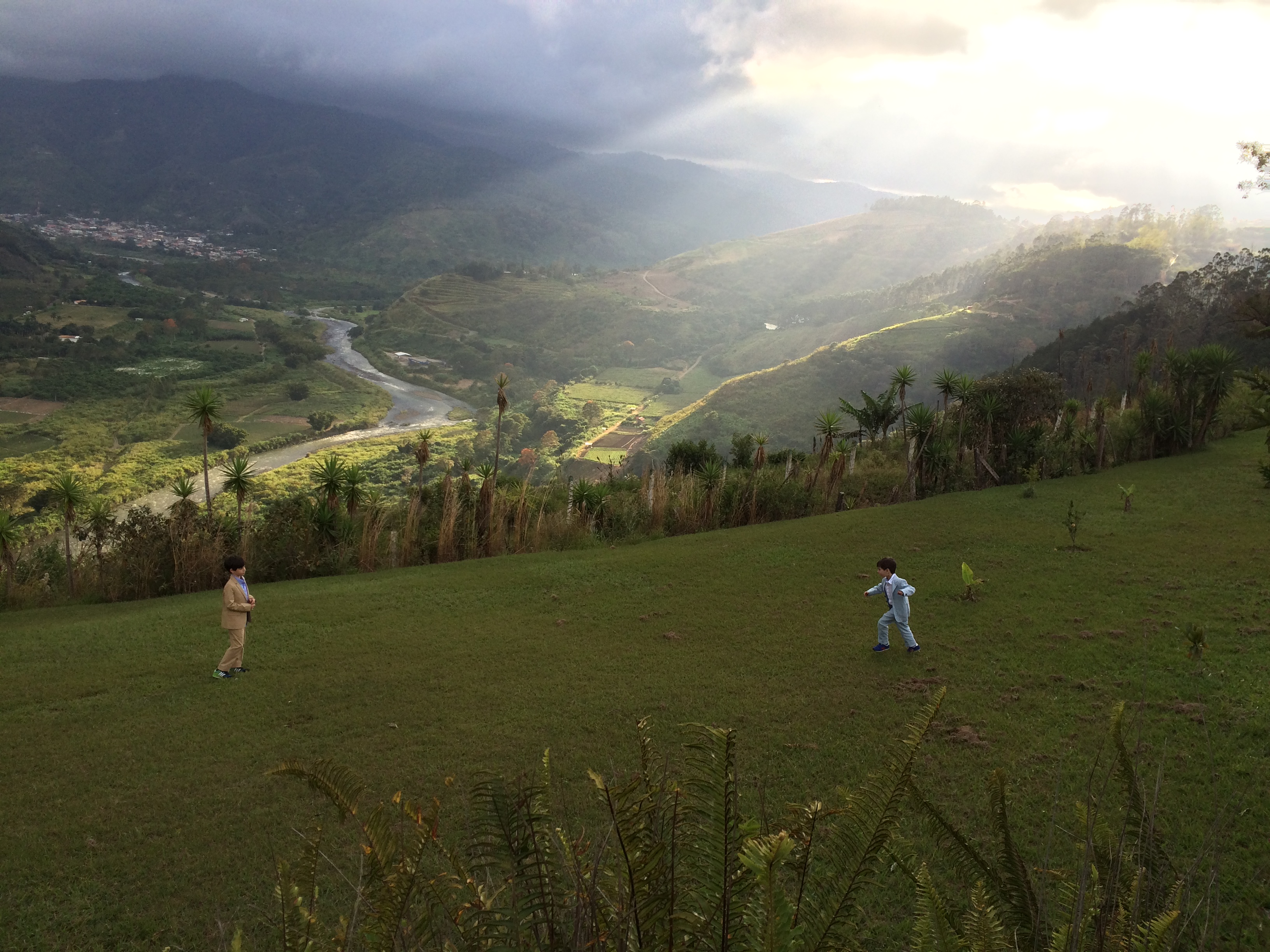
In Paraiso, overlooking Lake Cachi and the Orosi valley

In Paraiso, overlooking Lake Cachi and the Orosi valley

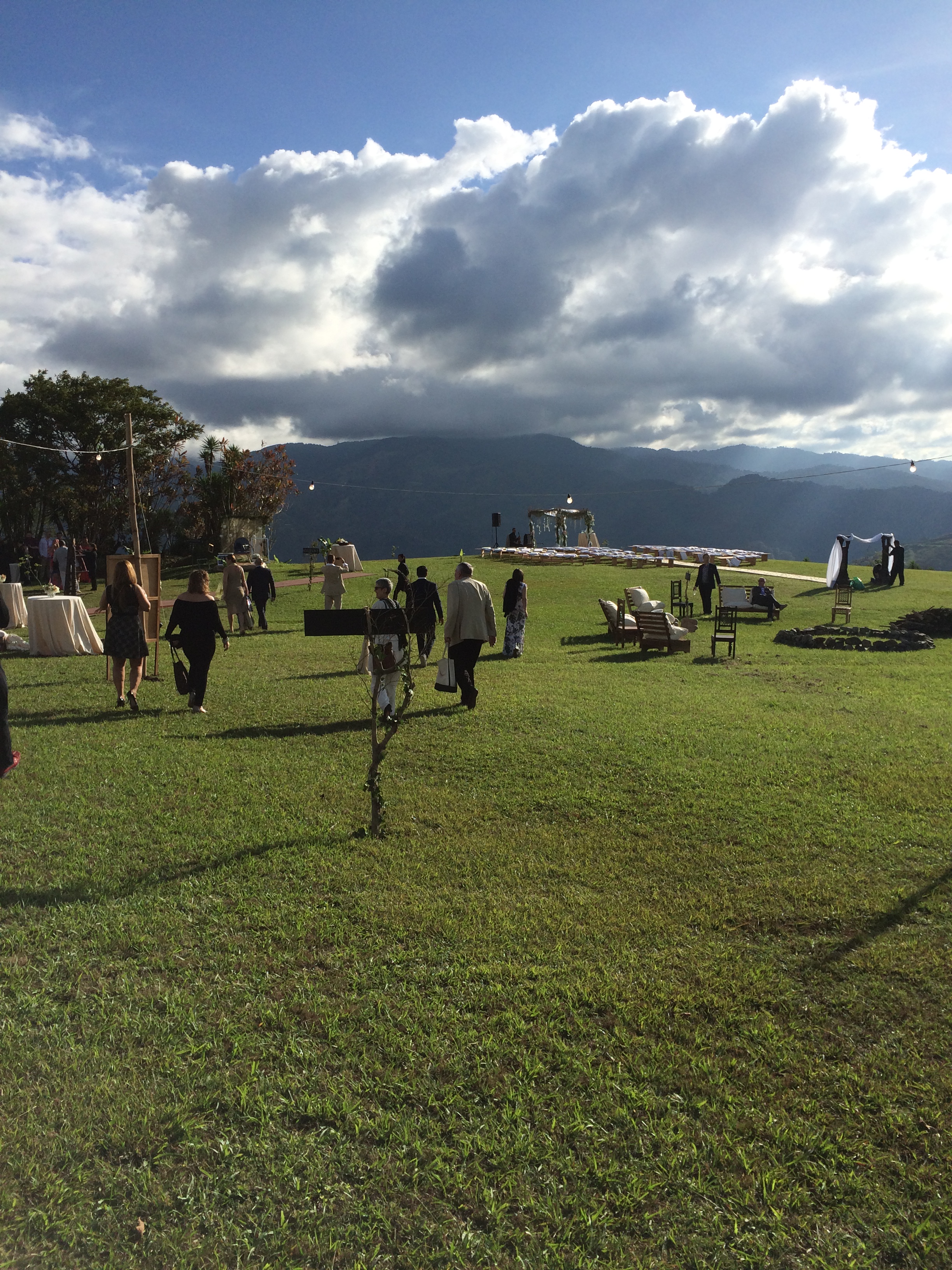
Admittedly, this is a blog dedicated to all things rural New Hampshire.  Being holed up in an airport hotel while waiting out the current snowstorm seems as good a time as any however, to recount the past few days spent in warmer, sunnier climes.  The wedding of our dear friends in Costa Rica brought an opportunity for escape to pastoral Paraiso, a small town located in the Cartago Province of Costa Rica.  The ceremony itself took place on a glorious afternoon, with friends and family gathered from all over the world to celebrate the happy occasion.

IMG_1325

Guests arrived from San Jose

There was time to wander off for a bit and take in the view:

IMG_1337

IMG_1385

IMG_1339

IMG_1358

Children did as children do:

IMG_1389

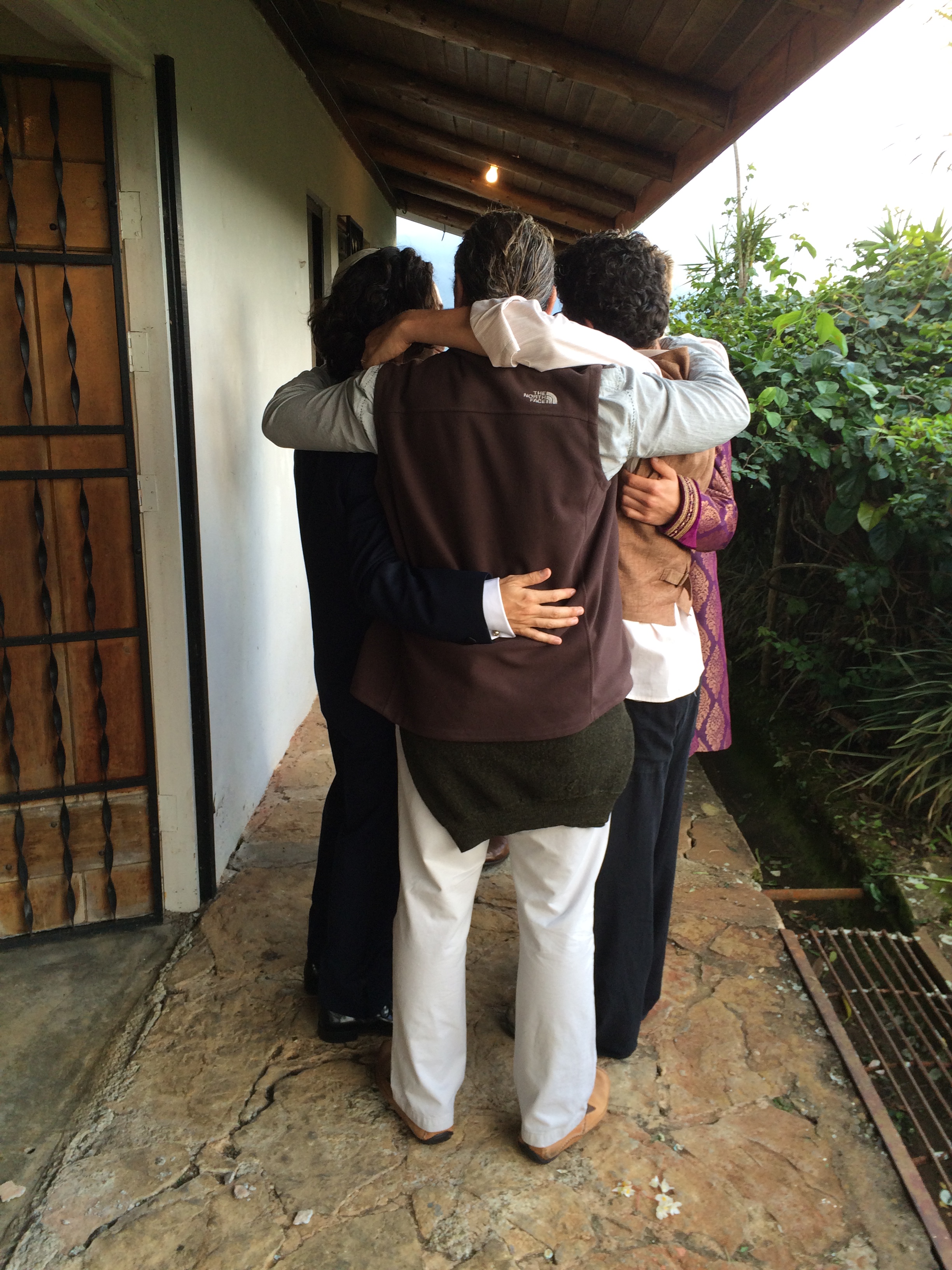
Close friends and family reconnected after time spent apart:

IMG_1393

And the bride looked positively radiant:

IMG_1345

After the ceremony, guests danced the night away under tent and stars:

IMG_1458

IMG_1484

It was a joyful occasion, sure to be remembered fondly for years to come.

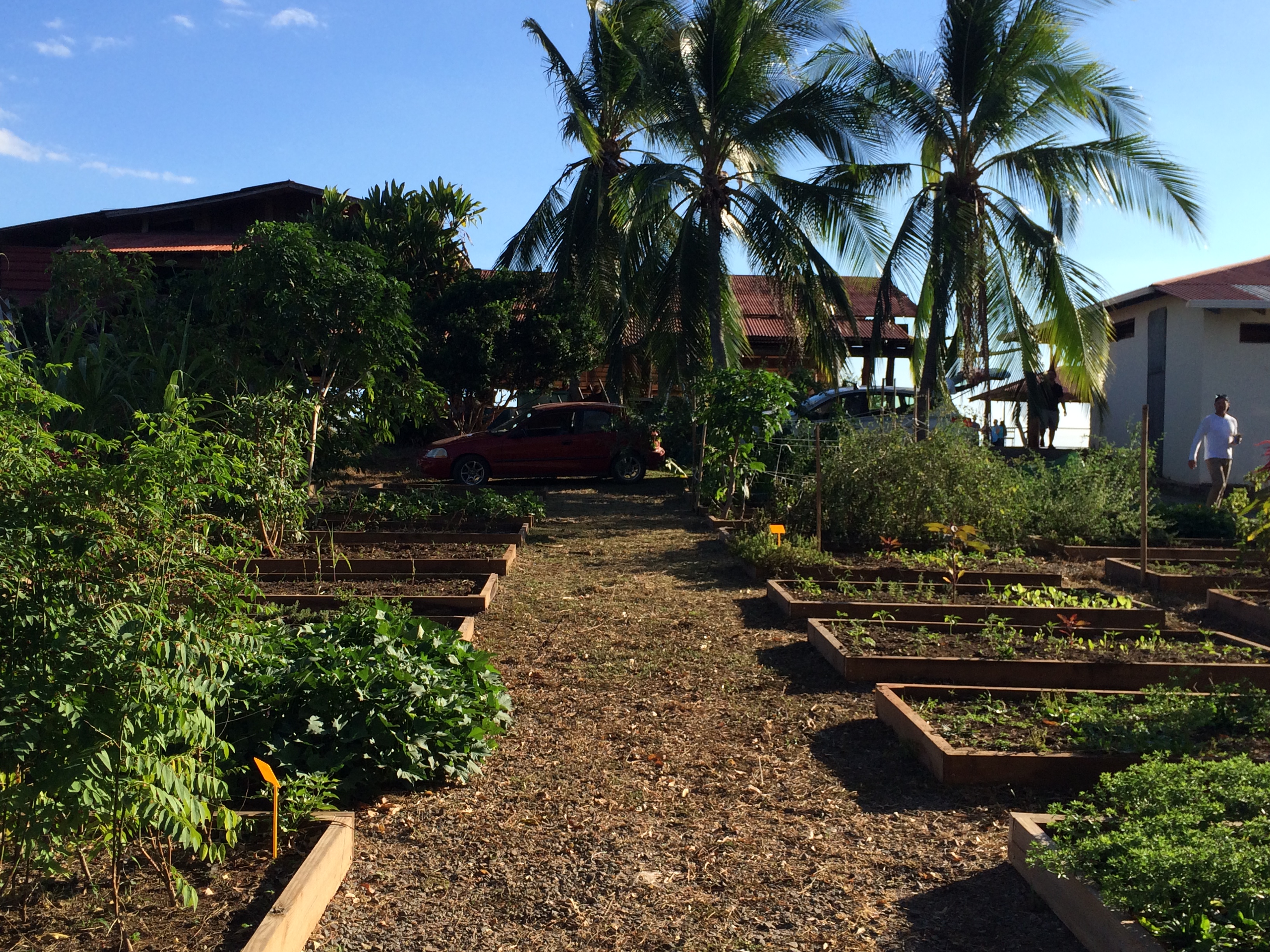
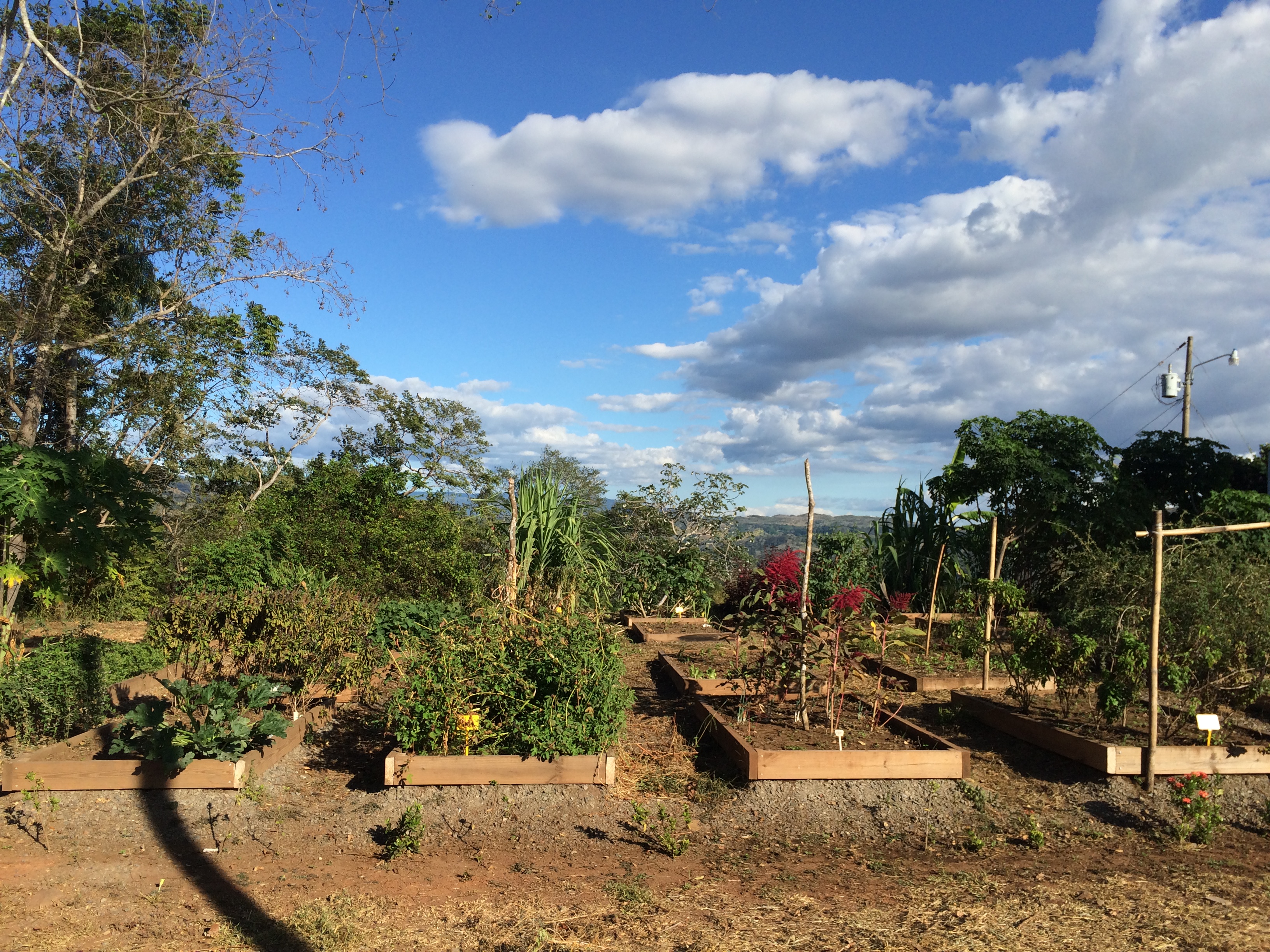
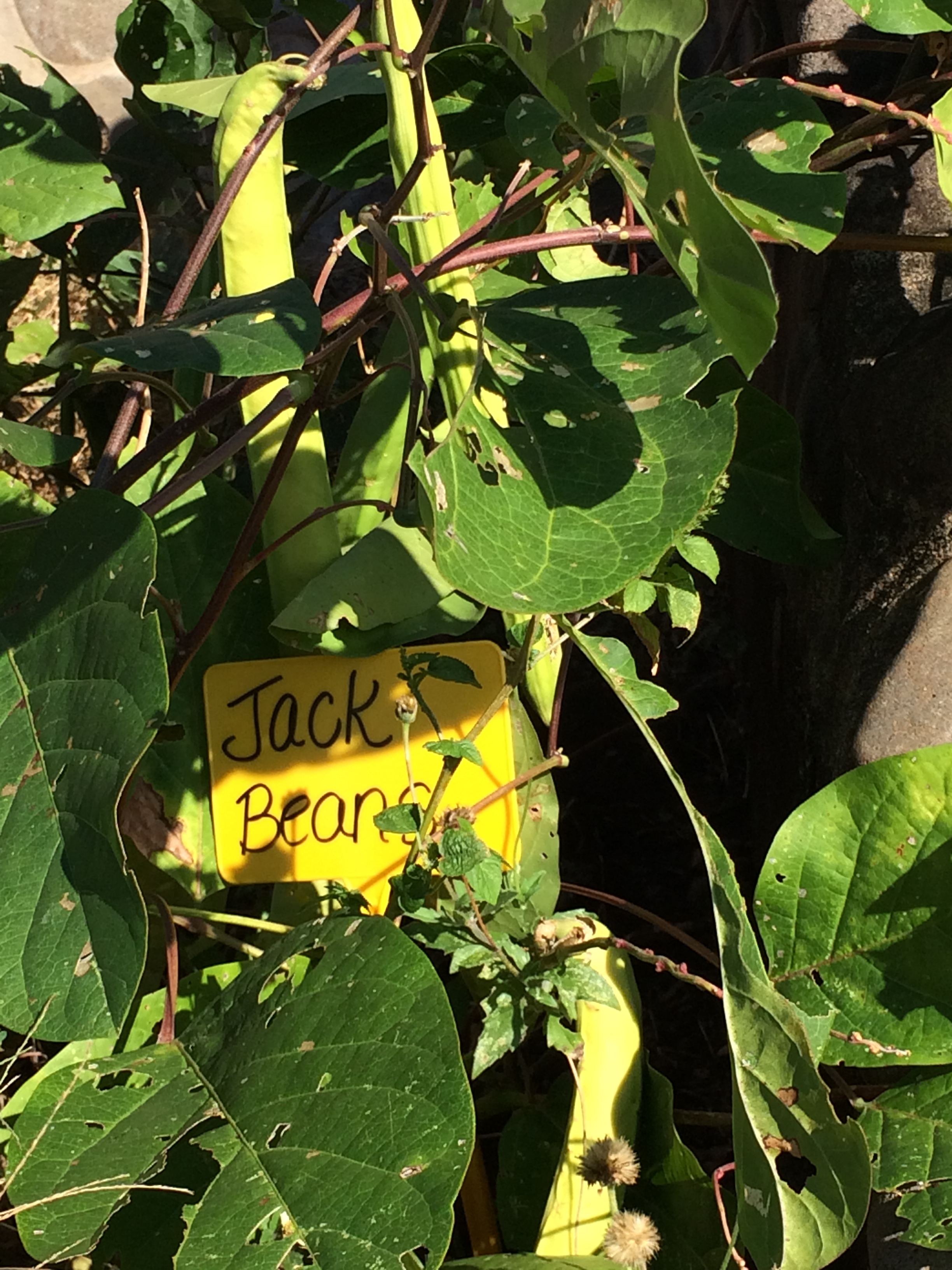
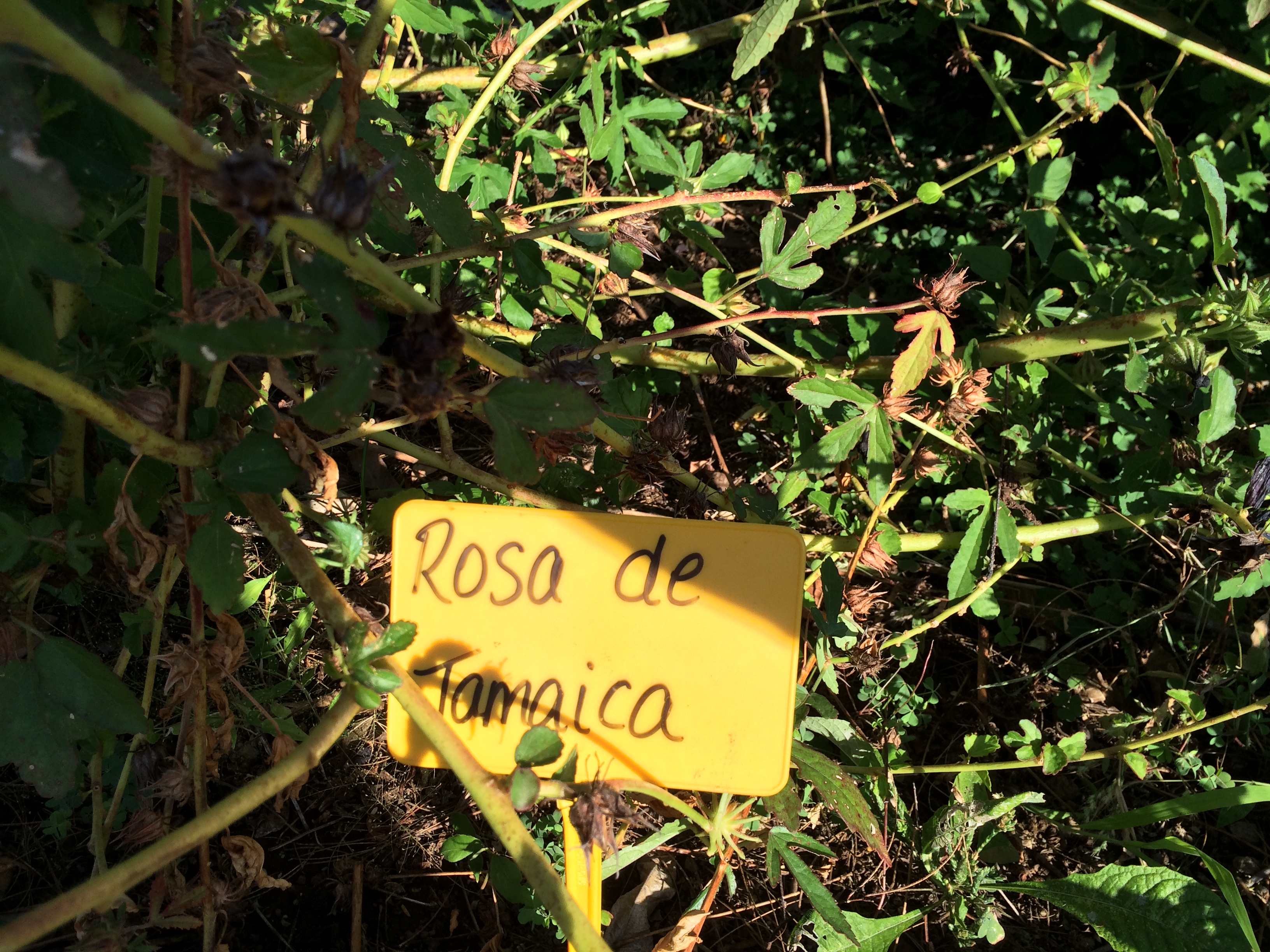
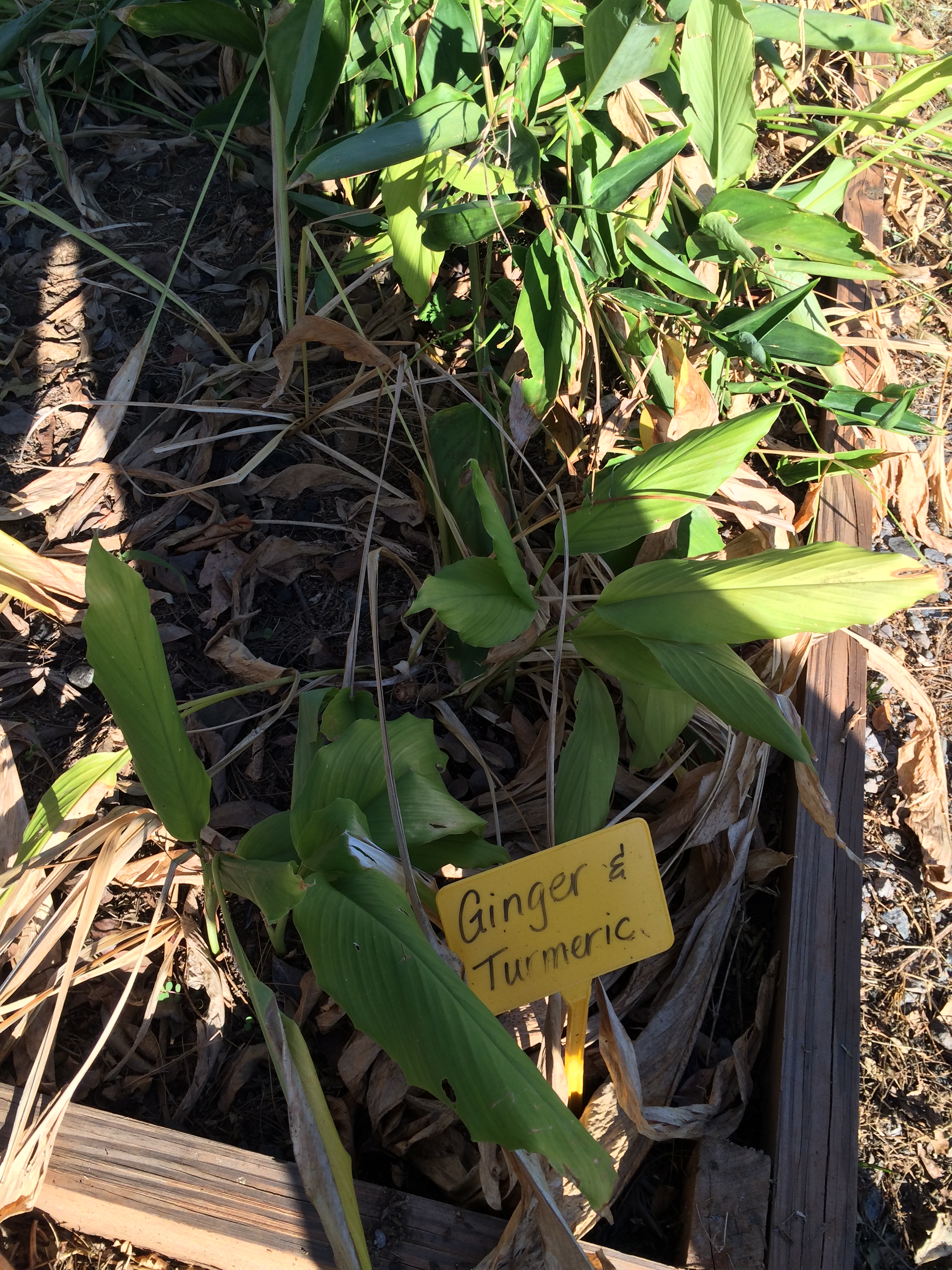
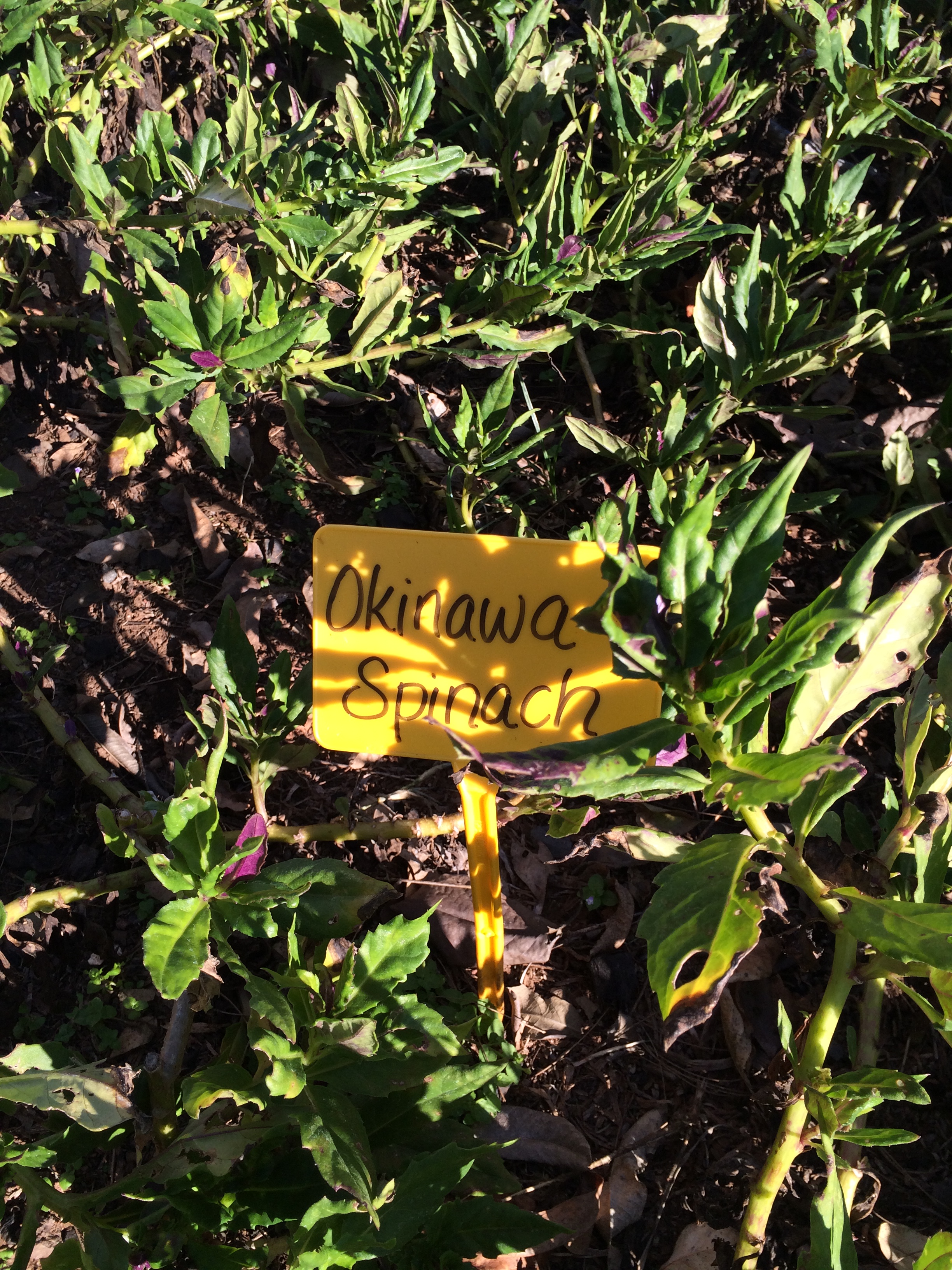
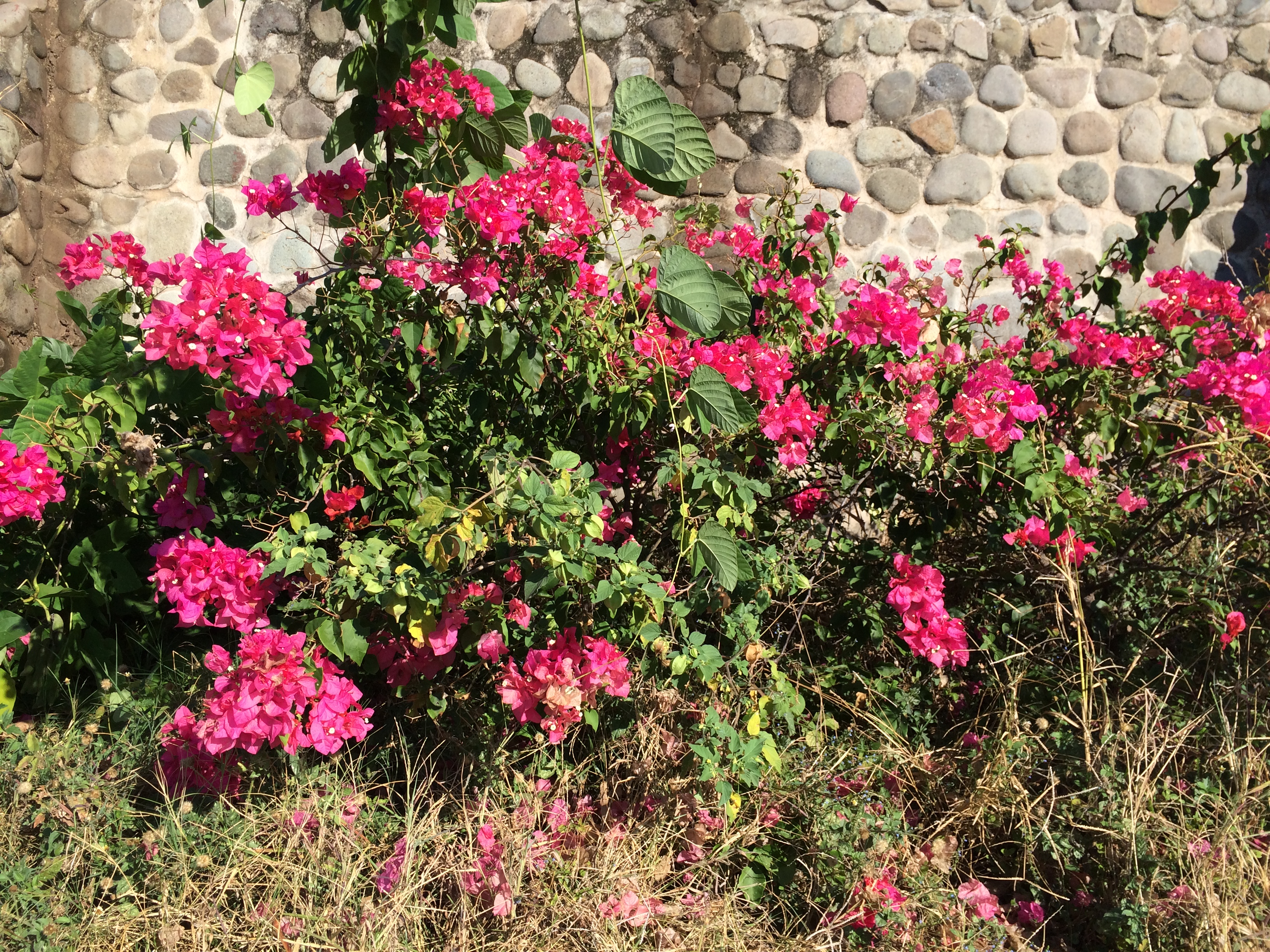
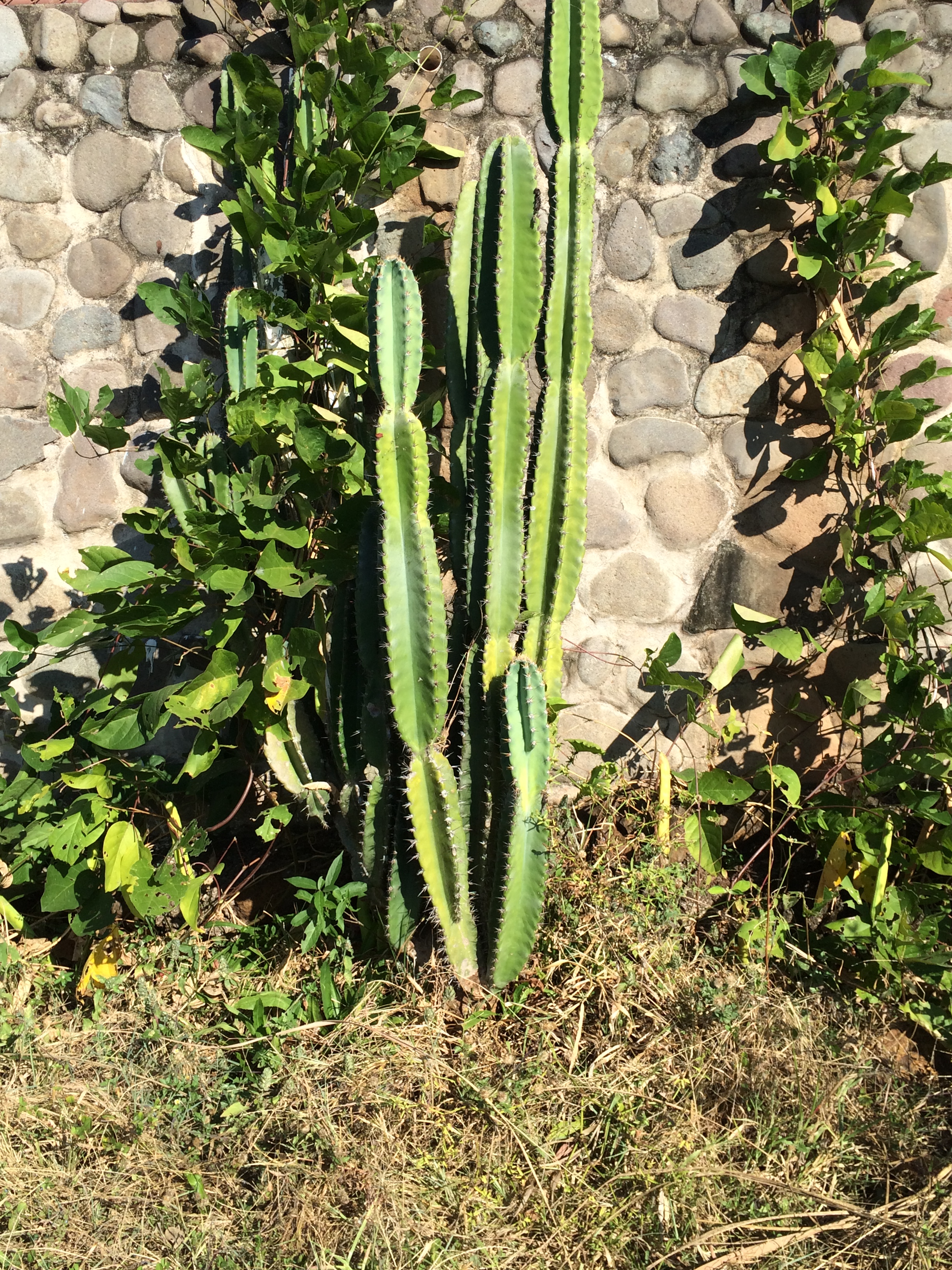
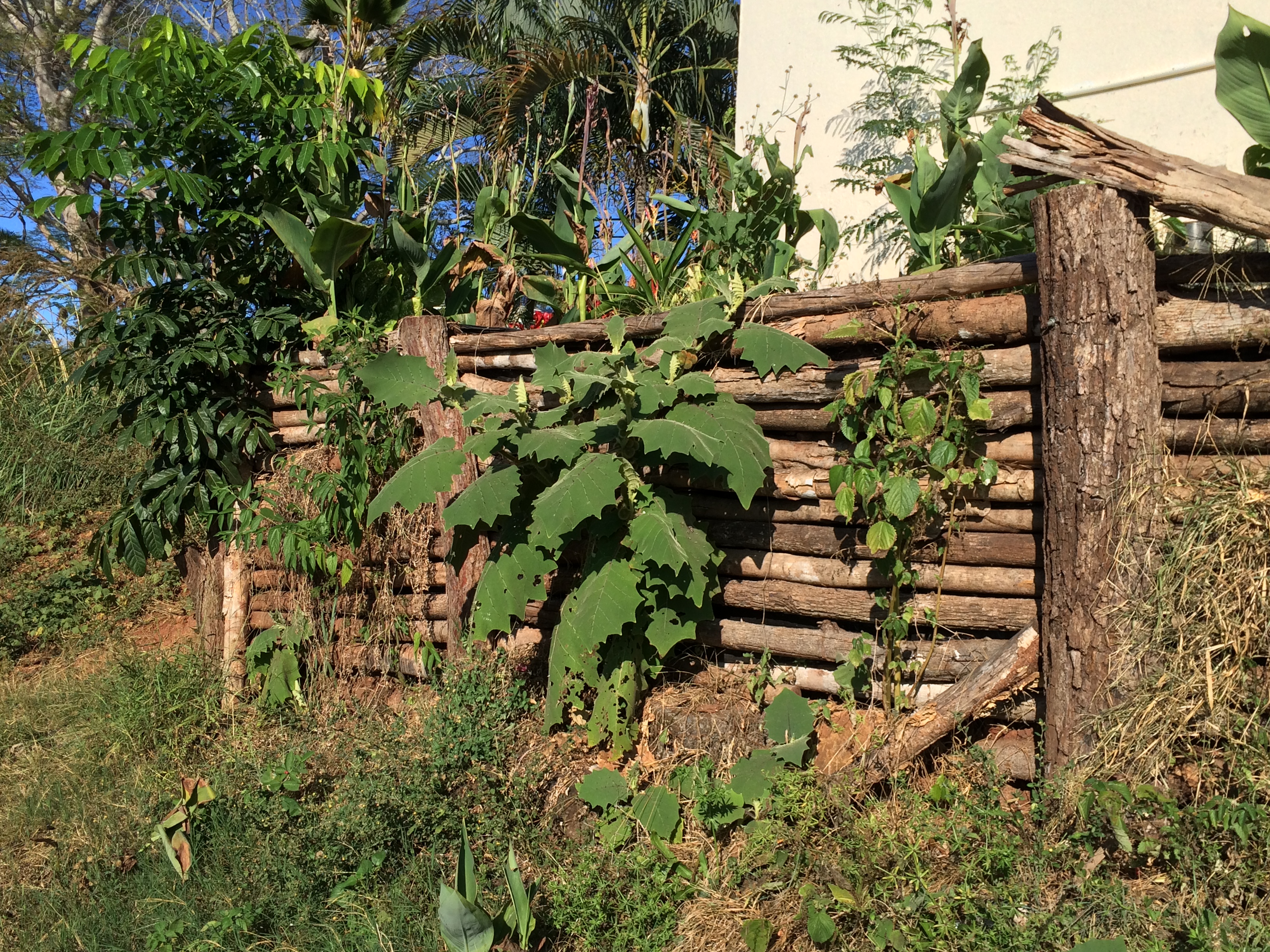
A visit to our friends’ home in Miramar the following afternoon brought anticipation of the spring season to come.  All manner of garden goodies were growing in abundance:

IMG_1608

IMG_1554

IMG_1547

IMG_1549

IMG_1556

IMG_1558

IMG_1561

IMG_1562

Signs of life could be found everywhere:

IMG_1543

IMG_1550

IMG_1552

IMG_1559

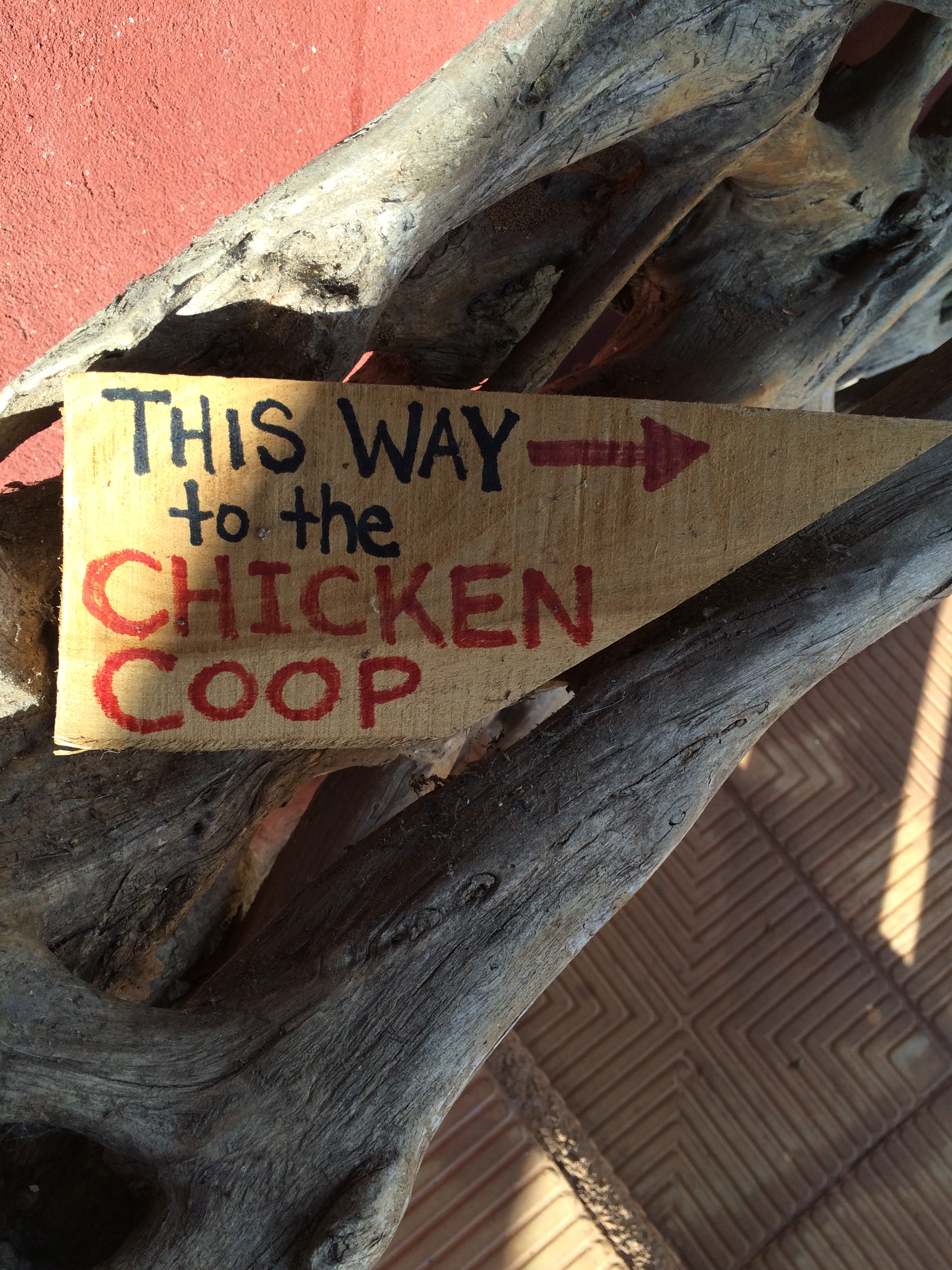
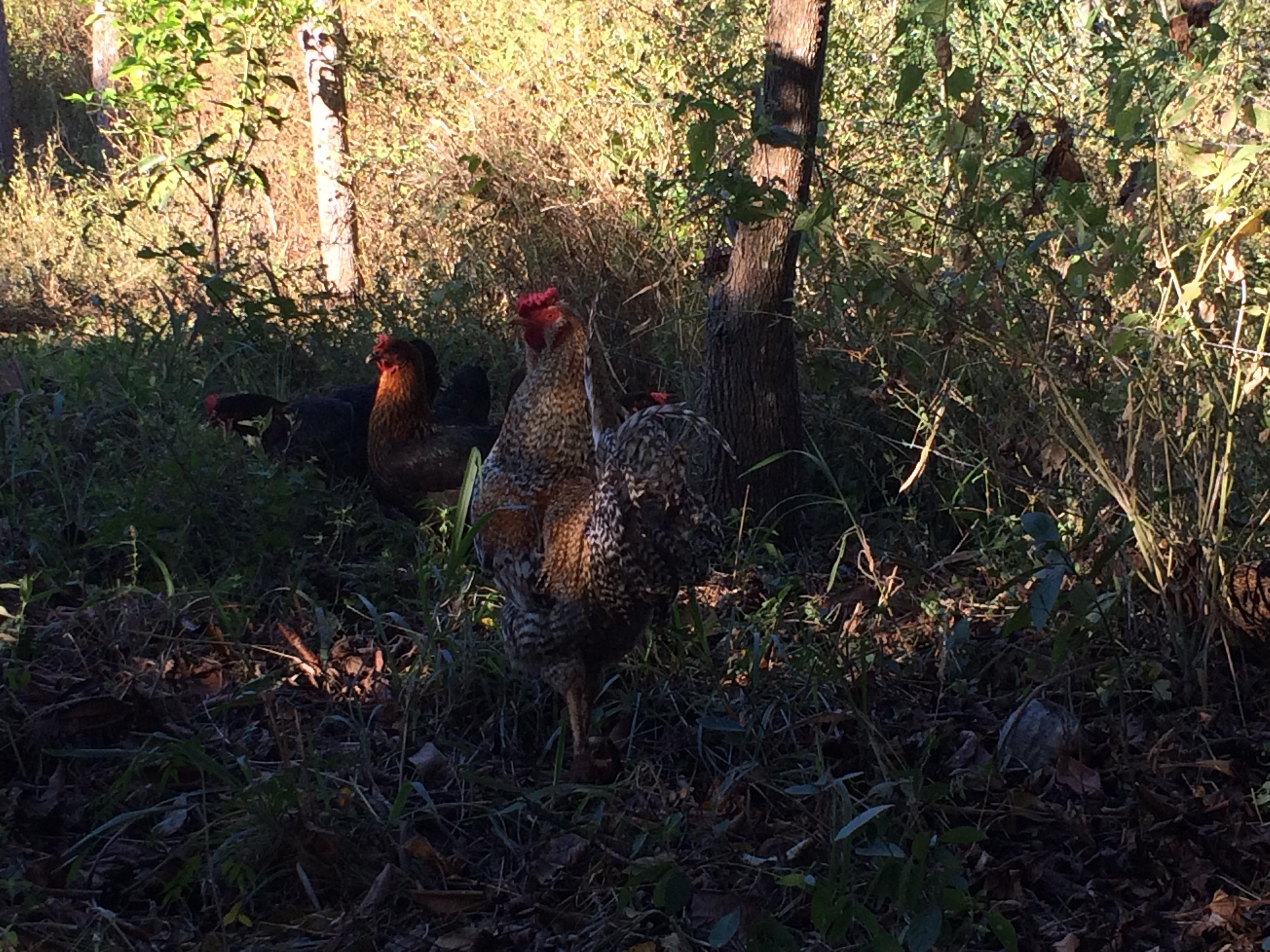
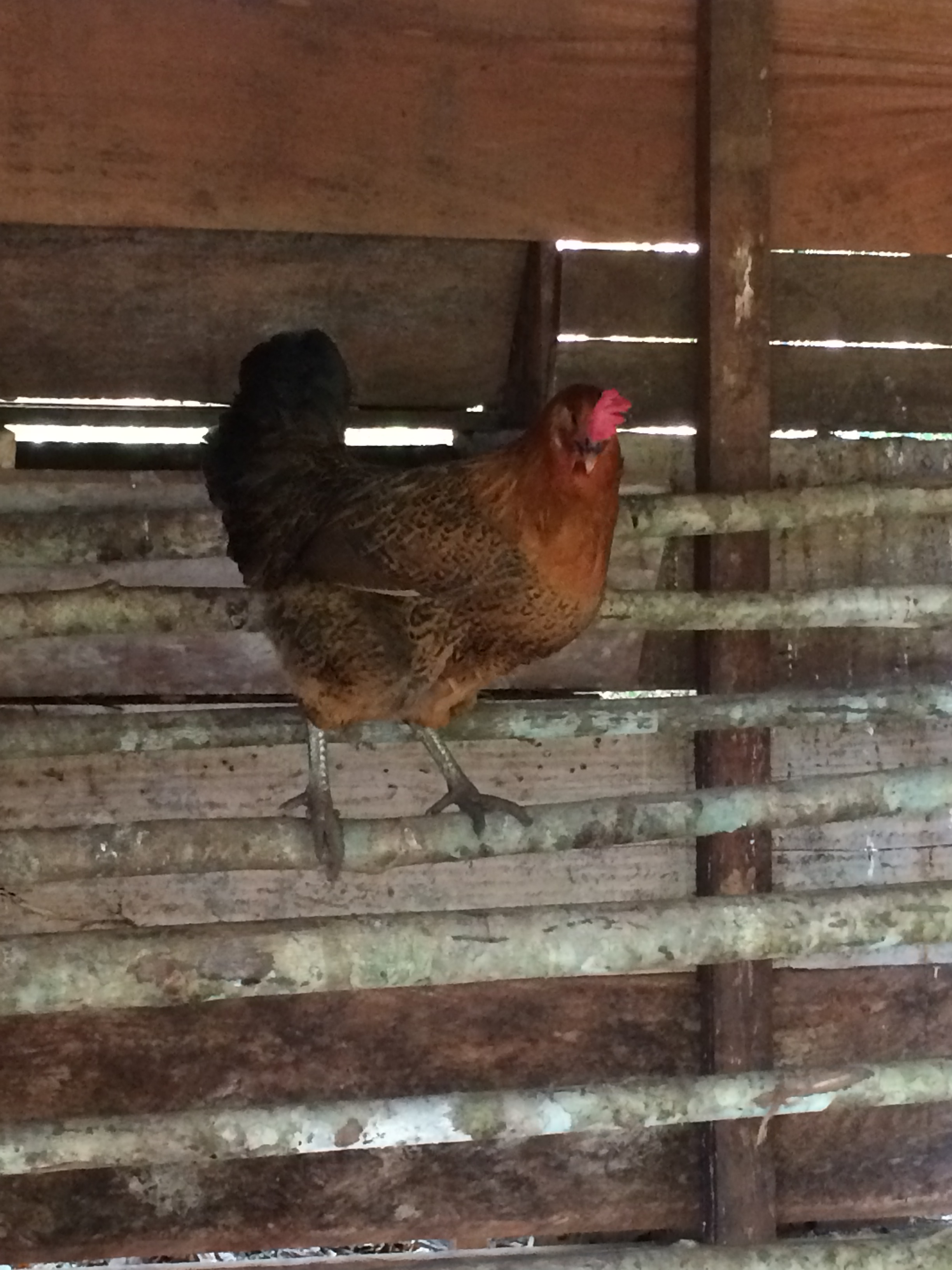
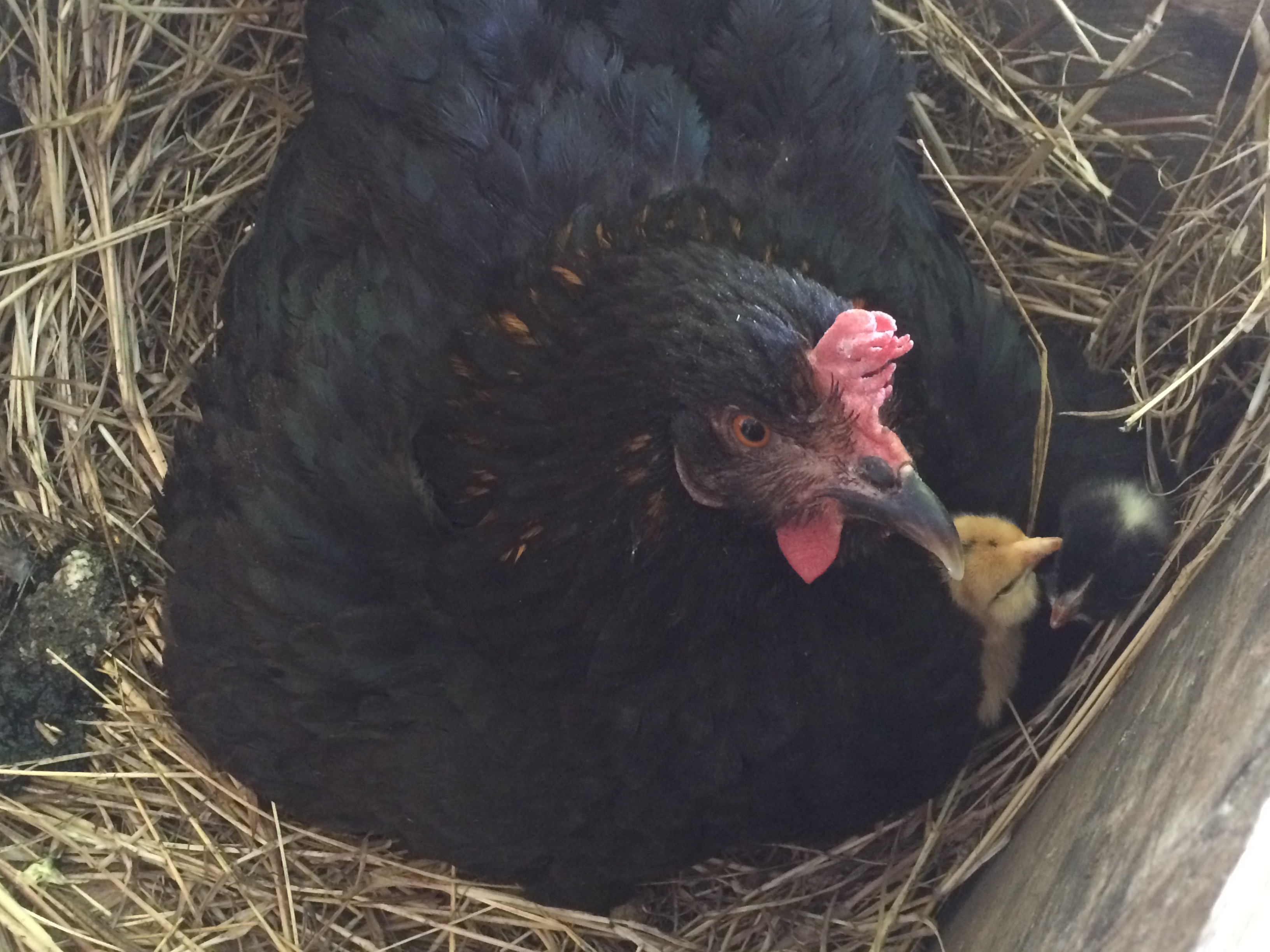
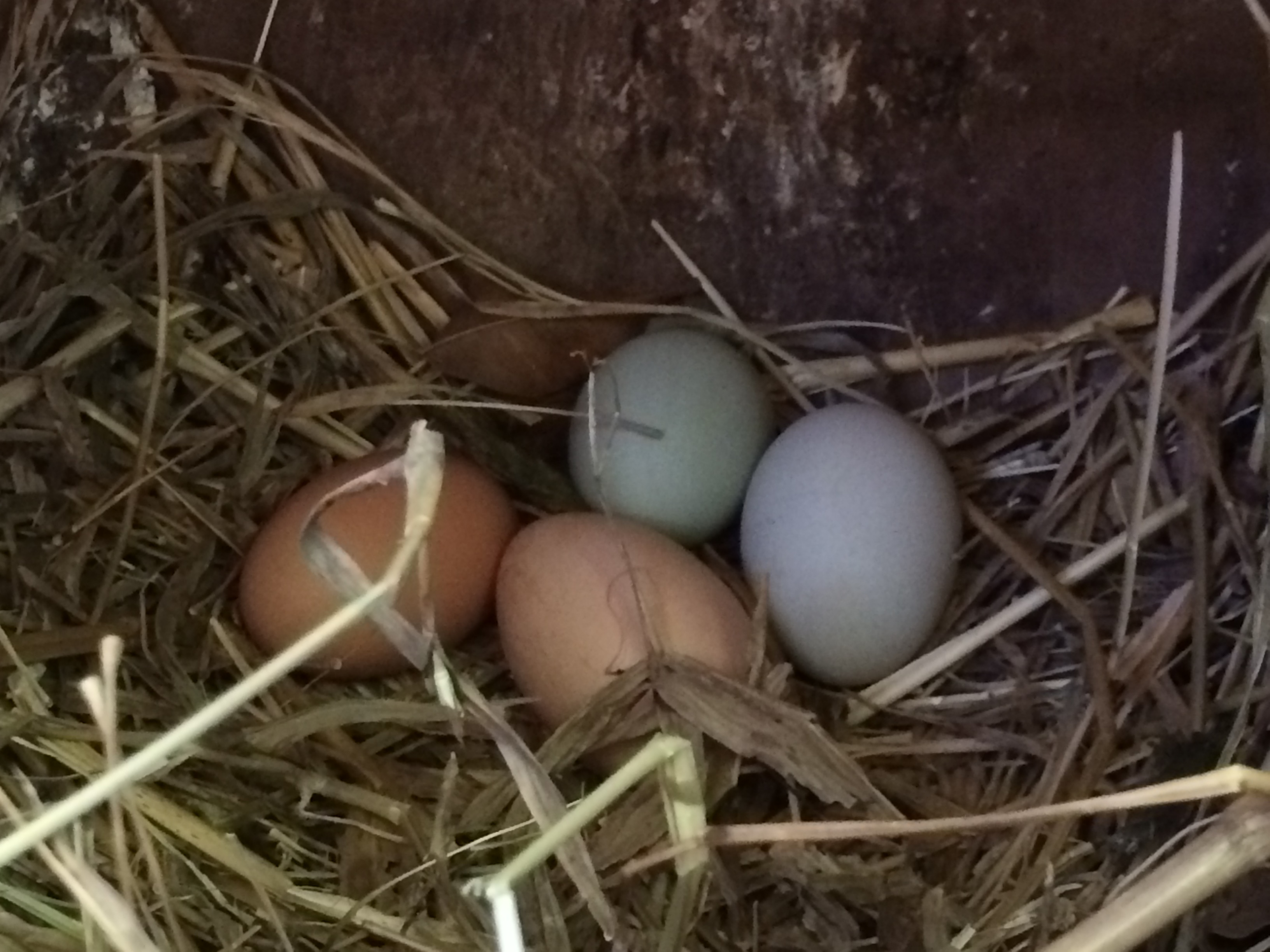
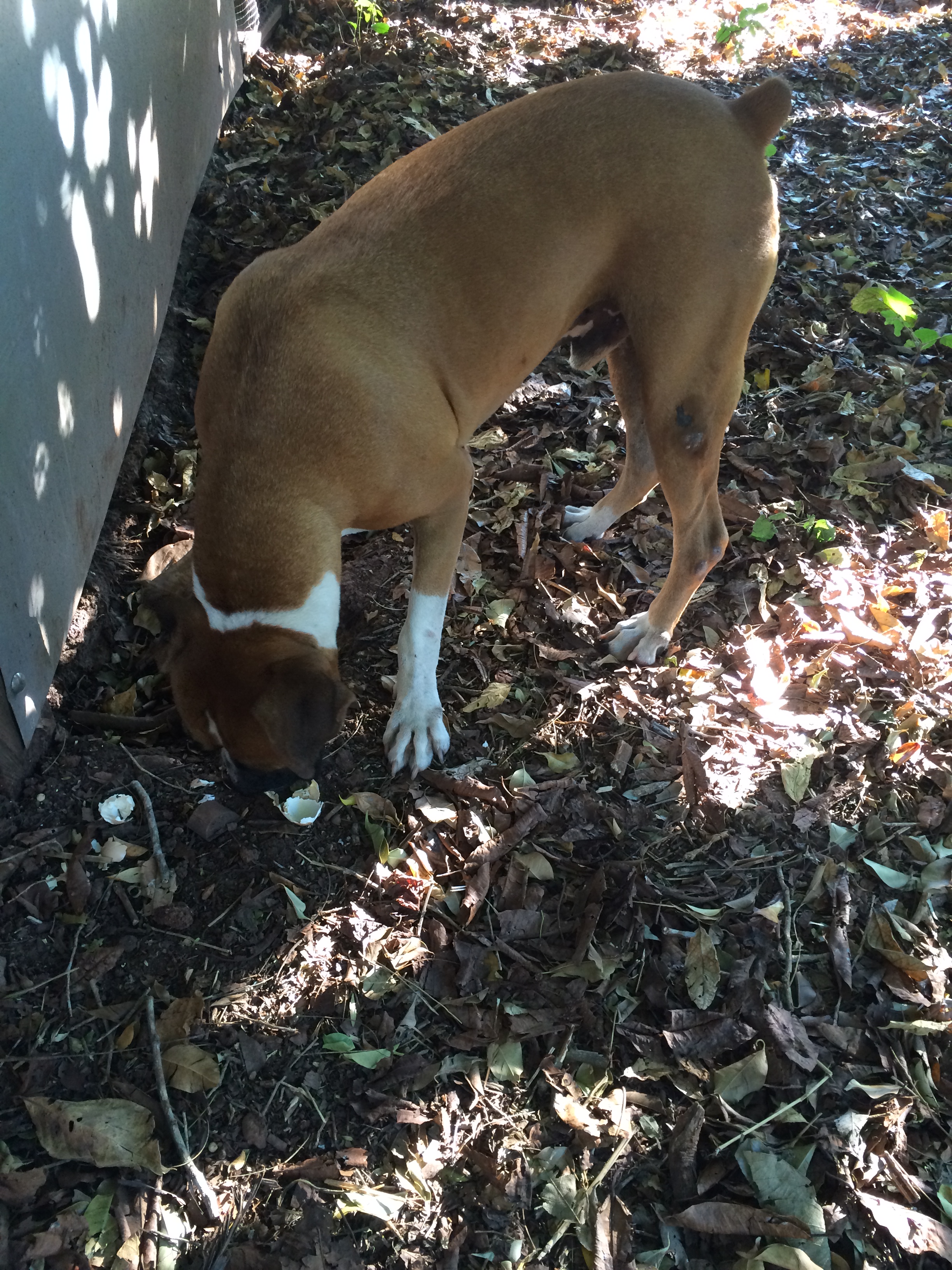
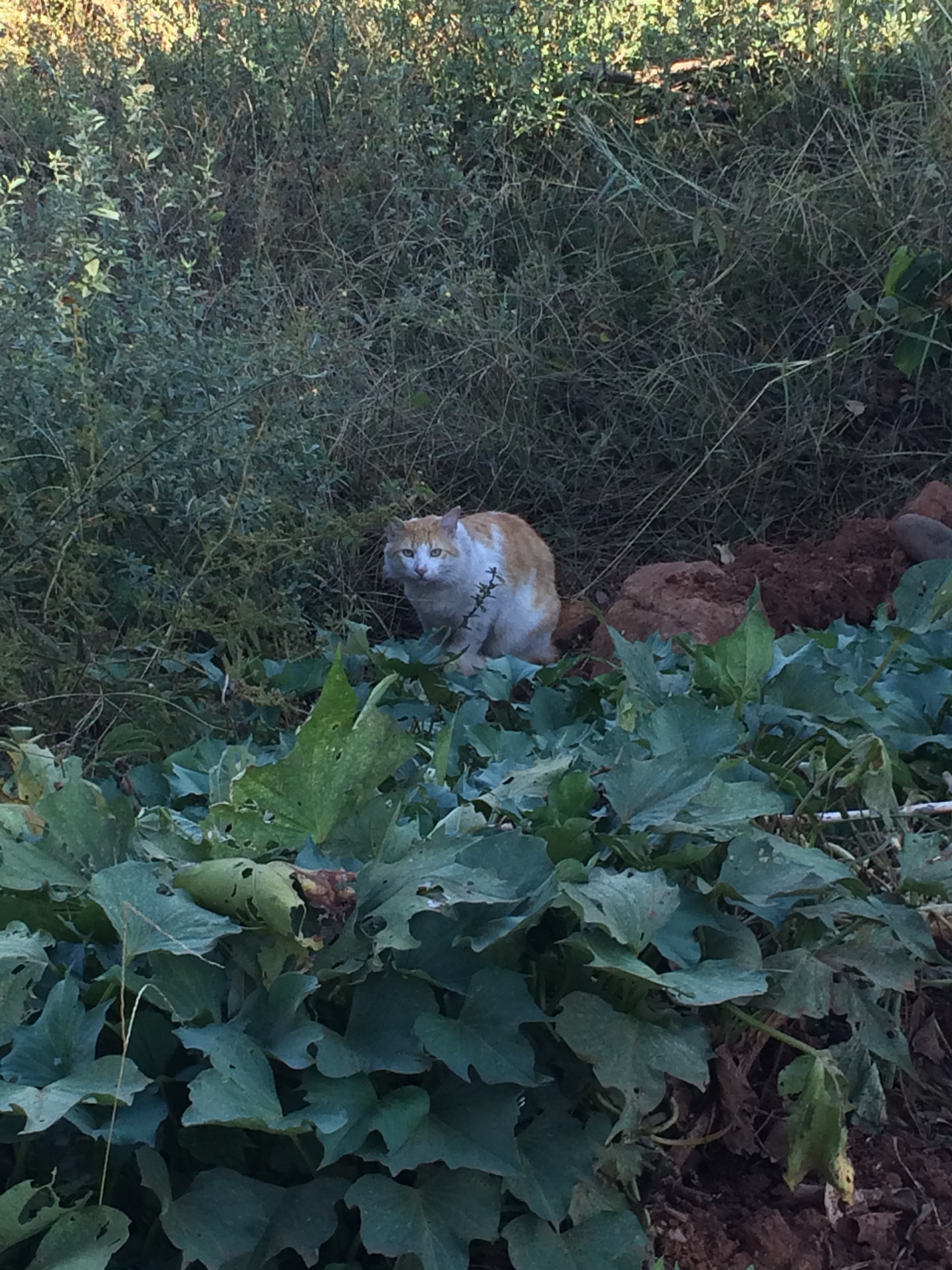
Chickens, dogs and cats roamed:

IMG_1536

IMG_1621

IMG_1615

IMG_1613

Hen with newly hatched chicks

IMG_1623

Fresh eggs

IMG_1626

Taking shady refuge from the hot sun

Taking refuge from the hot sun

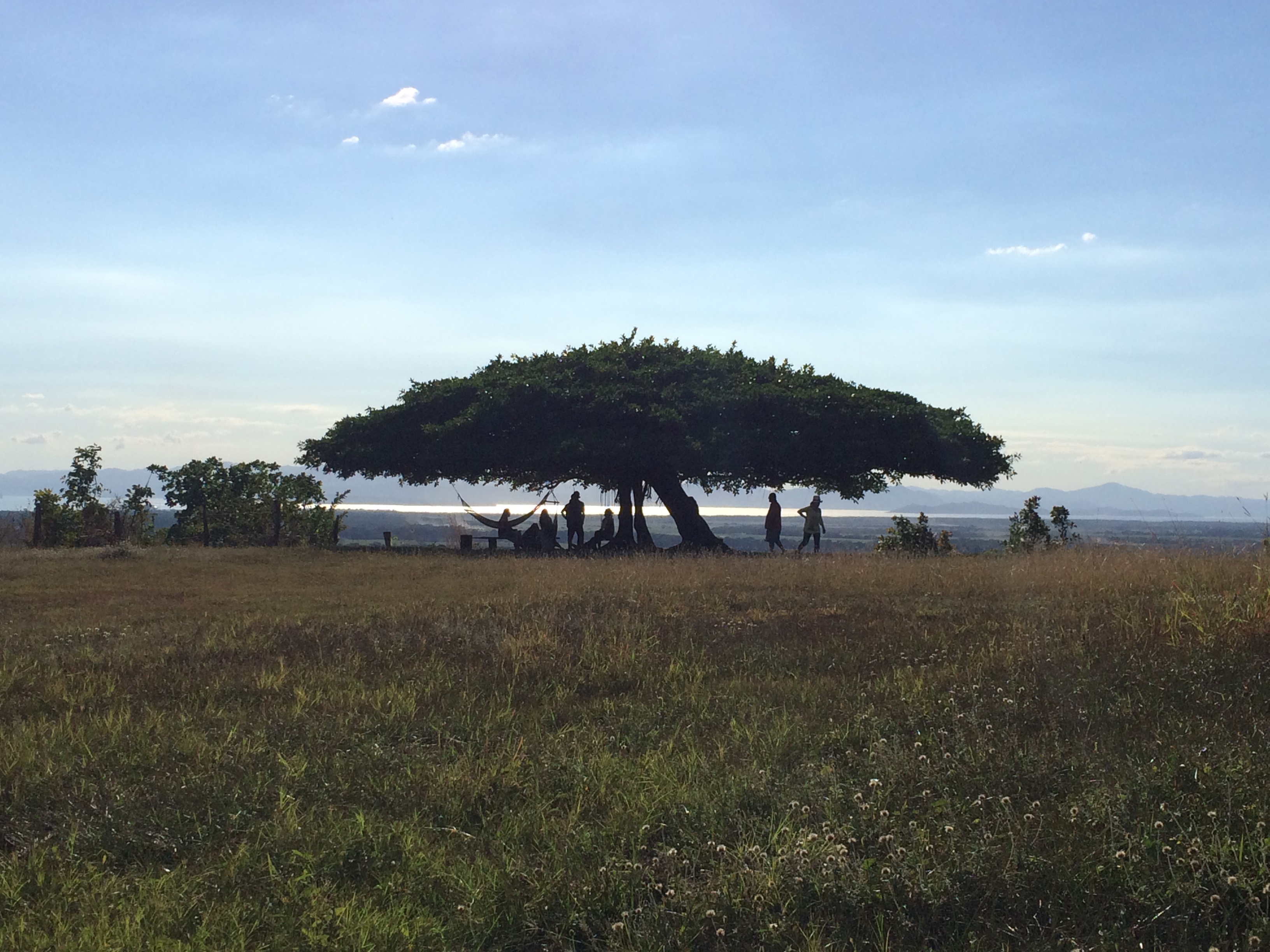
And friends gathered under the shade of a tree, recalling events of the evening past:

IMG_1531

Guanacaste – the national tree of Costa Rica

As the natives would say, “Pura Vida!” 

SCANDIC FOOTWEAR

IMG_1136

“There is scarcely anything in the world that some man cannot make a little worse, and sell a little more cheaply. The person who buys on price alone is this man’s lawful prey.”

-John Ruskin


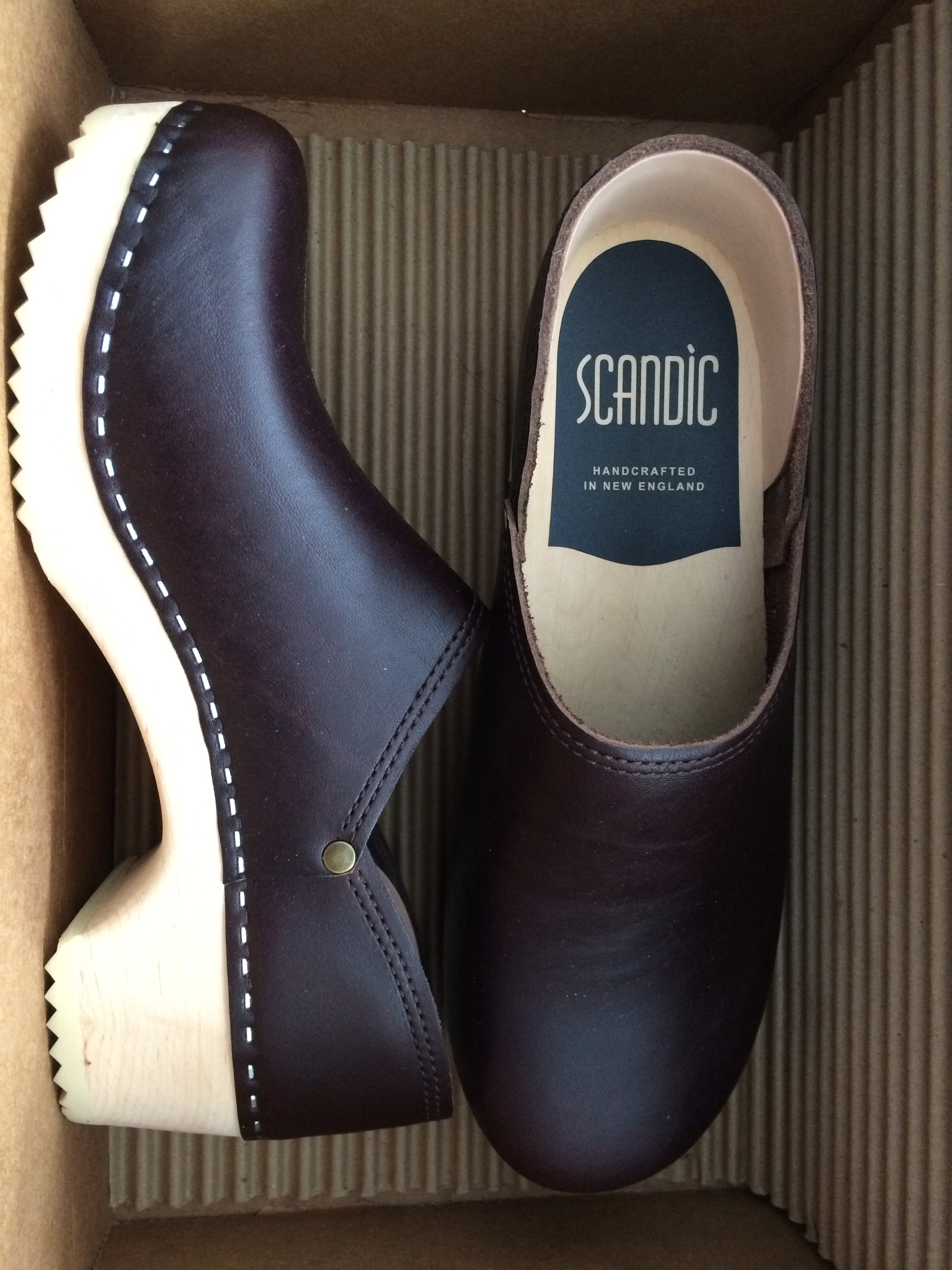
Given the wide and ever growing array of items in stores labeled “made in China” and now increasingly ubiquitous “designed in <insert country> made in China” ploy, one wonders whether an emerging group of single-minded, local business owners and producers will be able to stem the tide of more affordable (in the short run) yet inferior goods flooding the shelves.  My recent acquaintance with Scandic clogs offers reason for hope. Having originally spotted a pair on display while dropping off shoes for resoling at a local repair shop, their superior craftsmanship and quality were immediately evident.  Little time was wasted ordering the clogs in the appropriate size and the remainder of the week was spent in eager anticipation of their arrival. (*)  (They are currently made to order, unless one happens upon the right size at the right time, as limited size runs are available at stockists.  Alternatively, online orders can be placed through their website: scandicfootwear.com.)

IMG_1154

The Bedford Closed Back Clog in Brown Top Grain


Recent events brought an opportunity to visit the birthplace of Scandic Footwear – workshop of founder Morten Andreasen – born and raised in Aalborg, Denmark and formerly an engineer by profession, who thoroughly explained the painstakingly precise process of constructing the clogs (and boots and sandals) to exacting standards.  A single pair of clogs takes around 3 hours to make while one pair of boots – consisting of 18 individual pieces of leather – can take up to a full day.


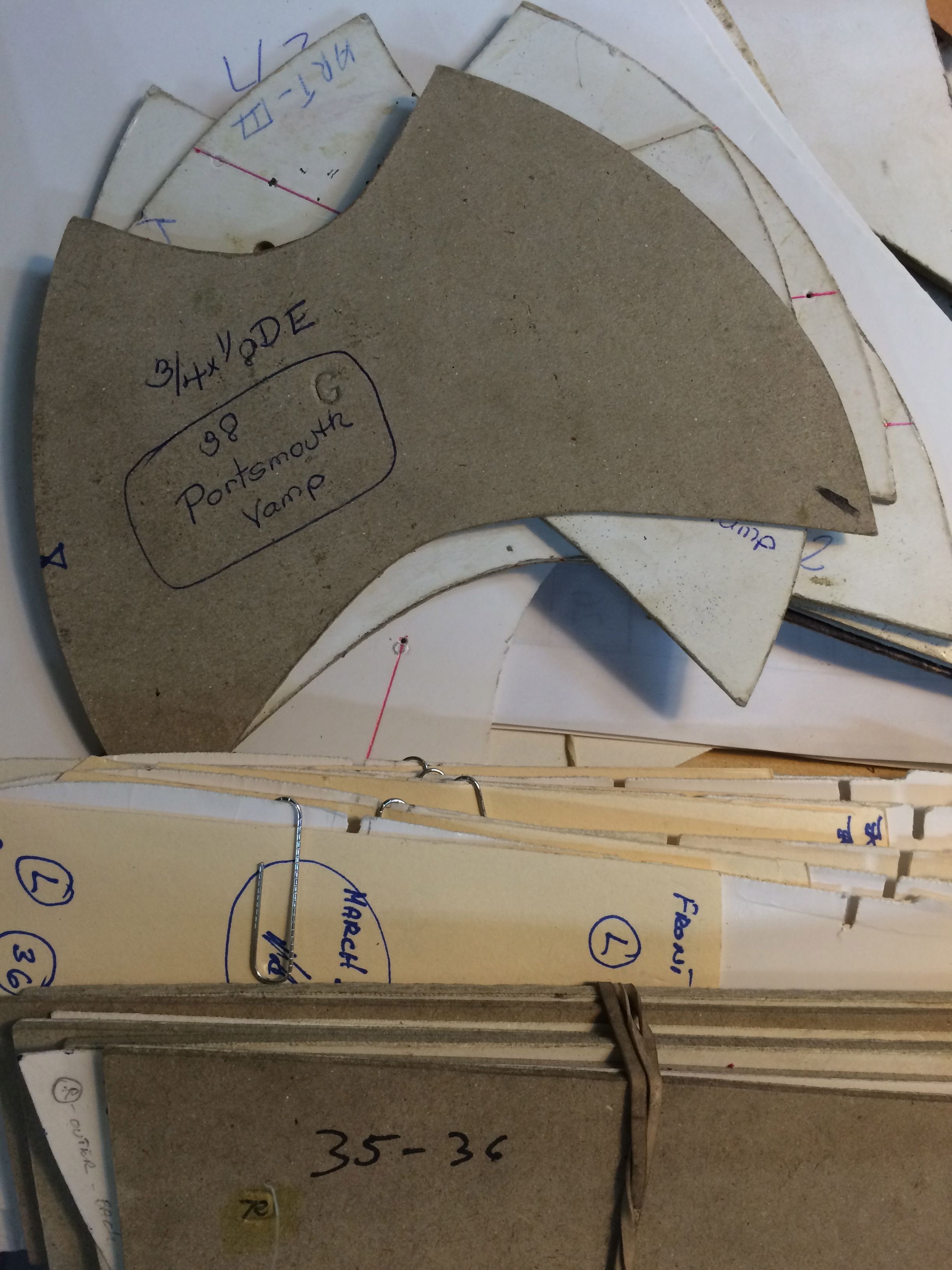
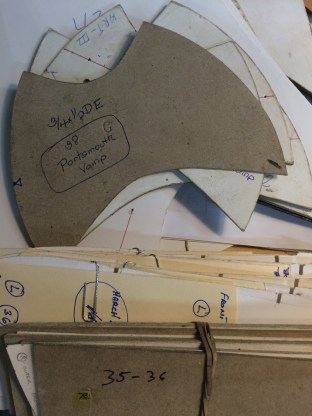
Before the shoes are constructed, patterns which vary according to shoe style are created:
IMG_1084

Sample patterns

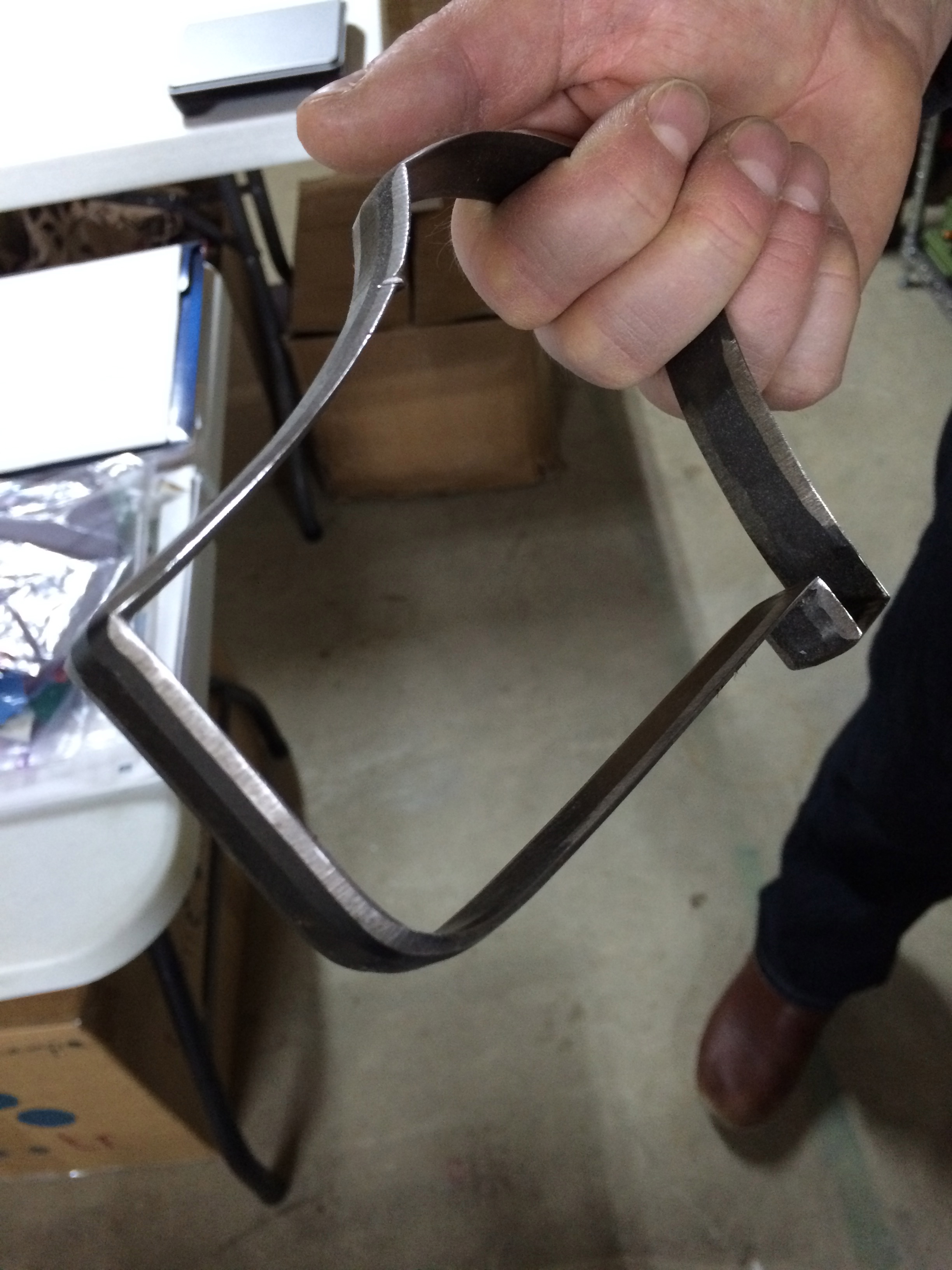
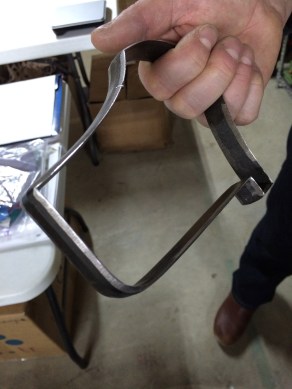
Leathers are cut to match the pattern, using a cutting die:
IMG_1088

Use of a die ensures the same, precise cut each time a particular pattern is used.

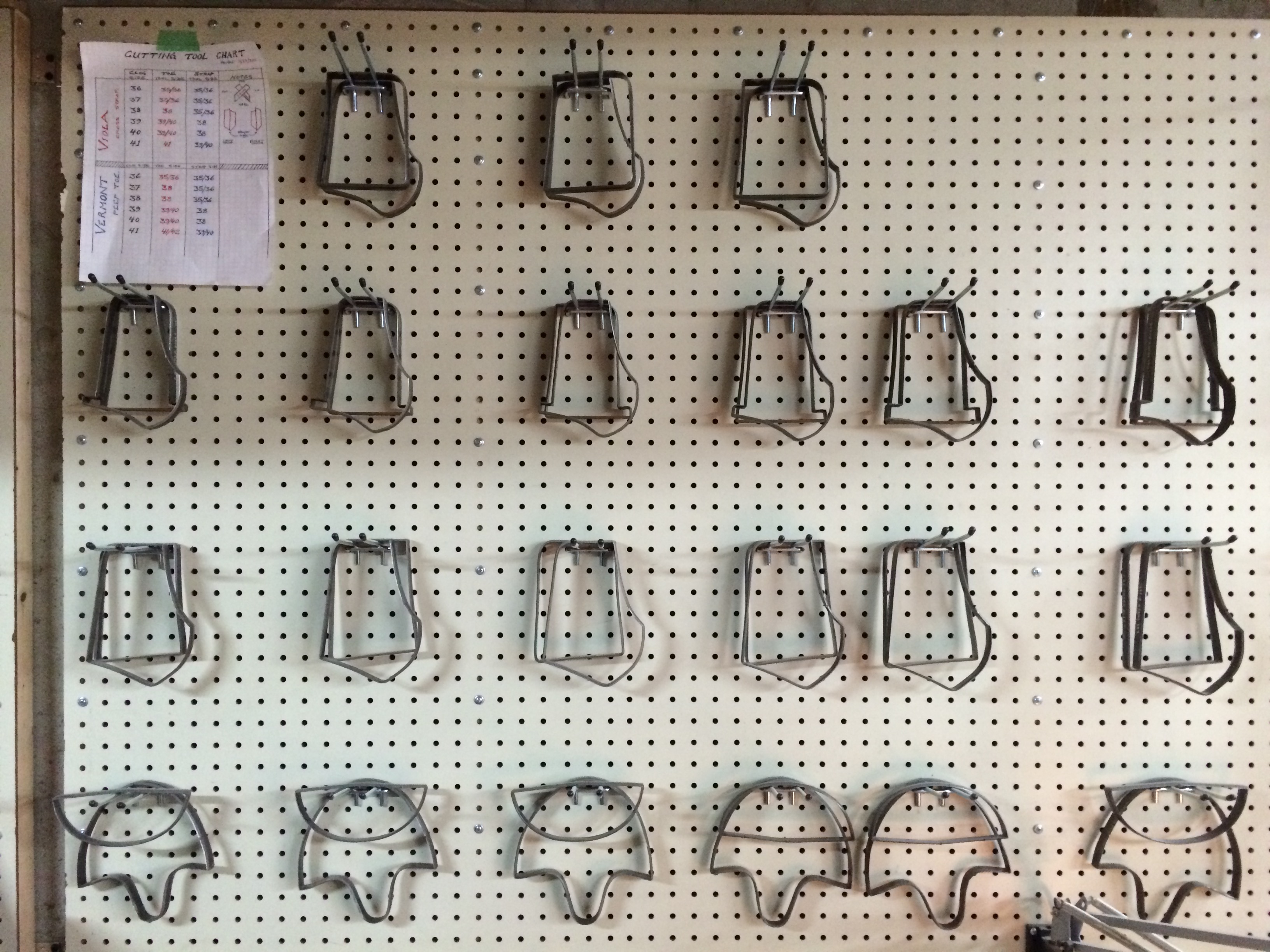
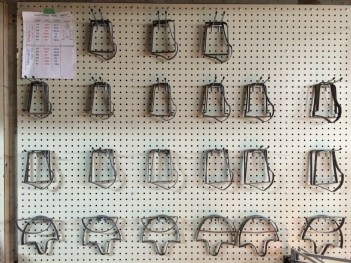
All cutting dies for Scandic Footwear are made in Manchester, NH, by Swanson’s Die Company, in keeping with Andreason’s commitment to work with local suppliers whenever possible.
IMG_1102

Cutting dies – made out of steel and organized by pattern.  Swanson’s has its own foundry and produces the steel in-house from iron, which is then ground by hand.
IMG_1092

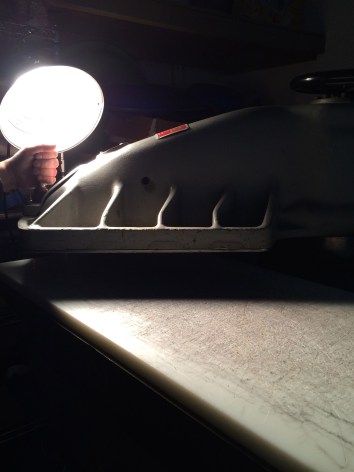
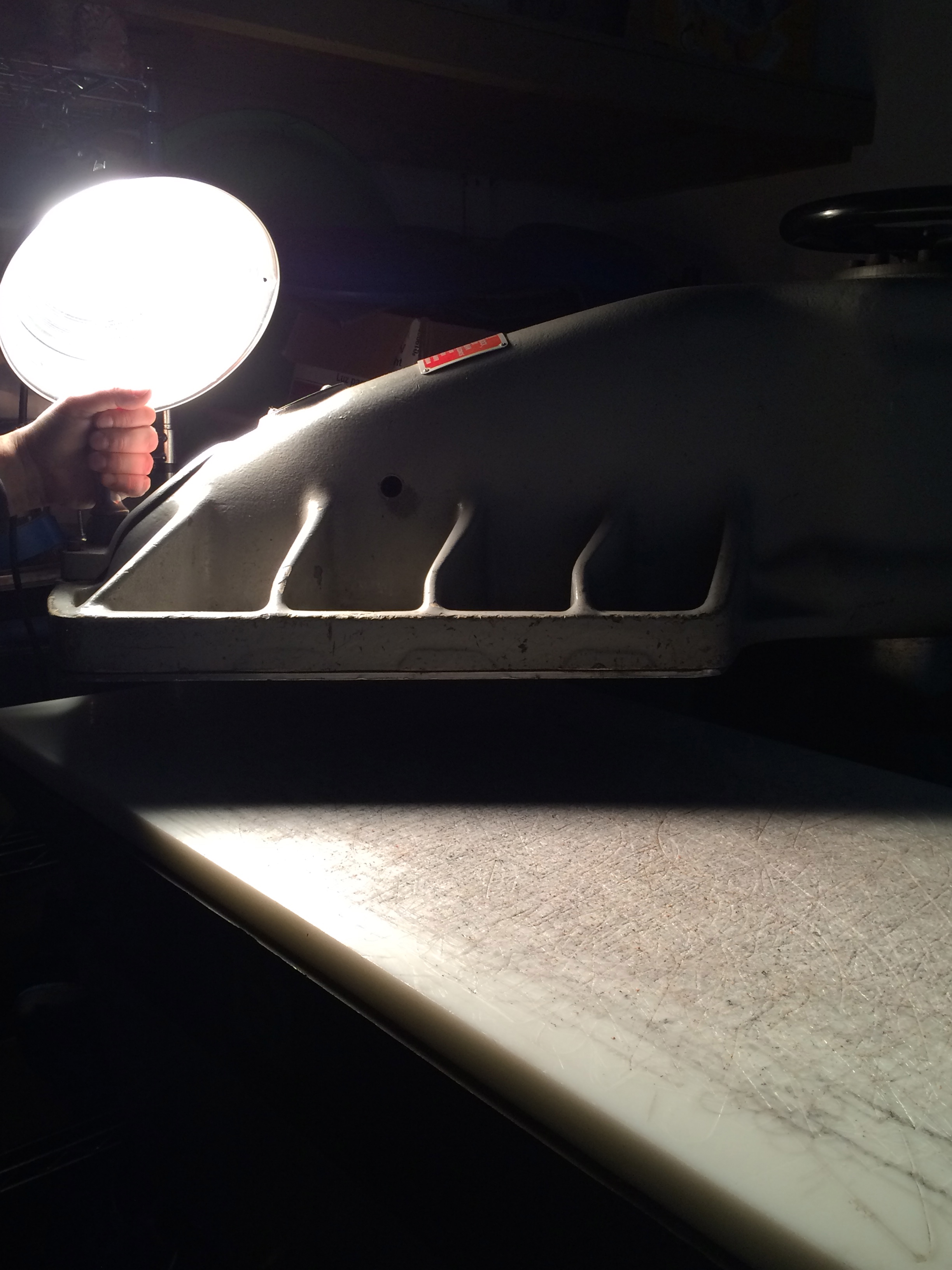
Industrial cutting machine


Some leathers used:
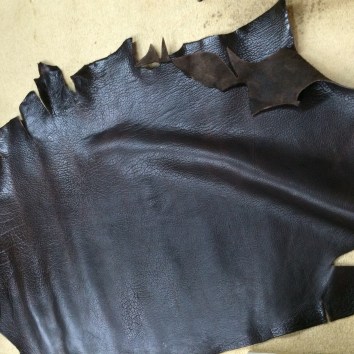
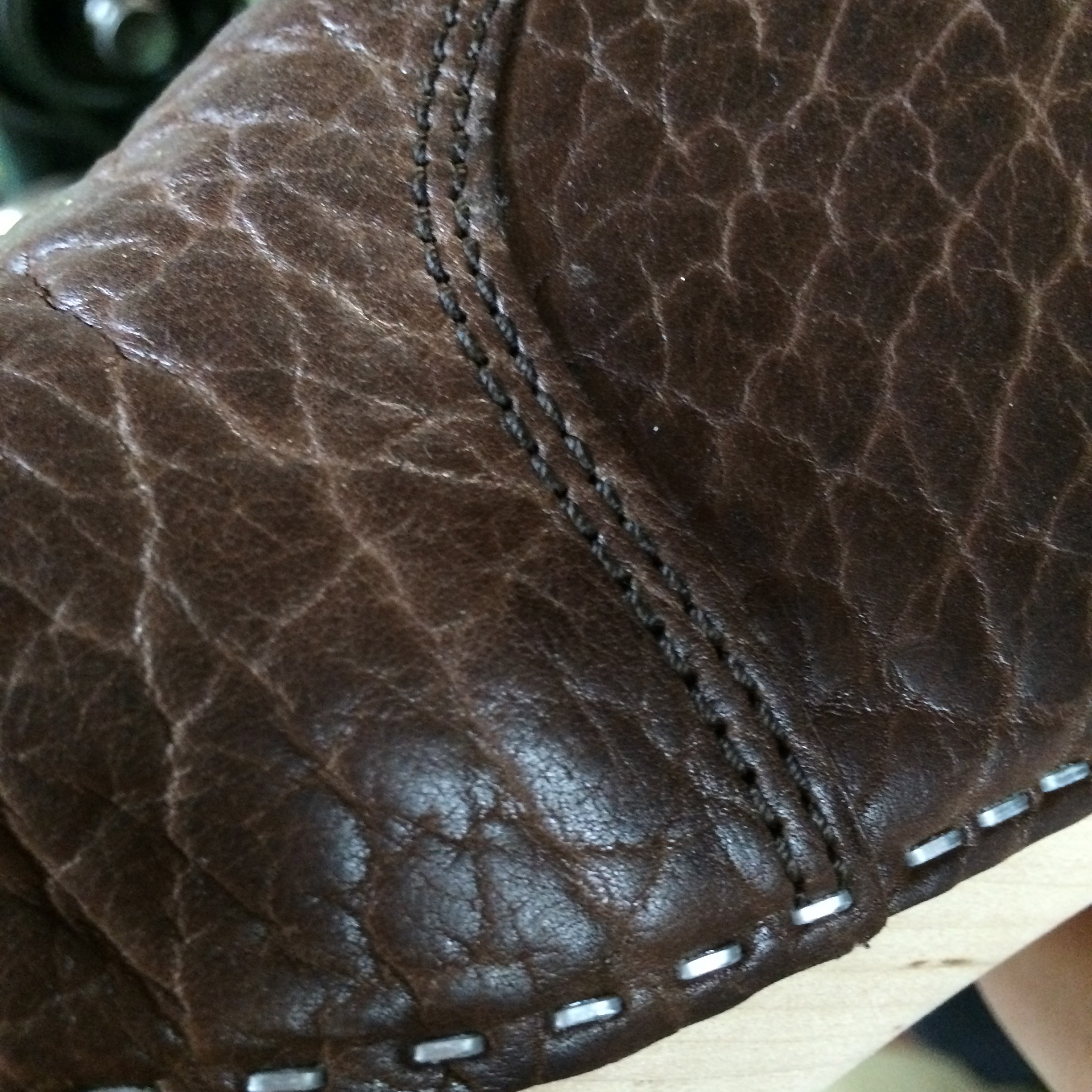
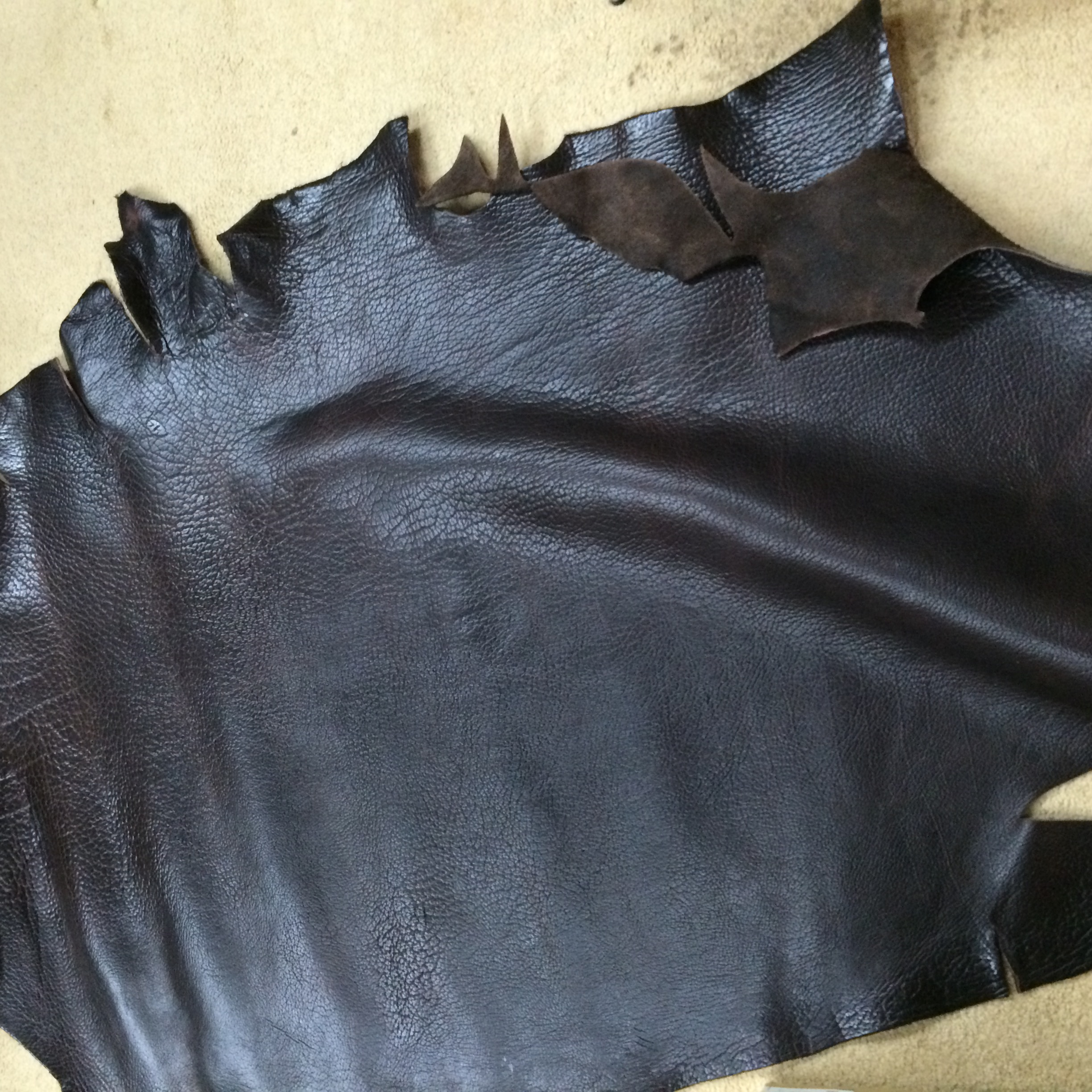
Natural bison leather, sourced in the US.
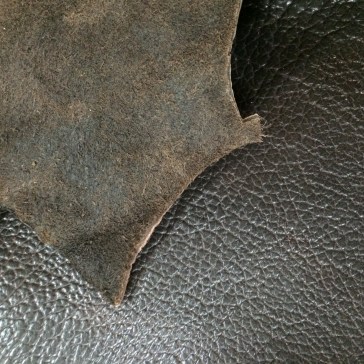
A roll of natural bison leather, sourced in the US.

IMG_1050

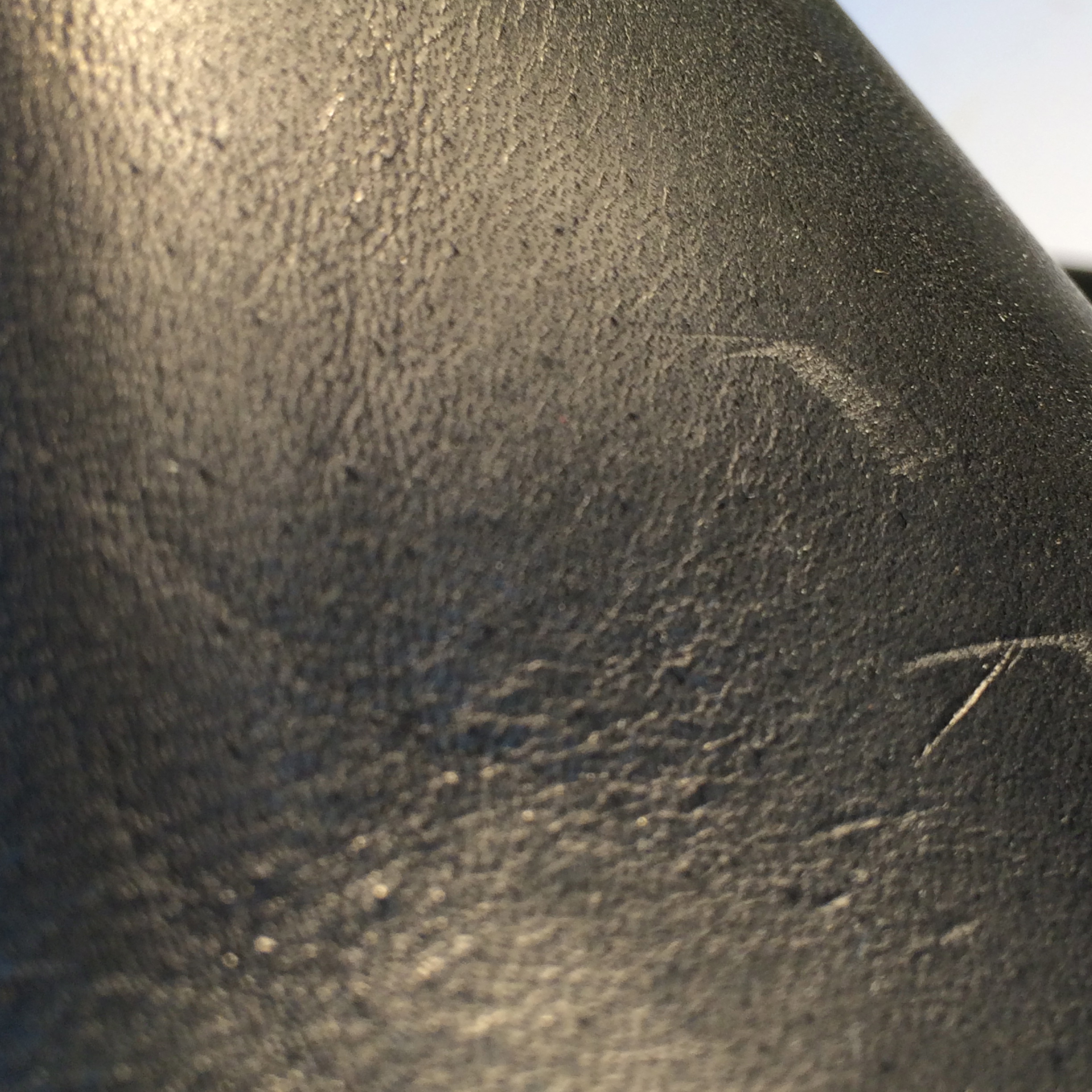
Actual texture (not embossed)

Top grain leather:
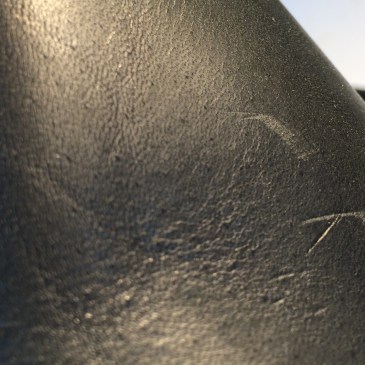
IMG_1055

The small dots are in fact hair follicles, the mark of a true top grain – as opposed to a split – leather. (Splits may be finished and embossed to simulate a full top grain but are not as high in quality.)

Nubuck leathers (top grains that have been sanded) are sourced outside of the US for higher quality.  Hides are typically tanned in Morocco.  Finishing is done in Spain, known for some of the finest finishing work in the world.

IMG_1063

A roll of nubuck…

IMG_1065

… and trademark velvet like finish

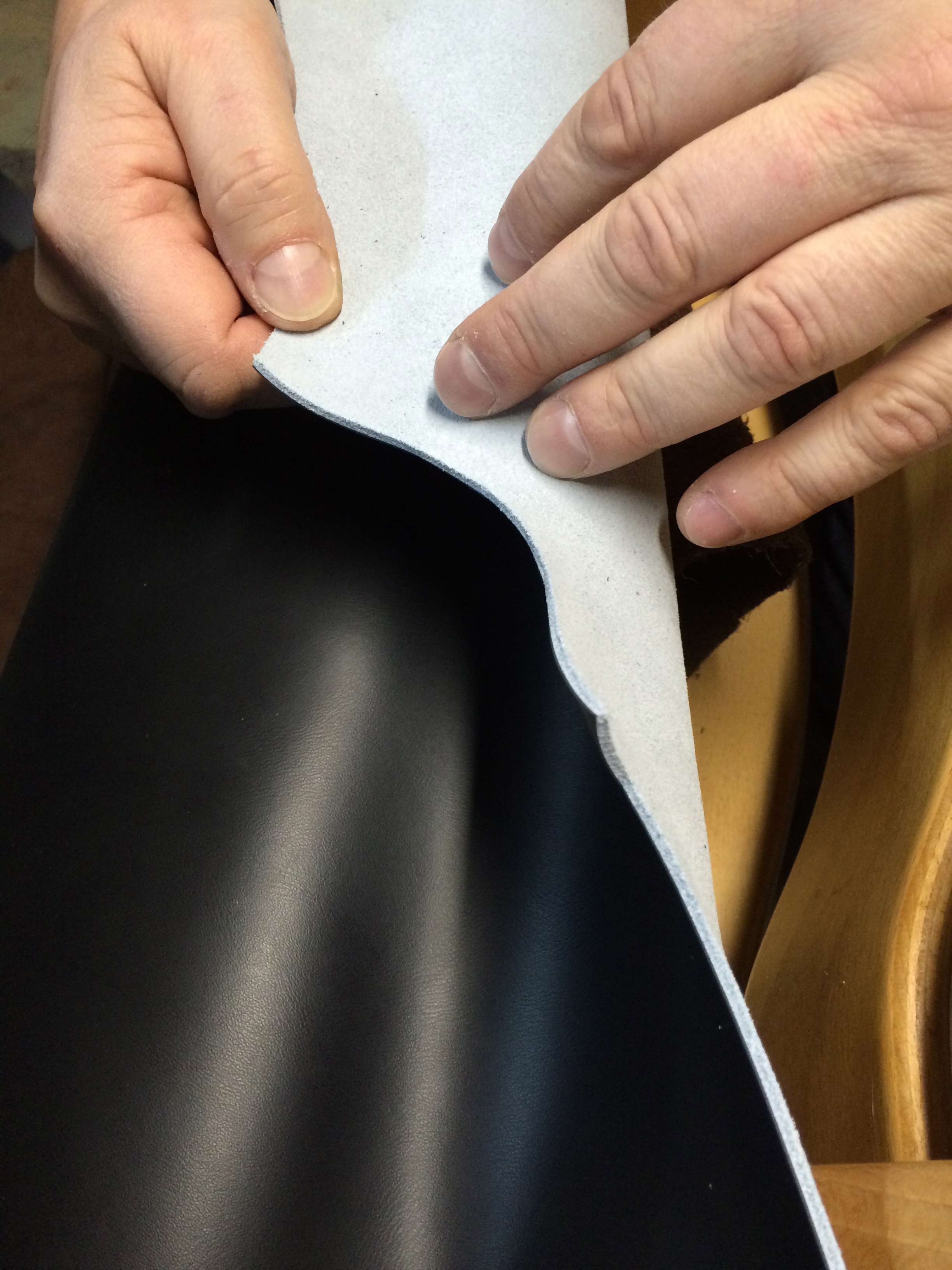
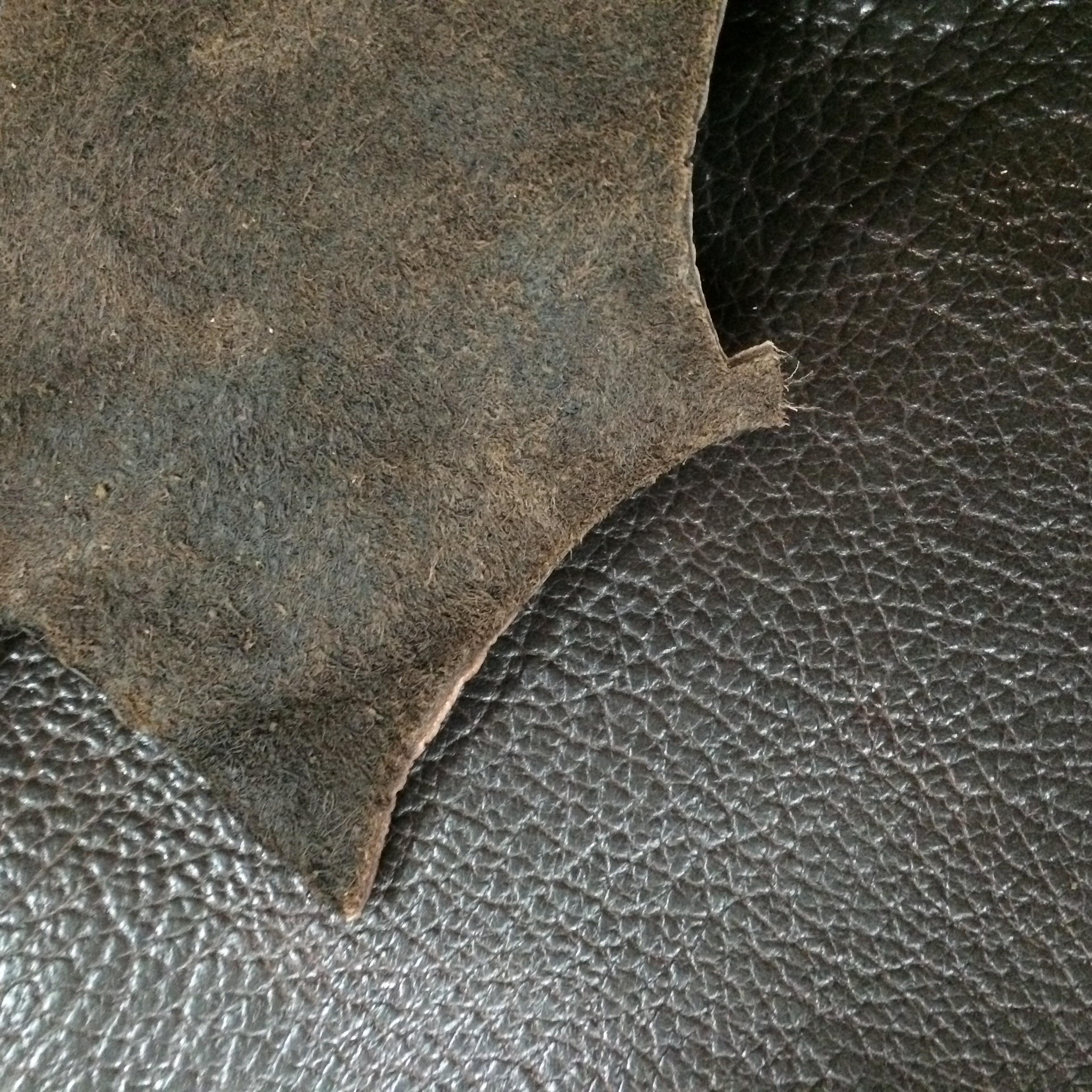
One type of leather that is not used at Scandic is polyurethane coated leather:
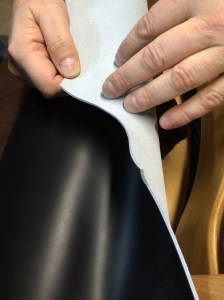
IMG_1058

The telltale white underside of polyurethane coated leatherIMG_1068

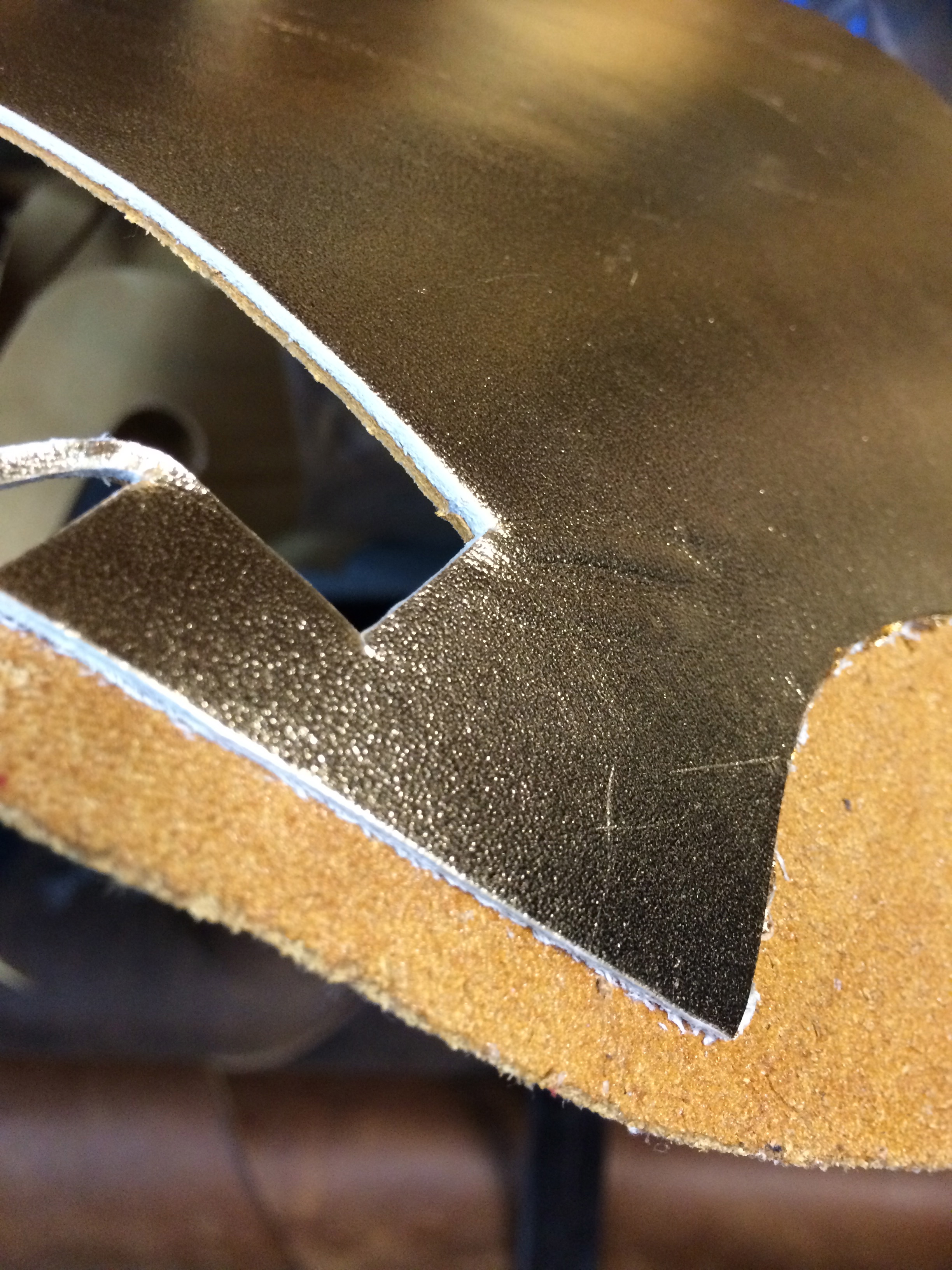
In contrast:

IMG_1070

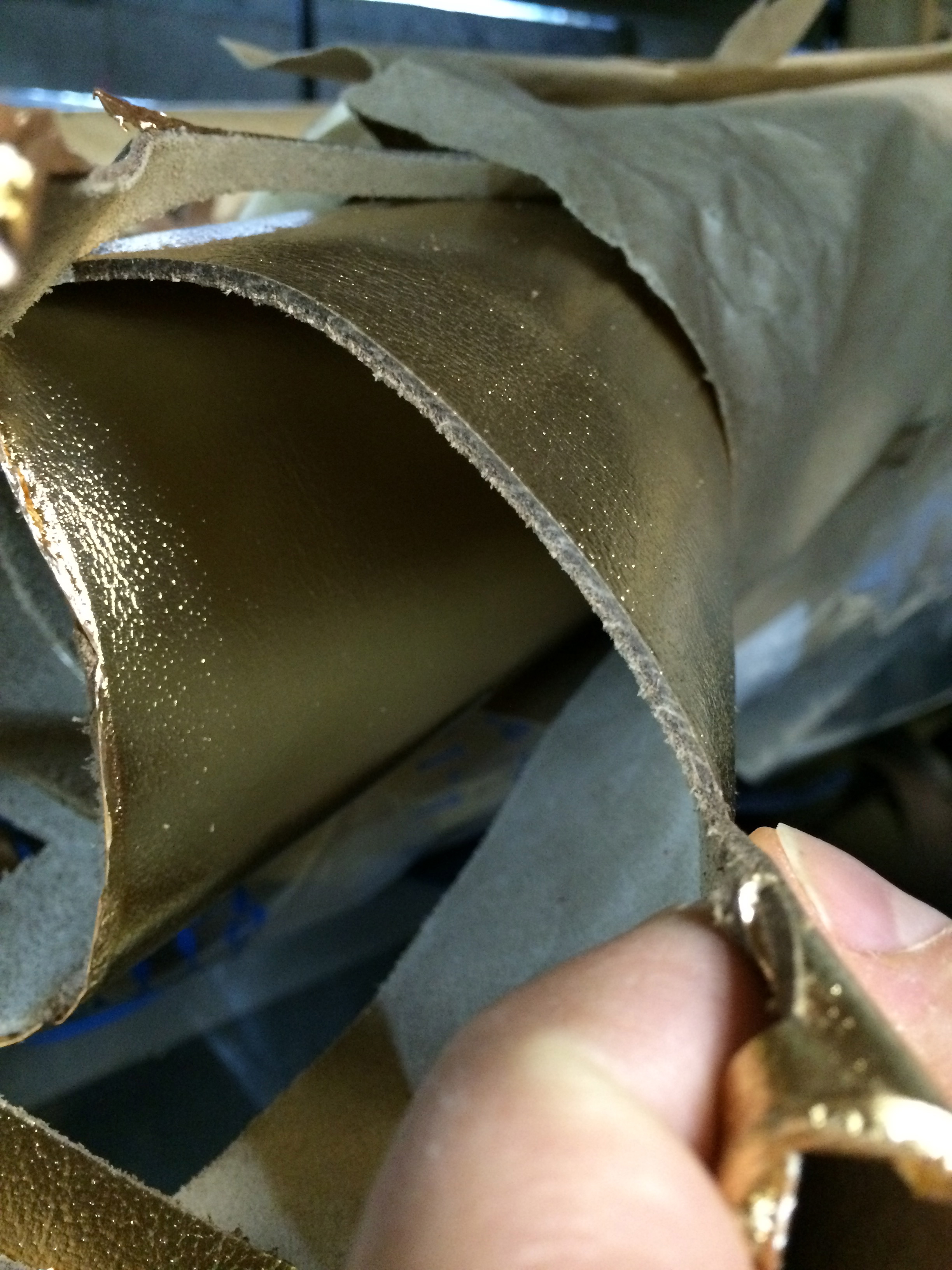
Metallic leather, collaboratively developed by Scandic and a Massachusetts based company.

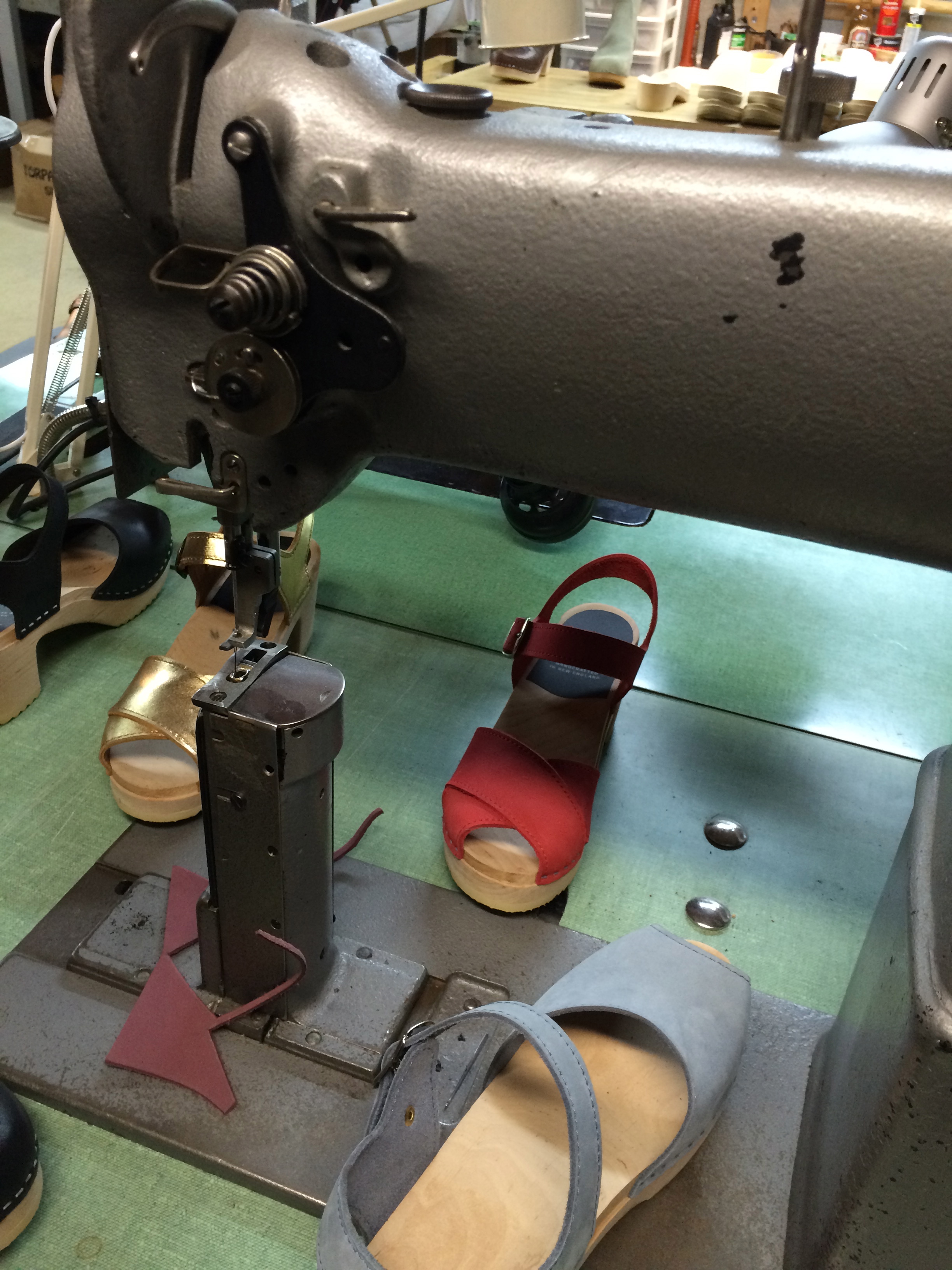
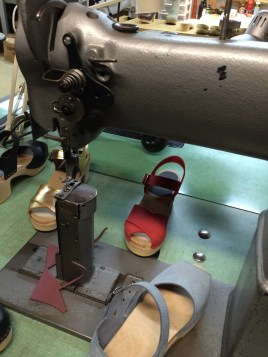
Individual leather pieces are then skived and sewn together using both single and double needle flat bed sewing machines, depending on shoe style.
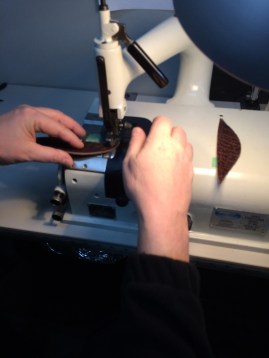
IMG_1111

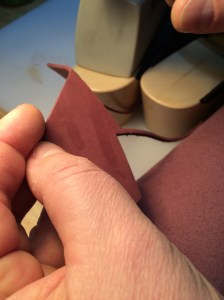
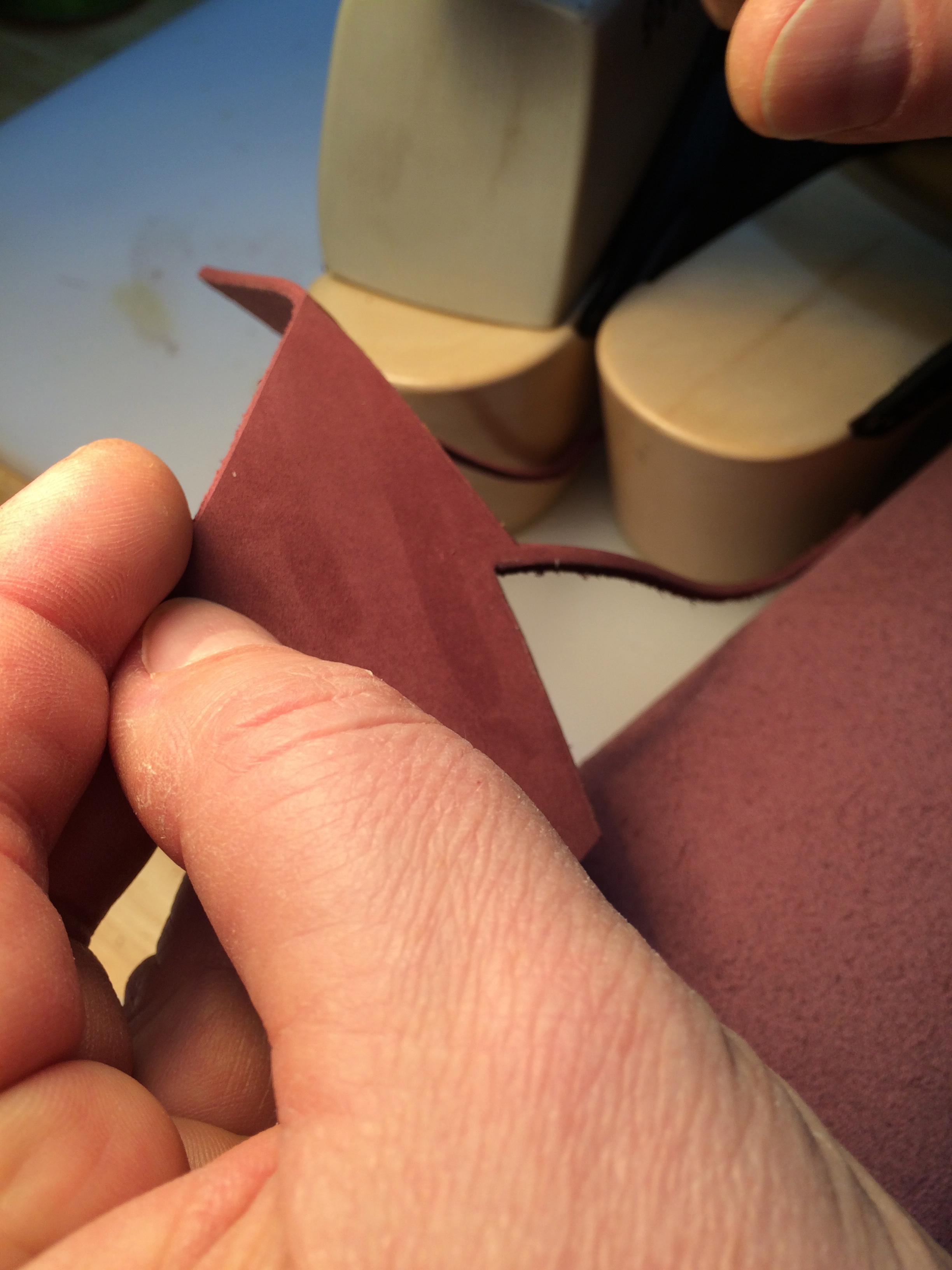
A piece of leather is skived (thinned) around the edges.
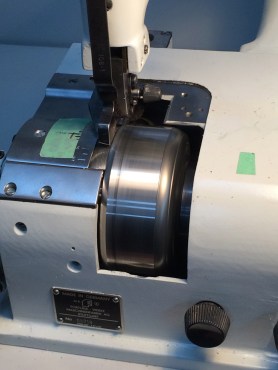
IMG_1109

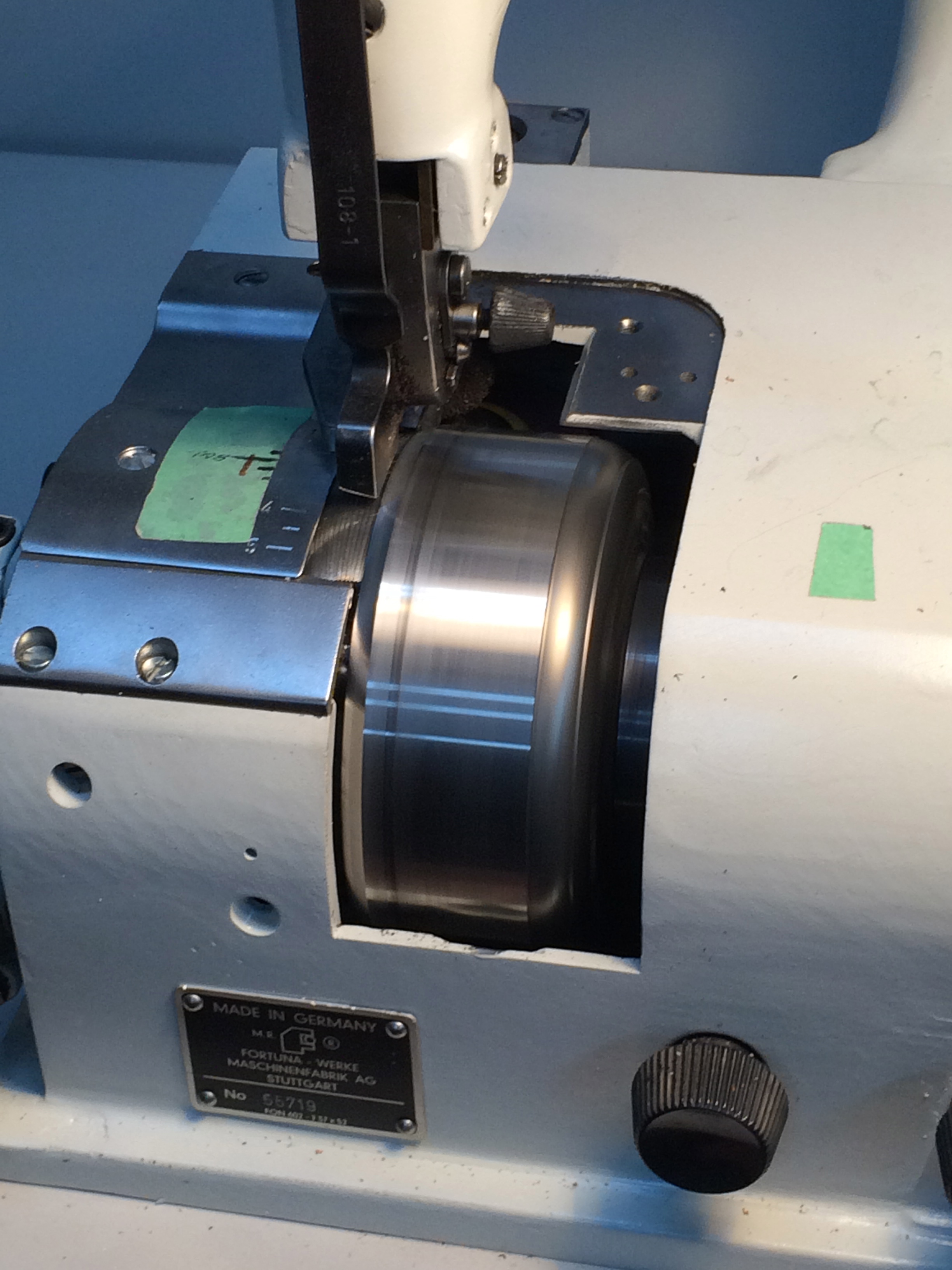
Skiving machine, made in Stuttgart, Germany
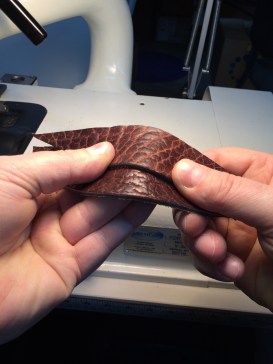
IMG_1114

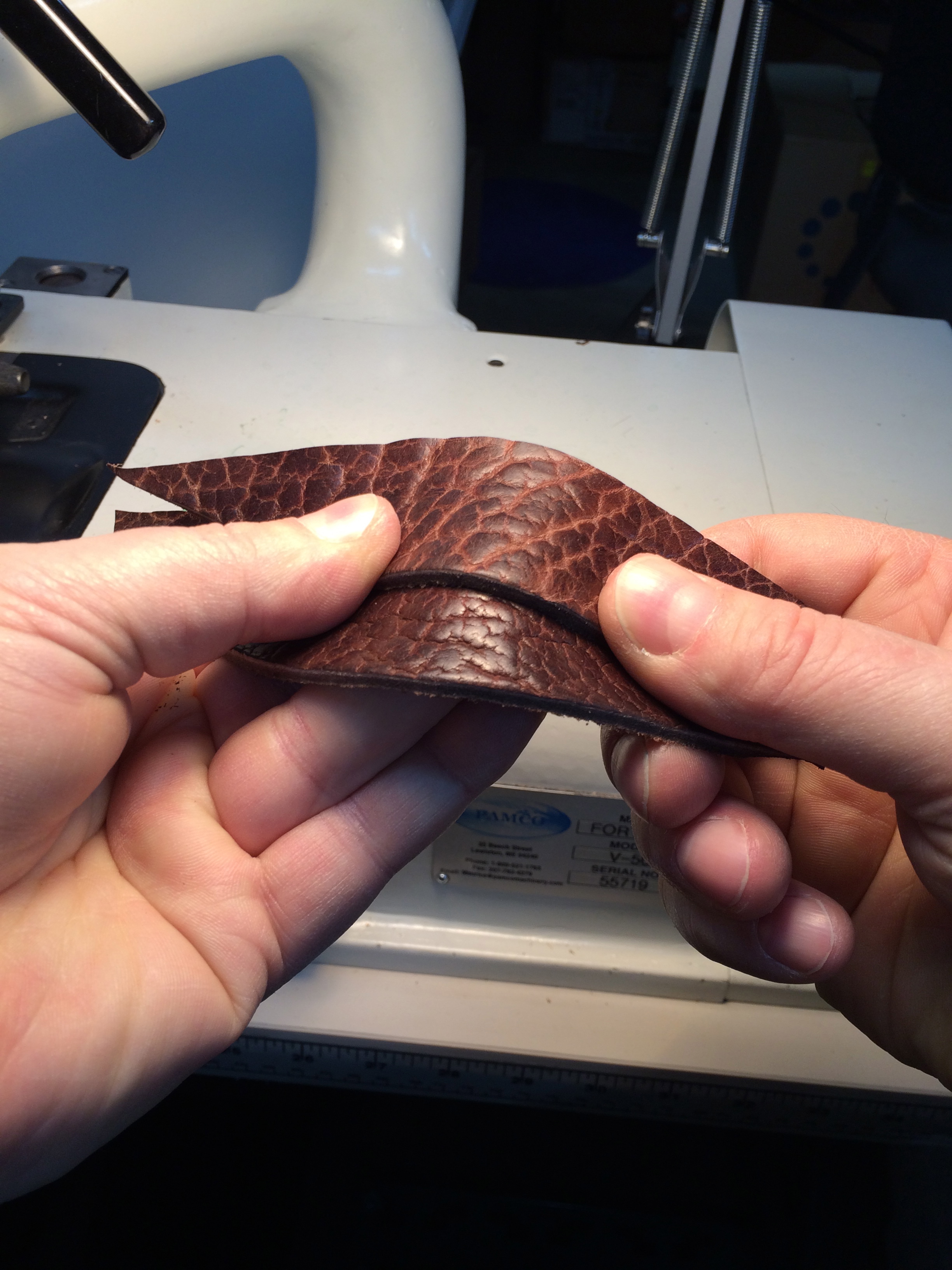
Two overlapping leathers, both unskived.
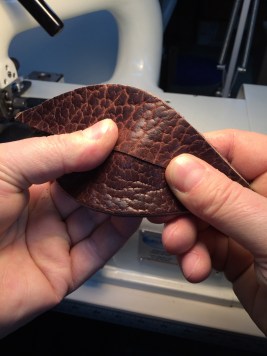
IMG_1113

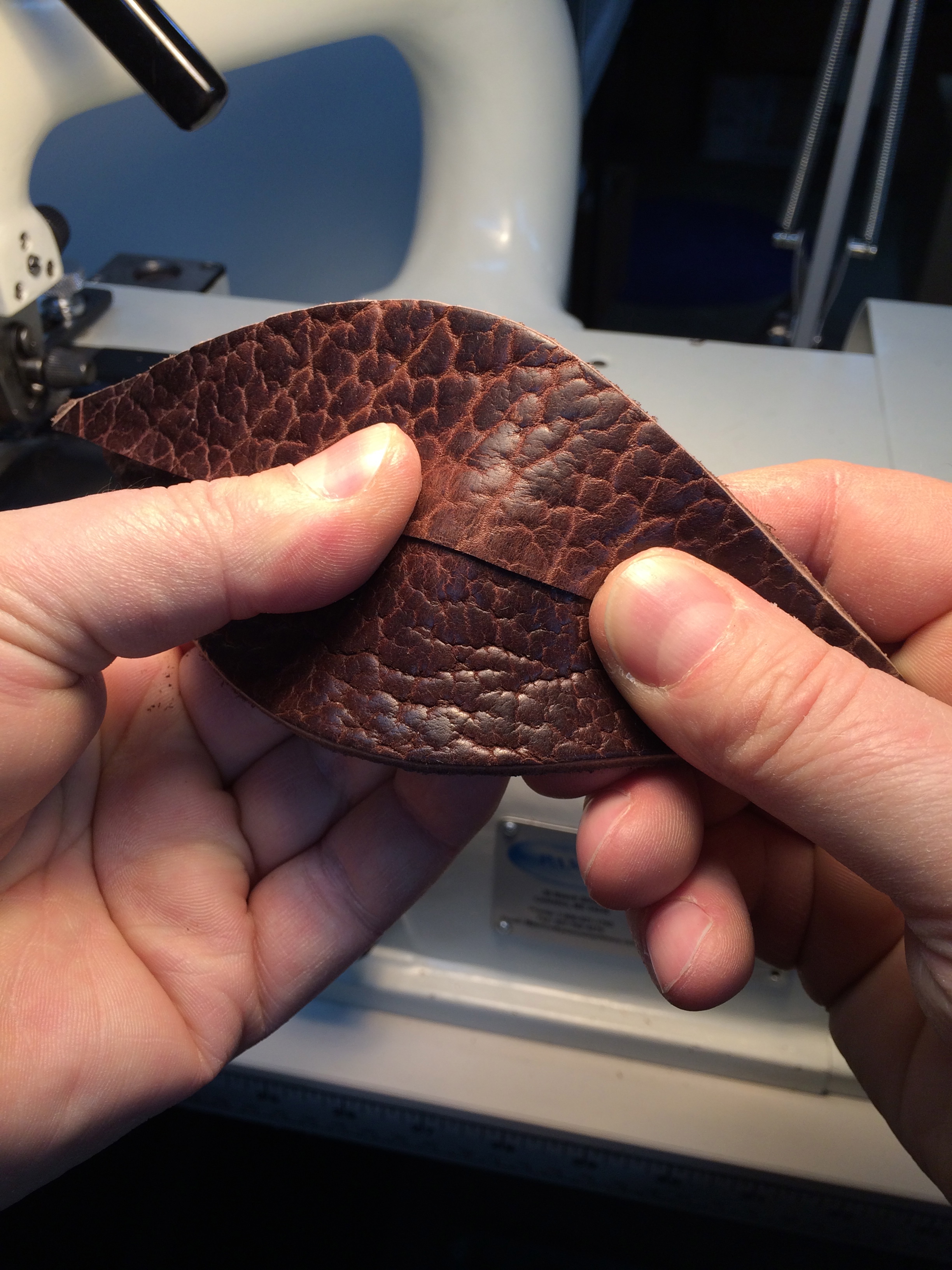
Here, the overlapping piece is skived to create a more streamlined appearance – an extra step overlooked by many manufacturers.
IMG_1074

This Singer dates back to the 1970’s and is built to last, unlike many of the newer products on the market today.

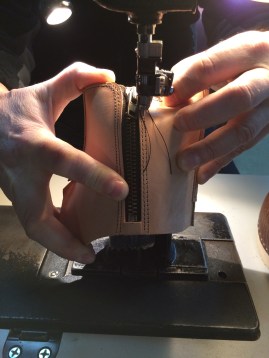
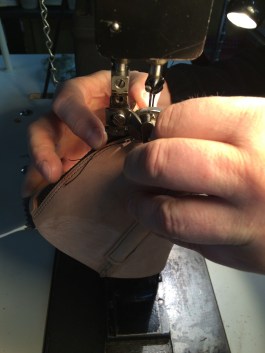
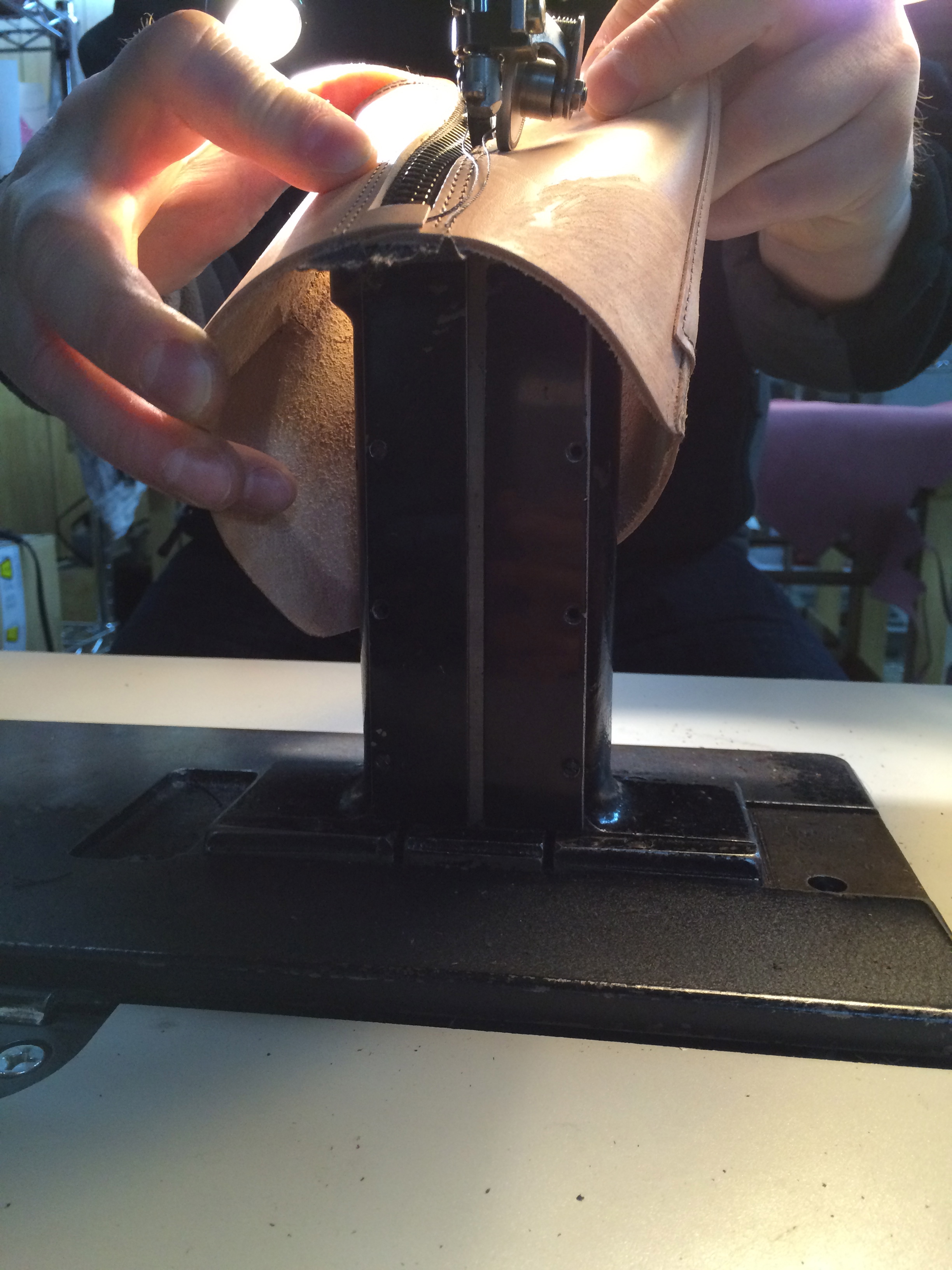
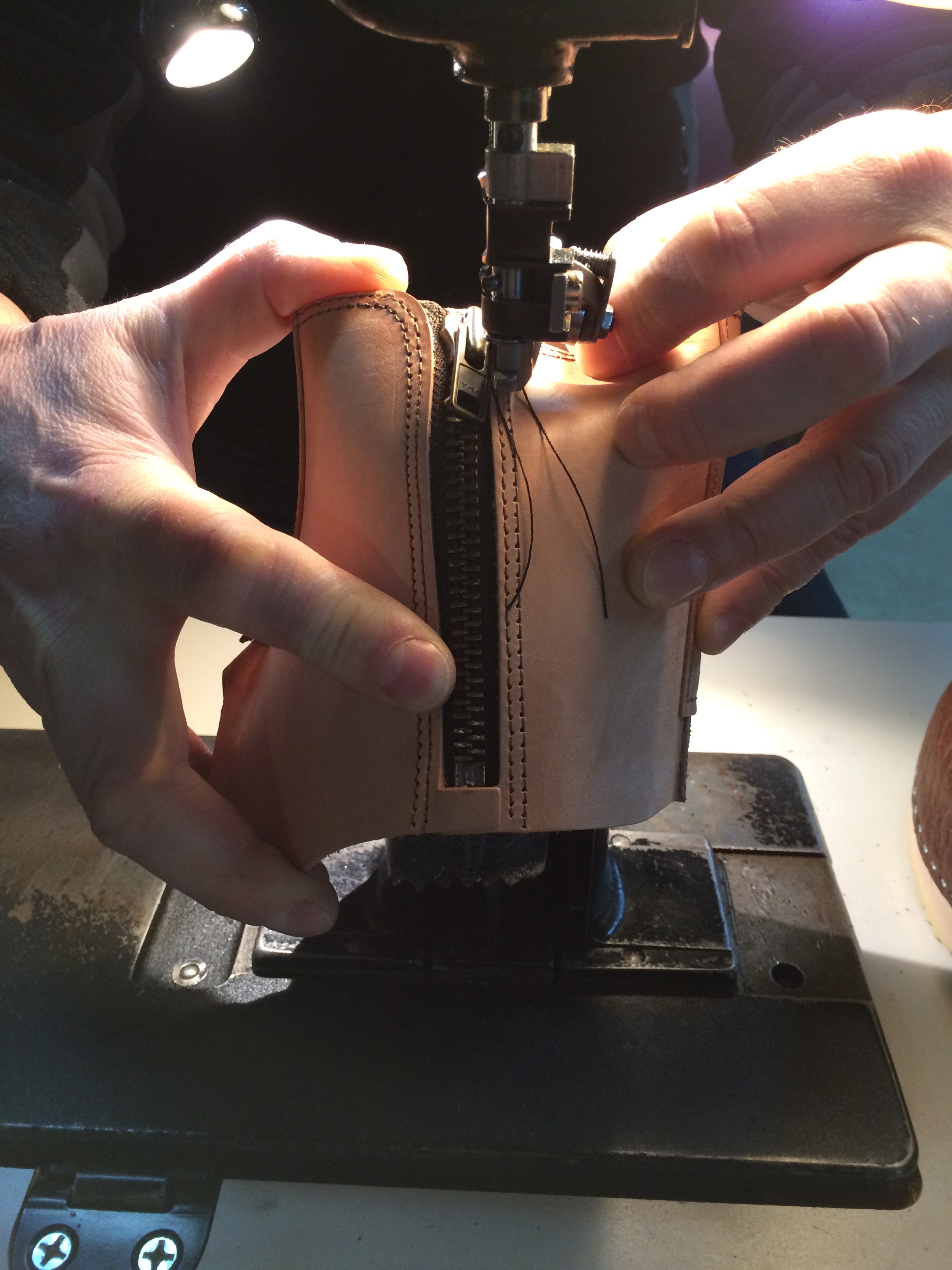
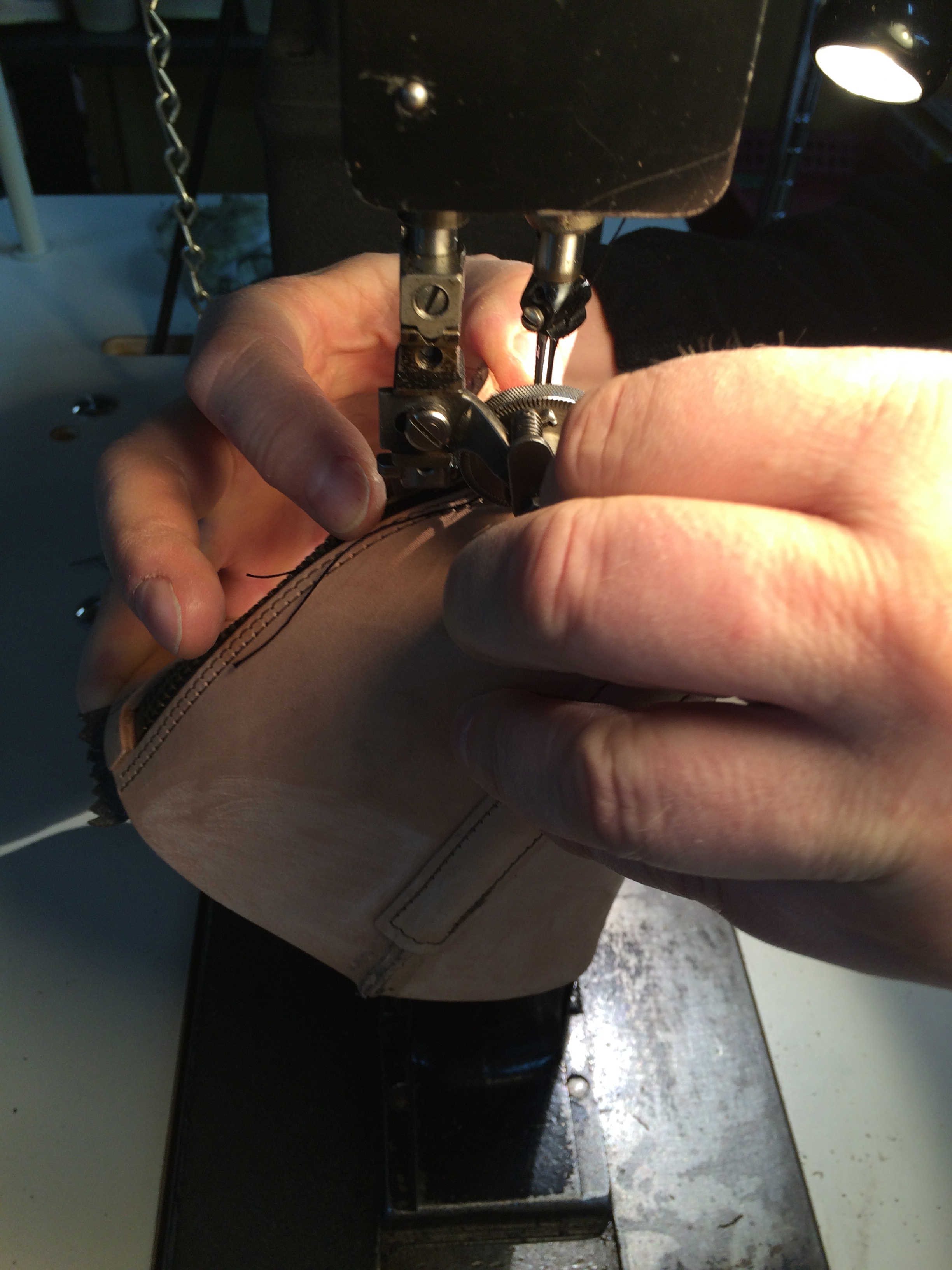
A double needle post bed is necessary for boot construction:

IMG_1080

IMG_1079

IMG_1081

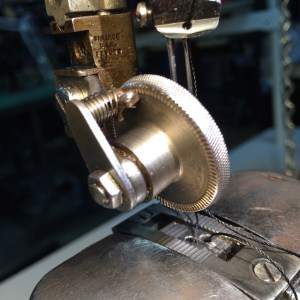
Minute adjustments can be made with a roller pressure foot, enabling fine details.  Delicate maneuvering is a must.

A roller pressure foot allows for minute adjustments, enabling finer details. Delicate maneuvering is a must.

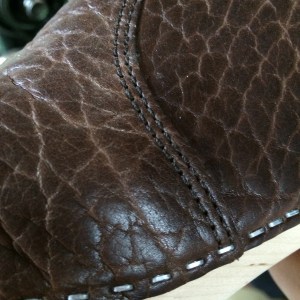
The double stitch prevents over stretching of leather:
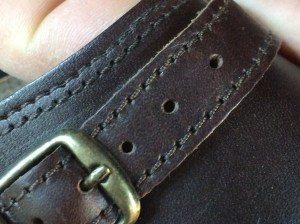
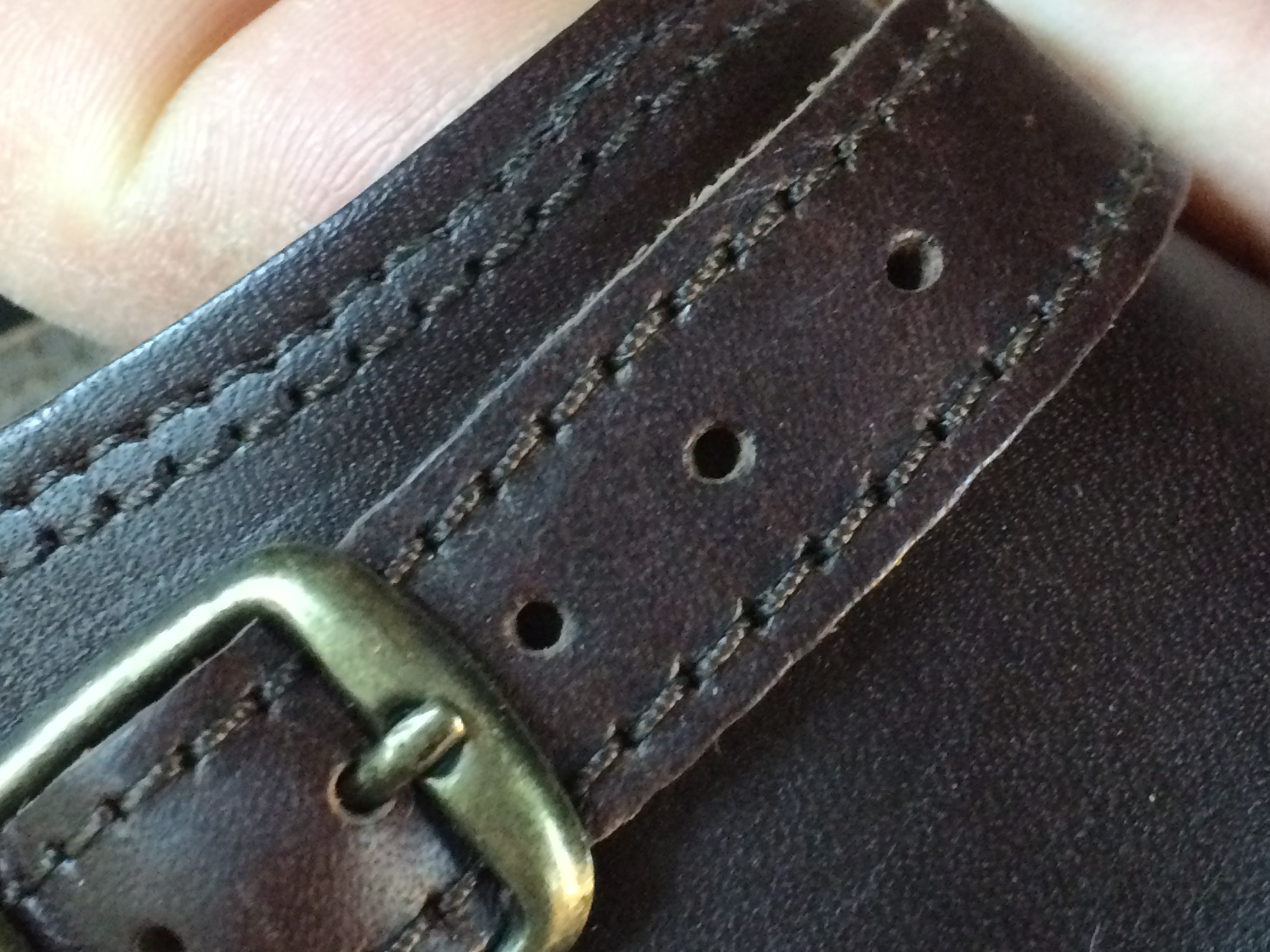
IMG_1032

Double stitch on edge, single stitch on buckle strap

Double stitch on edge, single stitch on buckle strap

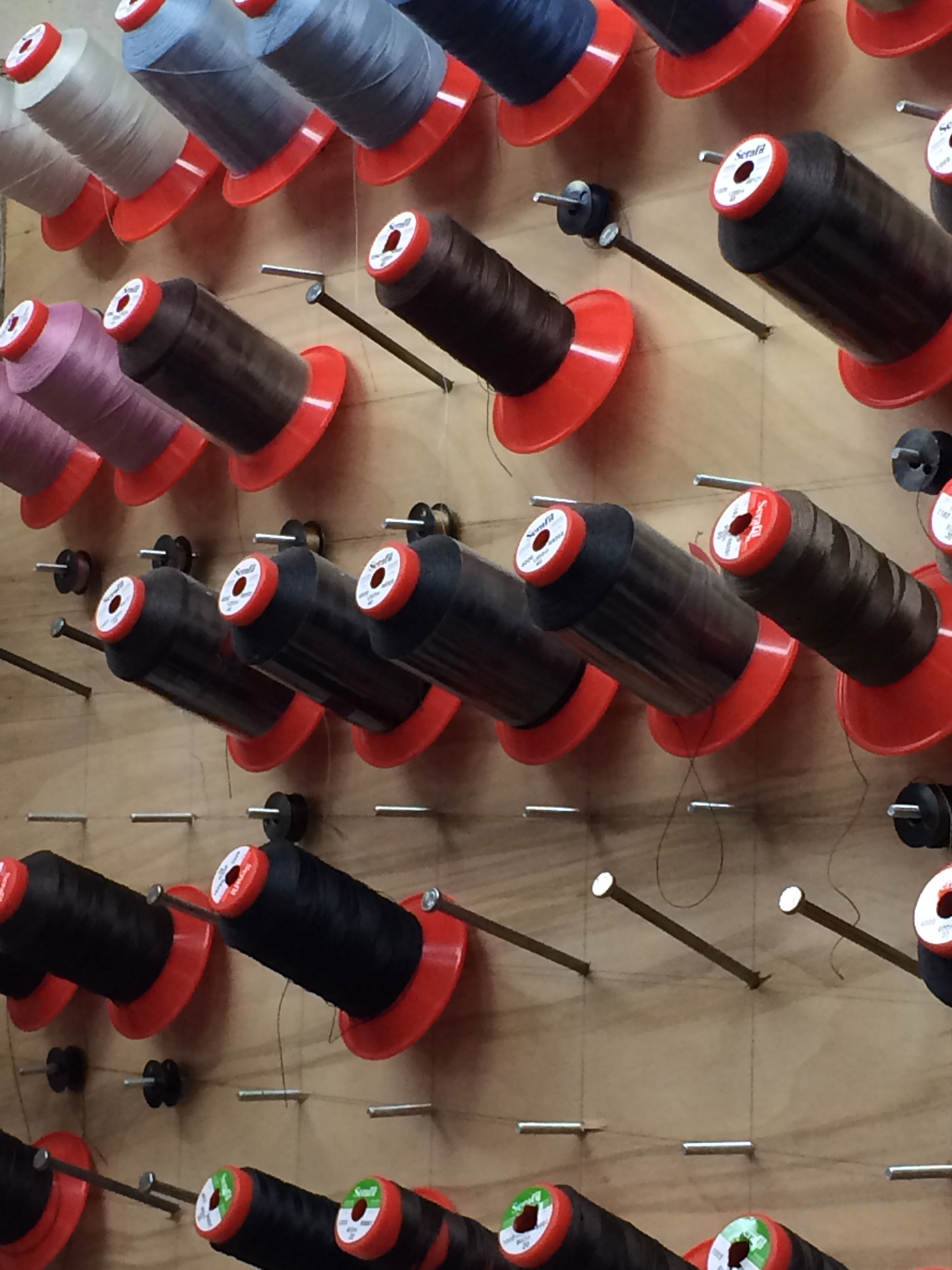
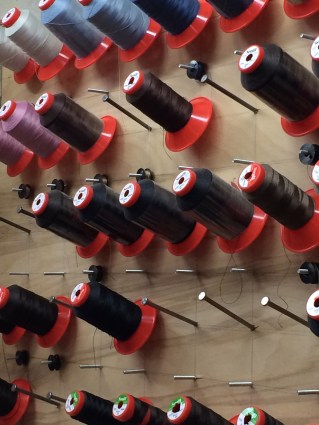
Colorful rolls of spool await threading:
IMG_1091

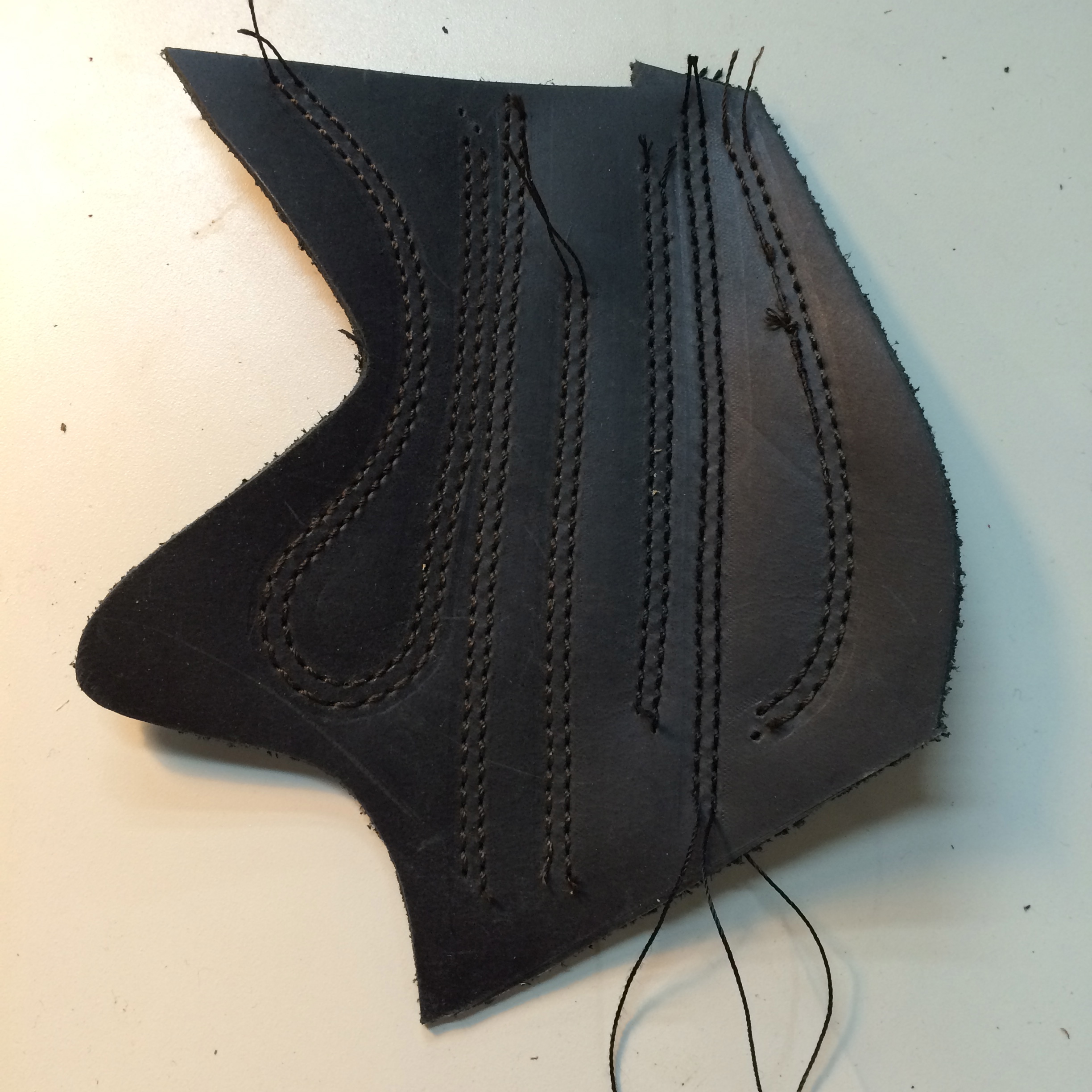
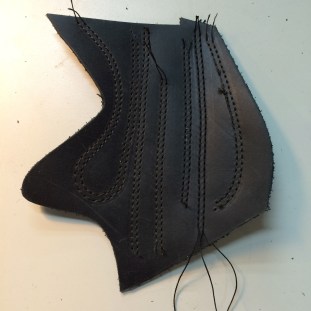
Small piece of scrap leather used as a test run, to ensure proper functioning of machines prior to sewing:
IMG_1034

Prior to curing, the leather is attached with an oilless handgun:
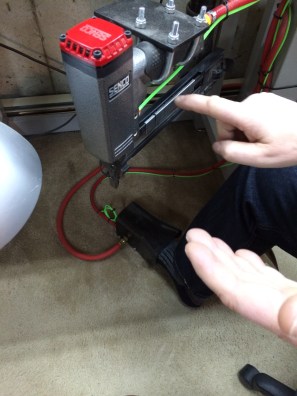
IMG_1103

Any mistakes made at this stage of production result in hours of lost time, as construction must be started from scratch.
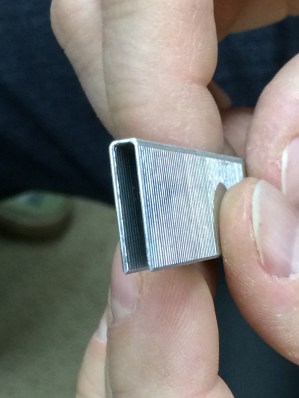
IMG_1105

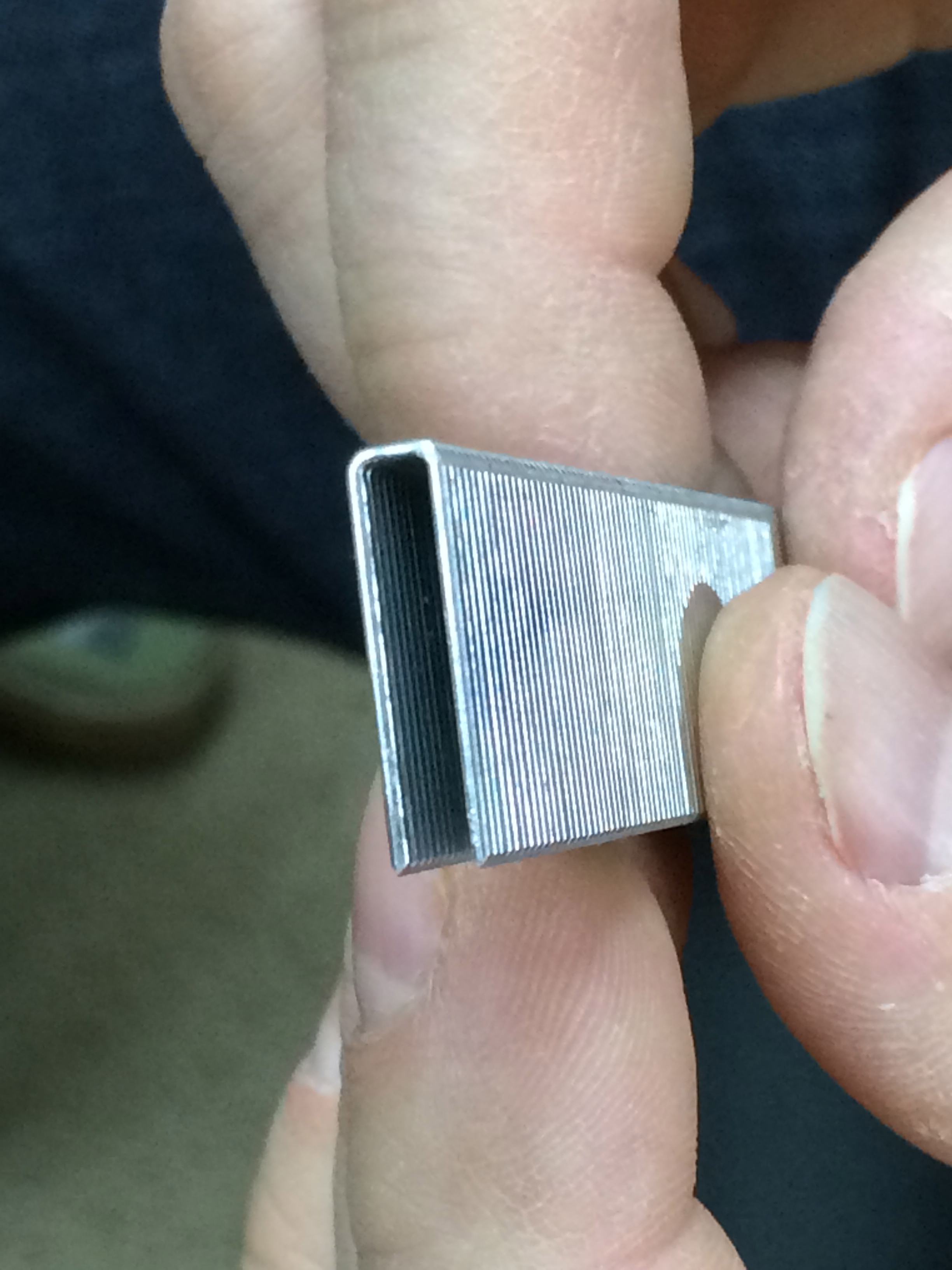
The staples used are 3/4 of an inch in width.  Impeccable spacing and alignment have become the Scandic trademark.

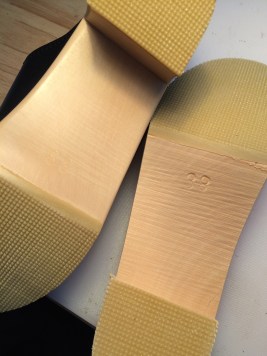
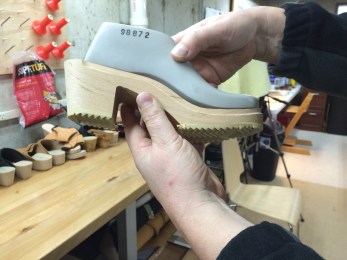
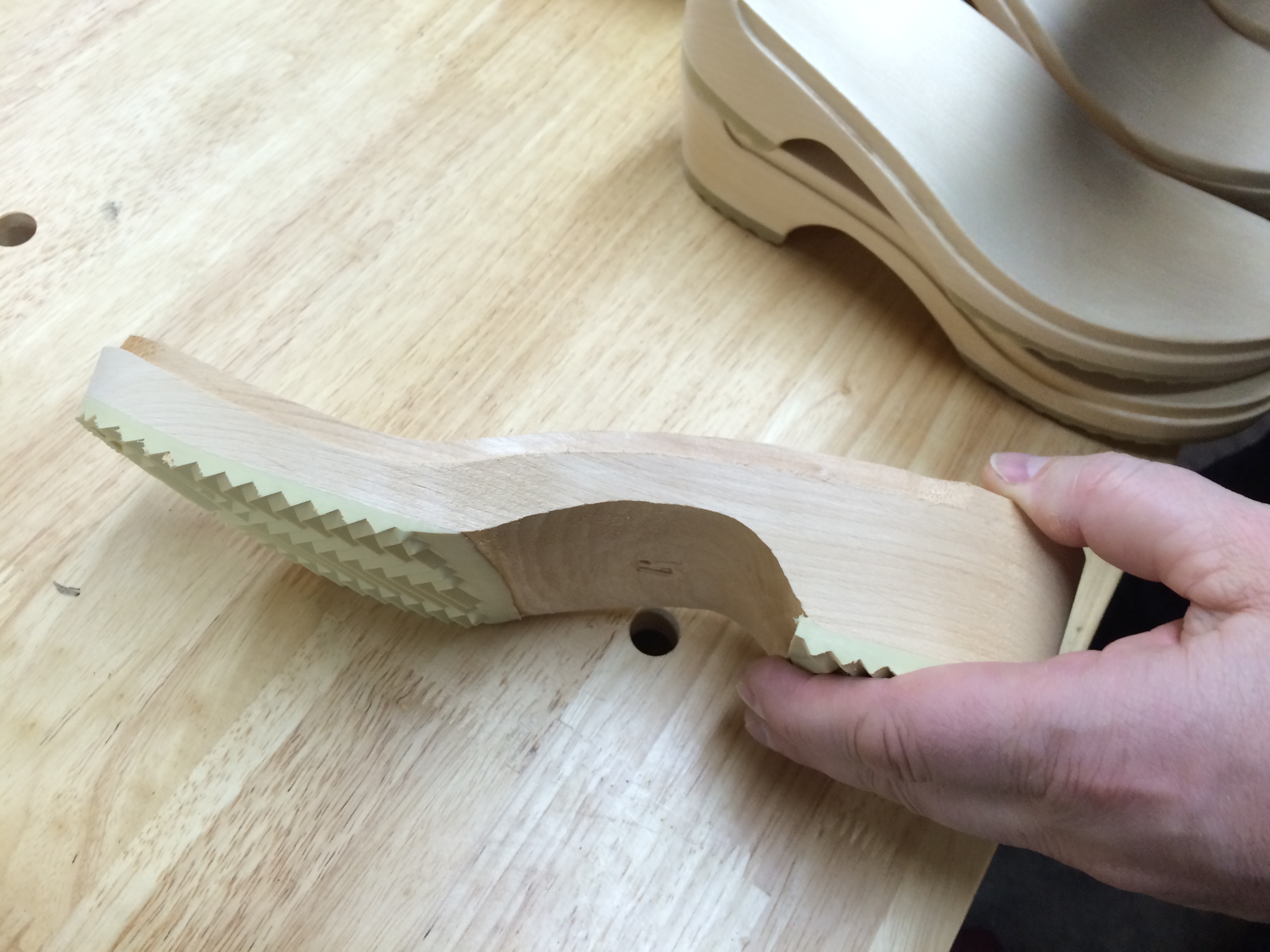
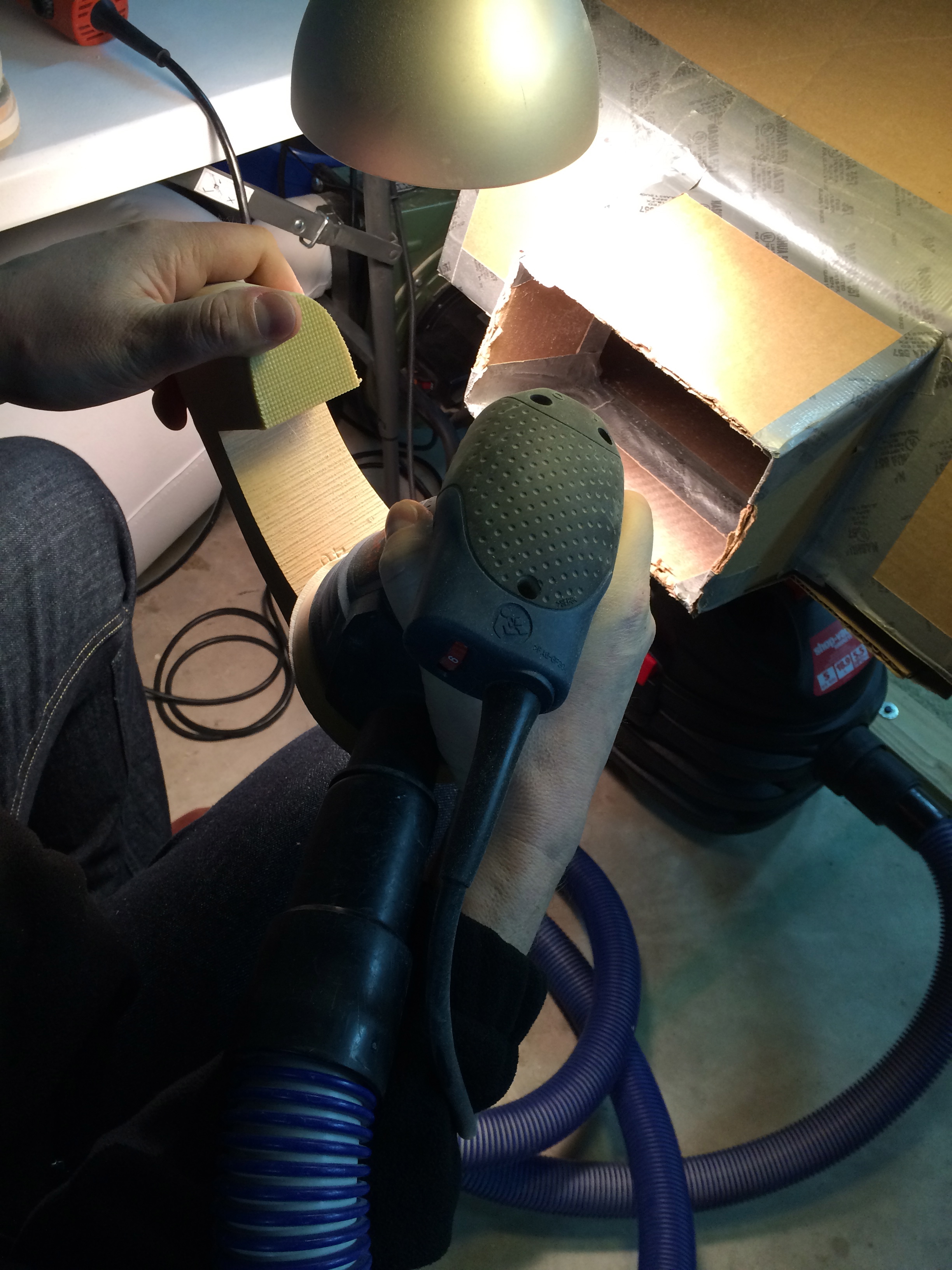
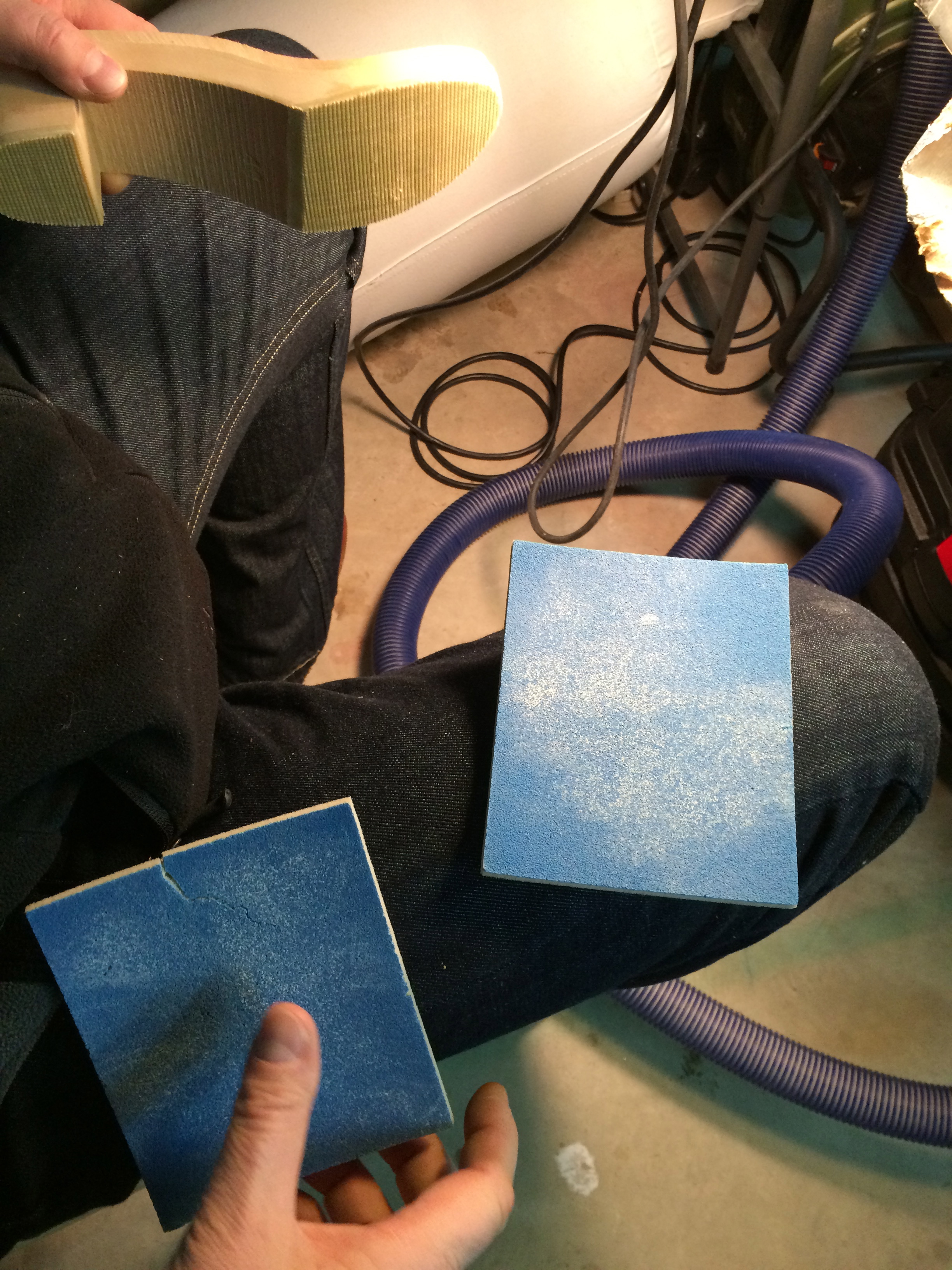
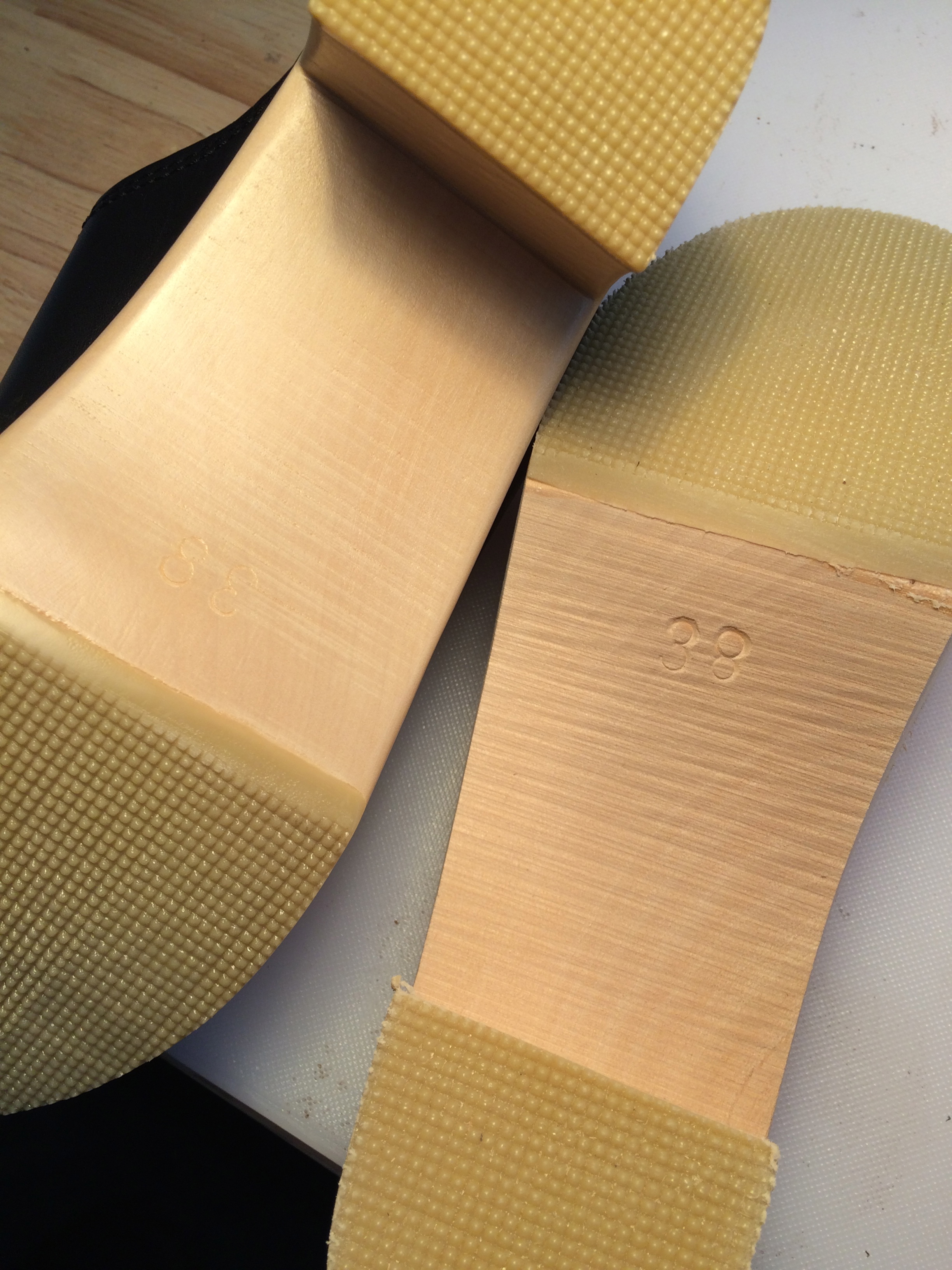
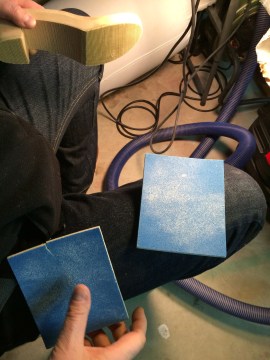
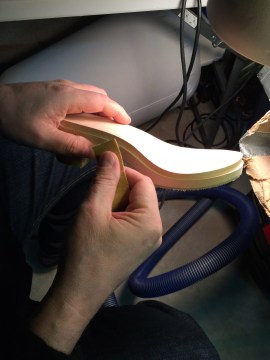
Heels are sanded first by tool, then 3 different types of sanding grades and finished with a water based varnish, made in VT.  A minimum of two coats of varnish are applied, with a sanding between the coats:
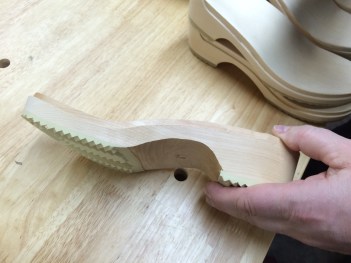
Wood soles are sourced directly from Sweden.
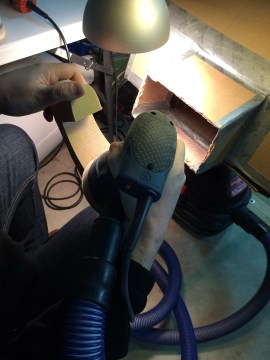
Wood soles are sourced directly from Sweden.
IMG_1097

IMG_1100

IMG_1099

IMG_1106

The difference between a sanded, varnished sole (left) and a rough one (right). Most clog manufacturers leave soles unfinished.

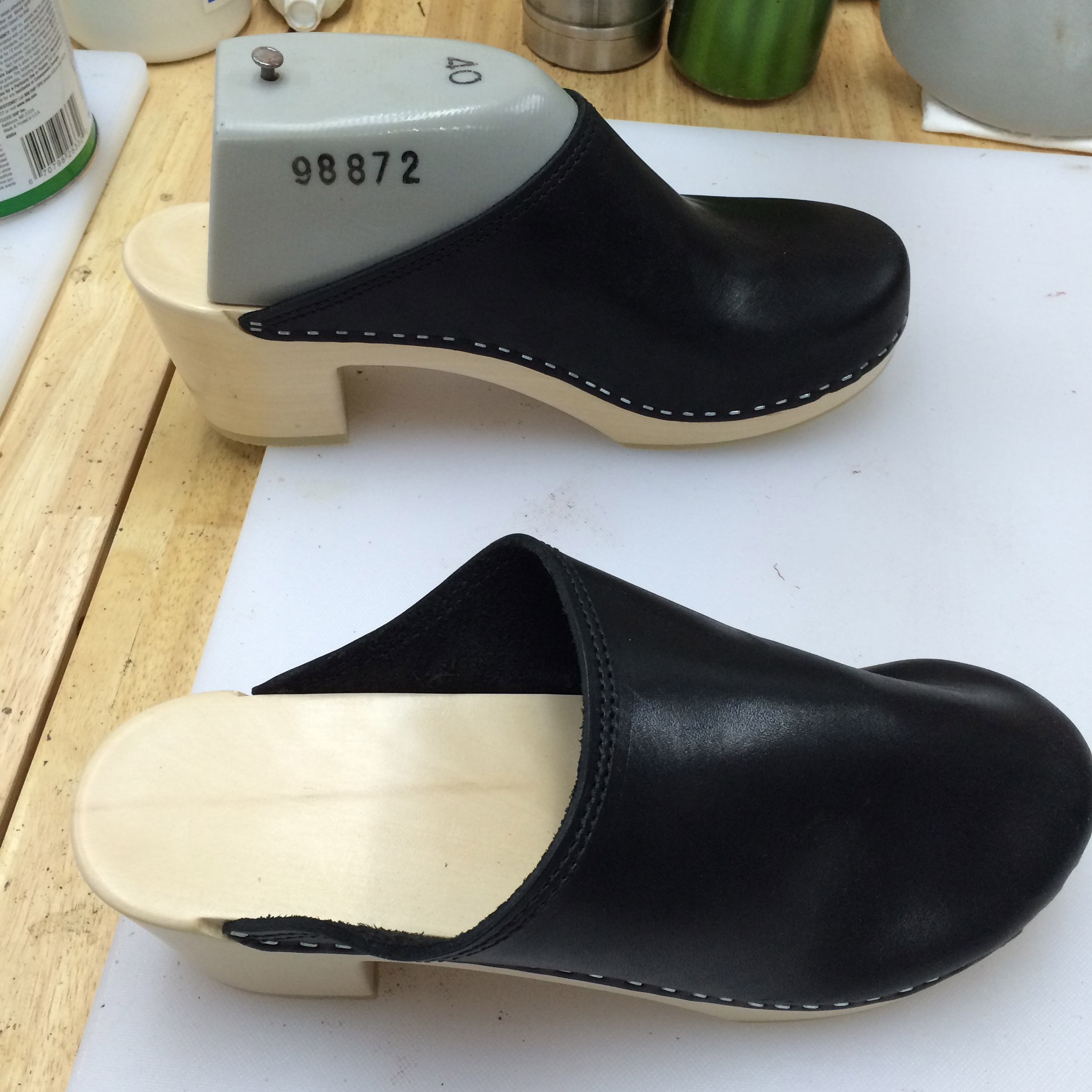
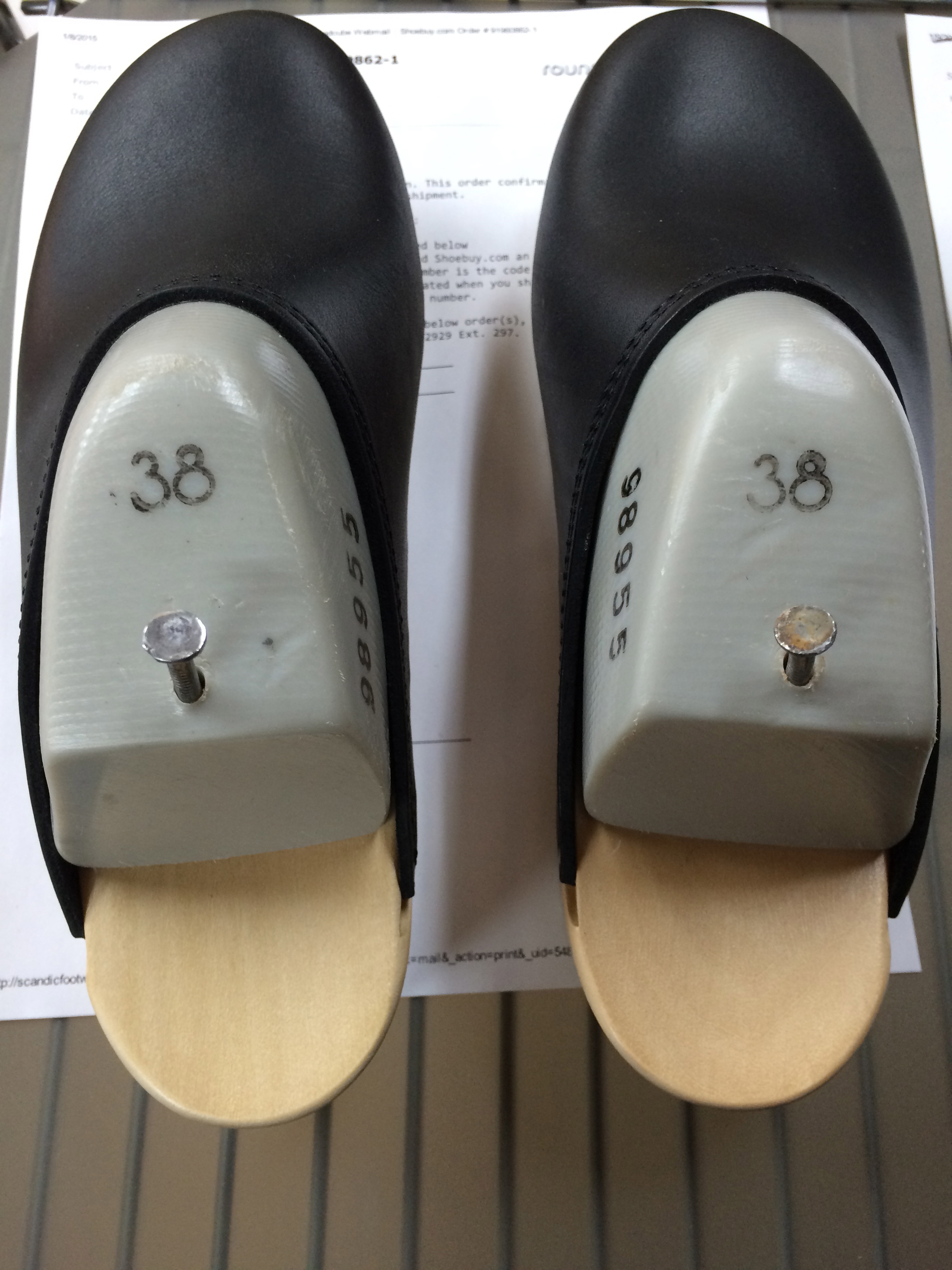
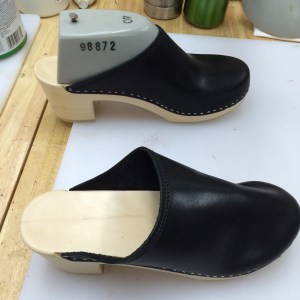
Proper curing is the final step in the process.  The leather is steamed and a last is inserted, cured into place with a nail and left to take shape:
IMG_1054

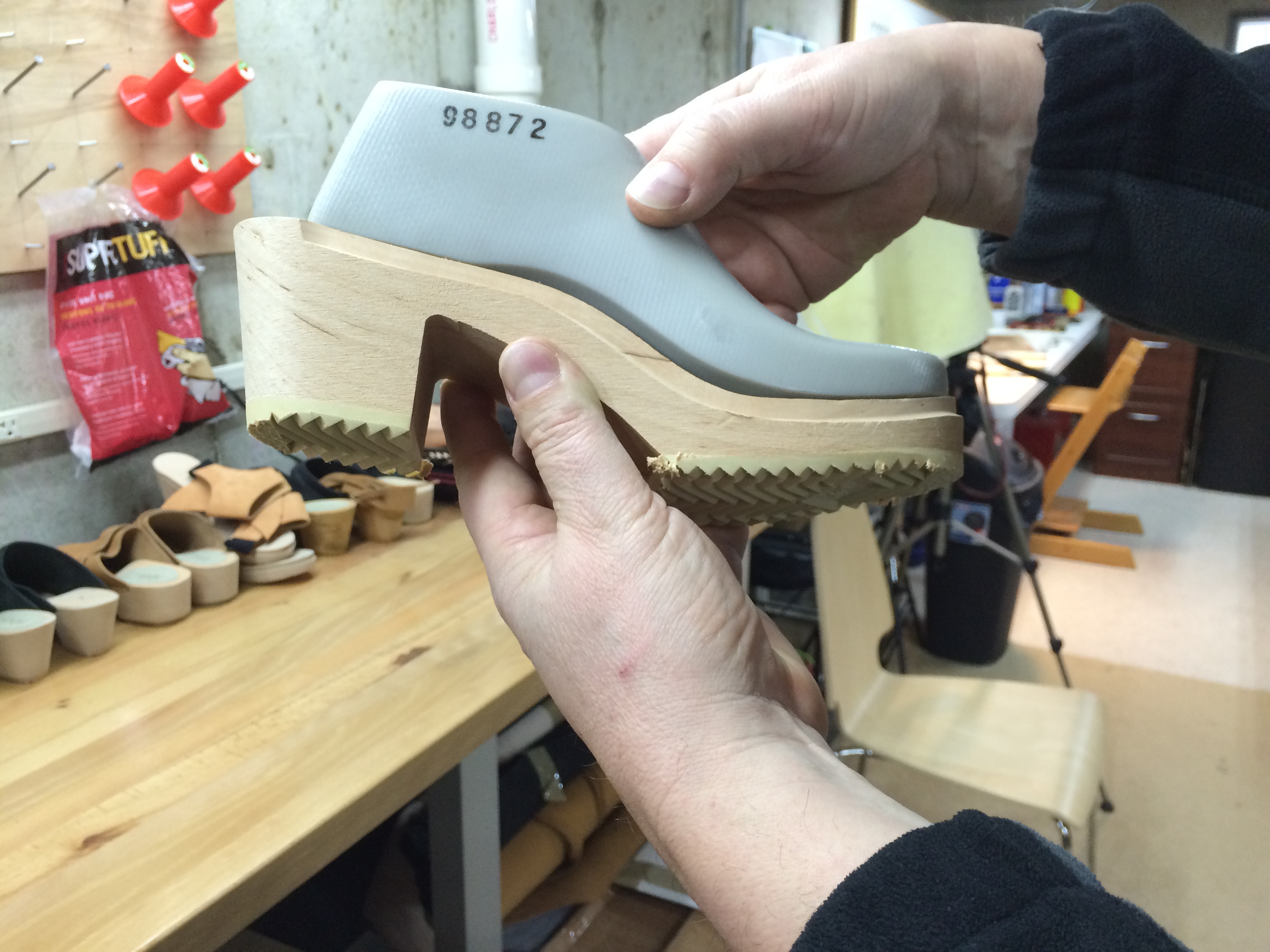
Lasts are made with a special type of plastic to endure high temperatures during the curing process, which typically takes about a day.

IMG_1095

Waiting to be shipped out

IMG_1027

The design for the shoe lasts are about 50 years old – tried and true.

Shoe lasts organized by size

Shoe lasts organized by size


Other noteworthy details:

IMG_1033

Zippers and other hardware are 100% brass, as opposed to commonly used brass plated aluminum.
IMG_1101

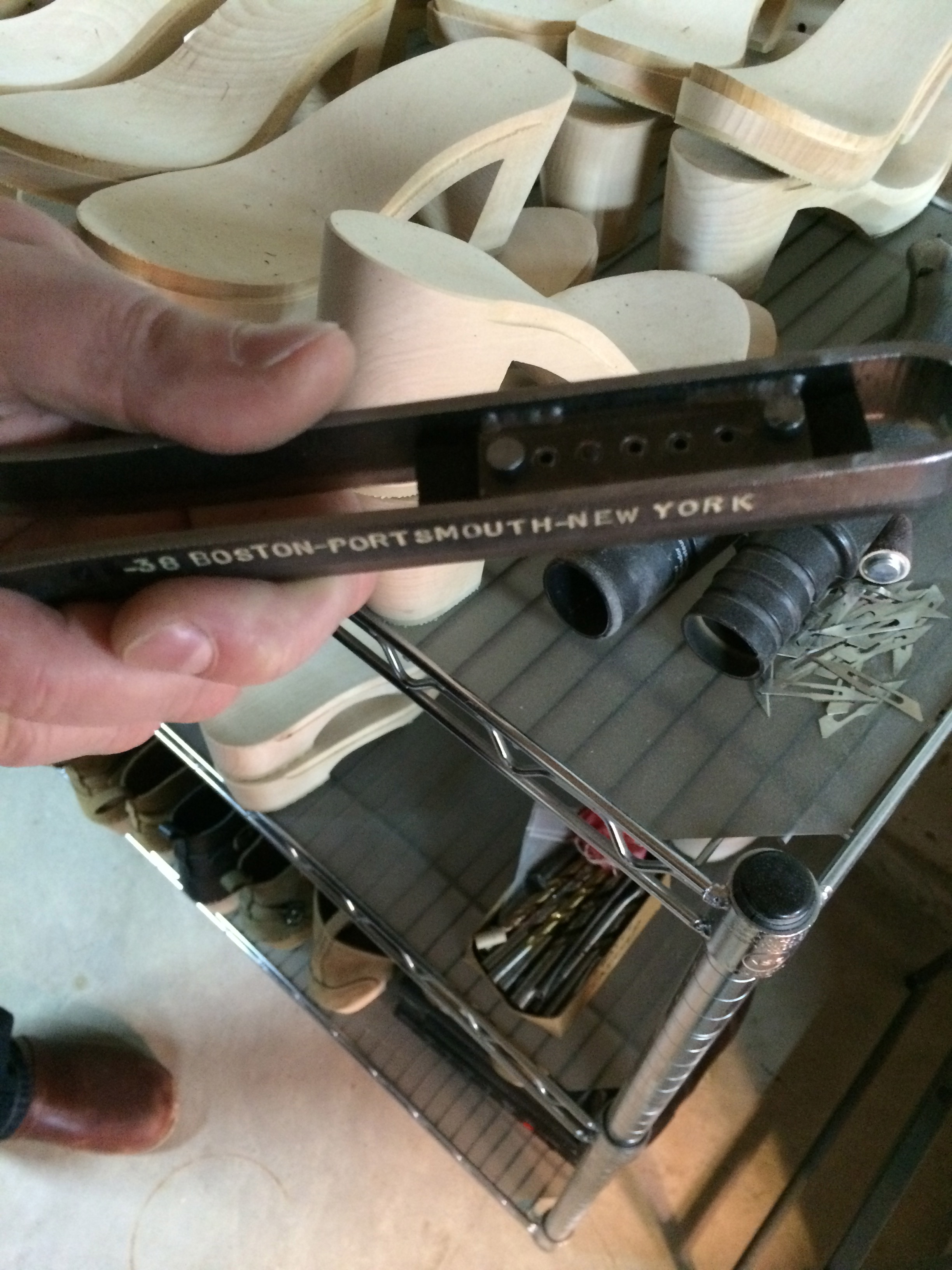
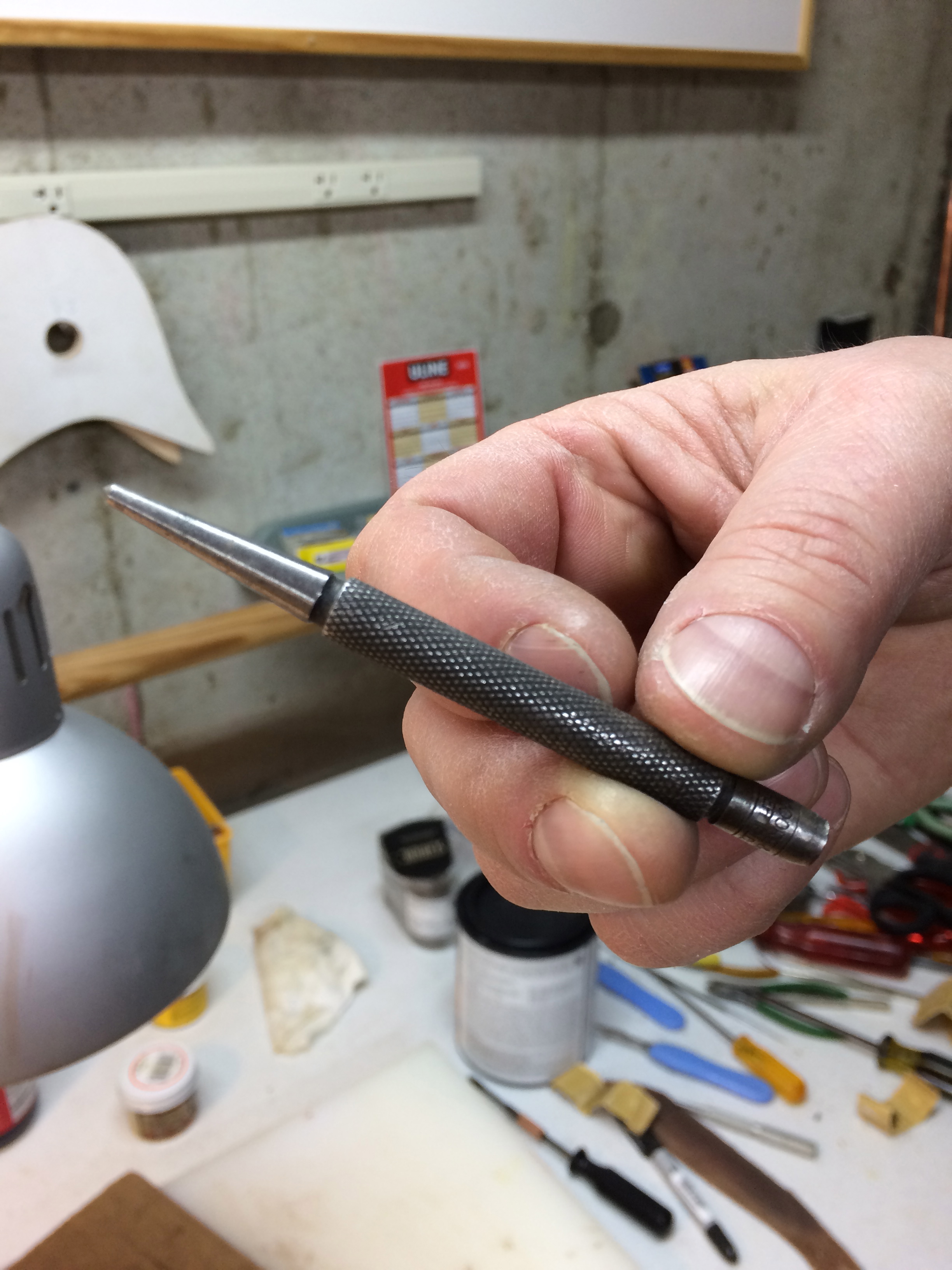
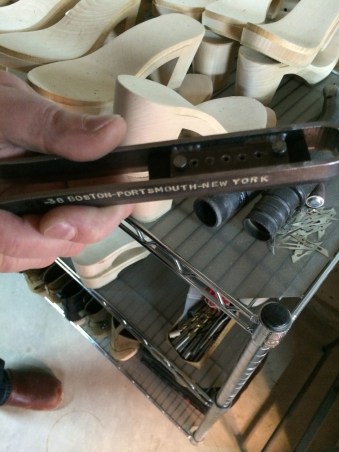
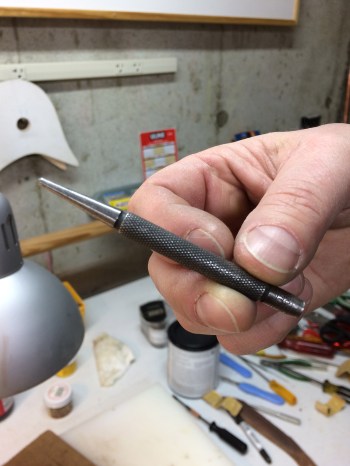
Tools used to craft the shoes are of excellent quality and often old.
IMG_1137

Center punch, made in MA circa 1950

IMG_1041

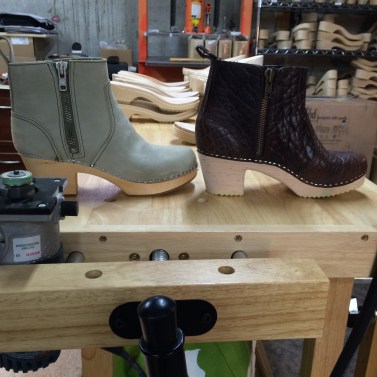
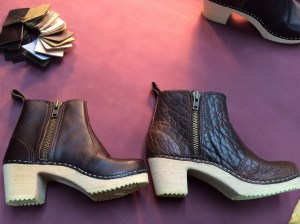
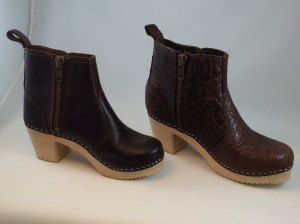
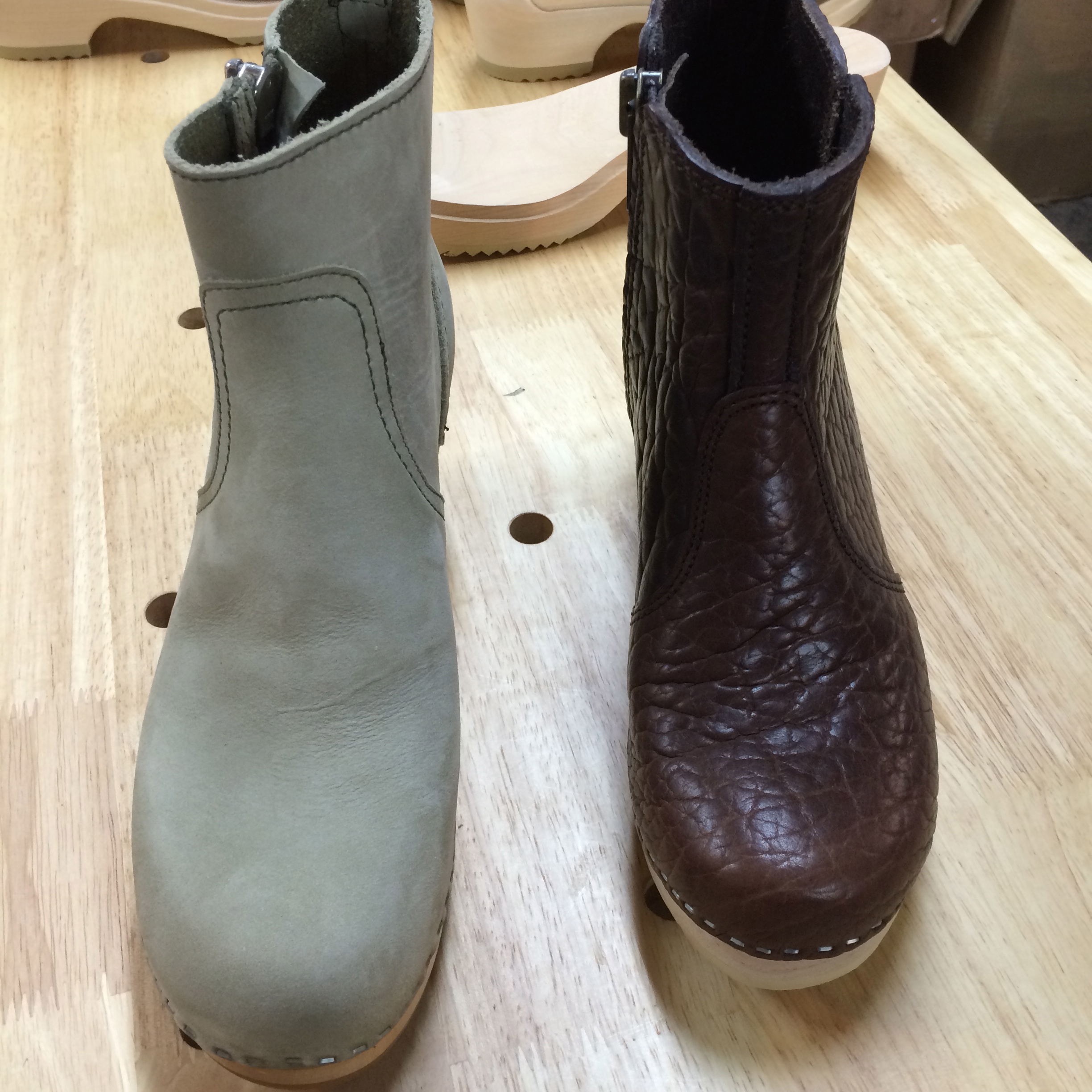
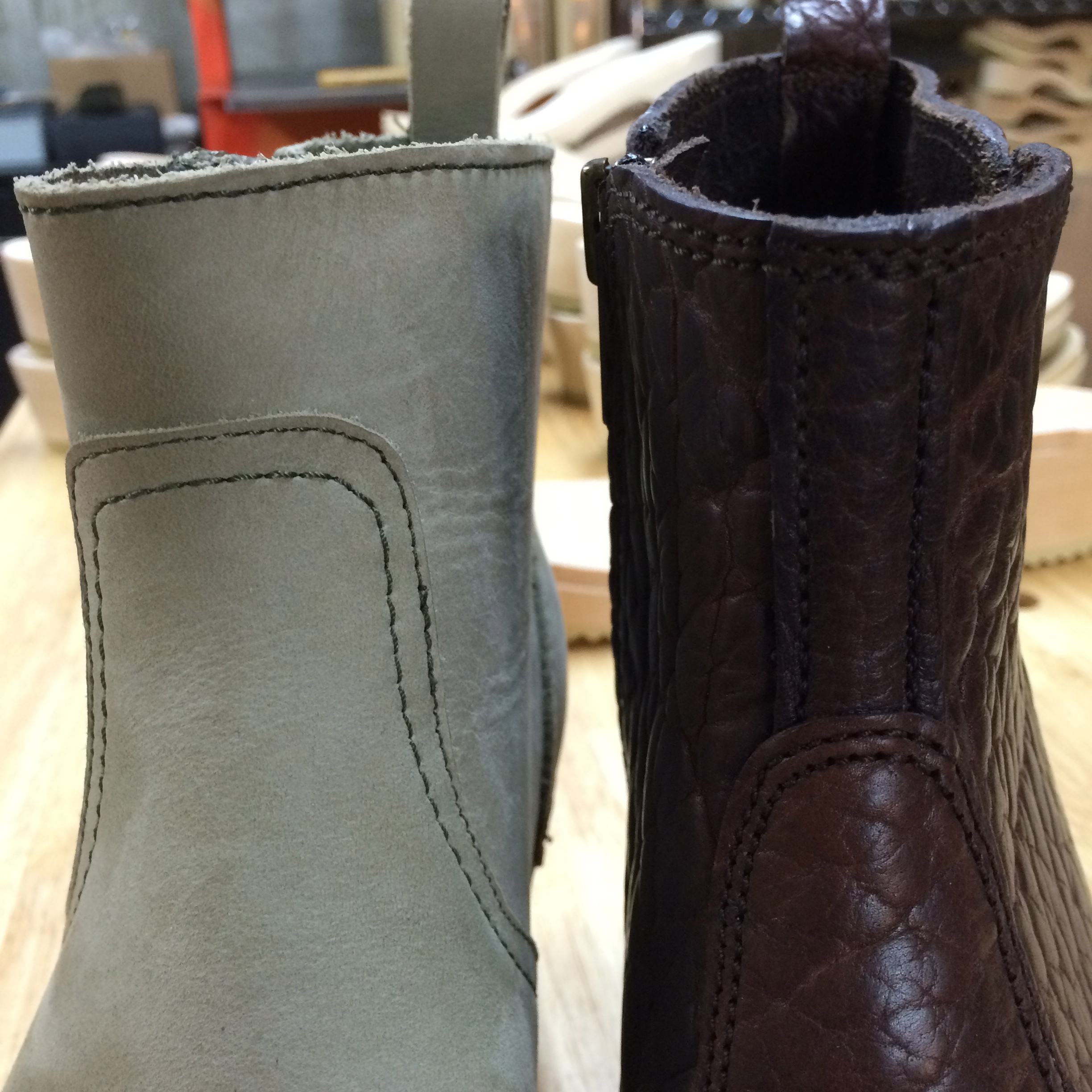
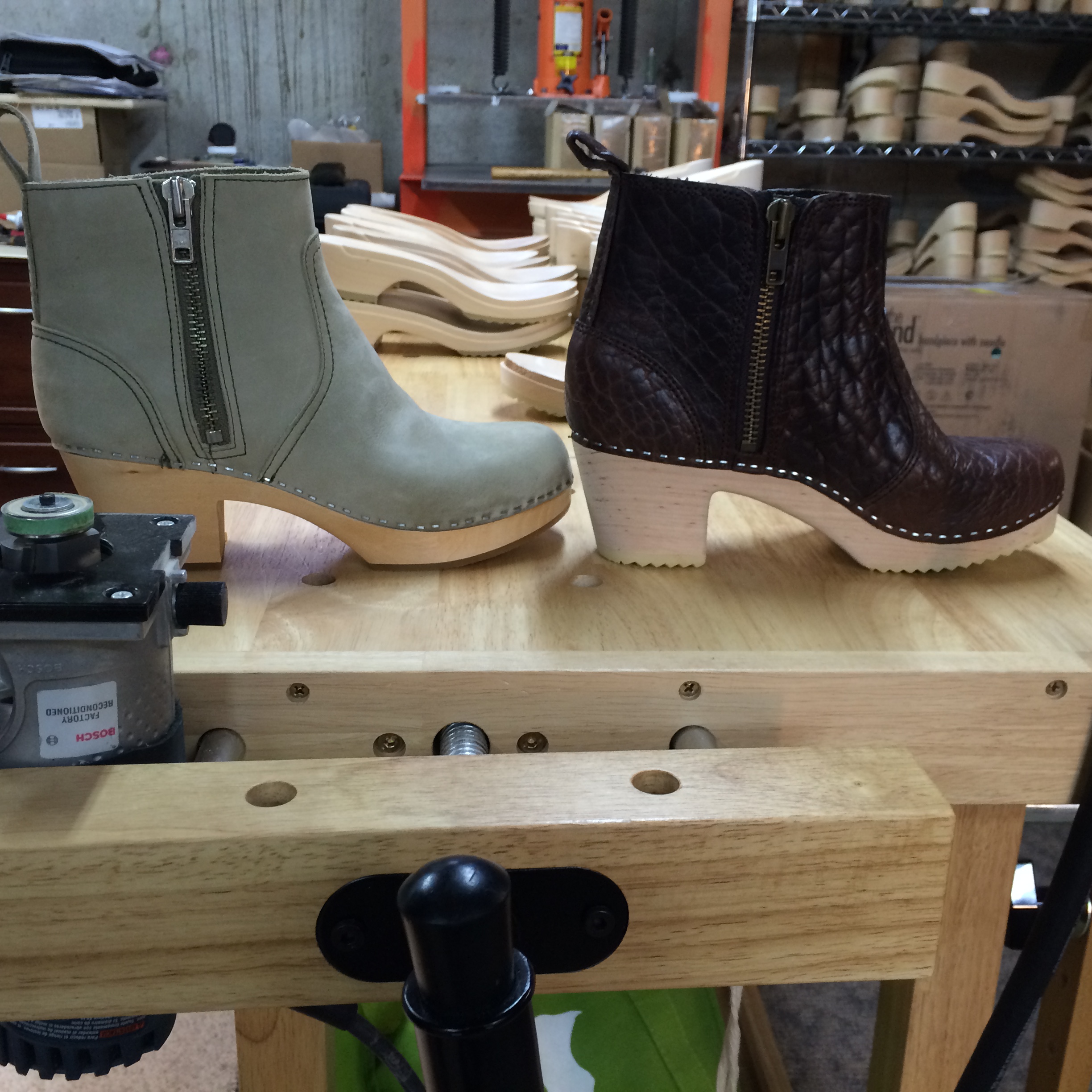
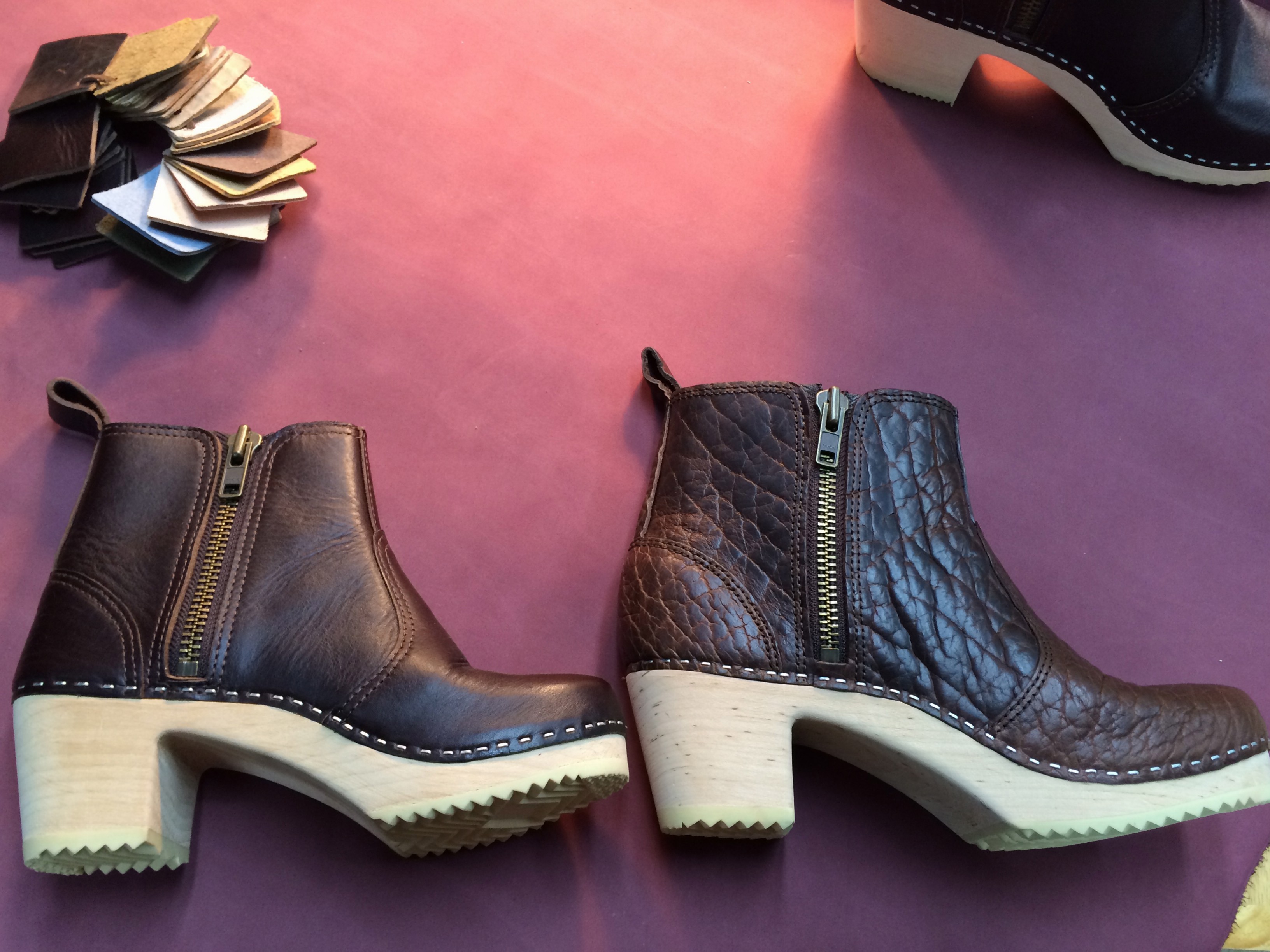
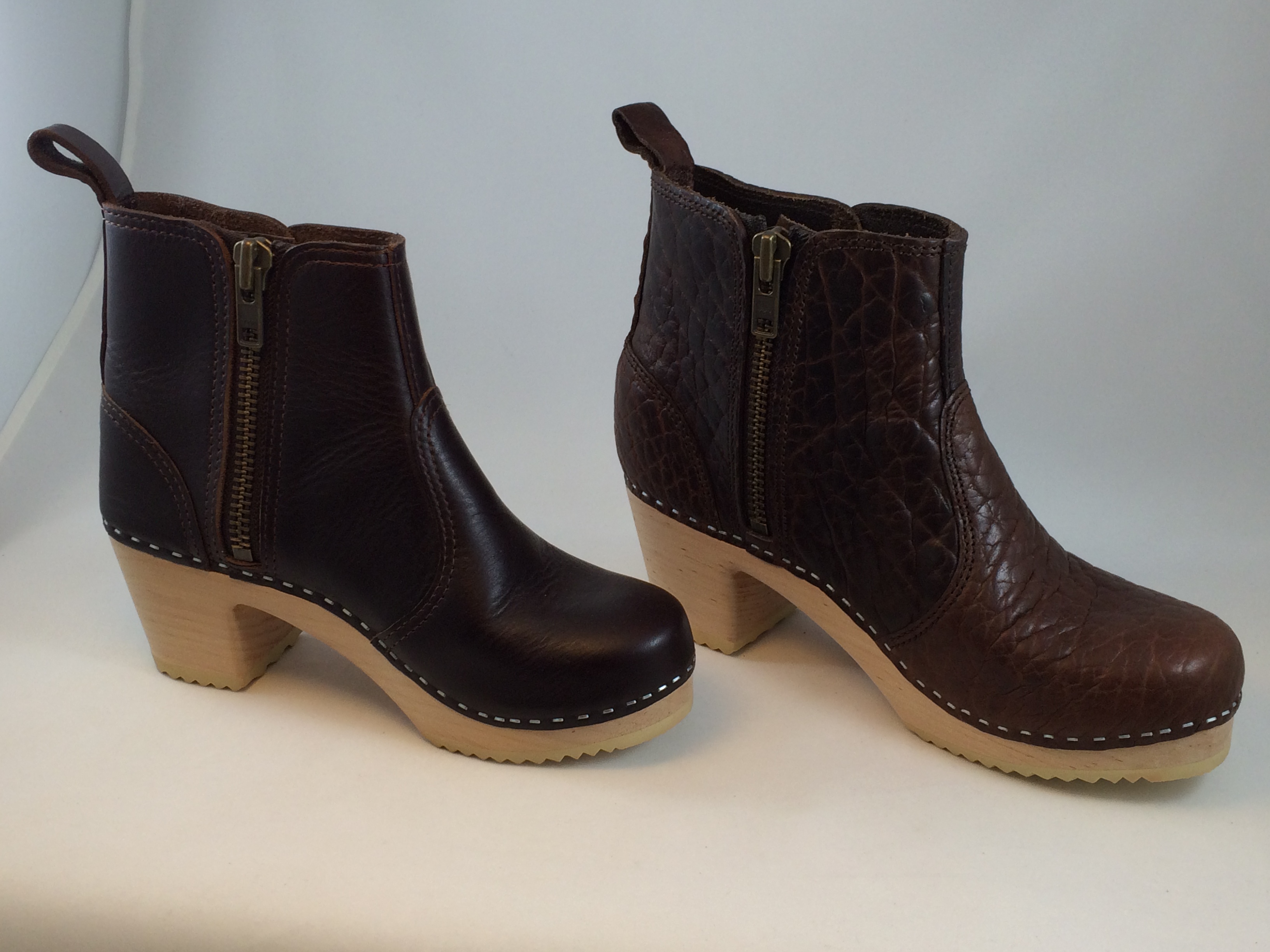
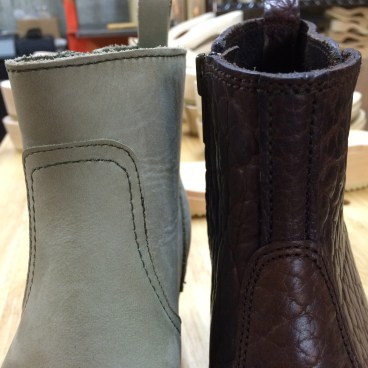
The pattern created for boots (right) results in a cleaner, sturdier, more structured look, in contrast with its typical counterpart (left).
IMG_1045

a closer look

IMG_1047

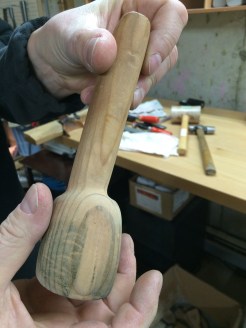
The slightly forward leaning silhouette of the boot (right) is by design, using a specially created heel form.
IMG_1125

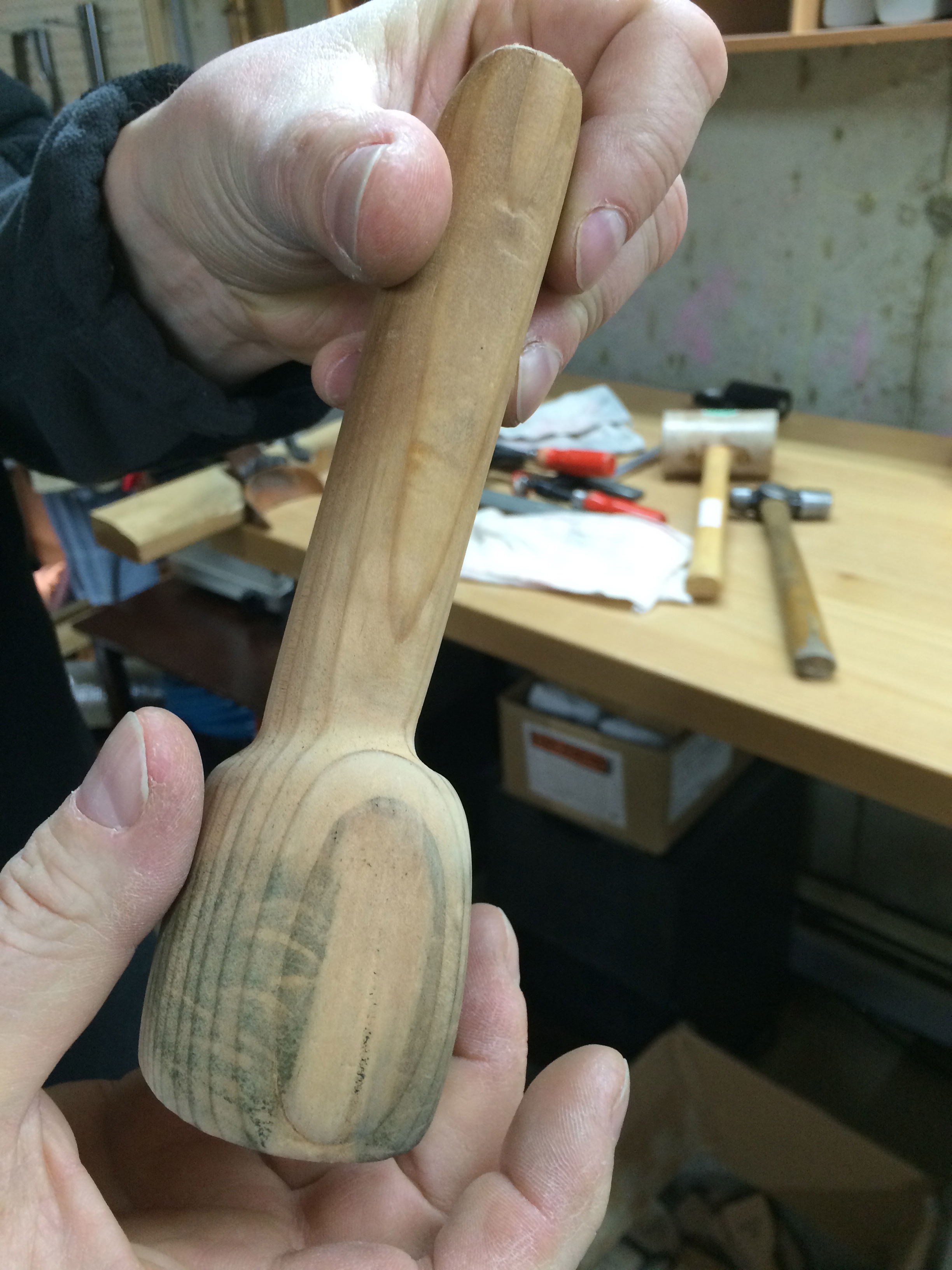
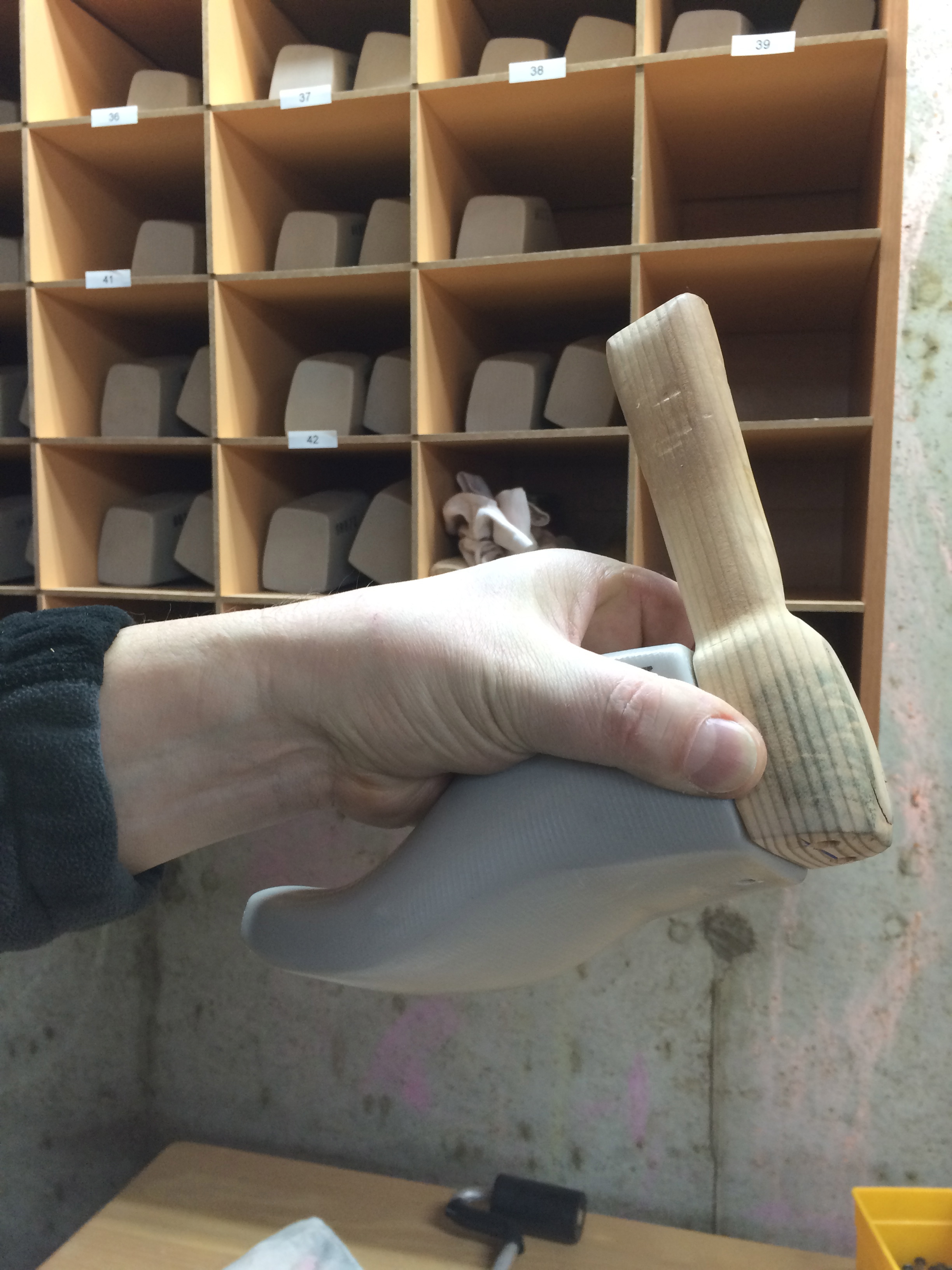
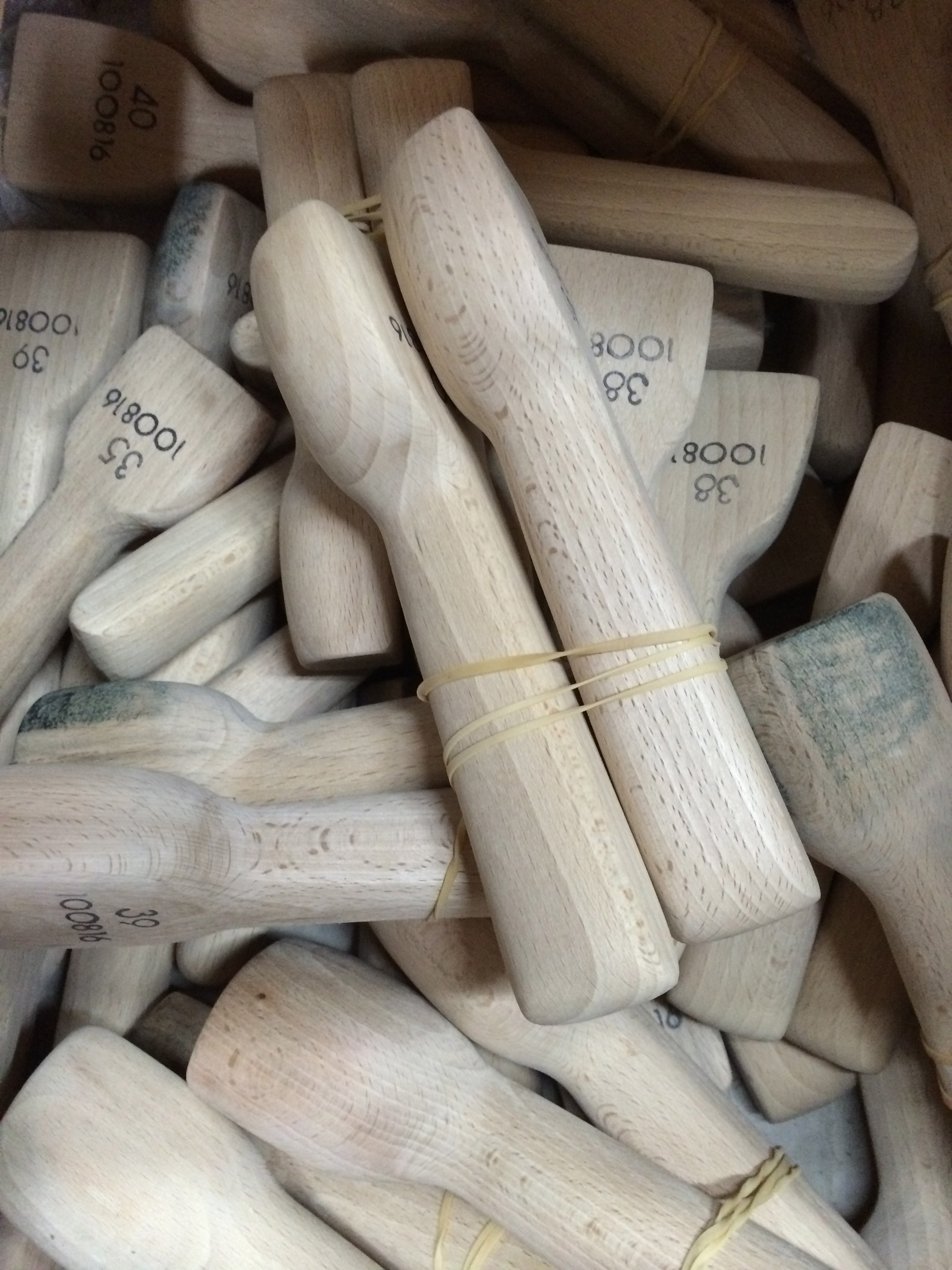
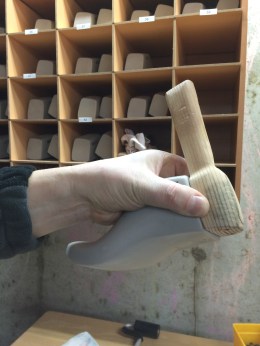
Heel form made by hand took a full day to create
IMG_1128

IMG_1126

The company that the lasts are ordered from liked the heel forms so much they started making them in multiple sizes.

It was impossible to leave without placing an order for a pair of boots.

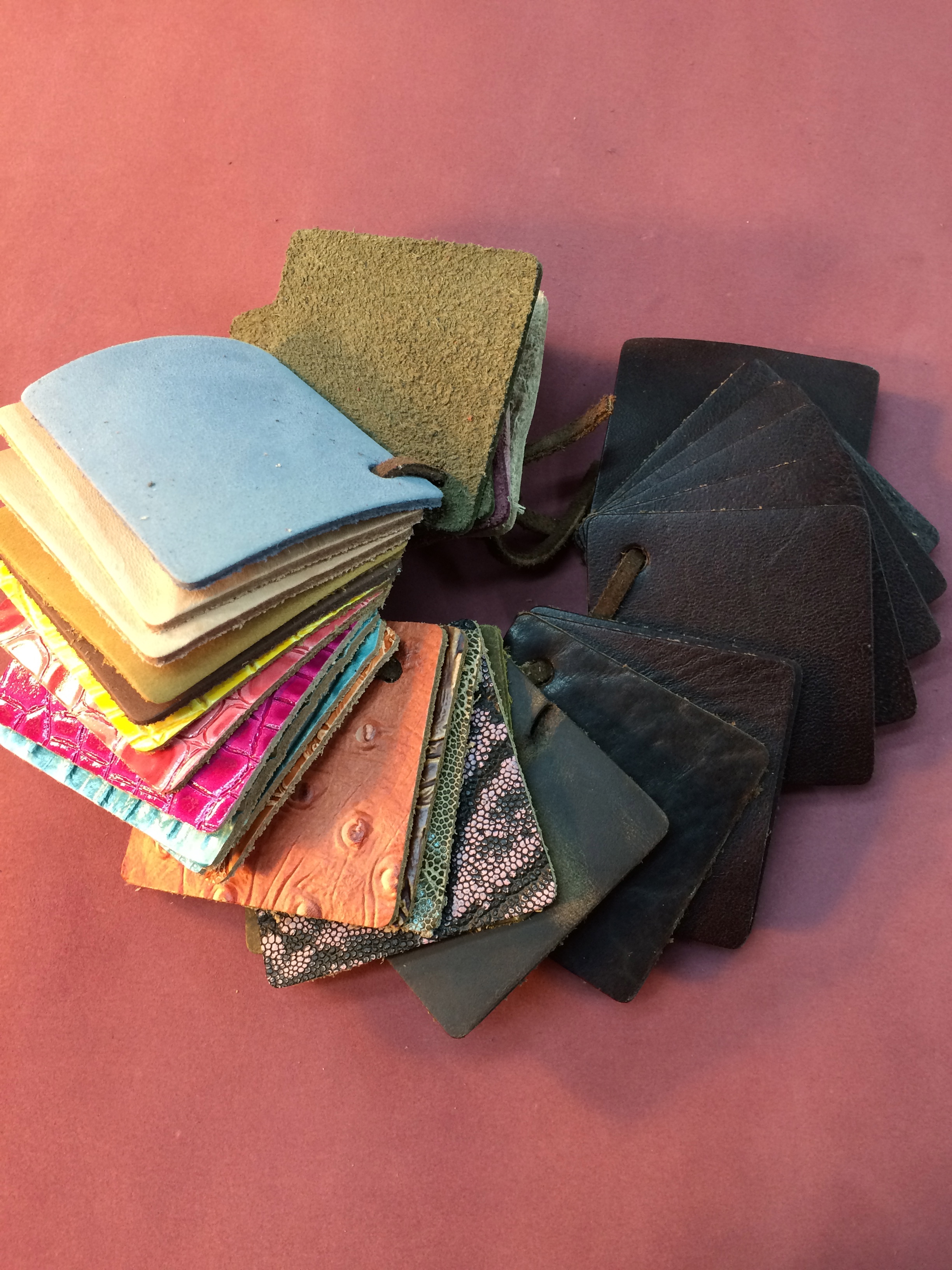
Sample fabrics were viewed:
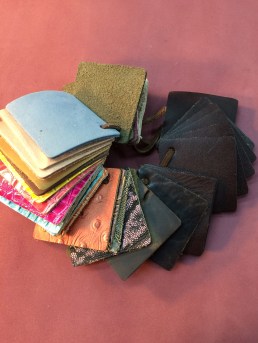
IMG_1117

Styles were considered:

IMG_1119

IMG_1121

(Same styles as above, displayed in a light box.)

And an order for the bison leather boot (right) was placed.


Andreasen expressed future plans to steadily expand operations while keeping the business headquartered in NH, hiring local craftsmen with the same uncompromising attention to detail.  Scandic Footwear was founded in 2012 and already well on its way to becoming an iconic brand.

In NH, Scandic Footwear can be found at Daub’s Cobbler Shop in Laconia and Simply Birkenstock in Concord.  In Maine, Lamey Wellehan shops and Horny Toad in Freeport are recently added stockists.


(*) I do have somewhat of a thing for clogs.
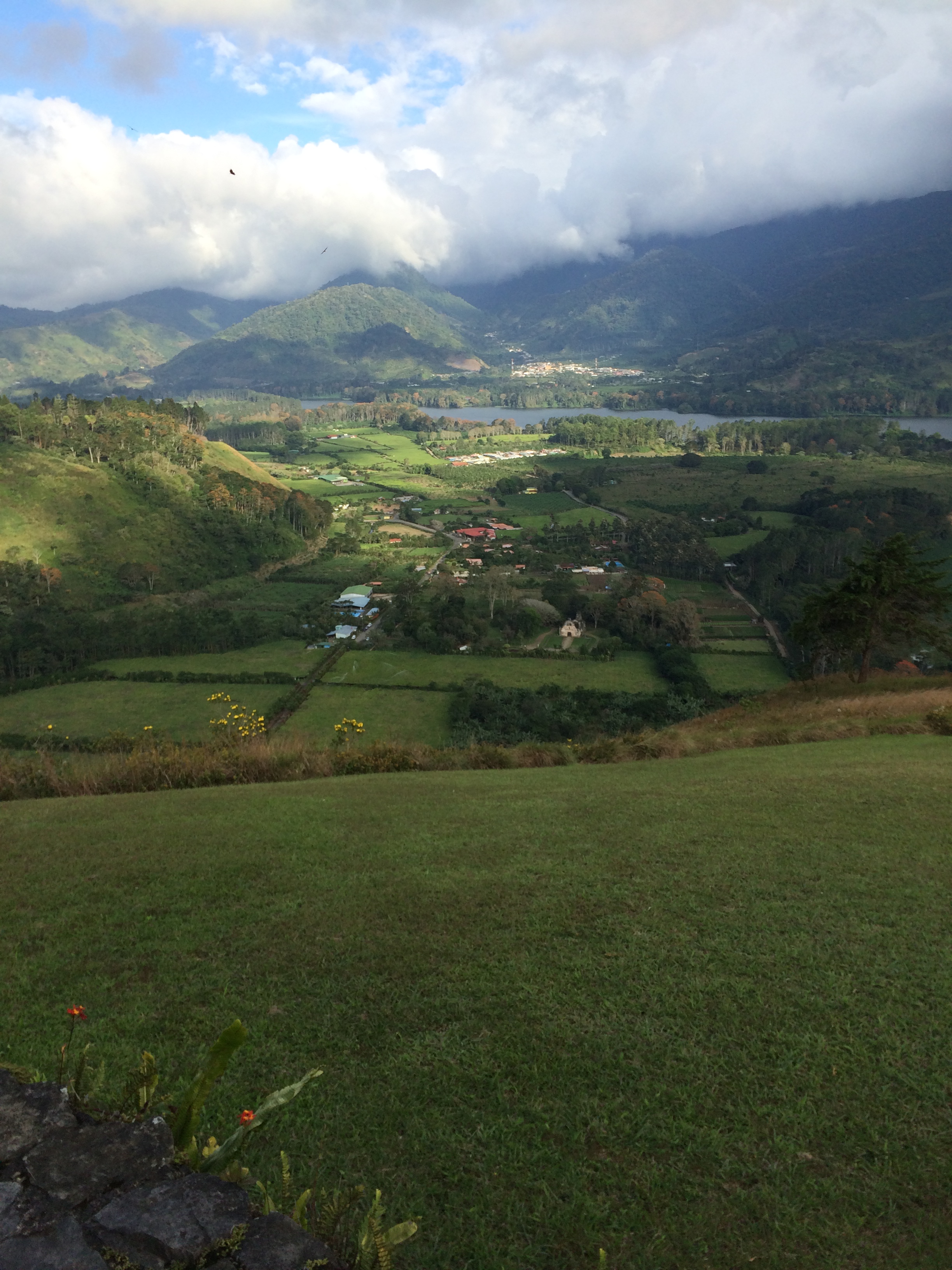
SILVER HILL FARM

IMG_0908

Weekly deliveries of wholesome, raw milk and yogurt from friend Pam at Silver Hill Farm are always much anticipated.  Despite frigid temps and wind chill, a visit to the farm was due.  Set on 60 mountainous acres, the farm is a bucolic sanctuary.

Lovable farm dog Tipper was the first to offer a greeting:

IMG_0818

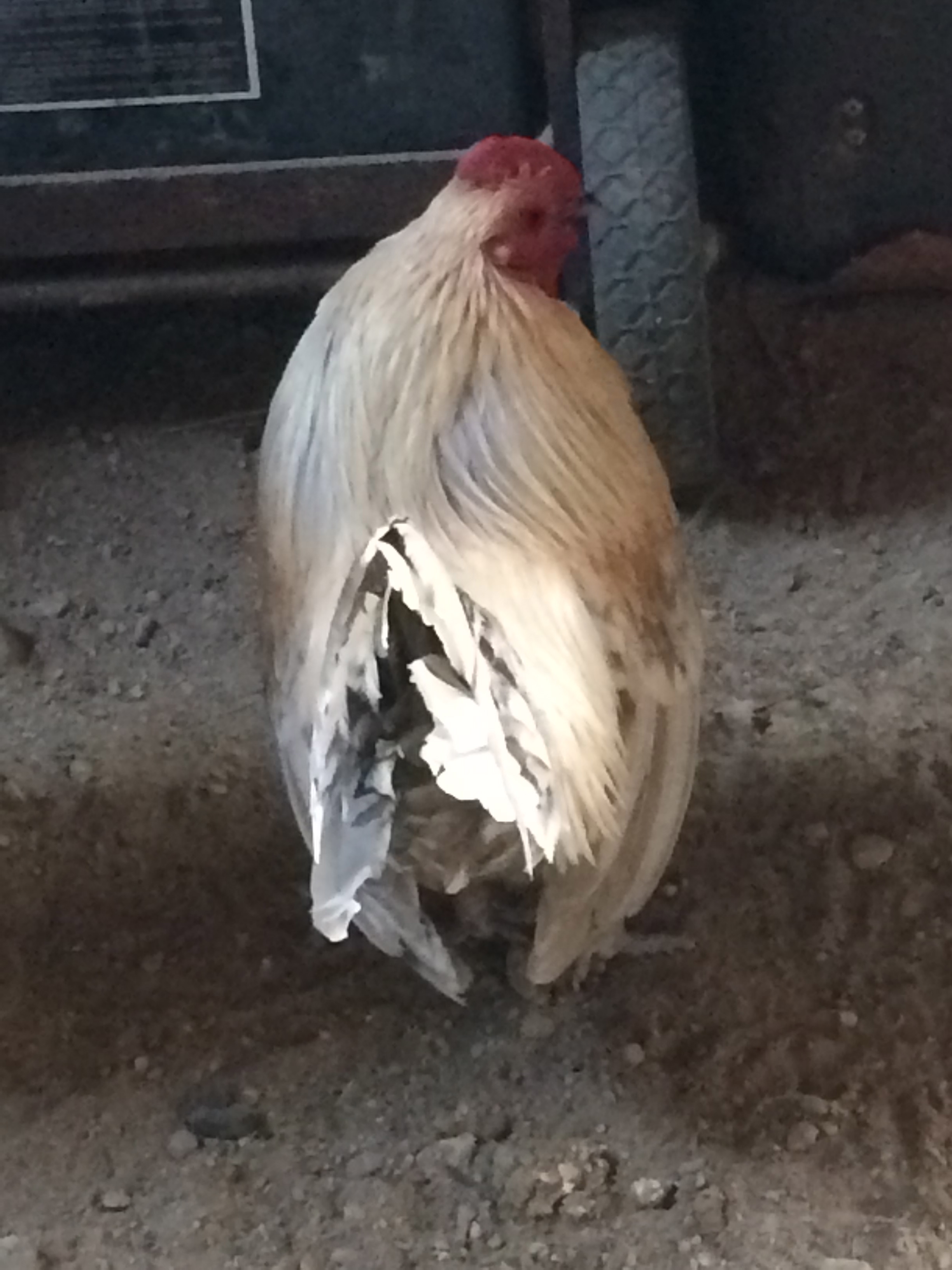
Unlike our canine friend, this dainty bantam was a bit camera shy:

IMG_0817

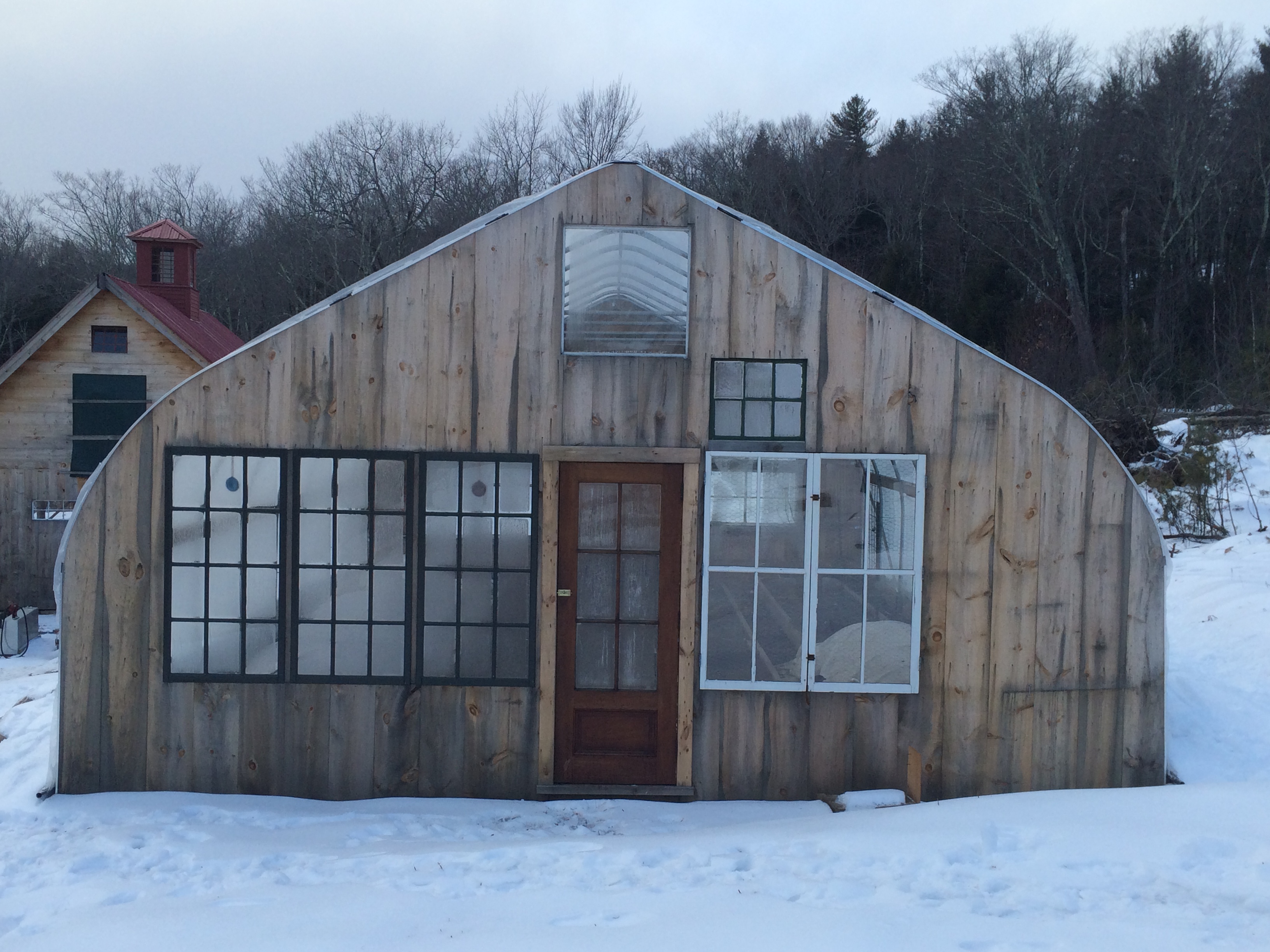
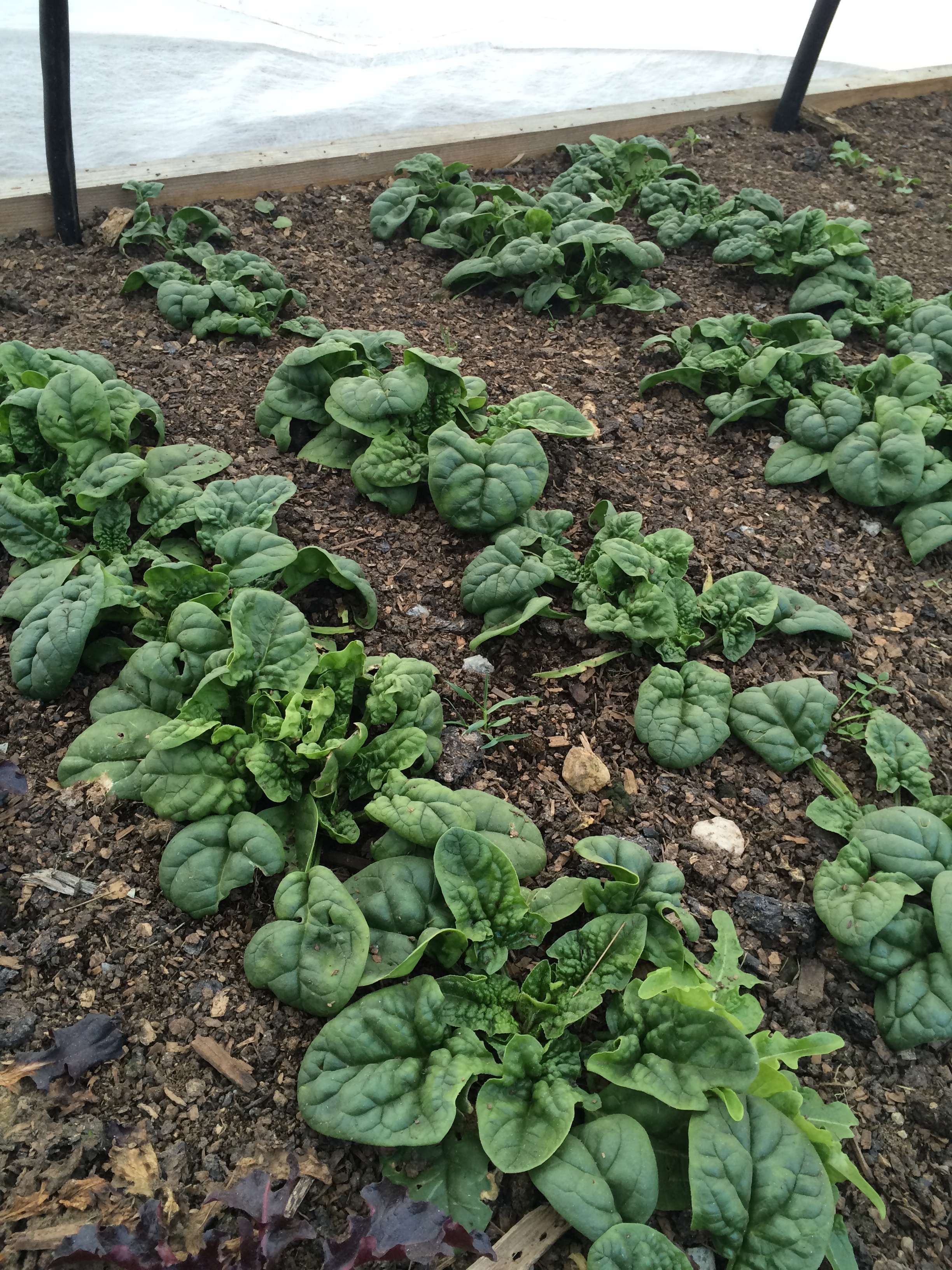
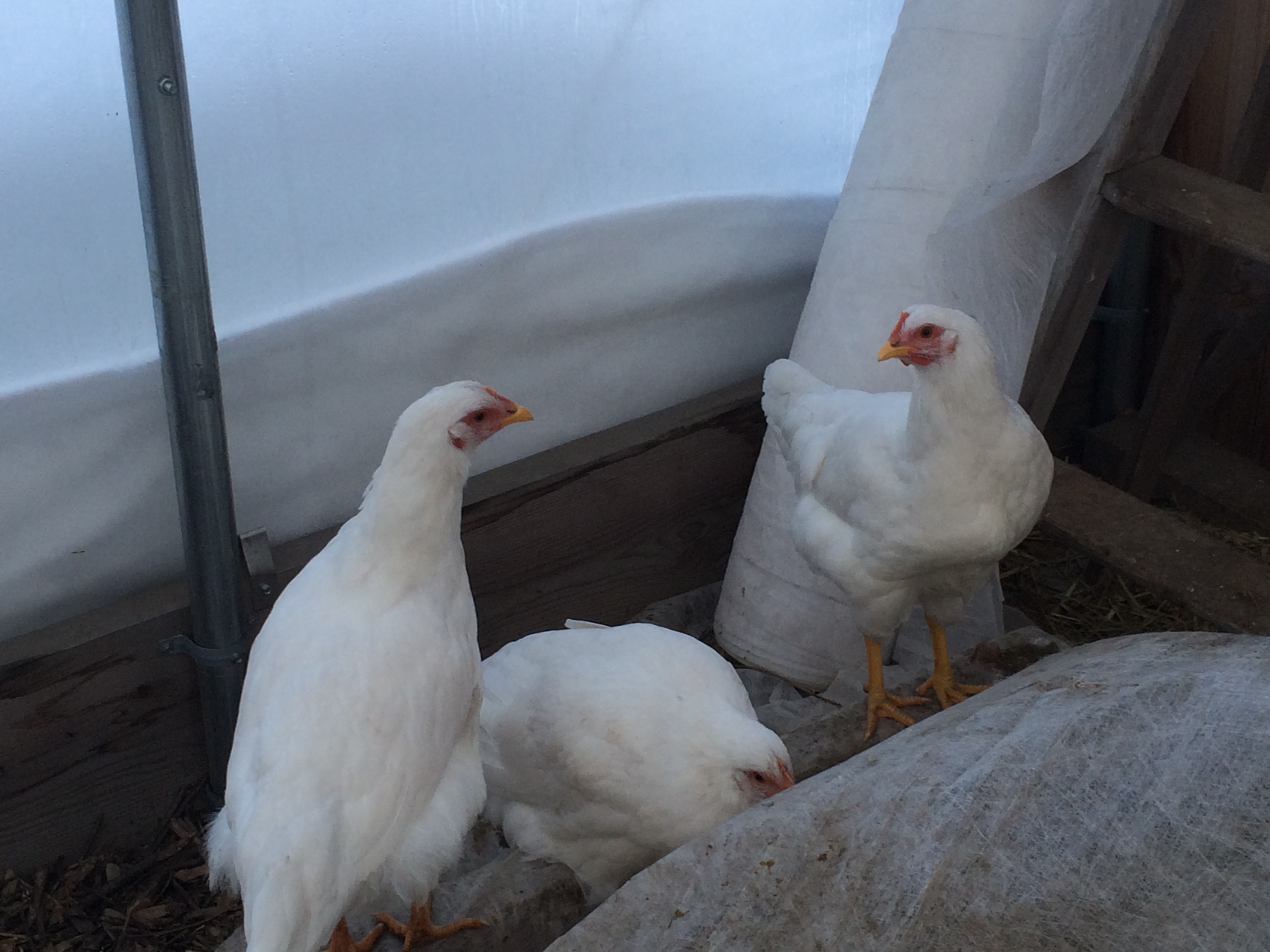
In the greenhouse, spinach was thriving and young chickens were keeping warm for the winter:

IMG_0834

Greenhouse built by Pam and husband Nathaniel.  All building materials were sourced locally, within a 25 mile radius of the farm.

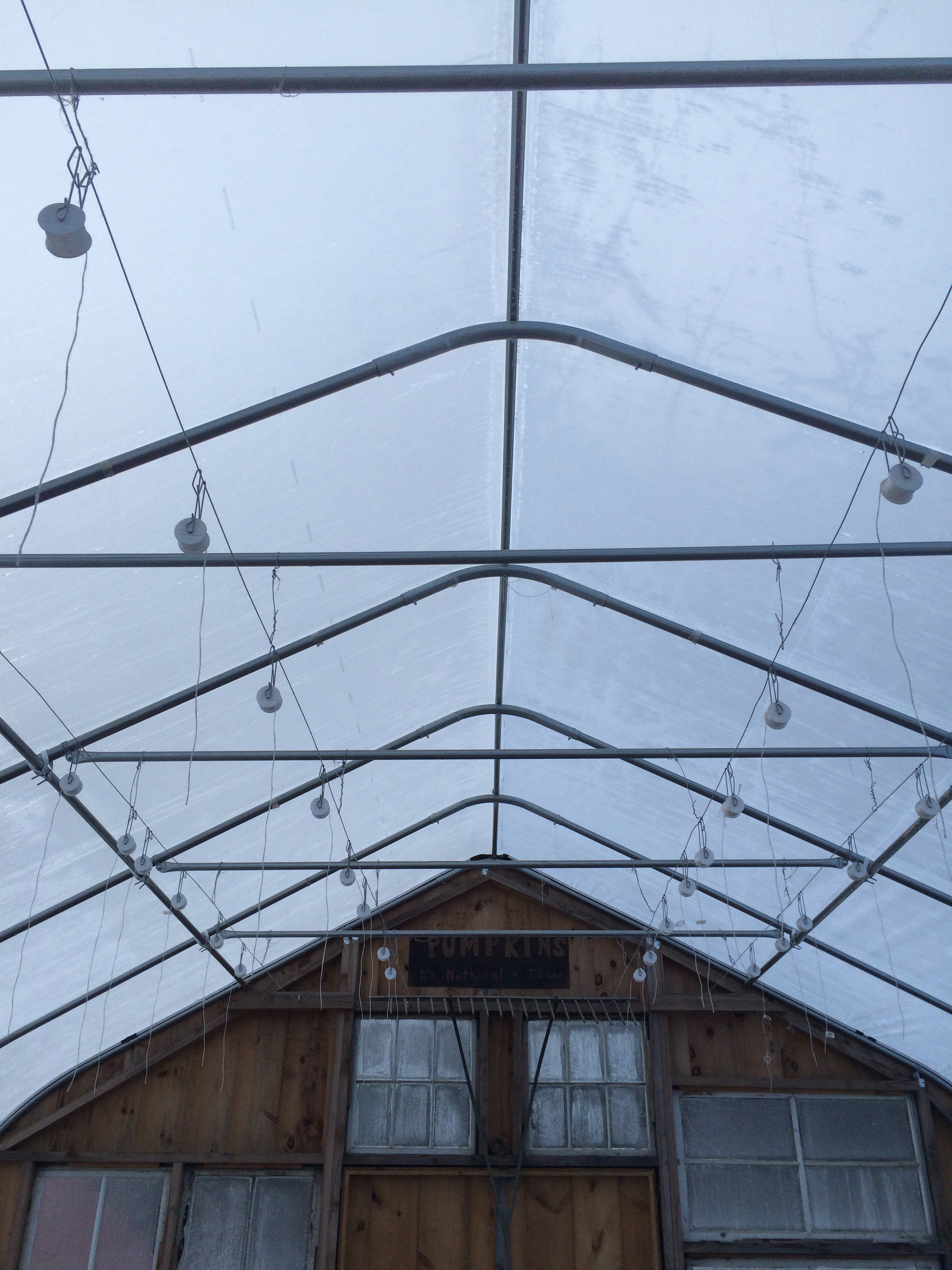
These pulleys will be used to support spring tomato plantings.
Lines and pulleys, which will be used to support spring tomato plantings.
A welcome bit of green amidst the snow and ice

A welcome bit of greenery amidst the snow and ice

Happy chickens

Hunting and pecking for tasty morsels

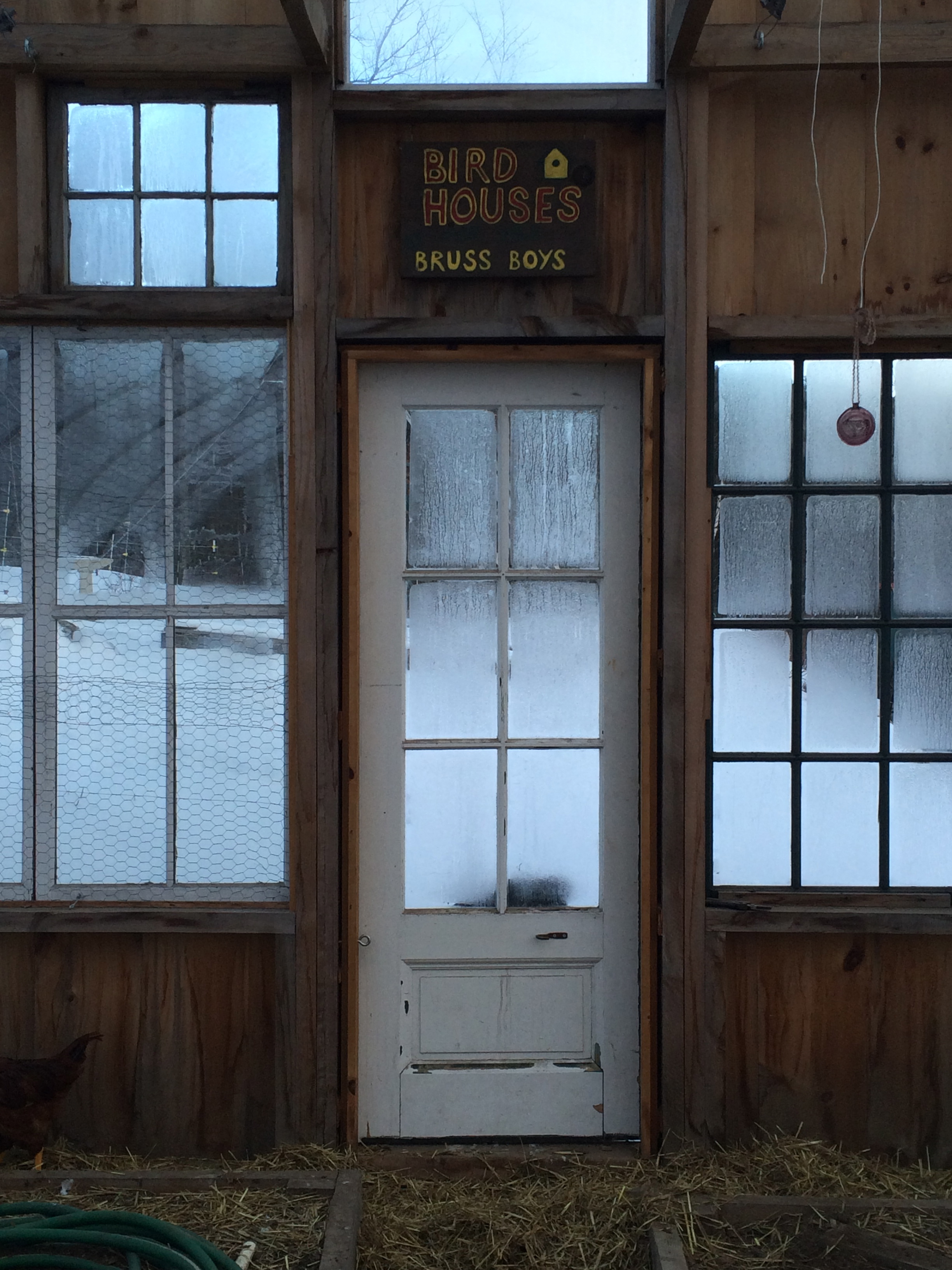
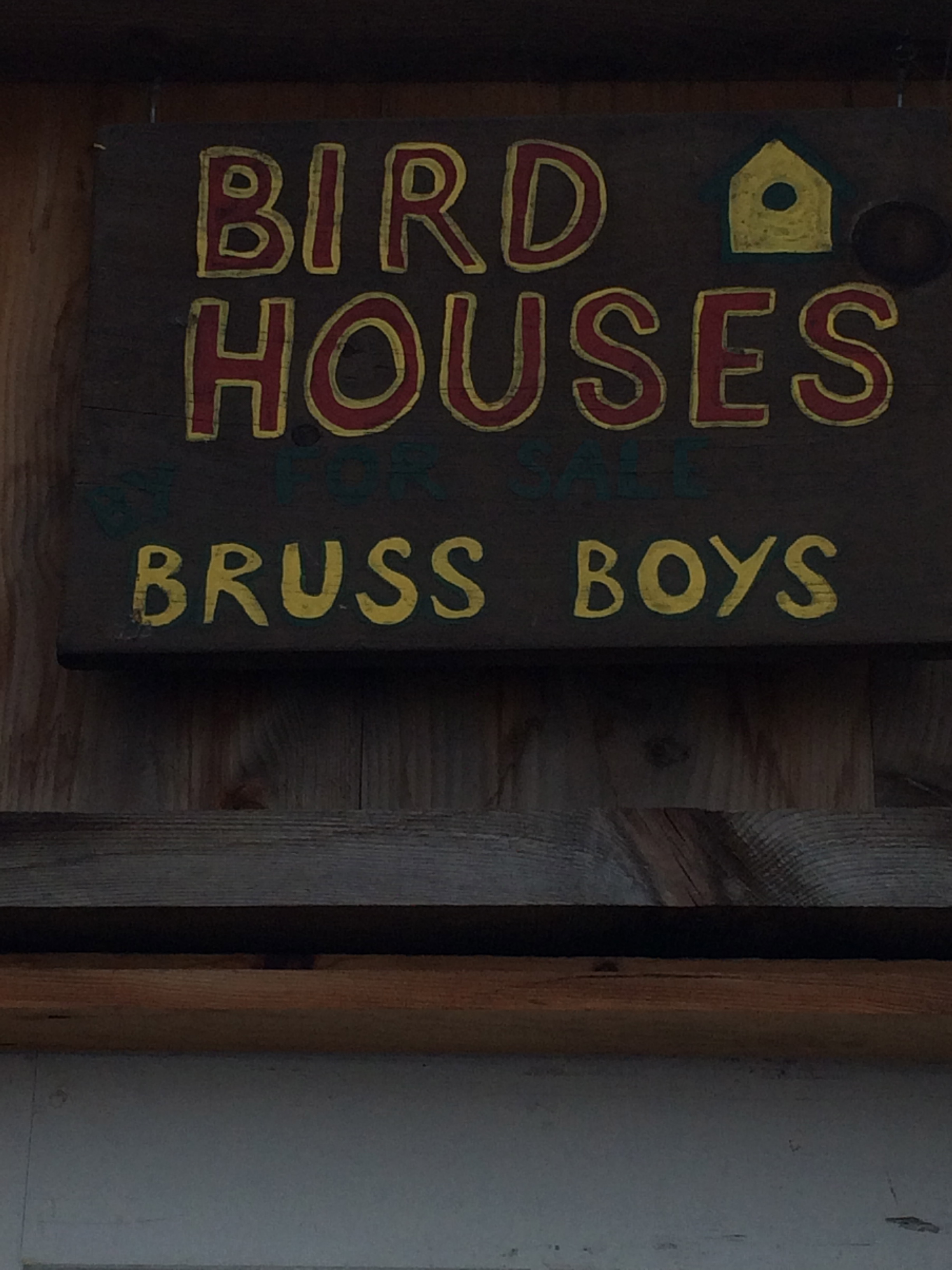
The sign above the door is a reminder of childhood enterprises.  Past is prologue.
The sign above the greenhouse door is a reminder of past childhood enterprises.
IMG_0839

After visiting the greenhouse, it was back into the icy wind.
The farm runs entirely on solar energy:

IMG_0821


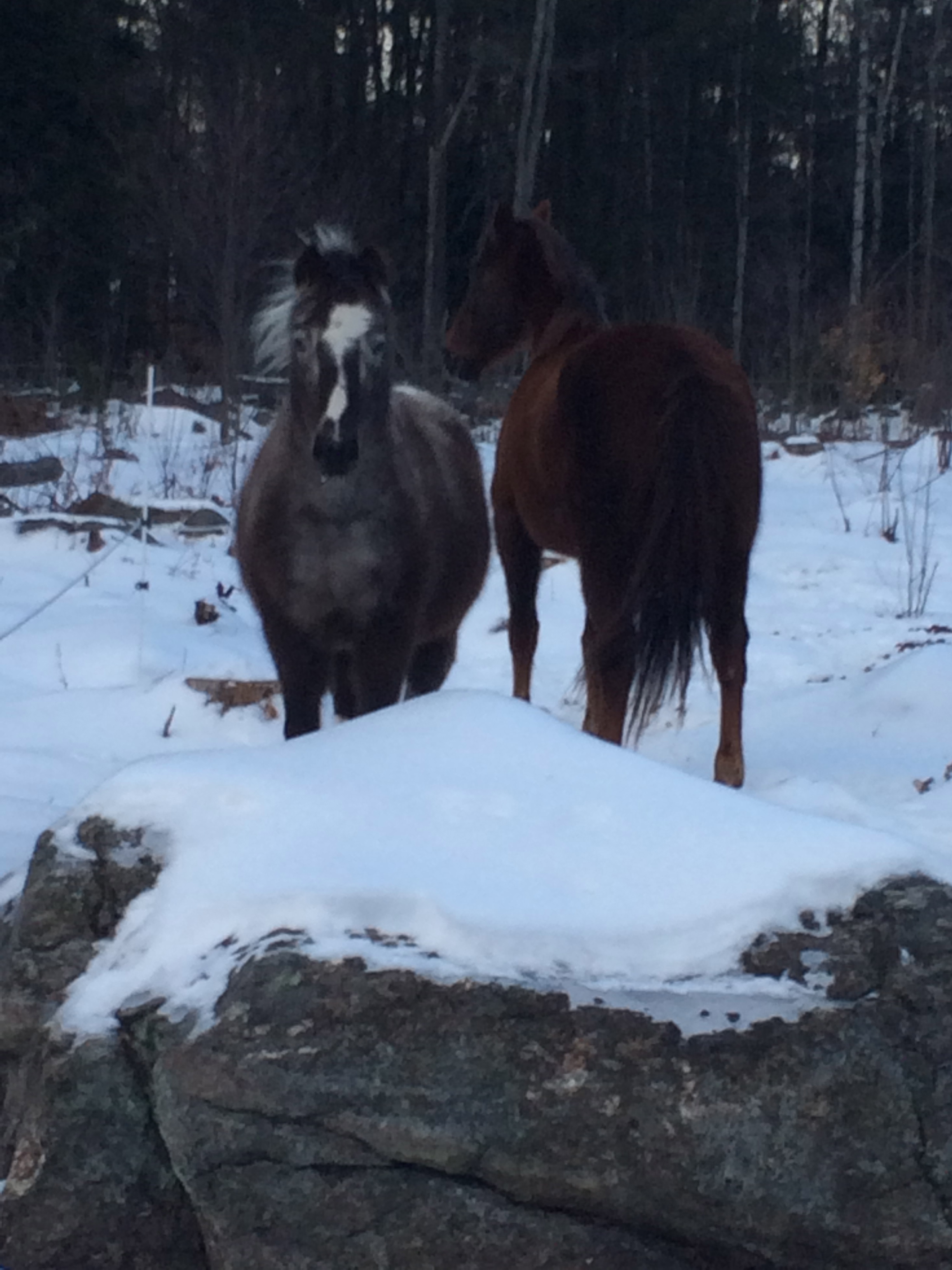
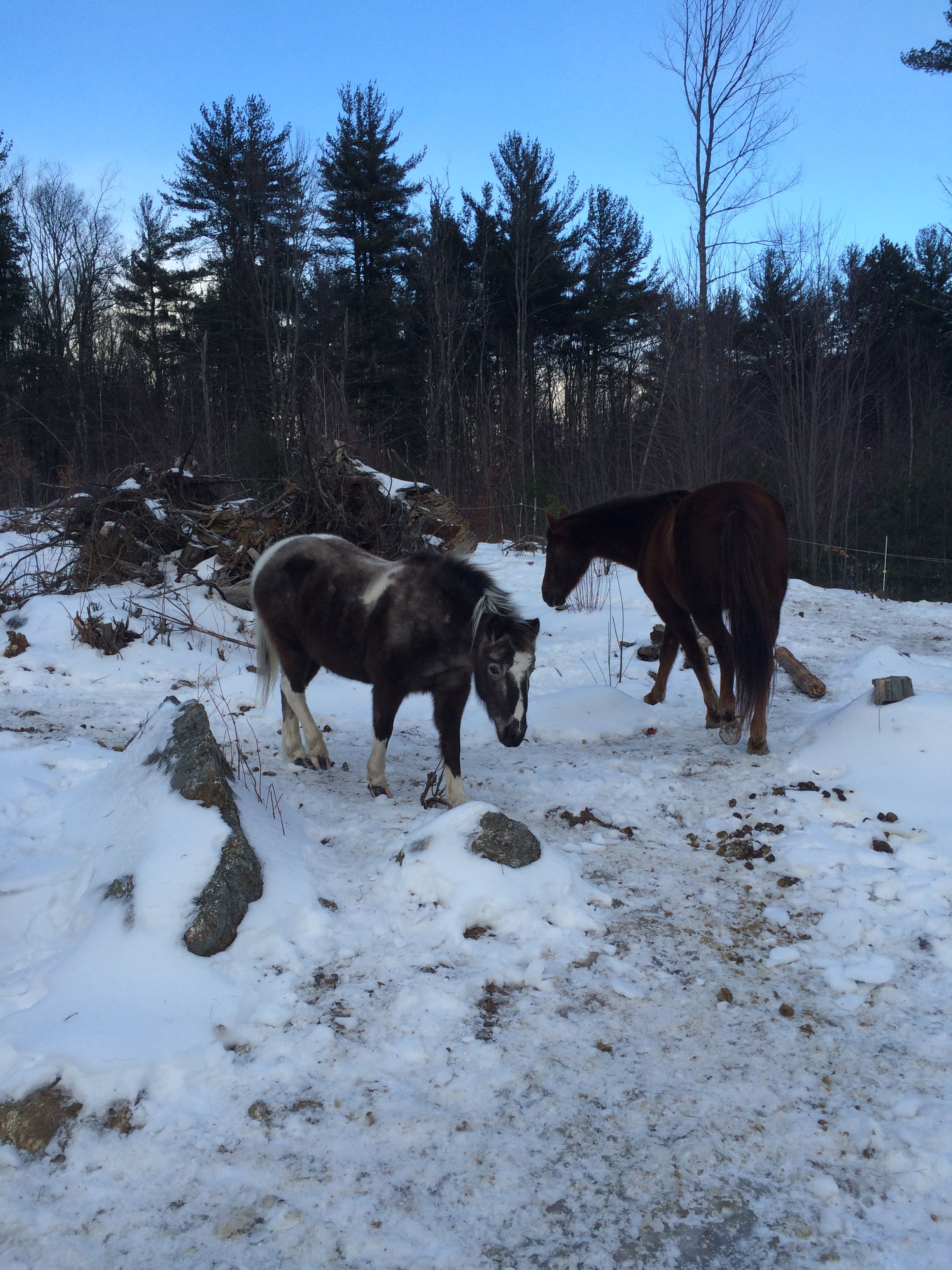
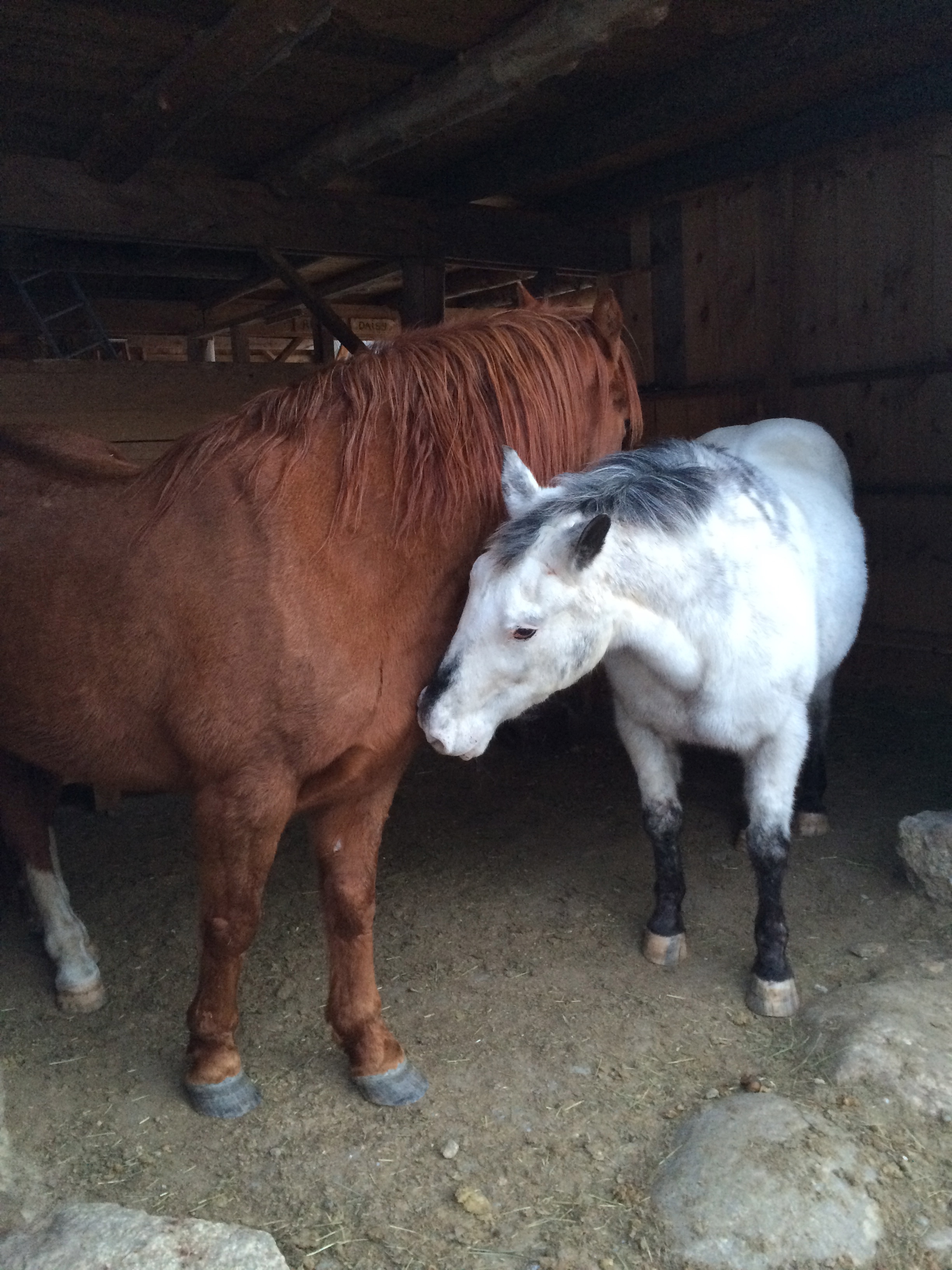
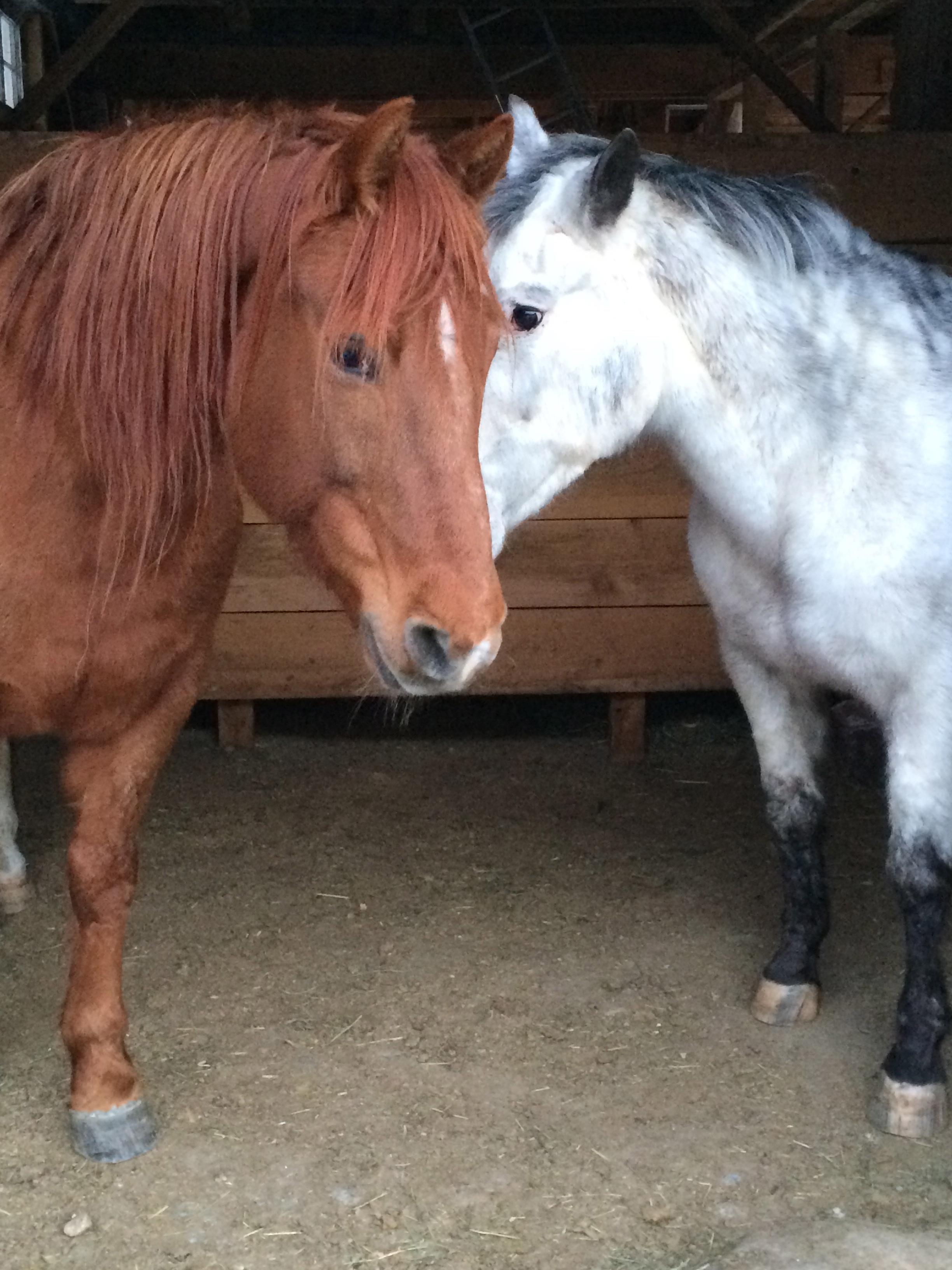
These majestic creatures were a delight to behold and looked very much at home in their sylvan surroundings:

IMG_0822

Raggedy, the pony (left) and Madison (right)

IMG_0824

The beef cows are all grass – not grain – fed and are given balage during the winter months.  (Balage is simply forage, baled in a round baler at a relatively high moisture content and then stored in a sealed container.)  The round bales then begin to ferment, increasing the nutritional value of the hay.  The rare exception made for grain is only small handfuls, fed a couple of times a year as a special treat.  From May to October or November, the cows graze freely in the fields.

As mentioned elsewhere on this blog, we are strict vegetarians.  It was therefore of some reassurance to learn that measures are taken on the farm to ensure that slaughter is quick, painless and as free of any stress as possible.  In Pam’s own words, “They never know what is happening” – a far cry from the all too regular heinous cruelty and abuse inflicted upon these gentle creatures in factory farming operations.  In contrast, cows at Silver Hill are well cared for – able to roam freely, take in plenty of fresh air and food, and live out their lives in relative peace and contentment.

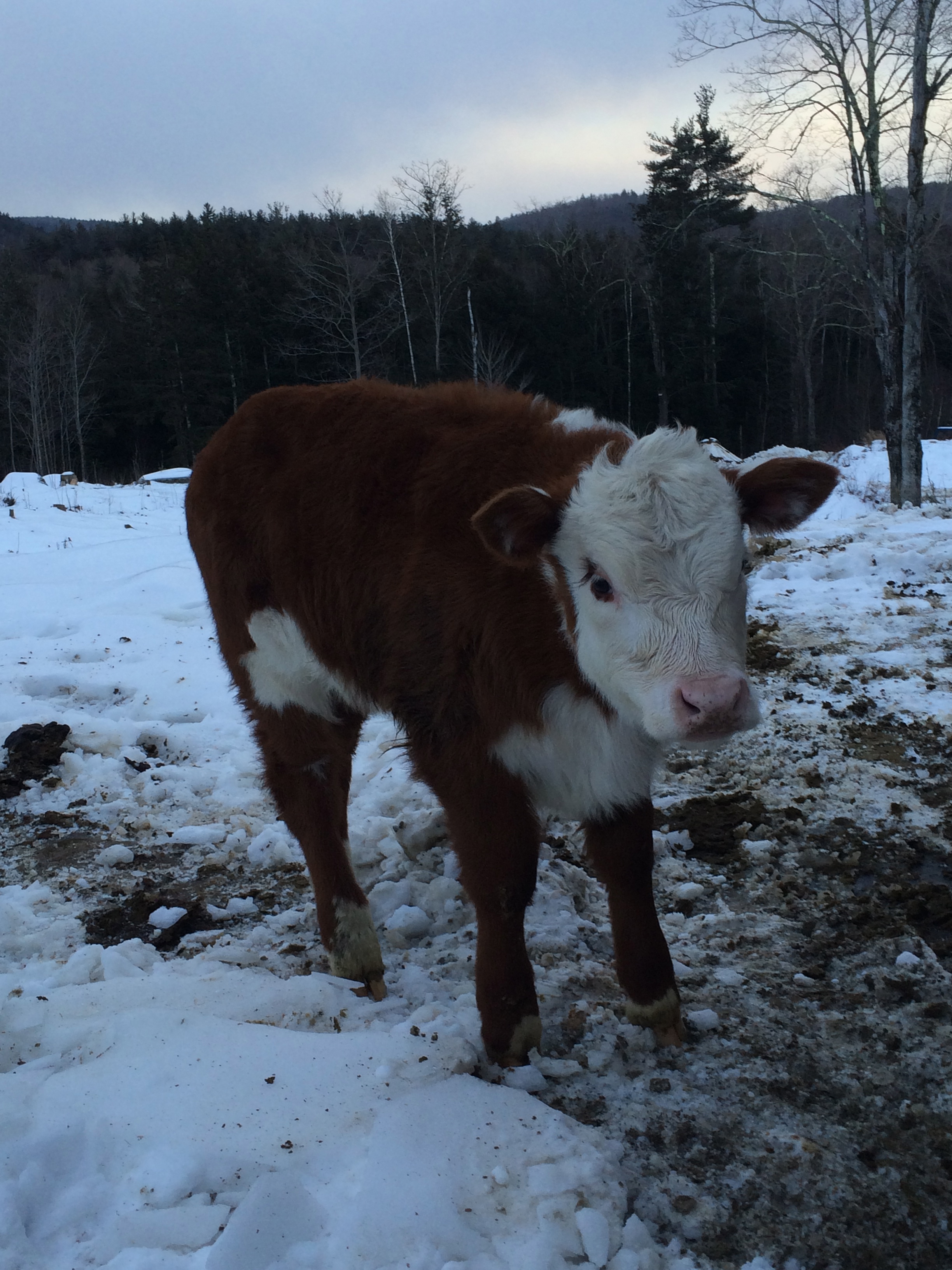
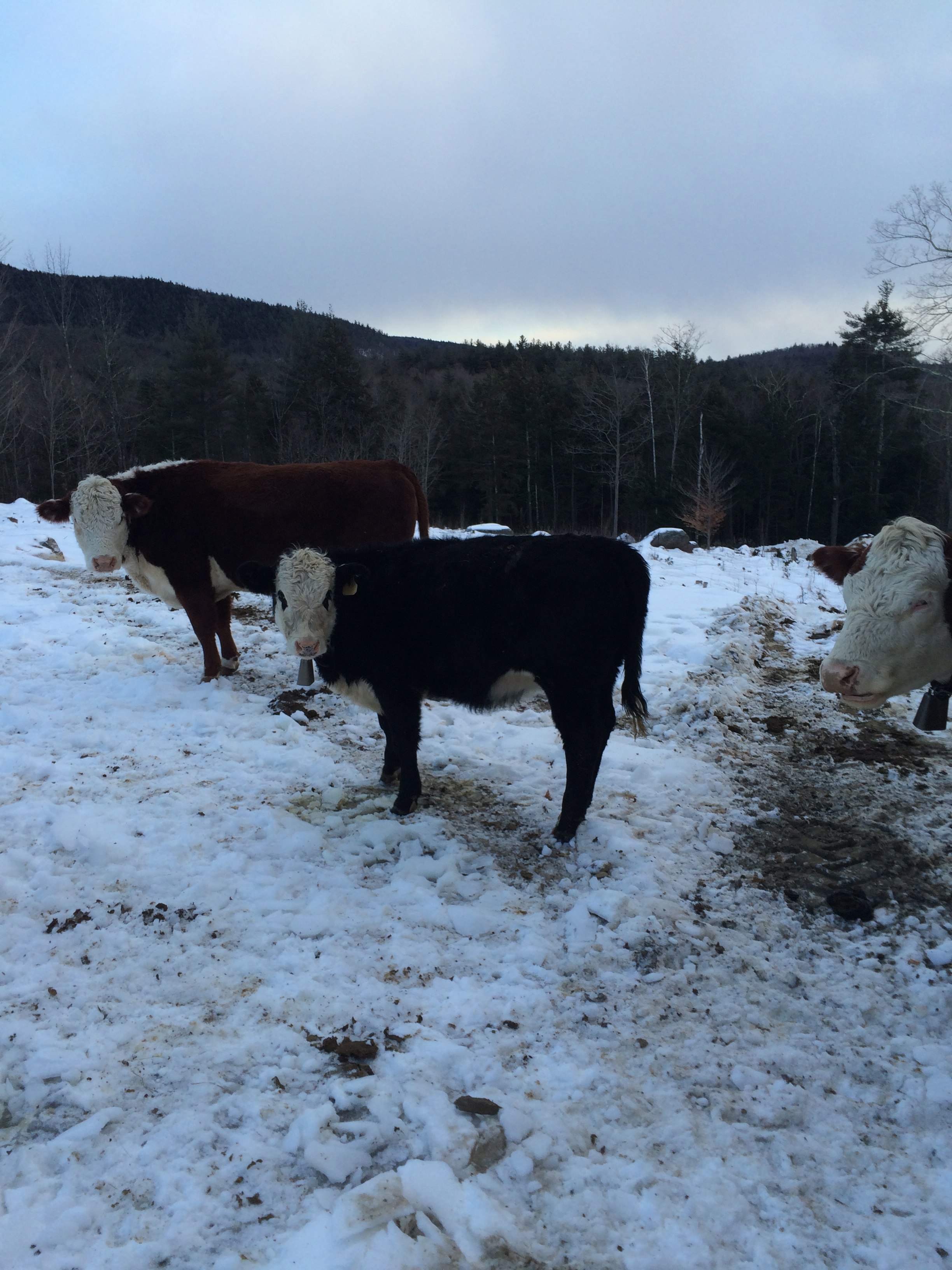
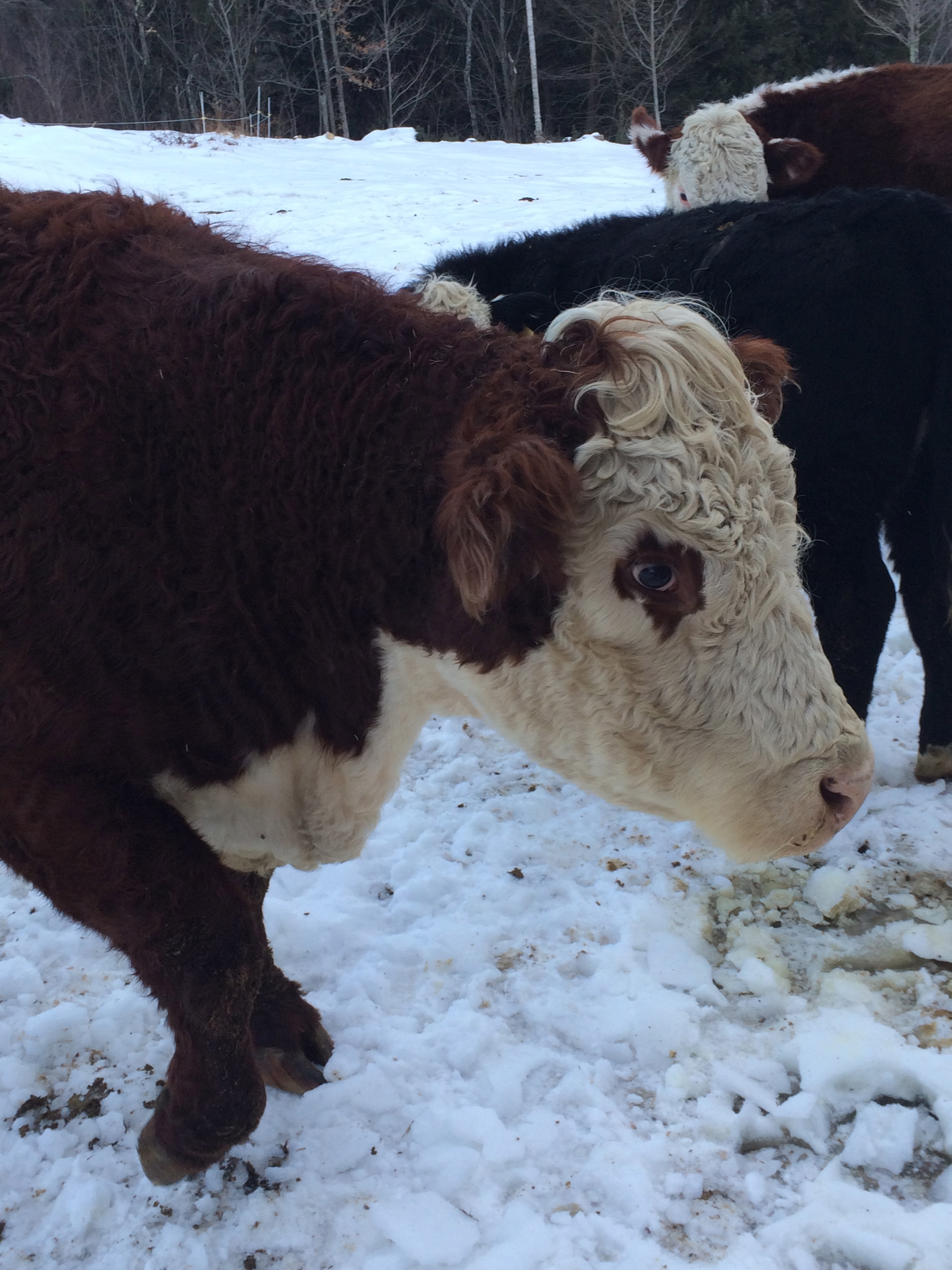
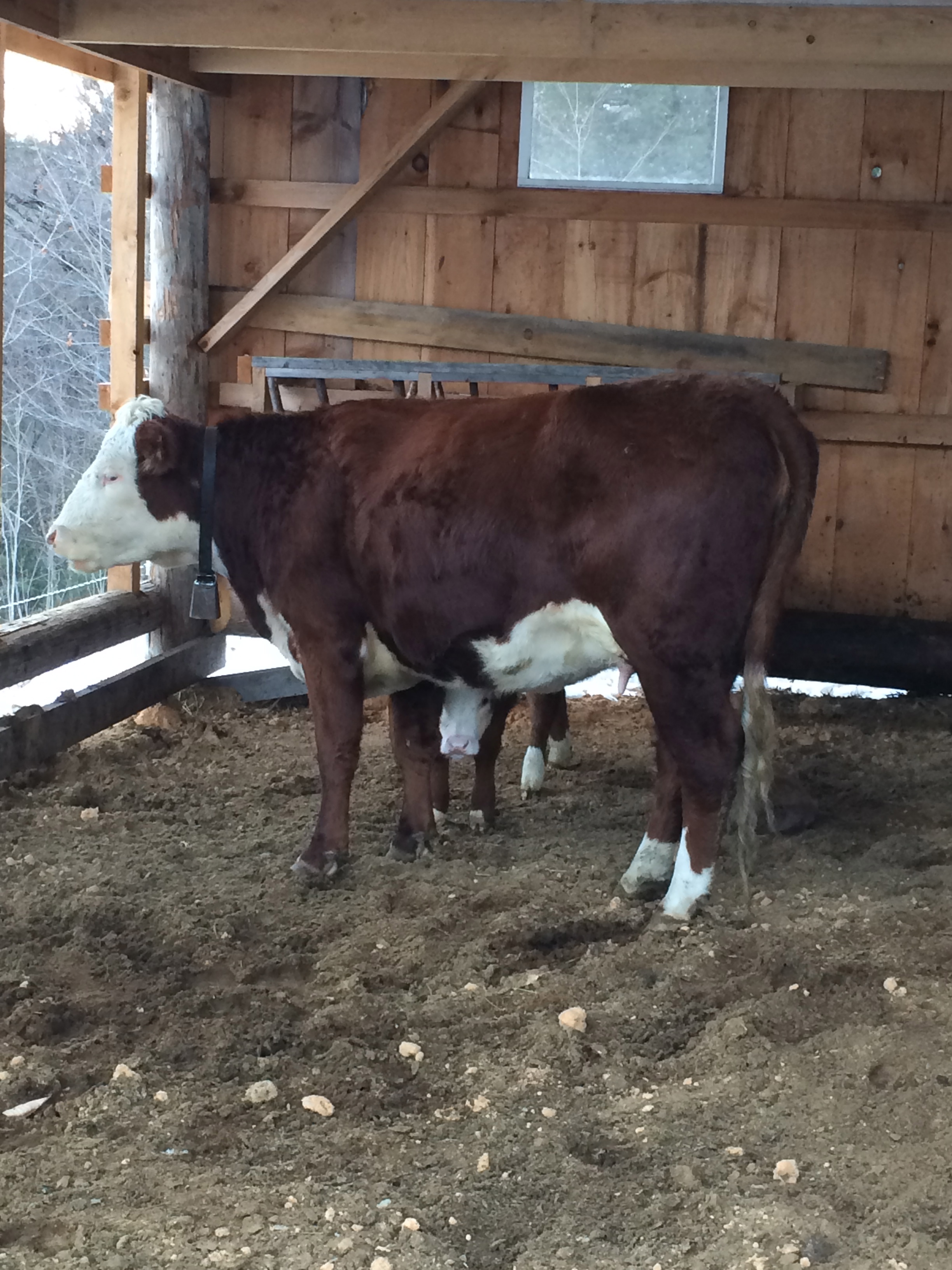
Adorable Hereford calf, Sawyer – born this past November and the newest addition to the farm:

IMG_0863

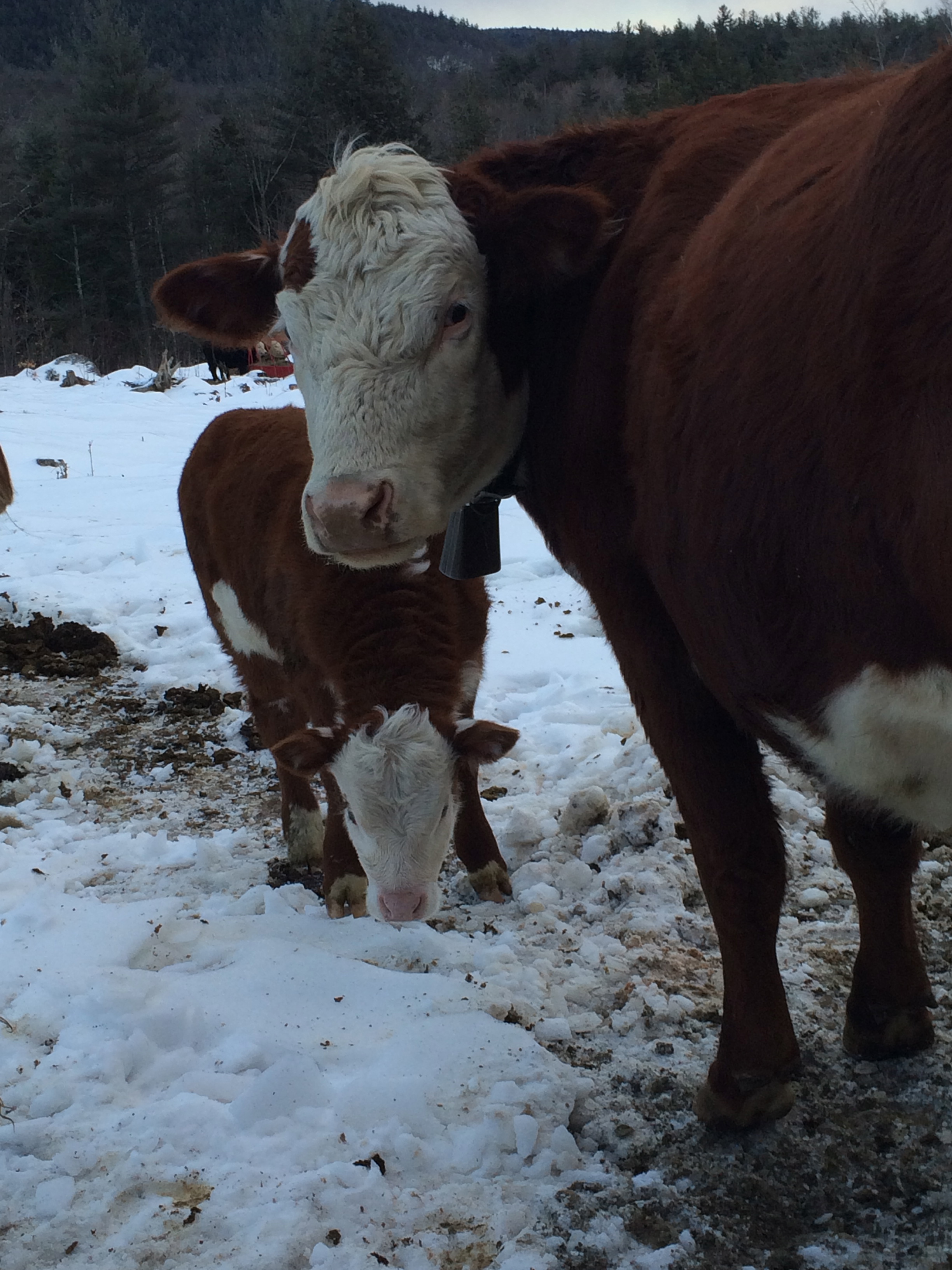
With mother, Spot:

IMG_0856

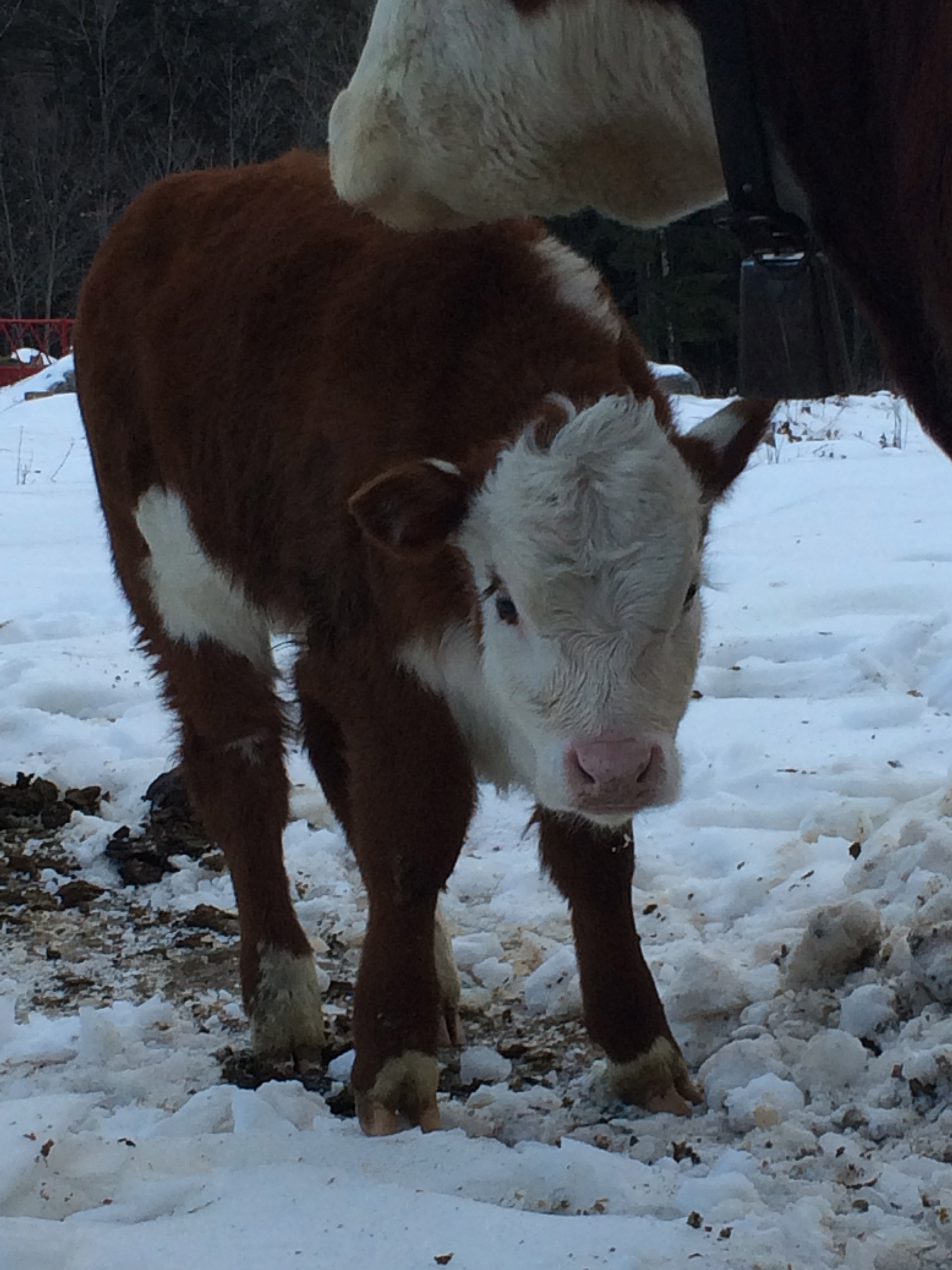
Peeking in for a closer look:

IMG_0857

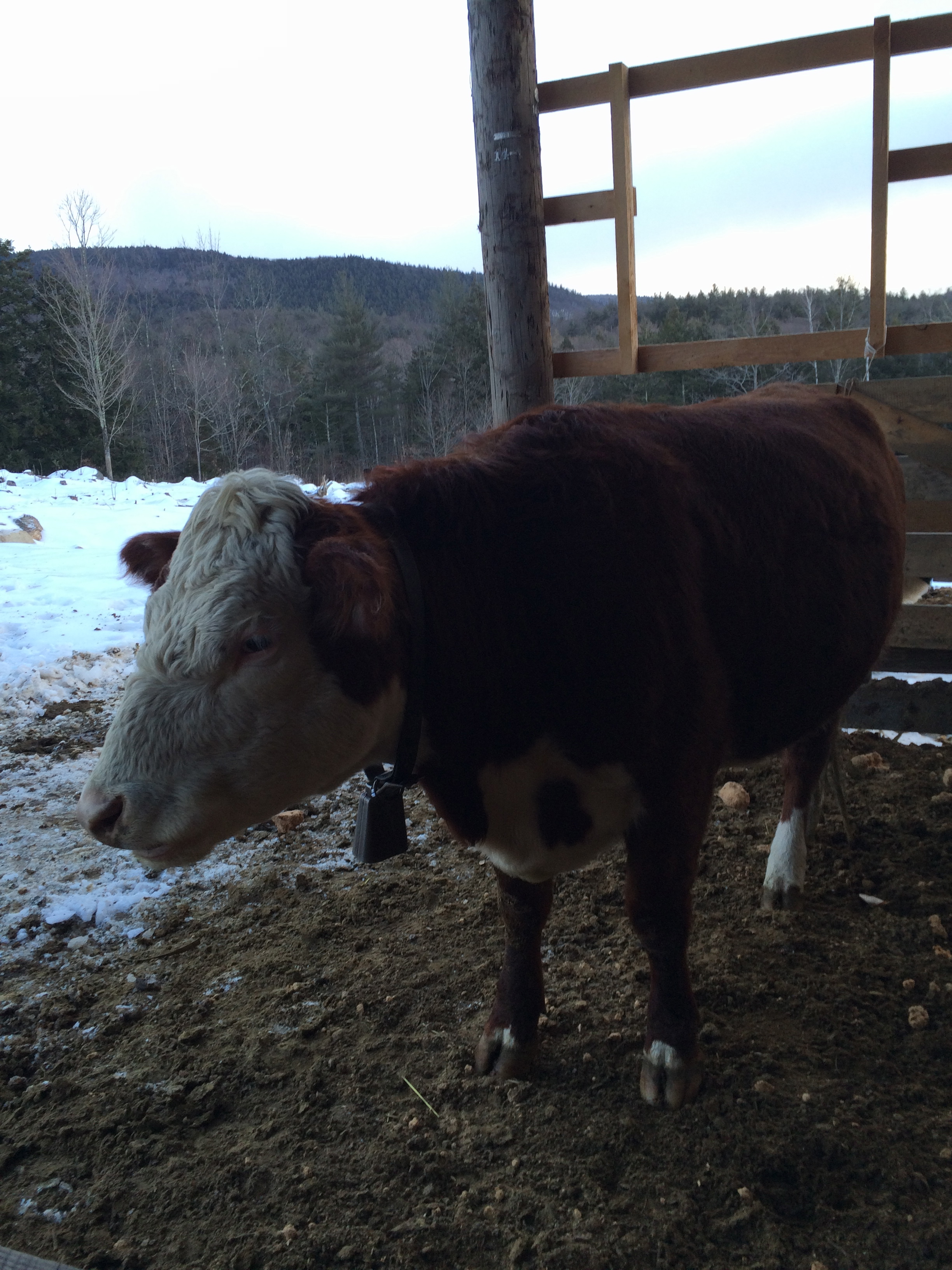
Herefords are known for their easy, well tempered manner:

IMG_0852

IMG_0861

IMG_0867

IMG_0881

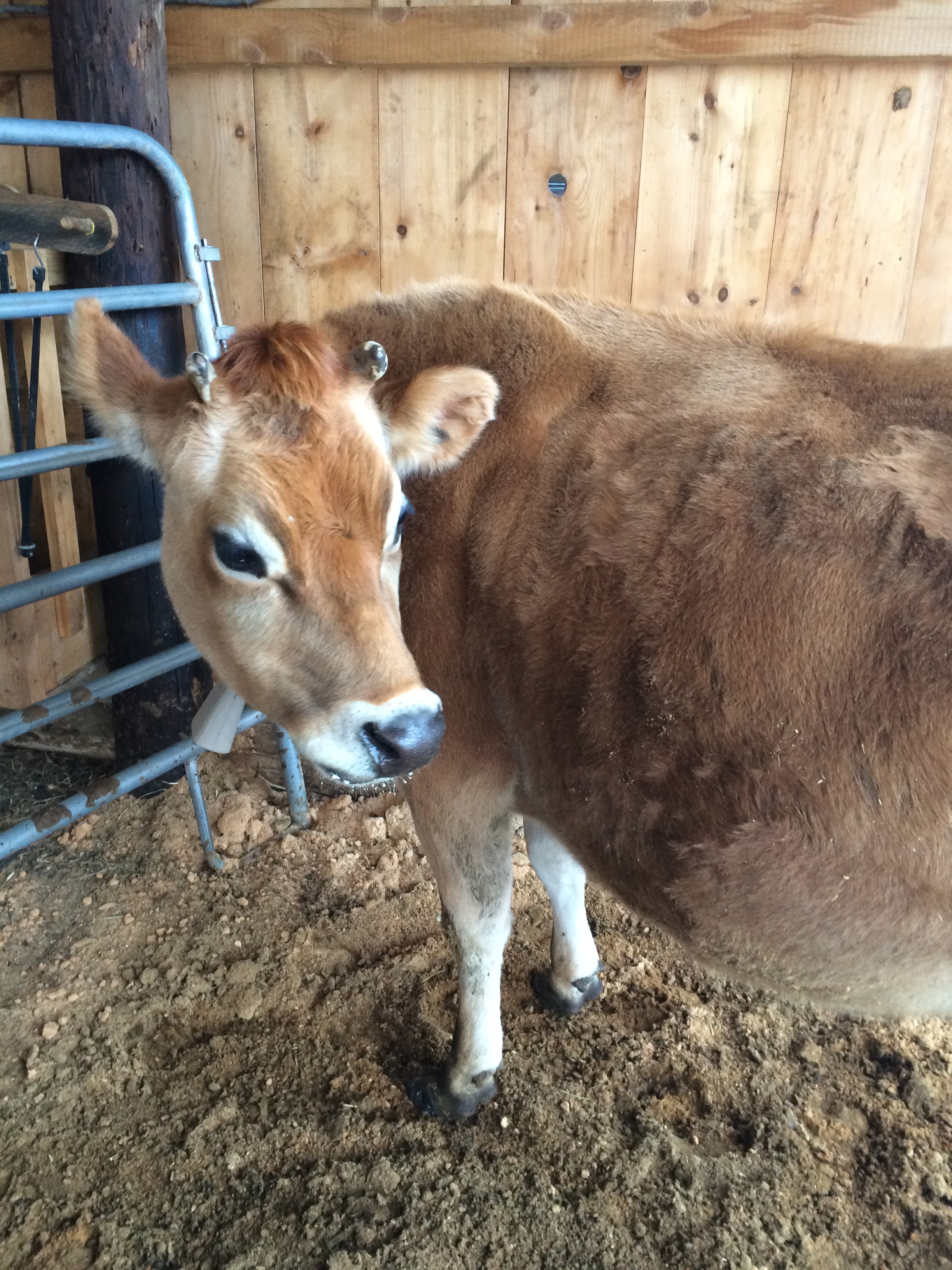
Milk from Jersey cows bear the highest fat content, providing the rich cream the breed is known for:

IMG_0871

Sweet Jersey cow, Mazie, given by a friend.


While dressed warmly and in multiple layers, a respite from the cold was needed and we ducked inside for tea.

Wool socks and long johns worn under thick corduroys.

Wool socks and long johns worn under cords. The Bean boot Stabilicers fell off on more than one occasion while walking through icy snow and would have been better designed with a top strap.

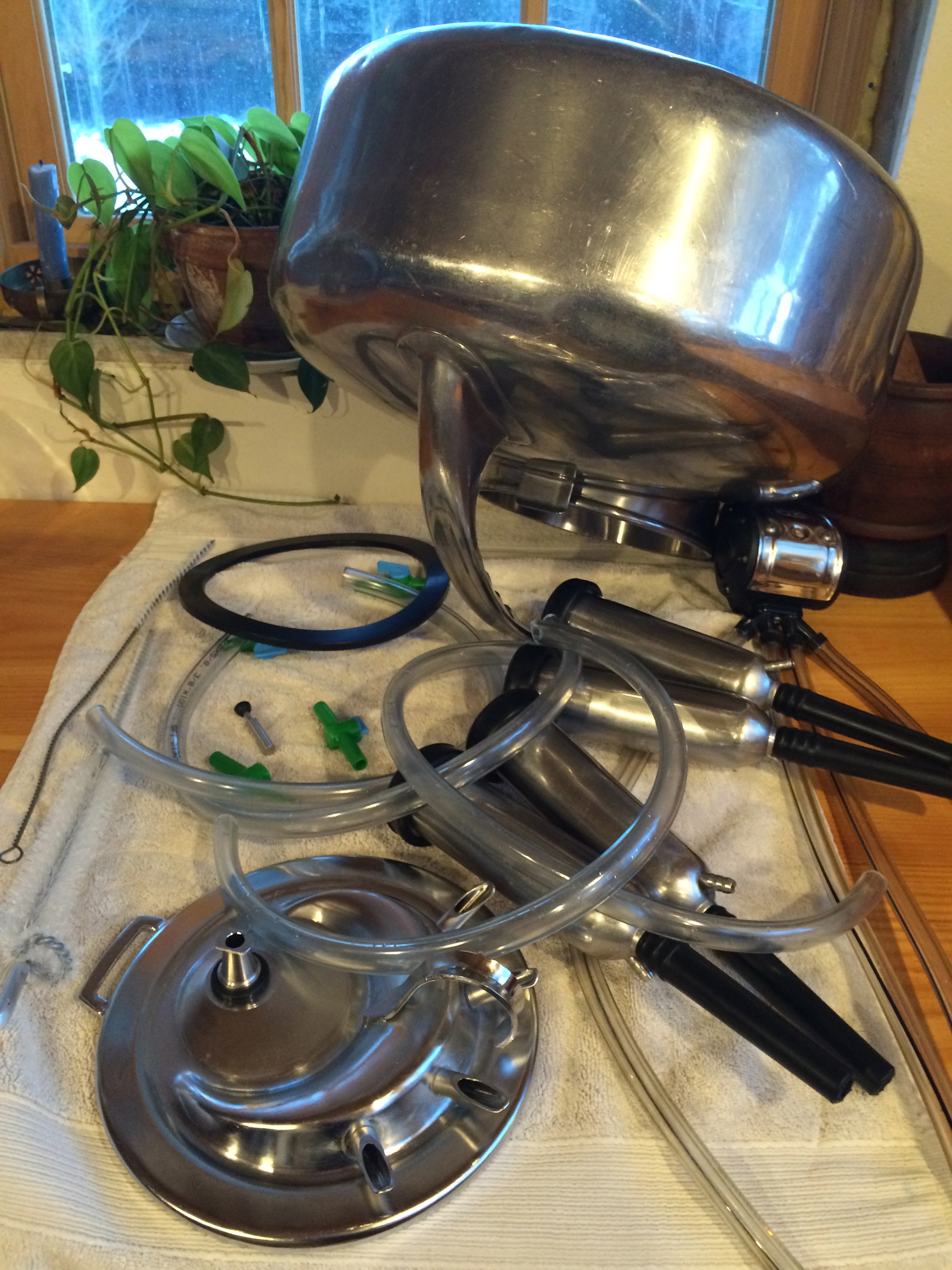
The cows are milked by hand using this equipment.

The cows are milked by hand using this surge milker, a vacuum pump which mimics a calf’s suckle.  The milk is then run through two different filters prior to bottling.

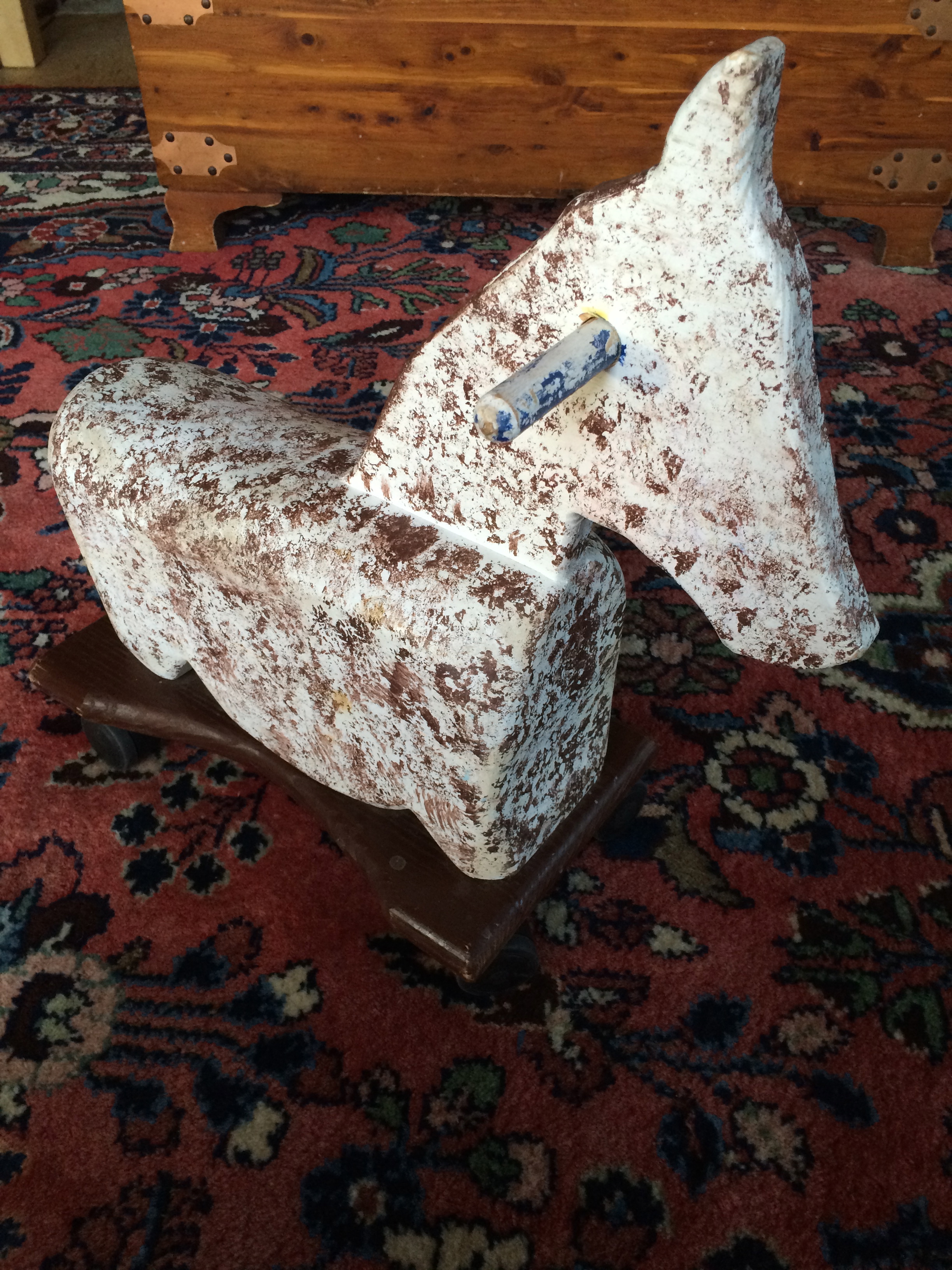
Old wooden horse that little Emma likes to "milk".

Little Emily enjoys “milking” this old wooden horse.  Practice makes perfect.

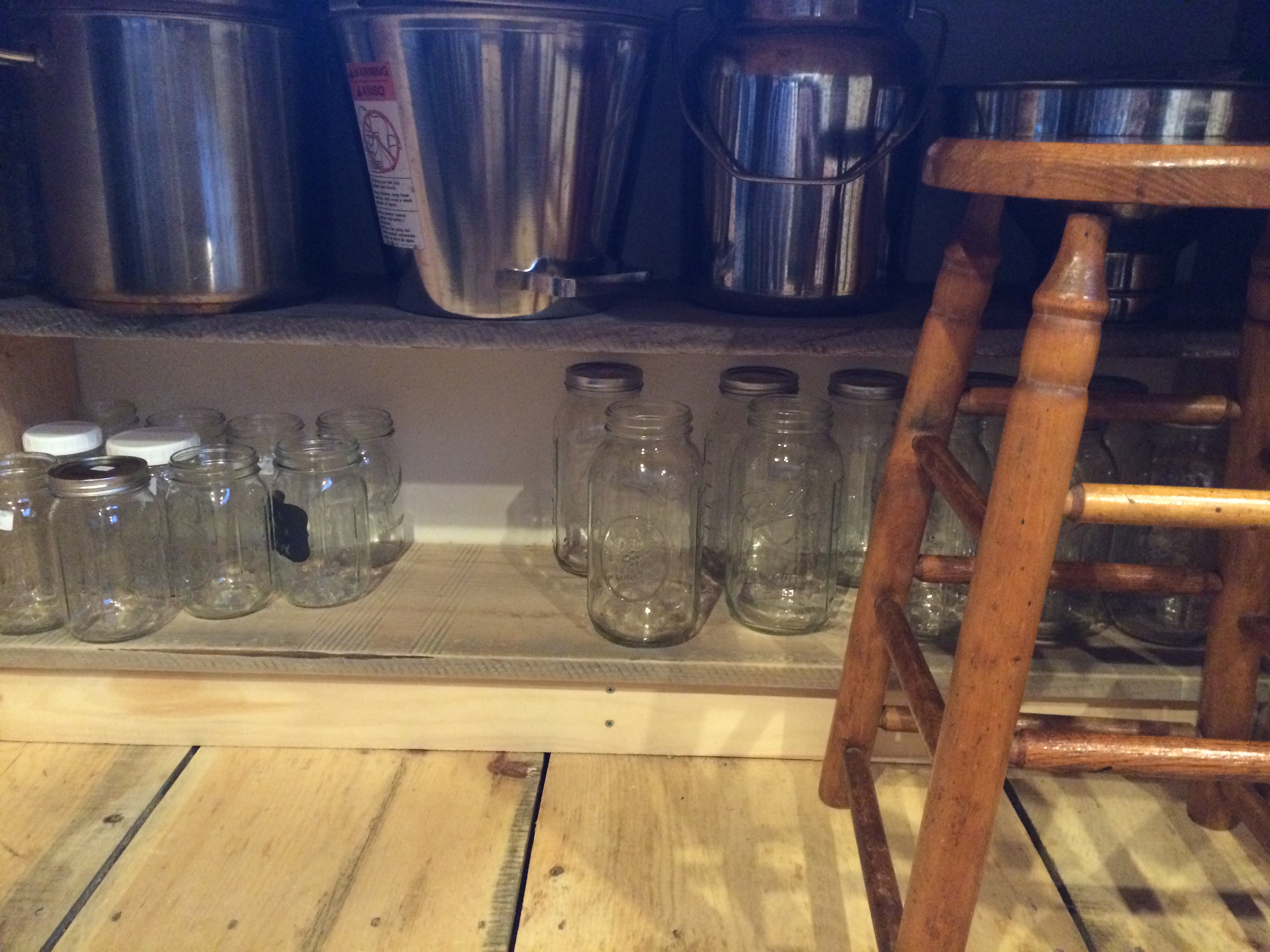
Milking pails and bottles

Pails and bottles used for milk storage

Canned goodies

Lots of canned veggies and jams

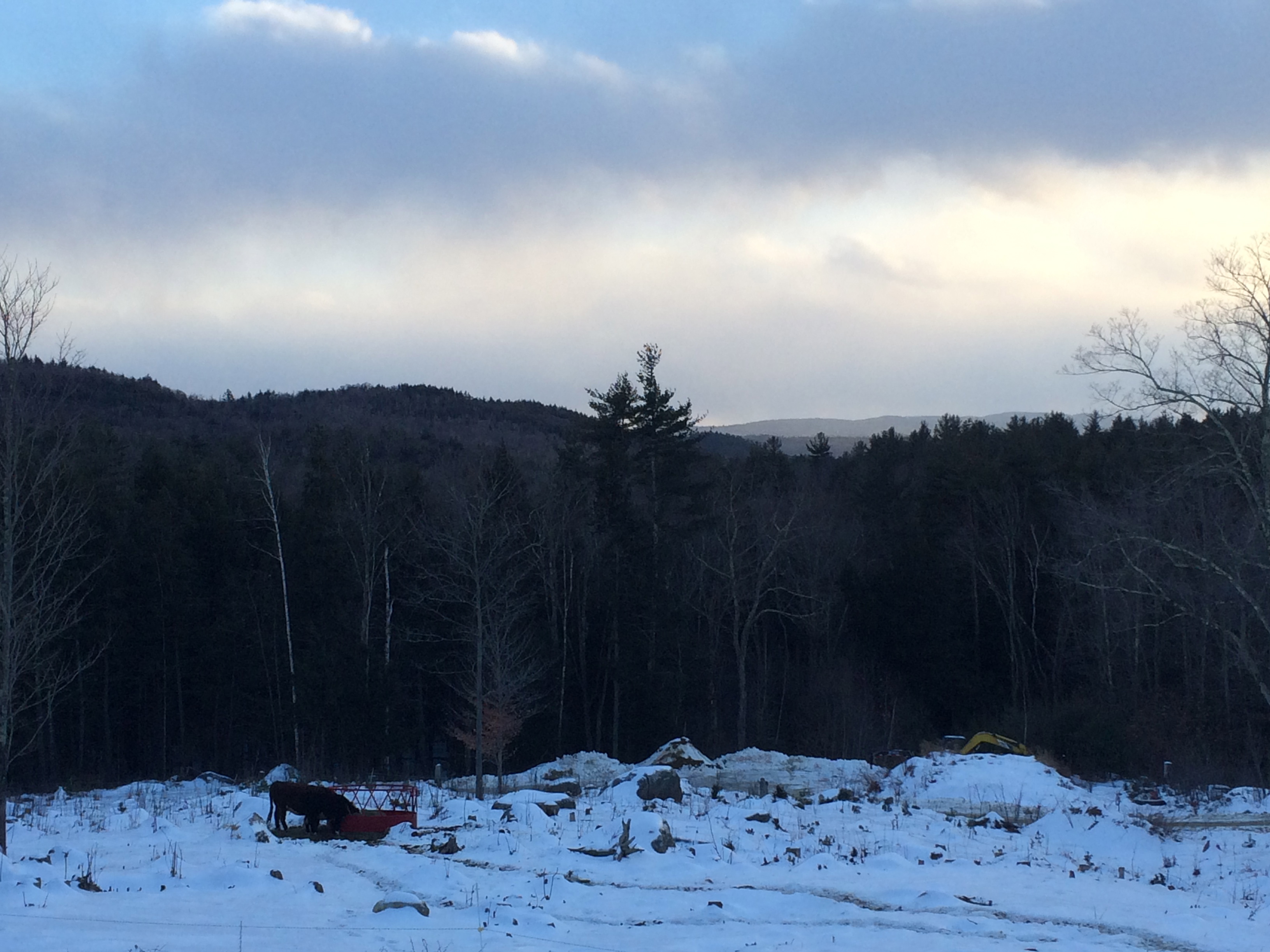
View from the back porch:

IMG_0889

Inspiration for the farm’s name is self evident:

IMG_0893

On a clear day one can see Mount Monadnock but too many clouds obscured the view at the time this photo was taken.

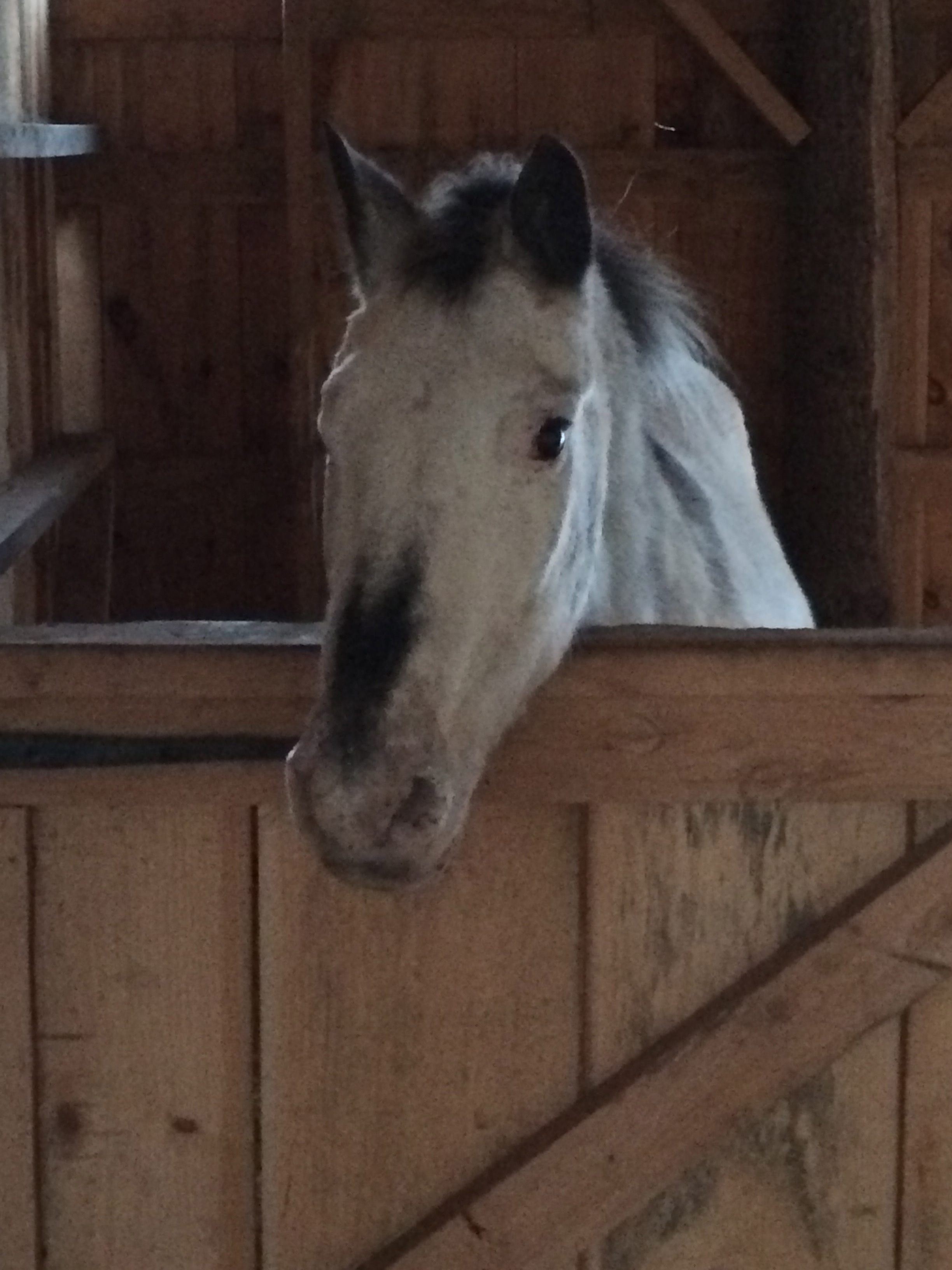
Our last stop for the afternoon was a visit to Rhapsody:

IMG_0910

And friend, Poss:

IMG_0920

With Pam:

IMG_0926

IMG_0939

A seasoned horse trainer (Pam trained with Rick Wallen of Wallen West Farms in Marshall, WI), her practical knowledge as well as a degree in equine management are invaluable on the farm.

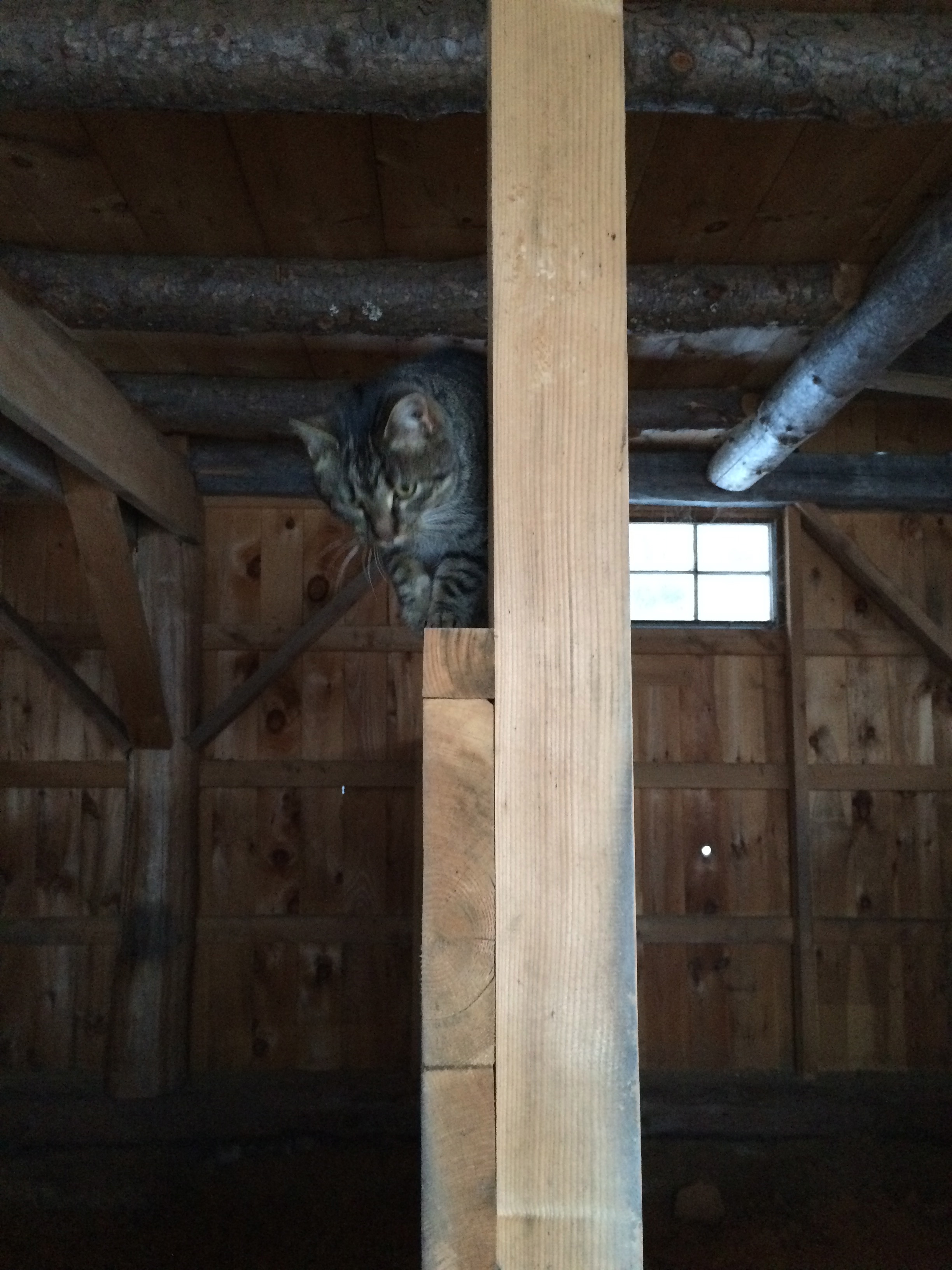
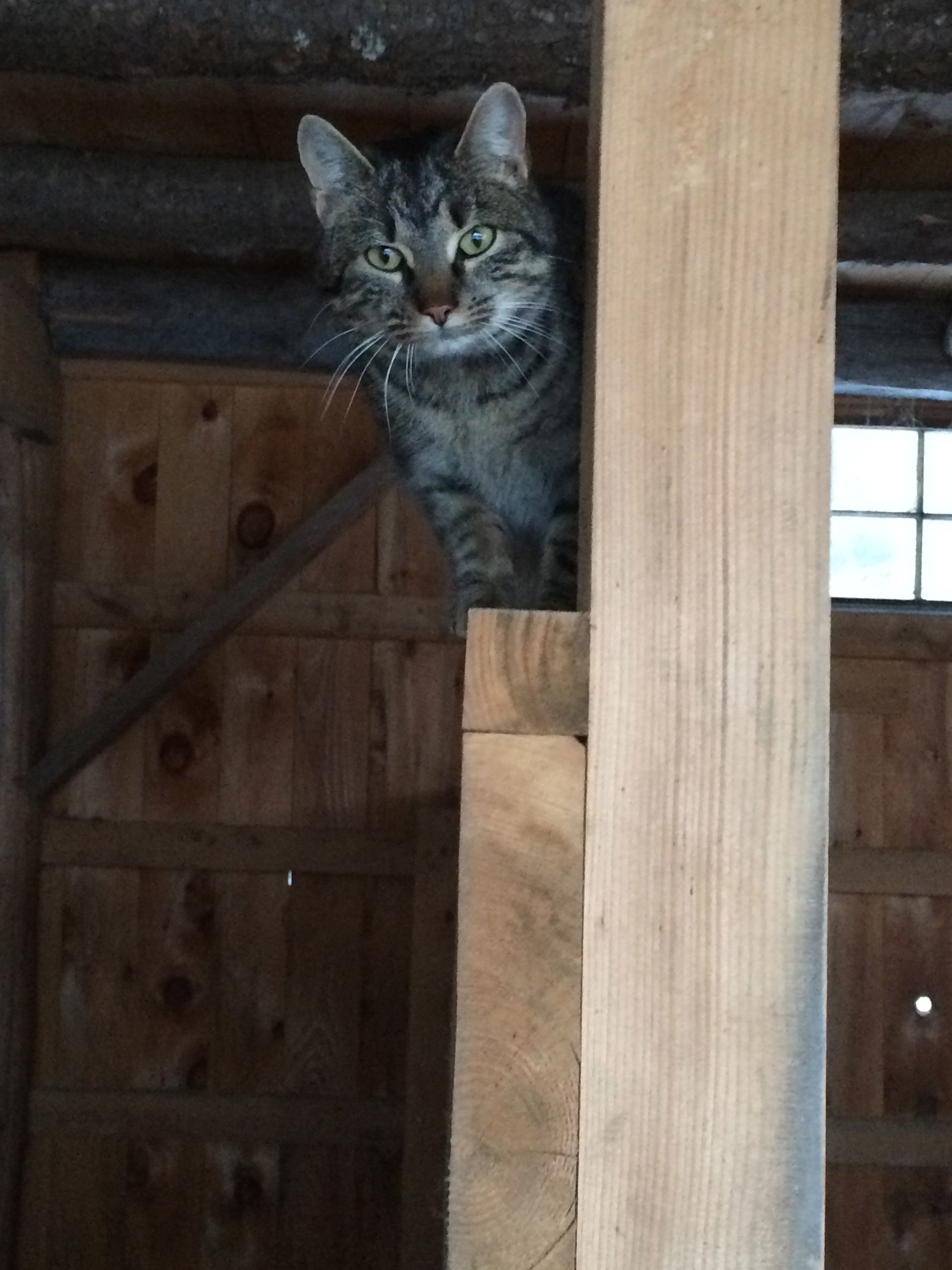
Barn cat, Puss, was cautiously curious:

IMG_0906

IMG_0907

Plumb pals:

IMG_0934

Poss helps guide Rhapsody, who is blind in one eye.

IMG_0938

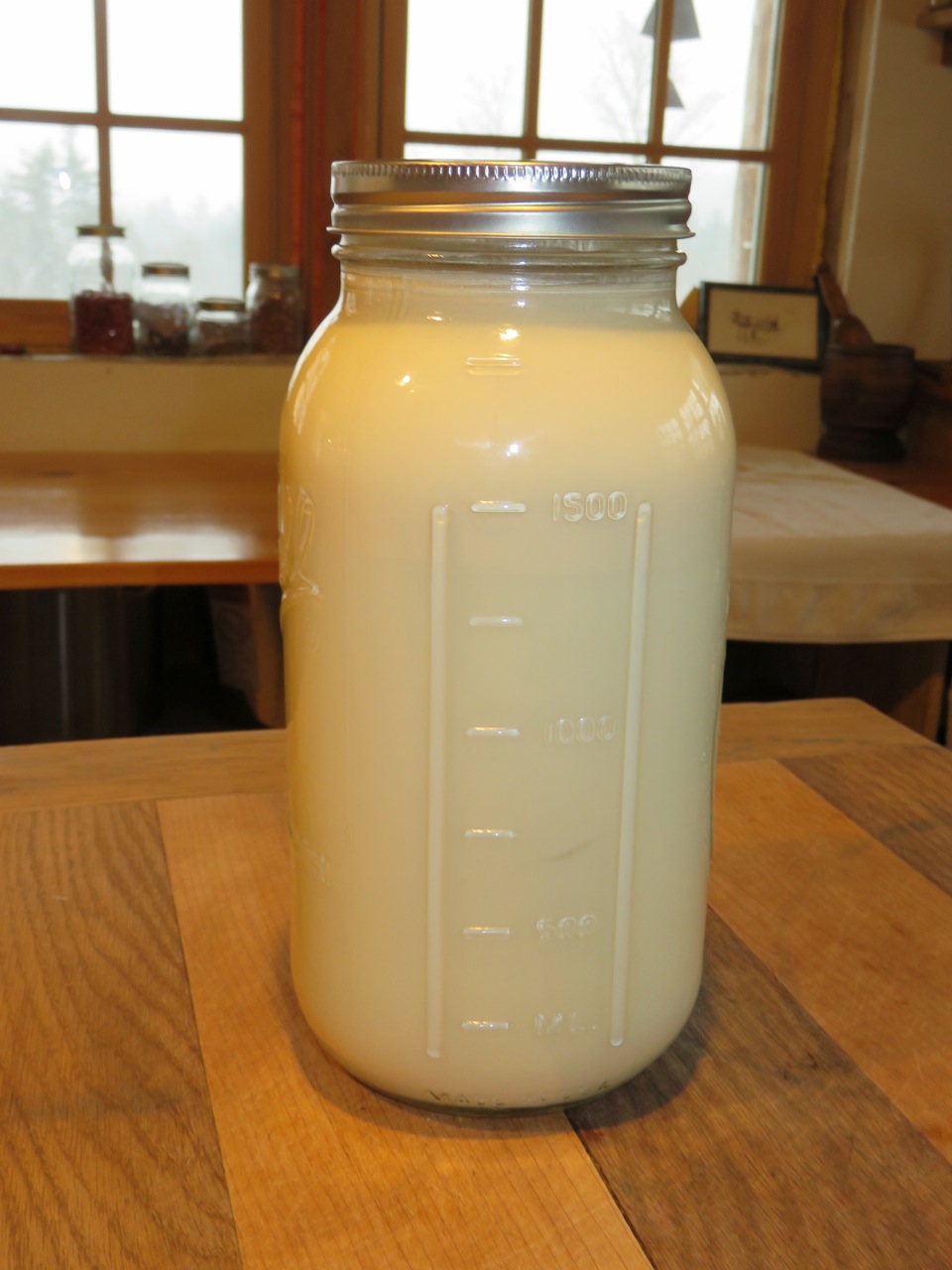
After thanking Pam for the lively farm tour and giving Tipper one last pat, it was time to leave – but not before picking up a fresh bottle of raw milk to take back home:

IMG_1234

TRACK AND FIELD

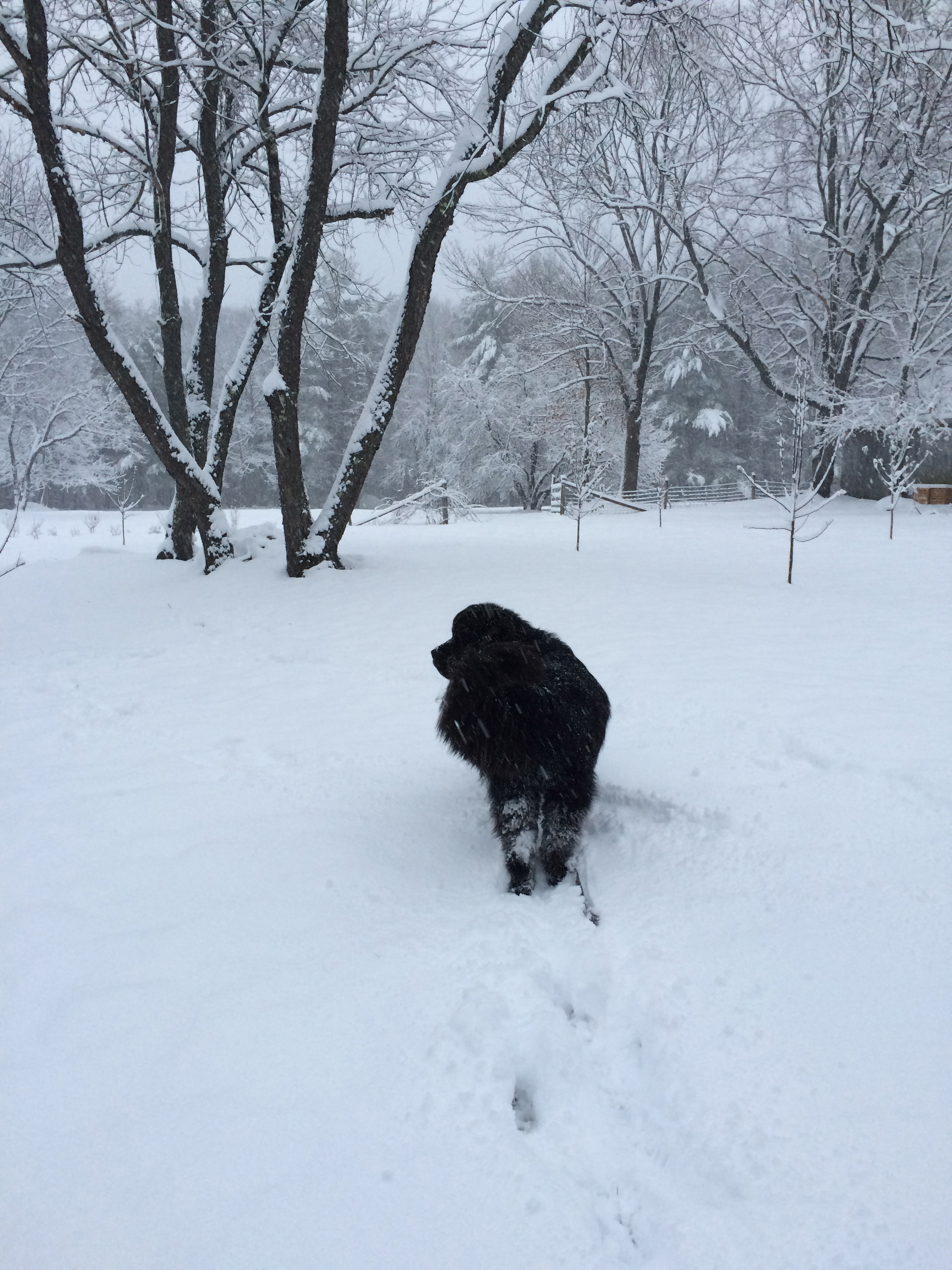
Our trusty Newfoundland has the remarkably inconvenient habit of waking in the middle of the night to bark unreservedly at random wildlife passersby.  Vexing as it is to be so abruptly roused at odd hours, the following morning always presents an interesting opportunity to see what may have been crossing through as we are out on our daily walk through the field.

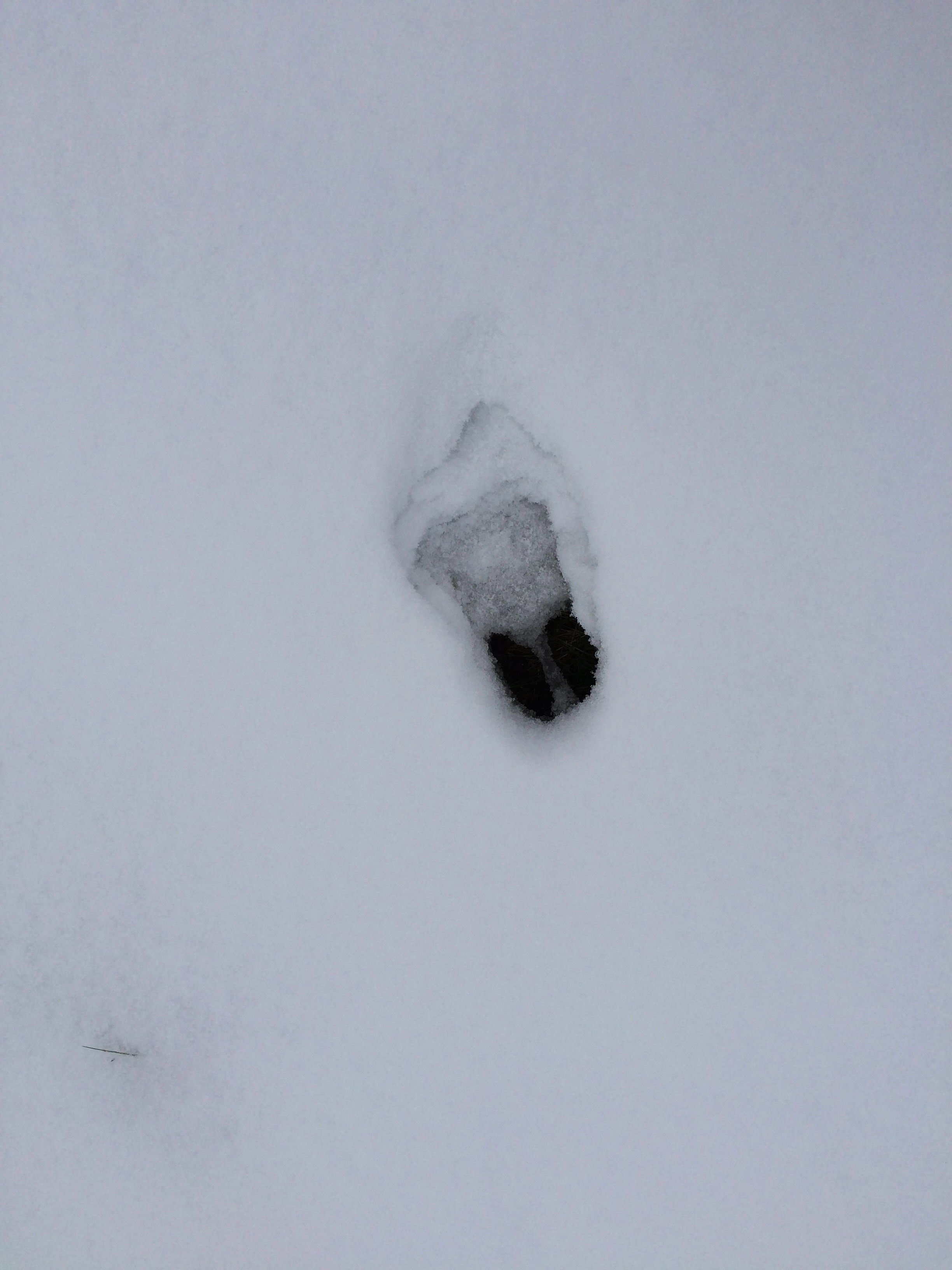
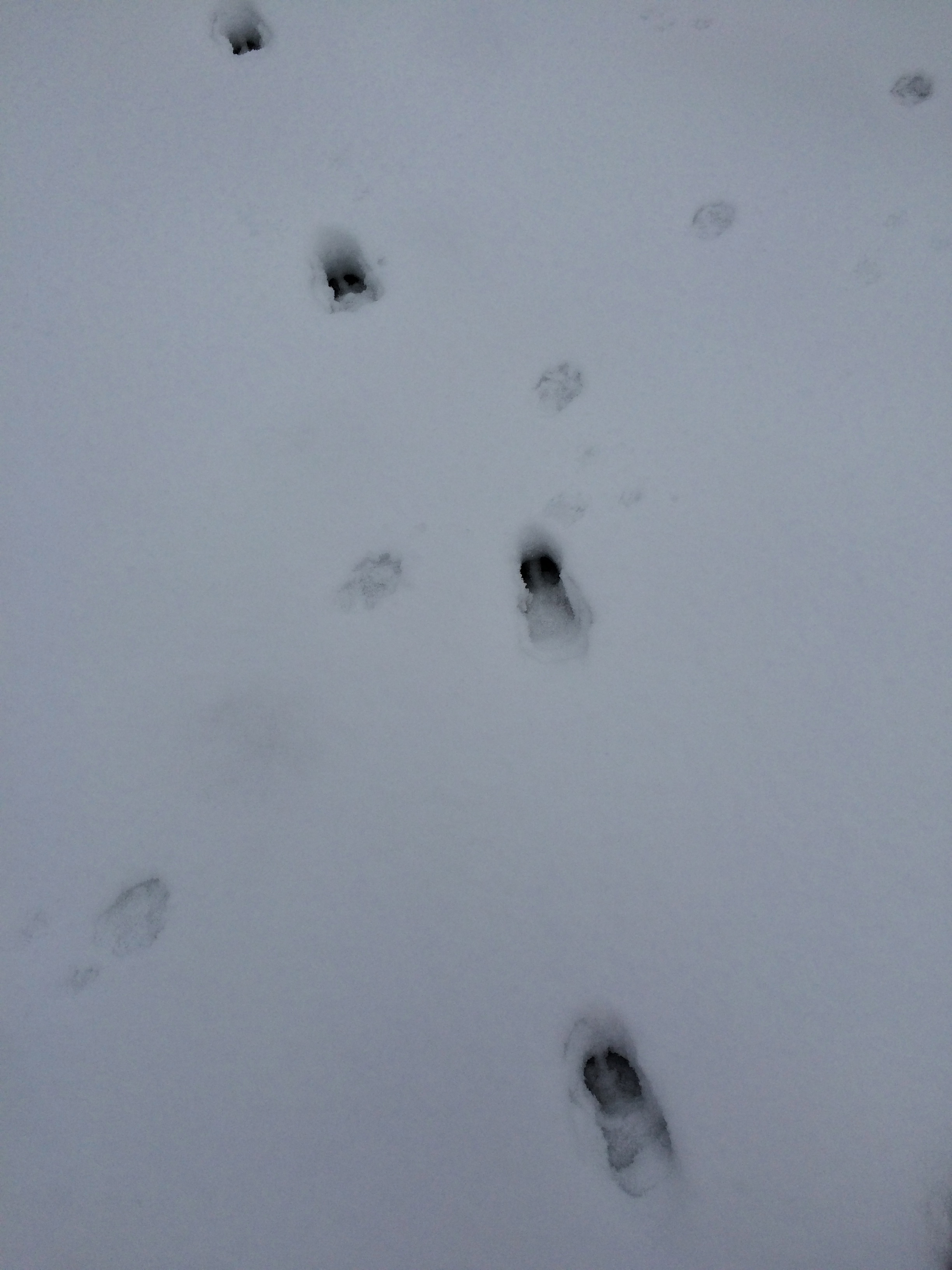
Fresh snowfall eases the identification process considerably.  A few of our recent findings:

Coyote (Canis Latrans)

Coyote (Canis Latrans)

White-tailed deer (Odocoileus virginianus)

White-tailed deer (Odocoileus virginianus)

Racoon (Procyon Lotor)- on the right

Racoon (Procyon Lotor) – on the right

A pair of crossed tracks - deer and coyote

A pair of crossed tracks – deer and coyote


And these rather fierce looking tracks:

IMG_0202


Proud Owner of above:

IMG_0075

HOW MANY CORDS?

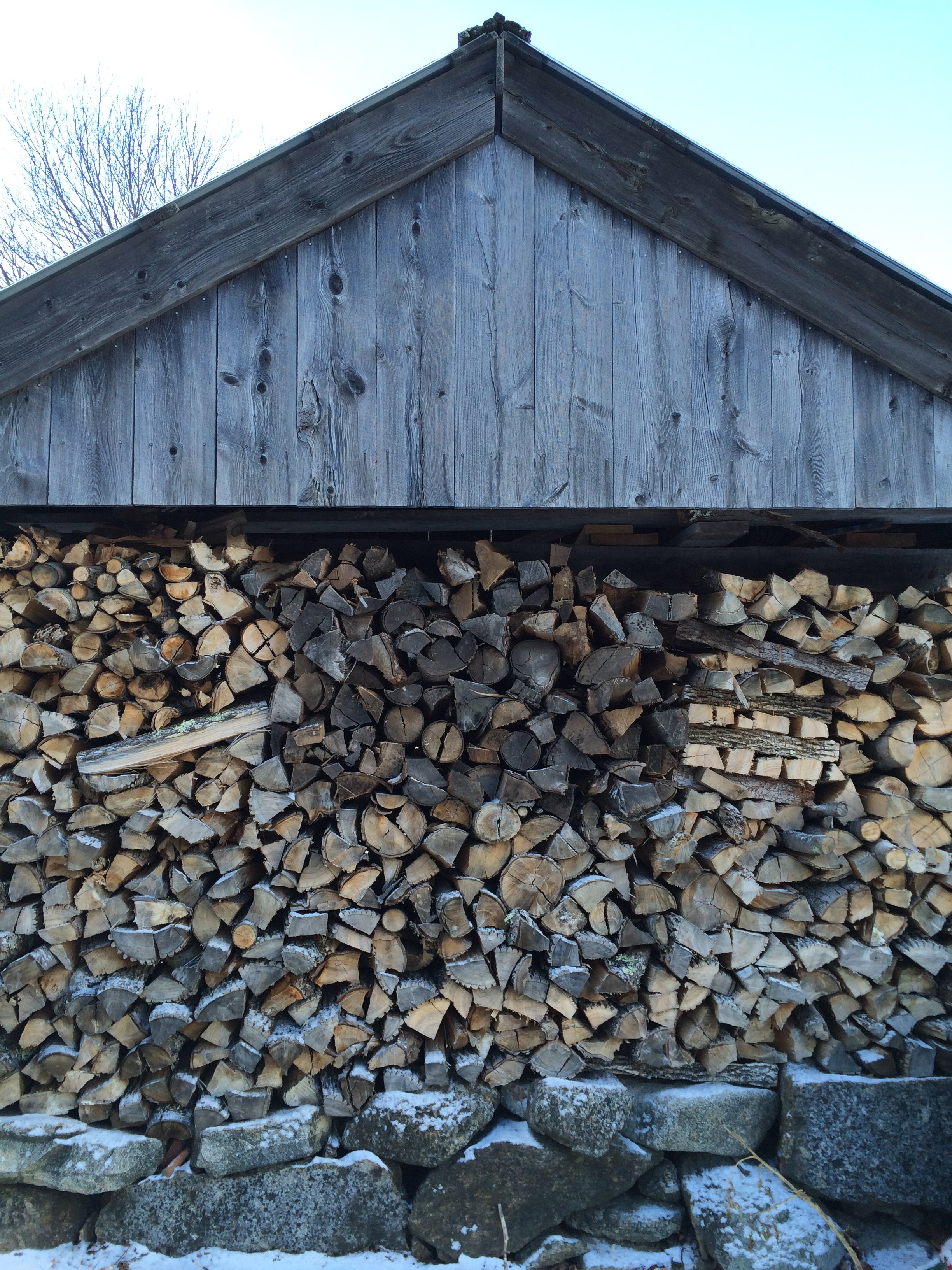
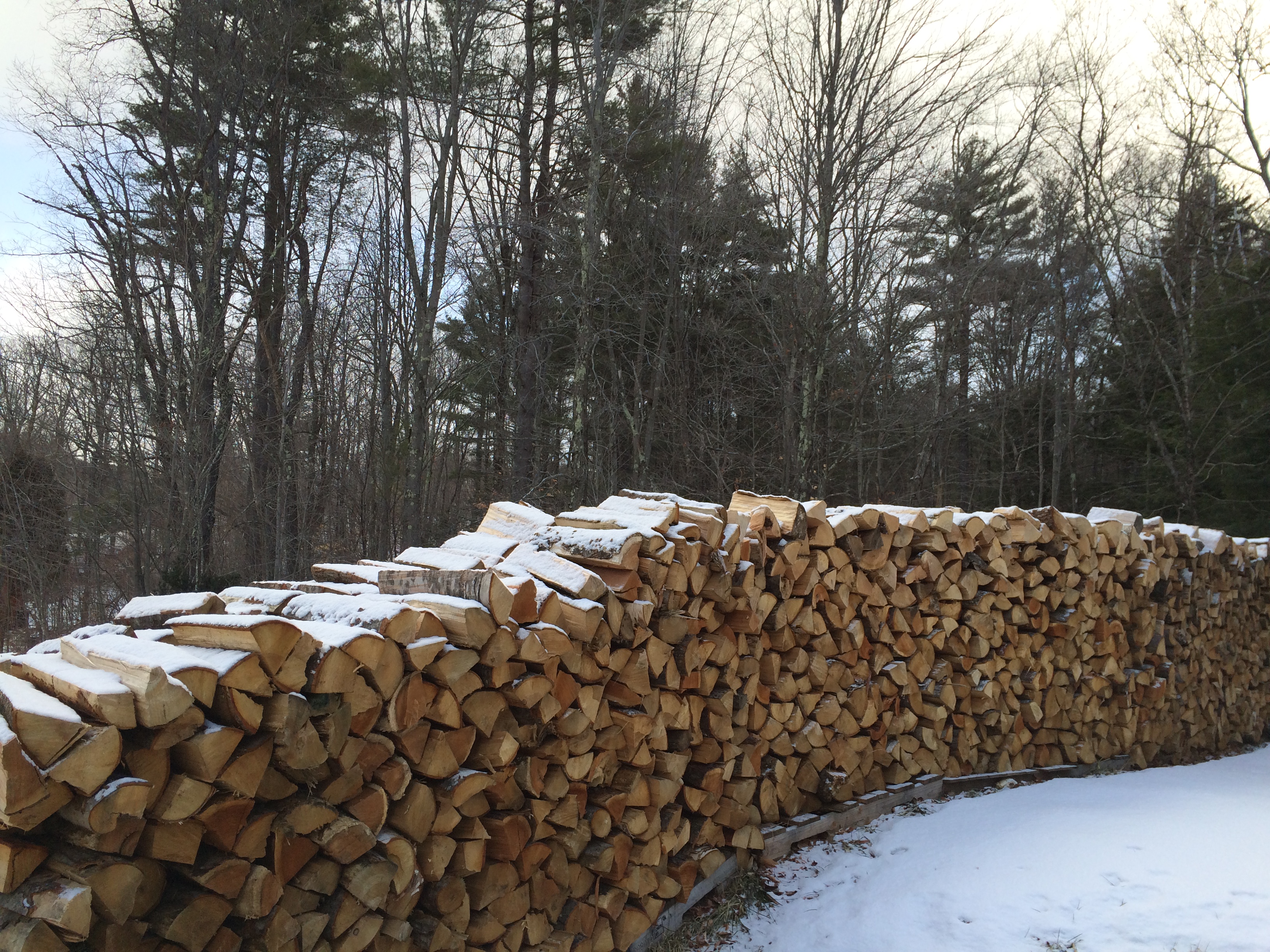
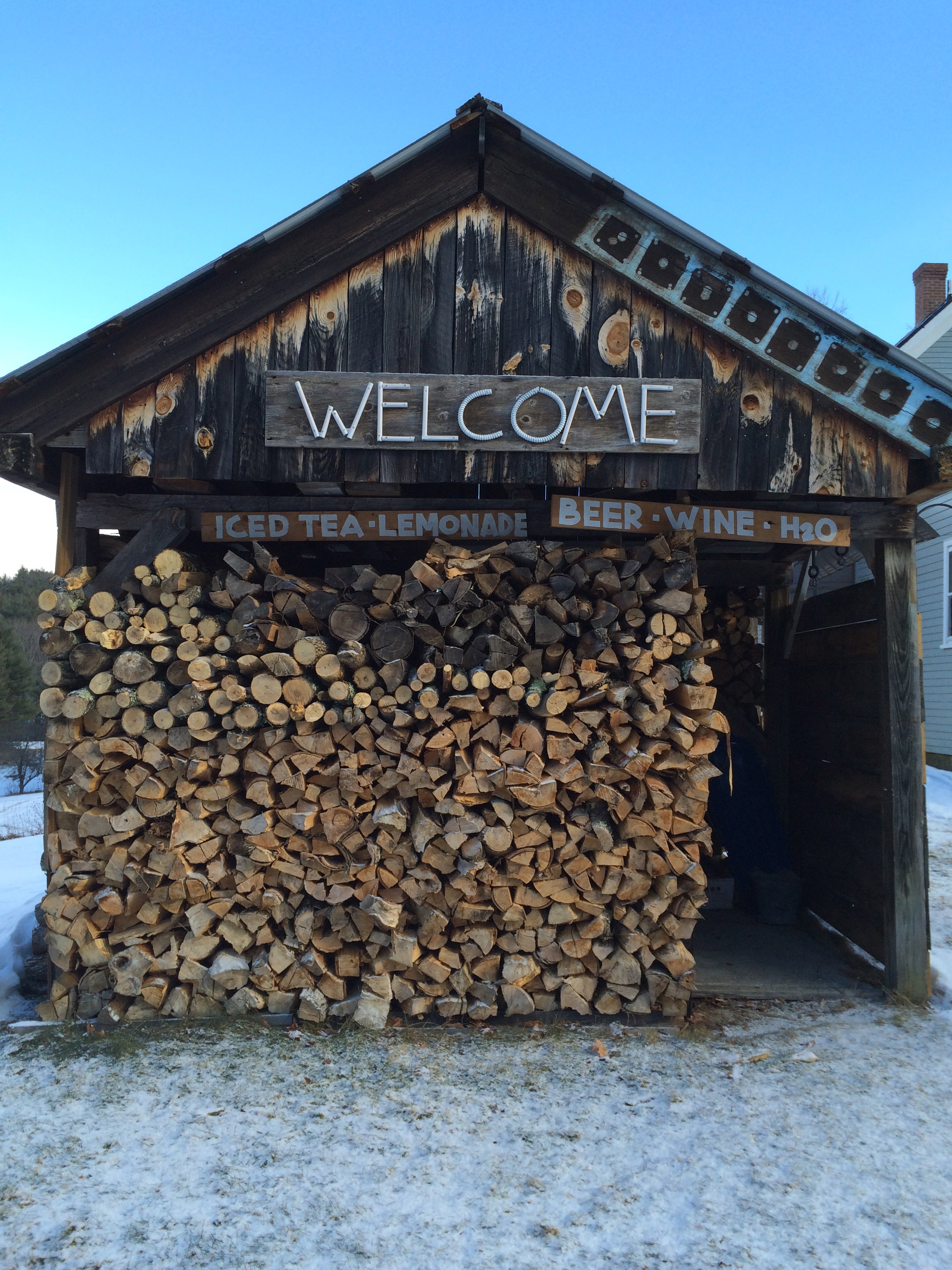
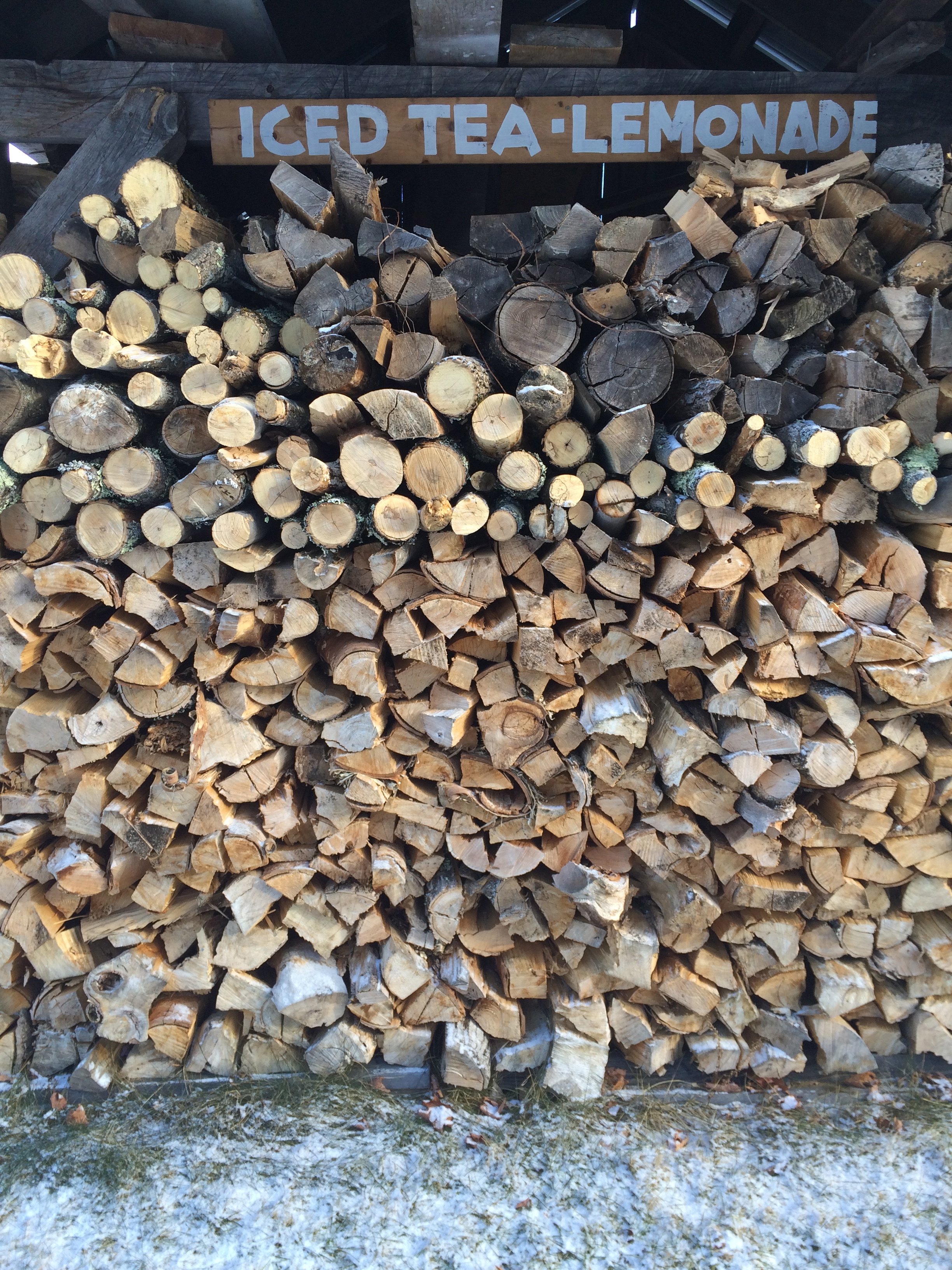
There is something abundantly reassuring about a freshly stacked pile of wood.  It is the promise that forthcoming storms will be met with ample warmth and that electrical power outages, whatever other damage or inconvenience they may cause, will not render one entirely defenseless against the elements.  Images of cozy nights spent by the fire also come to mind.

Each year, preferably before colder weather sets in, an order for firewood is placed with our local supplier.  The question inevitably arises: how many cords are needed?  A number of factors are taken into account, not the least of which is the expected severity of the coming winter.  Last season brought one of the coldest on record in the past twenty years, catching some unprepared.  (The record low for NH is still January 29, 1934, an arctic -47 degrees.)  Our standard six cords of wood were fully exhausted by the end of January and an order for two additional cords needed to be placed.

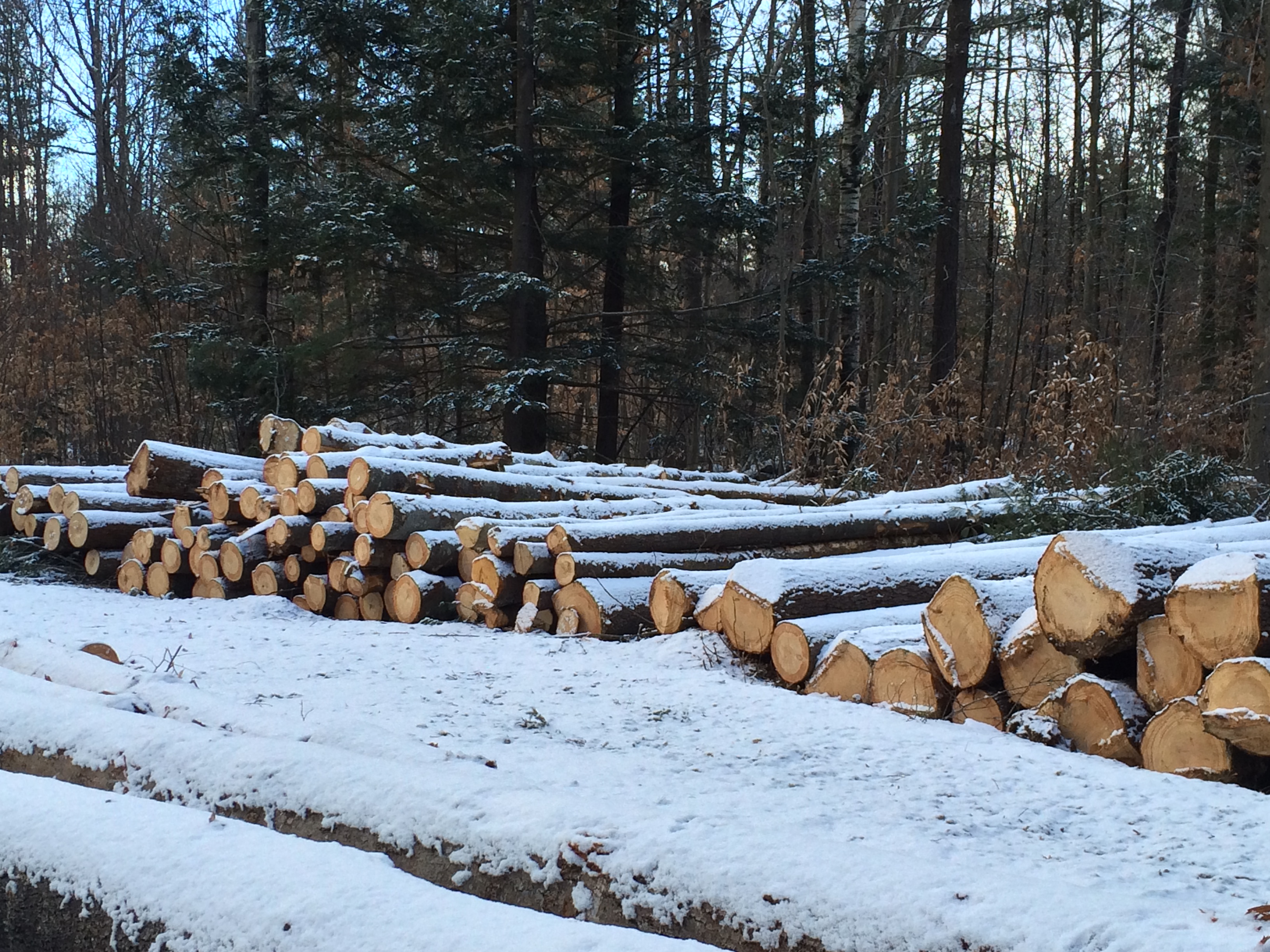
Below, logs waiting to be split and distributed:

IMG_0691

Depending on the type of wood, tools used and number of people involved in the effort, it might take anywhere from 2-3 hours or longer to cut and split a single cord of wood. The amount of solid wood in a cord varies depending on the size of the pieces, averaging about 85 cubic feet.  Quality of wood is also to be considered and varies across species. Hardwoods such as maple and birch are best for extended or overnight burnings while softwoods such as pine, spruce and cedar produce more creosote and are best reserved for kindling.

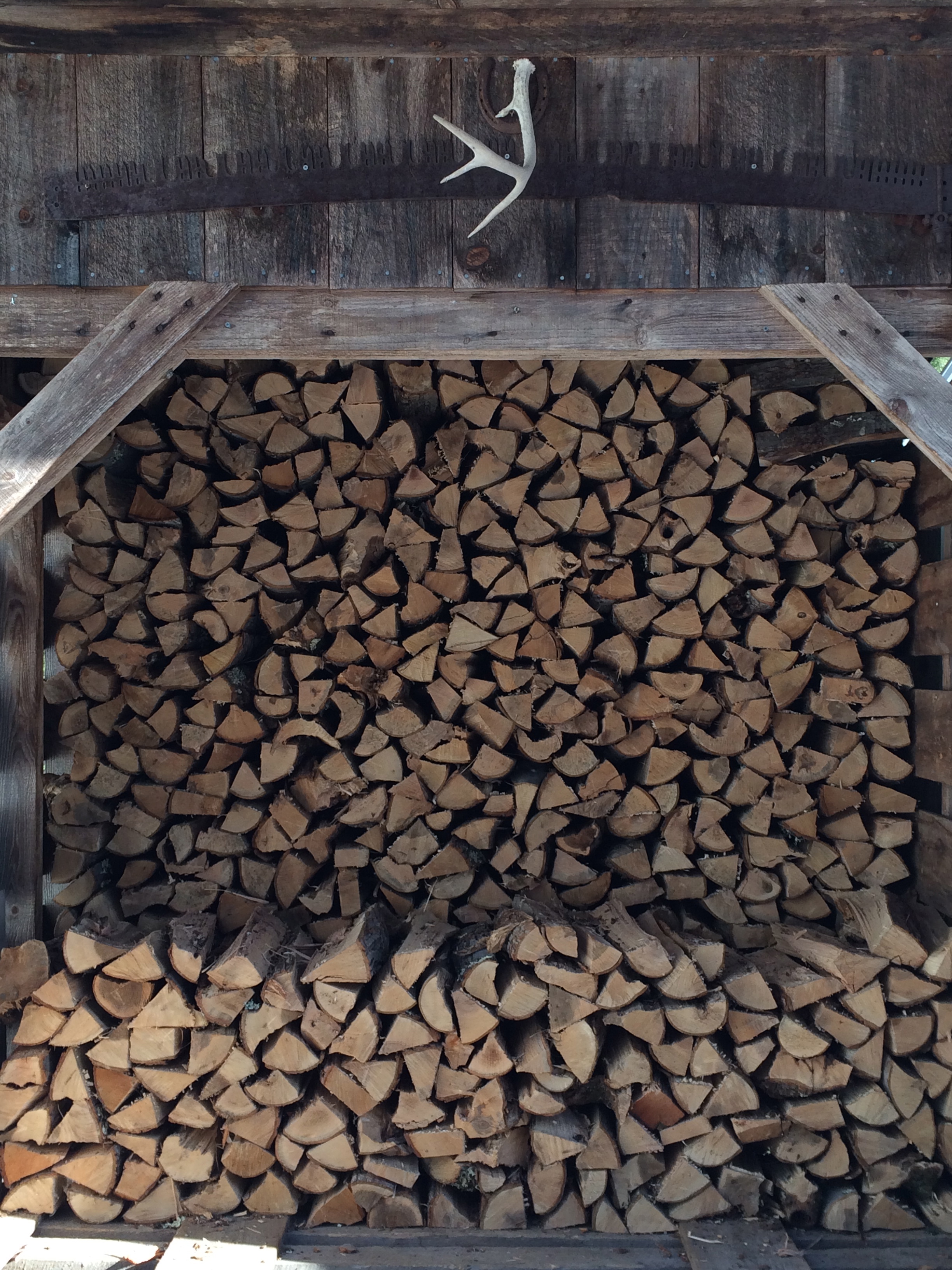
Aside from the more practical points, there is a certain visual appeal to be appreciated in the orderliness of deliberately stacked wood.  A few images from around town:

IMG_0594

IMG_0684

IMG_0328

IMG_0674

IMG_0694

IMG_0678

IMG_0679


WINTER WHITES

Well into the month of December, the Lake Sunapee region of NH has been enjoying unseasonably warmer temps this year.  Much of the snow that has fallen is already melting and the usually predictable white Christmas was more of a mix of ice, rain and slush than powder.

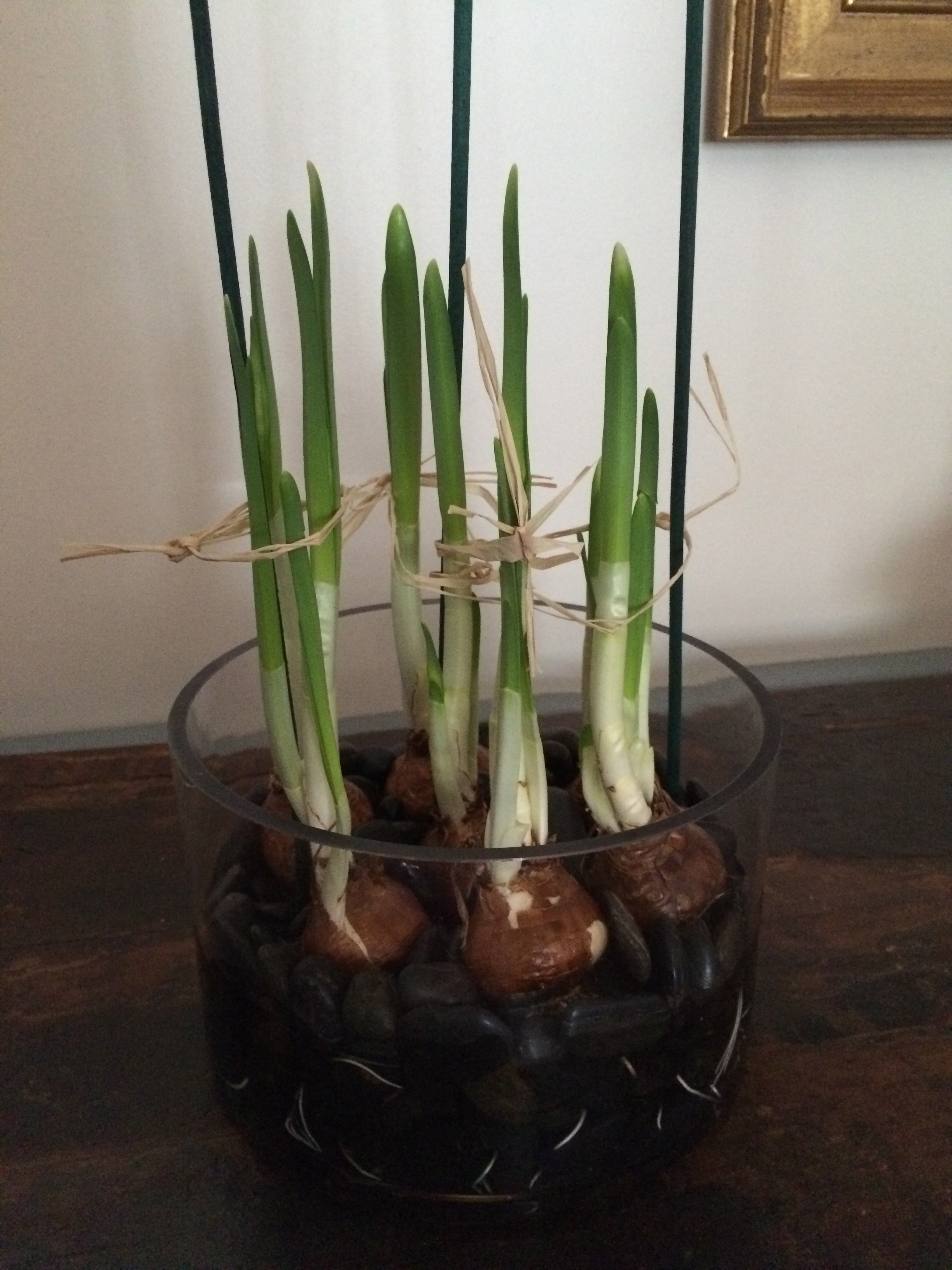
Whatever the weather outside, paperwhites (Narcissus tazetta) bestow a bit of Noël sous la neige indoors.  If planted at the right time, one can still enjoy the blooms weeks after the Christmas tree is past its prime and other holiday decorations have been taken down.  Their tendency to become top heavy and fall over can make them somewhat of a challenge when forcing the bulbs but this is easily overcome by training them early on:

IMG_0225

Loosely tying the emerging stems to wooden stakes helps to ensure proper, upright growth

IMG_0385

Ties are periodically adjusted upwards to accommodate longer stems


IMG_0386

Blooms about to emerge

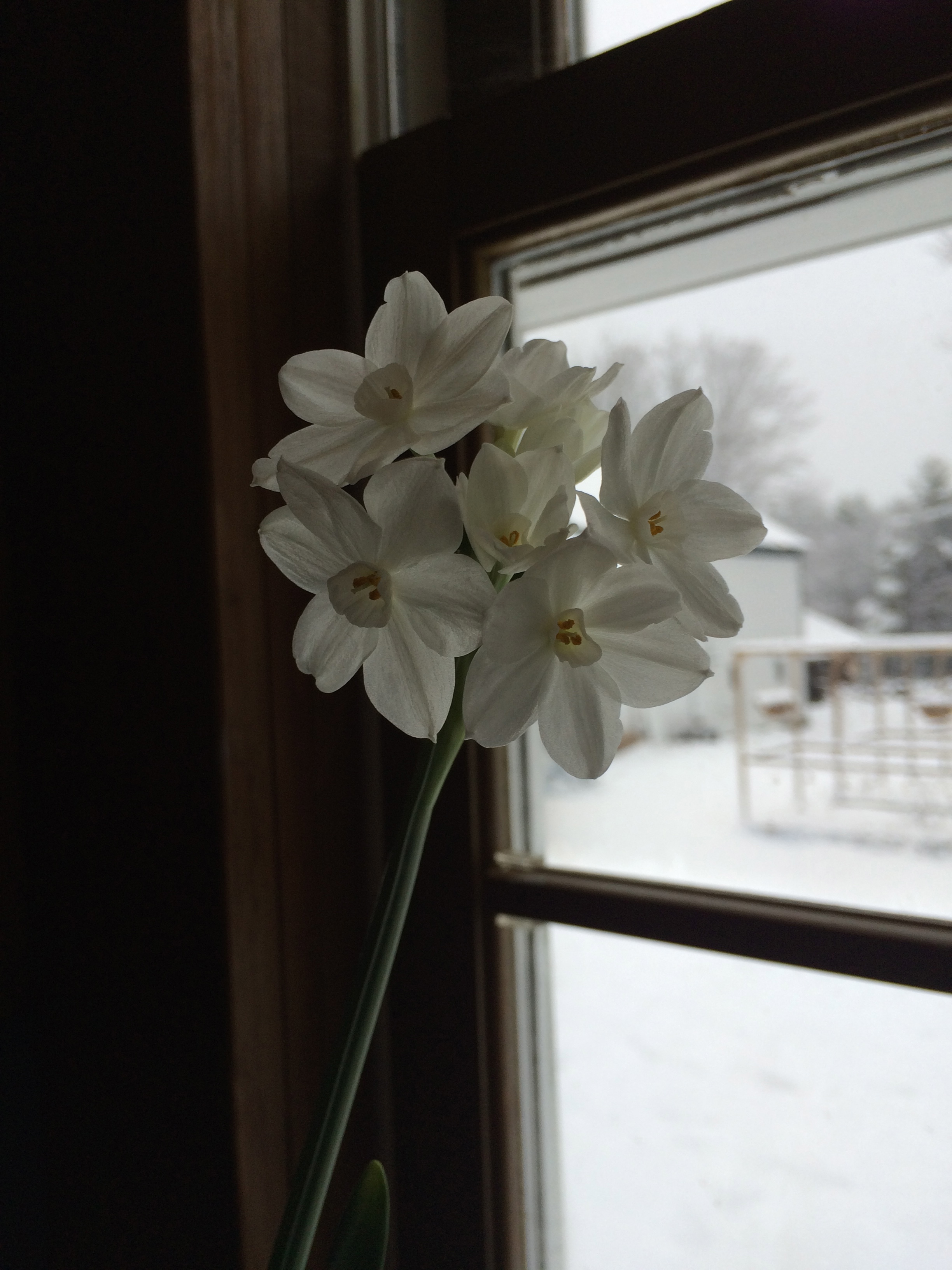
First bloom of the season

First bloom of the season

Alternatively, William B. Miller, Professor of Horticulture and Director of the Flowerbulb Research Program at Cornell University, has devised a simple and effective method to reduce stem and leaf growth with the use of dilute solutions of alcohol, eliminating the troublesome paperwhite “flop”:

http://www.hort.cornell.edu/miller/bulb/Pickling_your_Paperwhites.pdf

Some prefer the more graceful look of a longer stem but whatever the method used to grow them, it’s worth the extra effort to be able to enjoy the fragrant, star-shaped flowers during the winter months.

IMG_0406


IMG_0497

IMG_0502


CHRISTMAS EVE AT THE BRADFORD CENTER MEETINGHOUSE

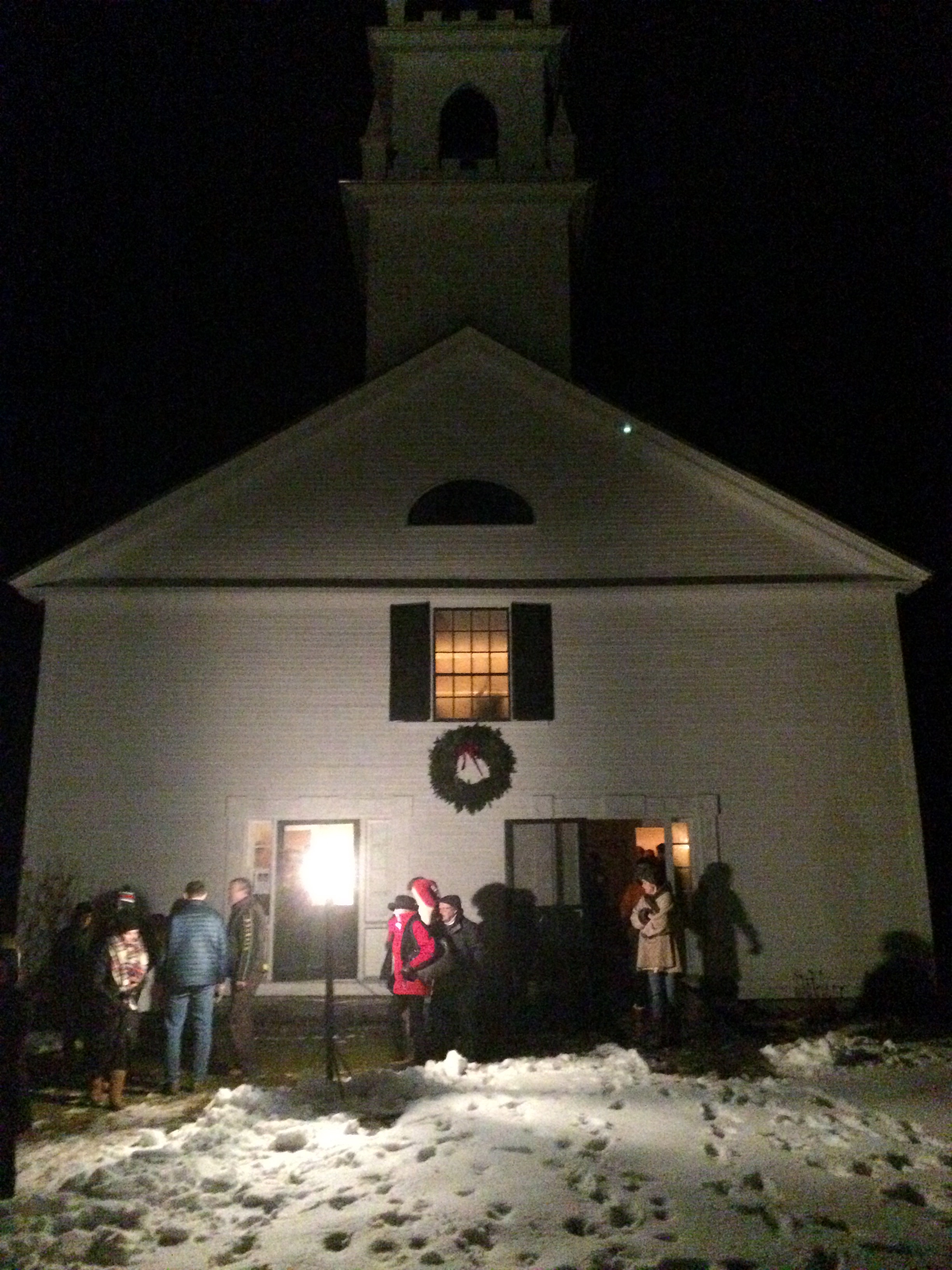
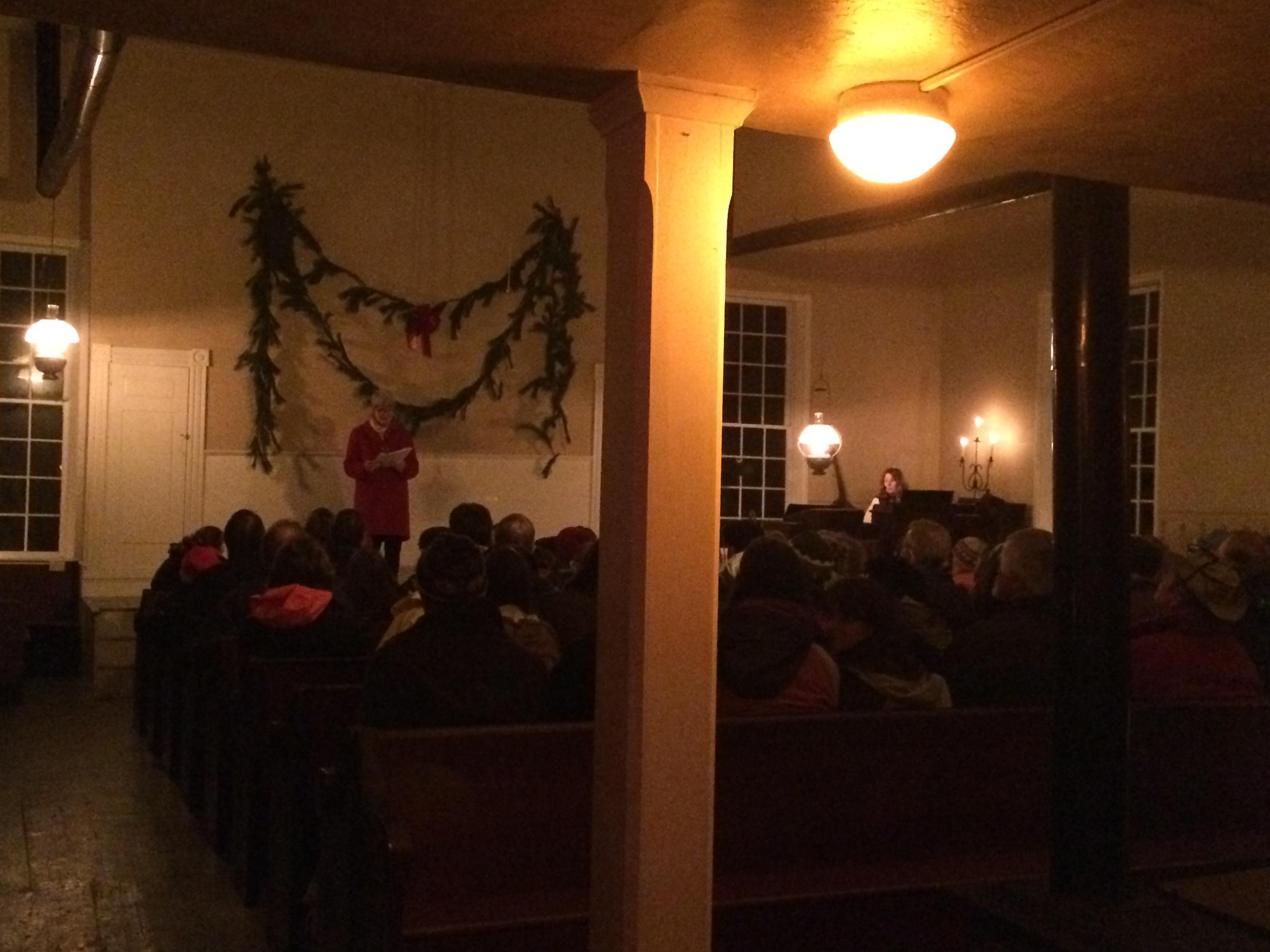
Each year the Bradford Center Meetinghouse hosts its annual Christmas Eve Pageant.  Children take part in a live nativity scene, yuletide carols are sung by all and there is a palpable feeling of holiday cheer and goodwill in the air.  This year brought an evening of rain in place of the usual fresh blanket of snow but warmth of spirit displaced any vestige of the damp chill.

IMG_0468

The Bradford Center Meetinghouse

IMG_0478

A soft beacon against the night sky

IMG_0460

10309502_10100659057525369_4672450462538356183_n-1

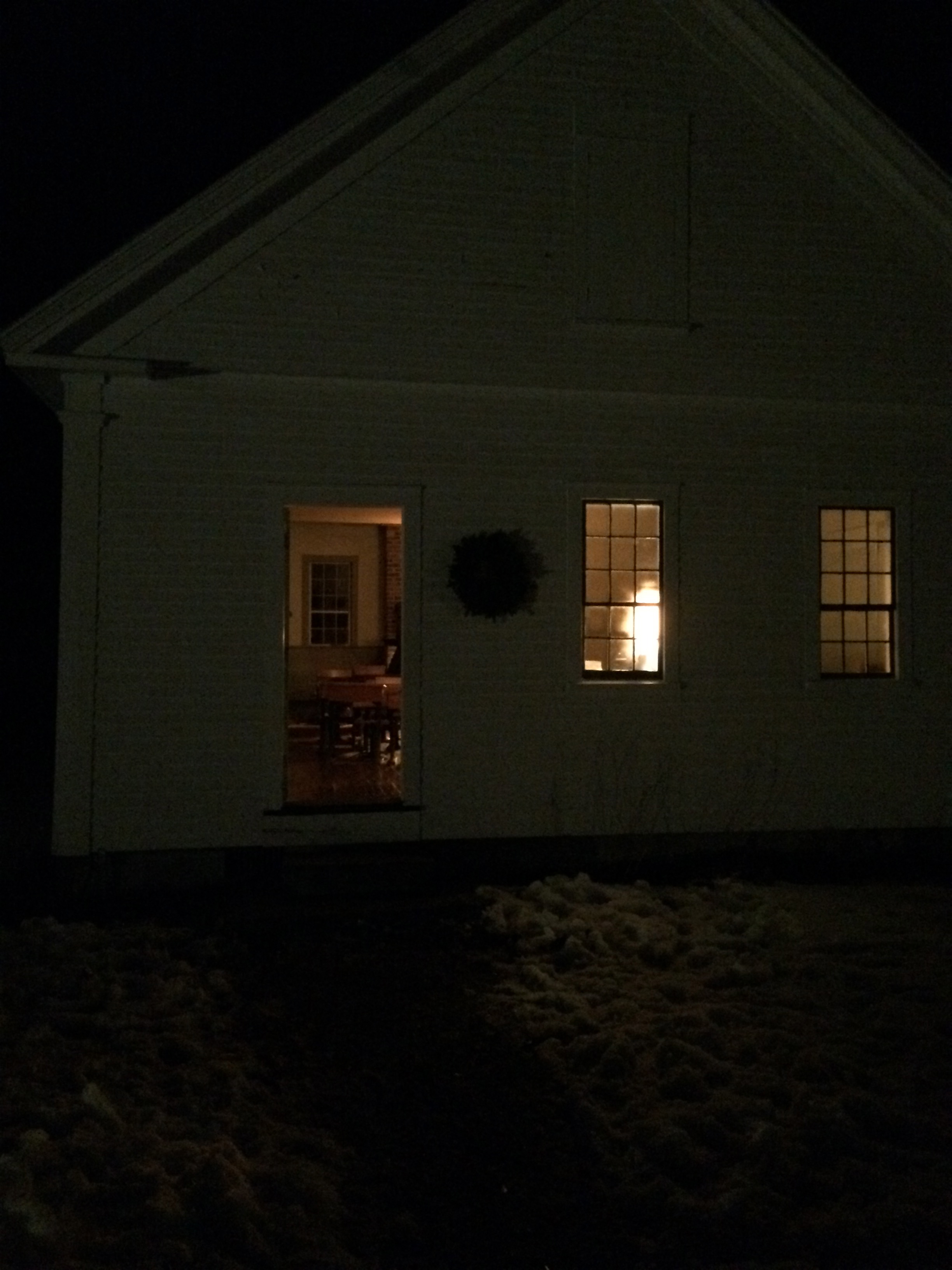
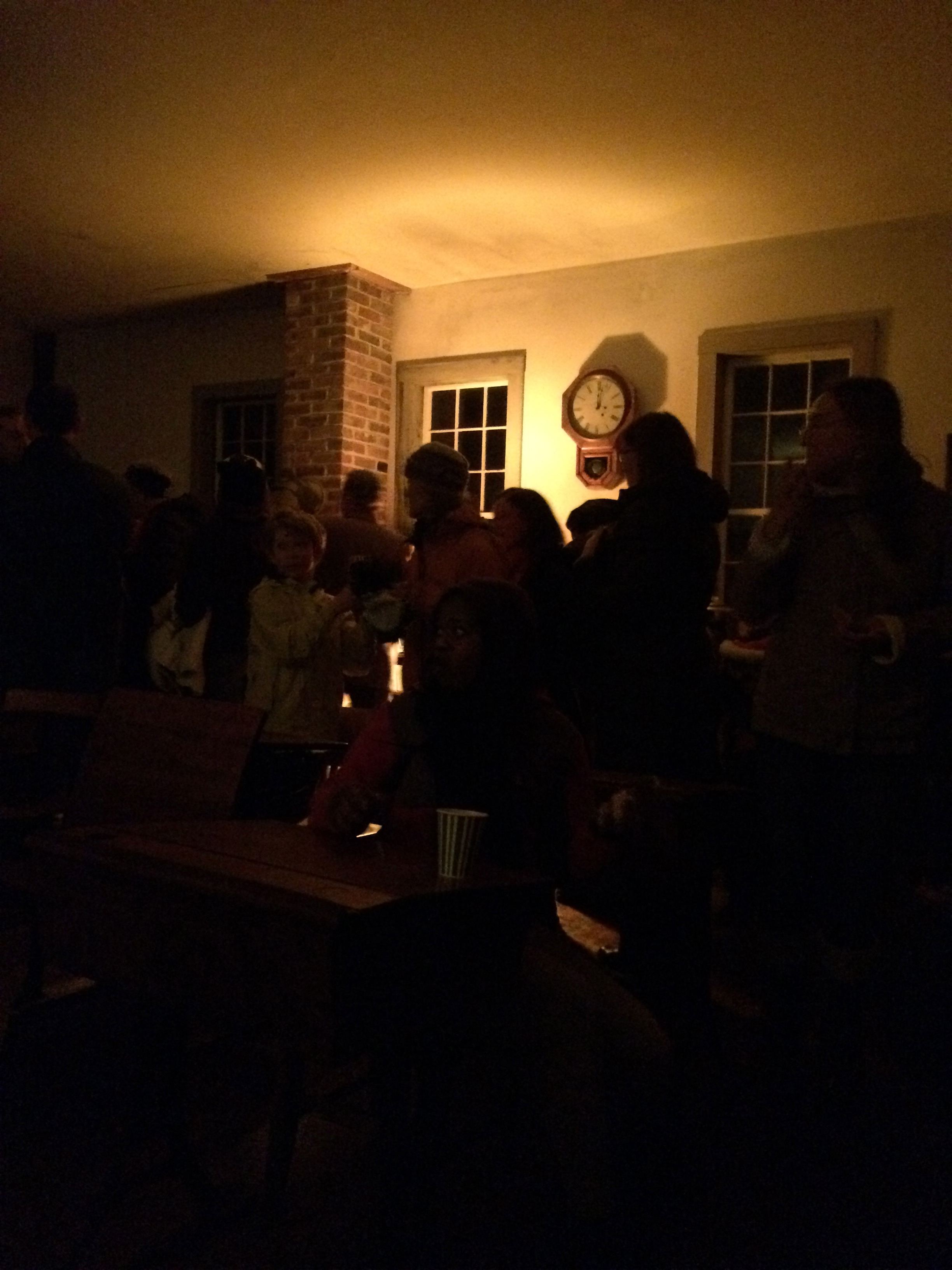
Cookies and hot cocoa at the old Schoolhouse followed the festivities:

IMG_0494

The Bradford Center Schoolhouse


IMG_0487

IMG_0486

Wishing you a Merry Christmas and Happy Holidays!

TOWN TRIMMINGS

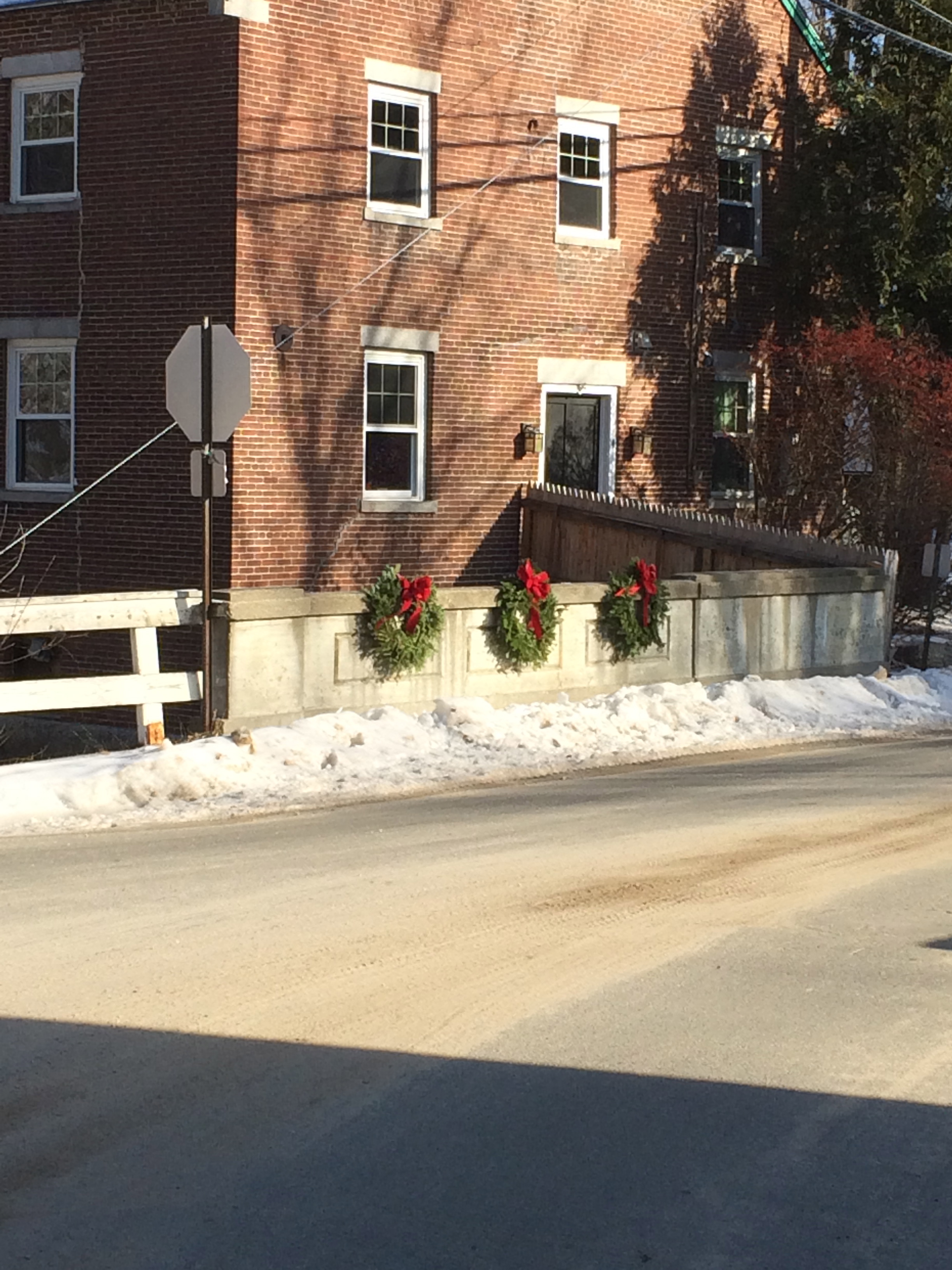
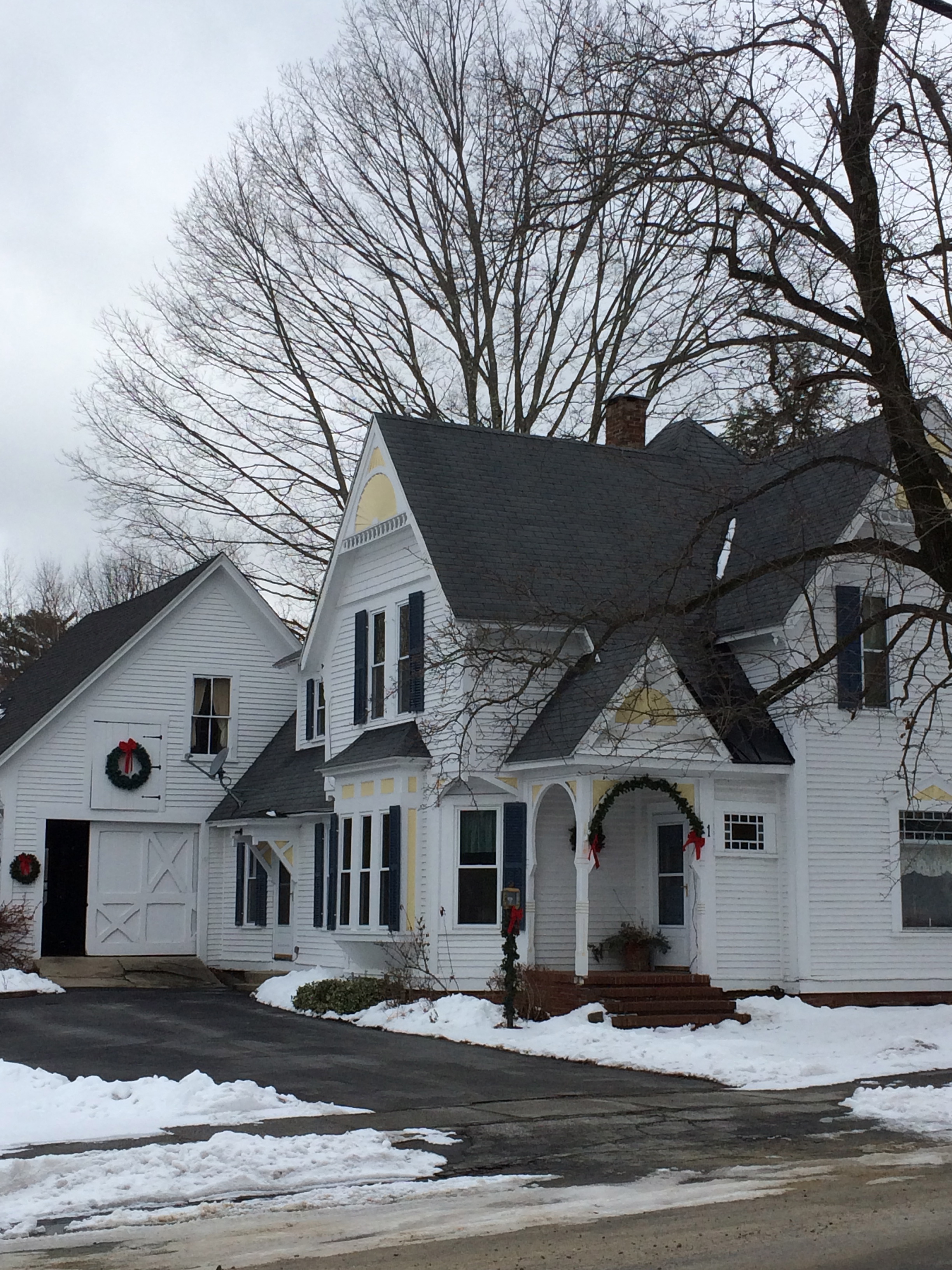
Sometimes a leisurely drive or stroll through town is all it takes to conjure up a generous dose of holiday spirit.  In many NH towns, one can find festive holiday decor still hanging brightly well into February. March and early April find melted snow turned to mud and slush, a rather dreary backdrop for many of the (by then) tired and weatherworn decorations.  The last holdouts of holiday cheer then reluctantly take down the wreaths, lights and other trimmings, to be either properly discarded or boxed away for safekeeping until the next holiday season.

A few festive images from around town:

IMG_0197

IMG_0182

IMG_0176

IMG_0242

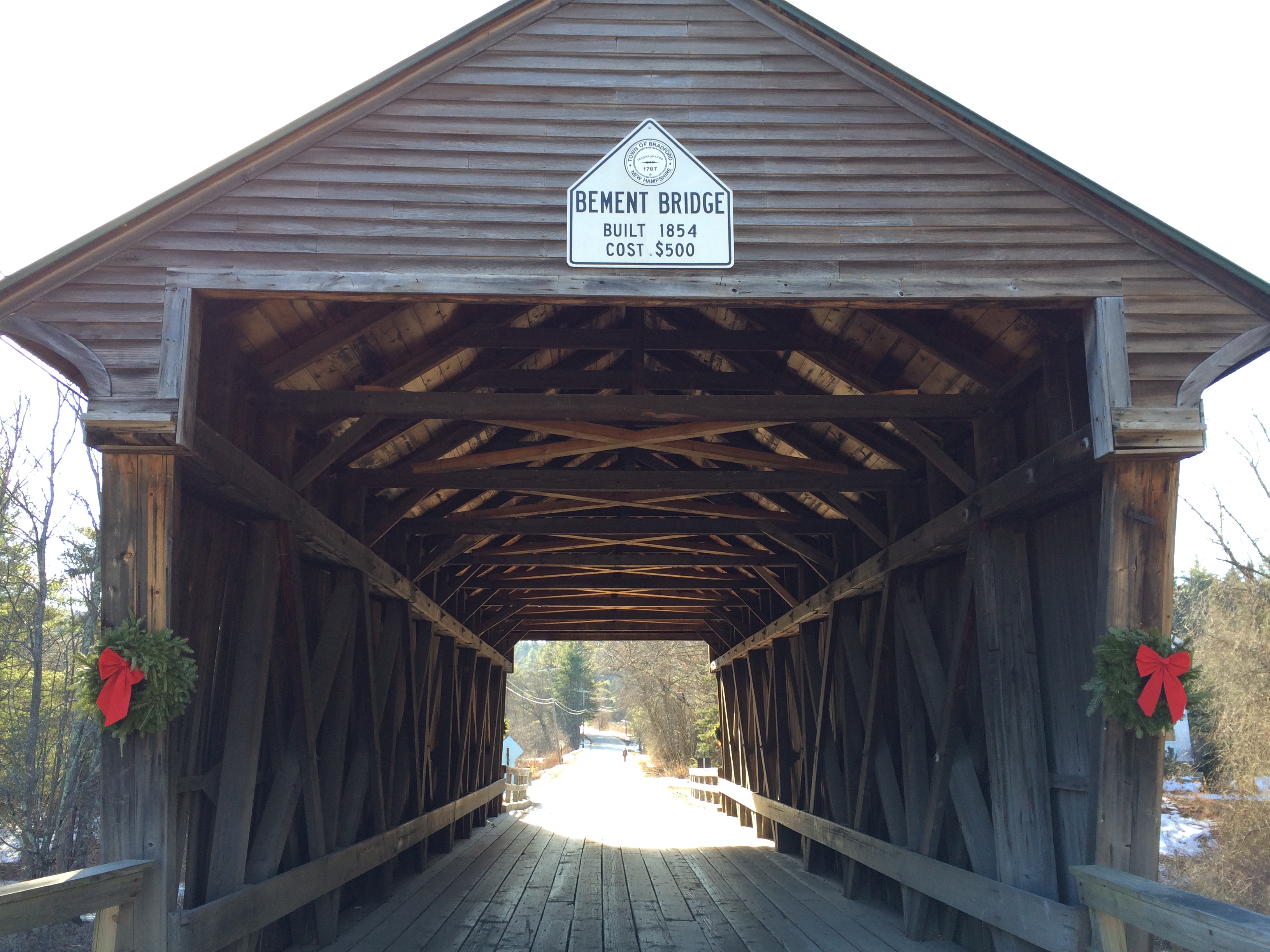
The Bement Covered Bridge

The Bement Covered Bridge

IMG_0237 IMG_0238

IMG_0333

Town Hall

Town Hall

The Tin Shop

The Tin Shop

IMG_0353

IMG_0163


It is worthwhile to note that some of the most beautiful decorations are also the simplest.  There is a certain restraint evident.  Green garlands, red bows and a smattering of well placed white lights and candles are all that are needed to enhance the already existing charm of the structures they adorn.

NEW ENGLAND BELLS

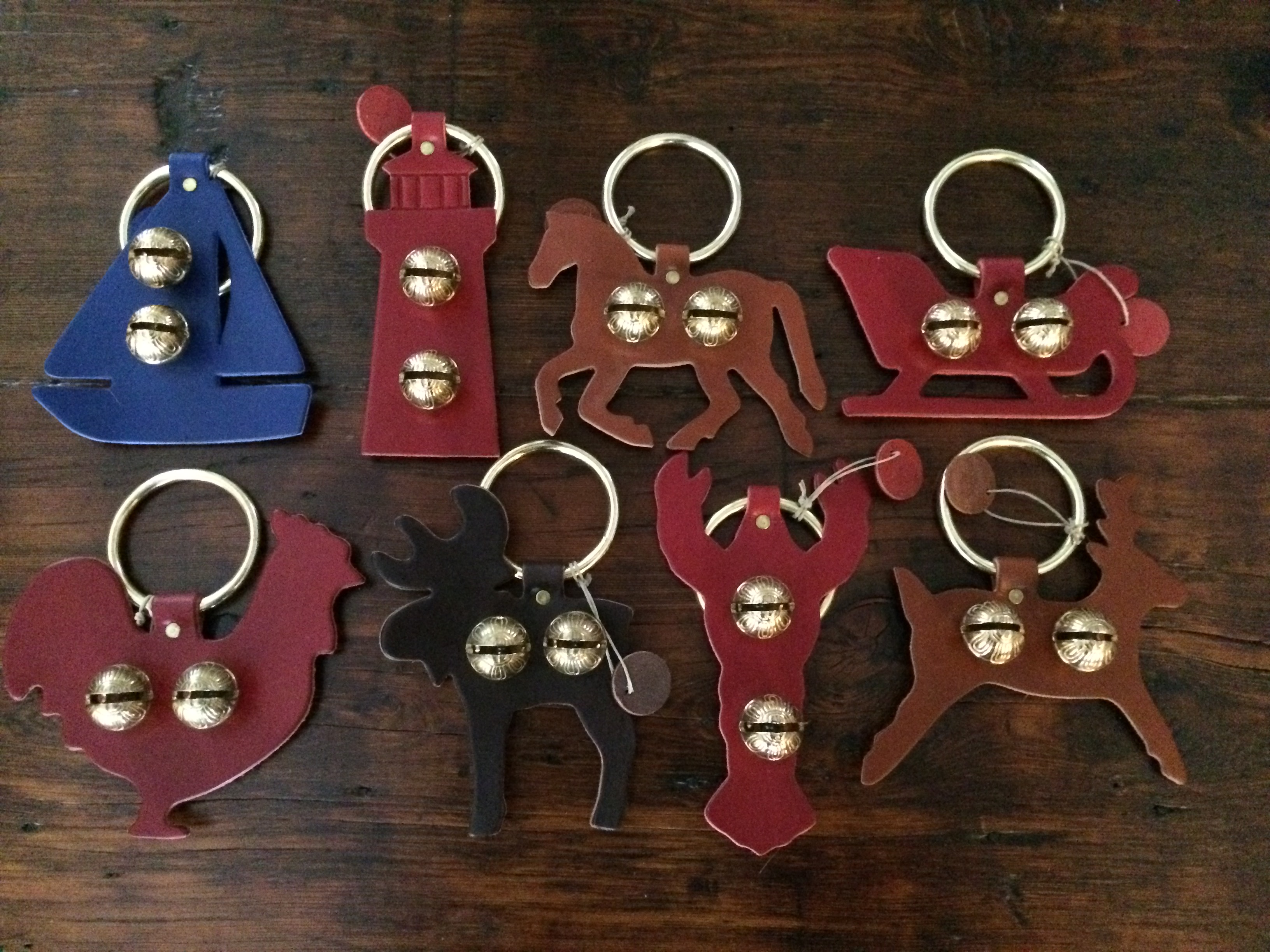
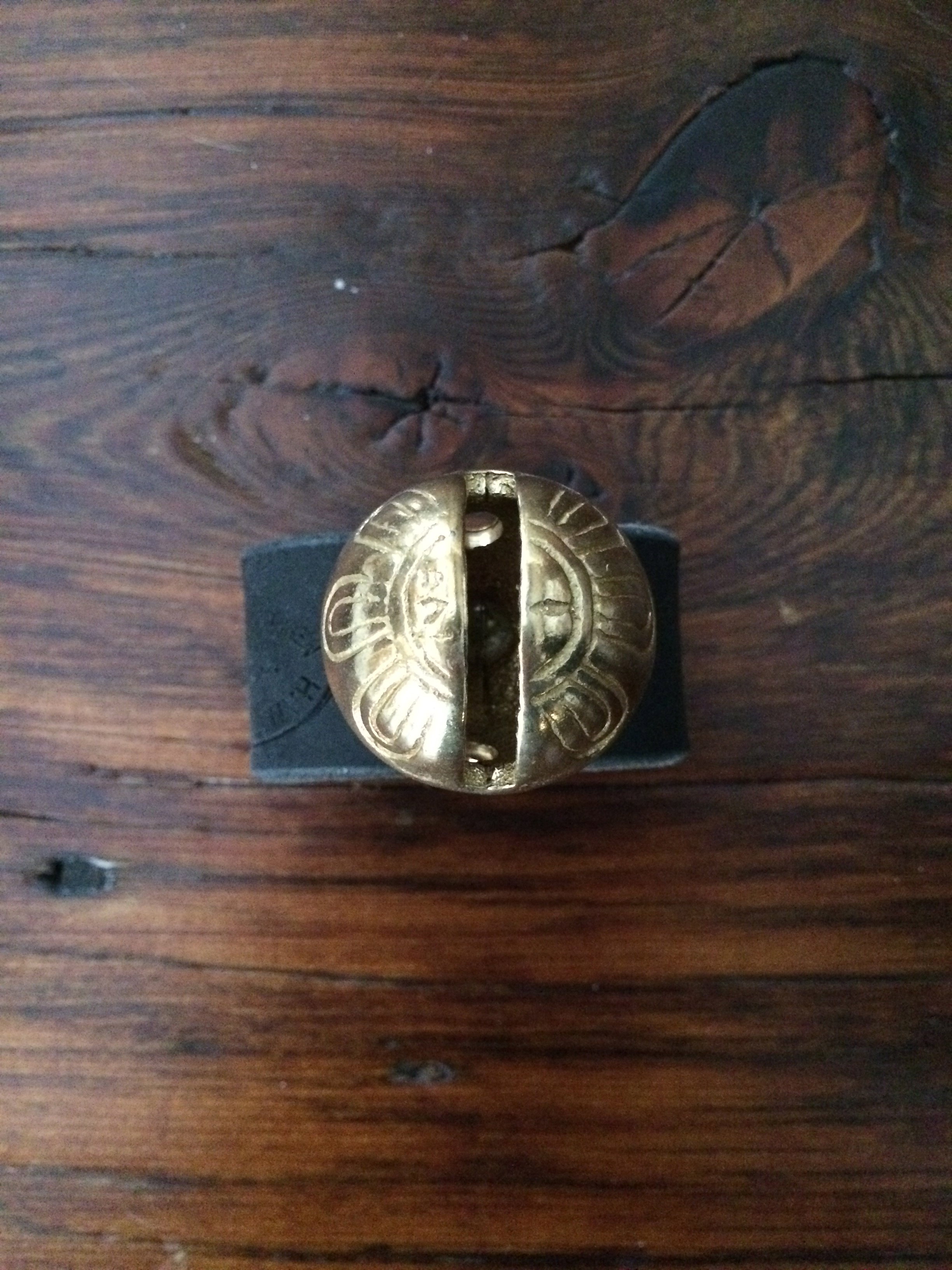
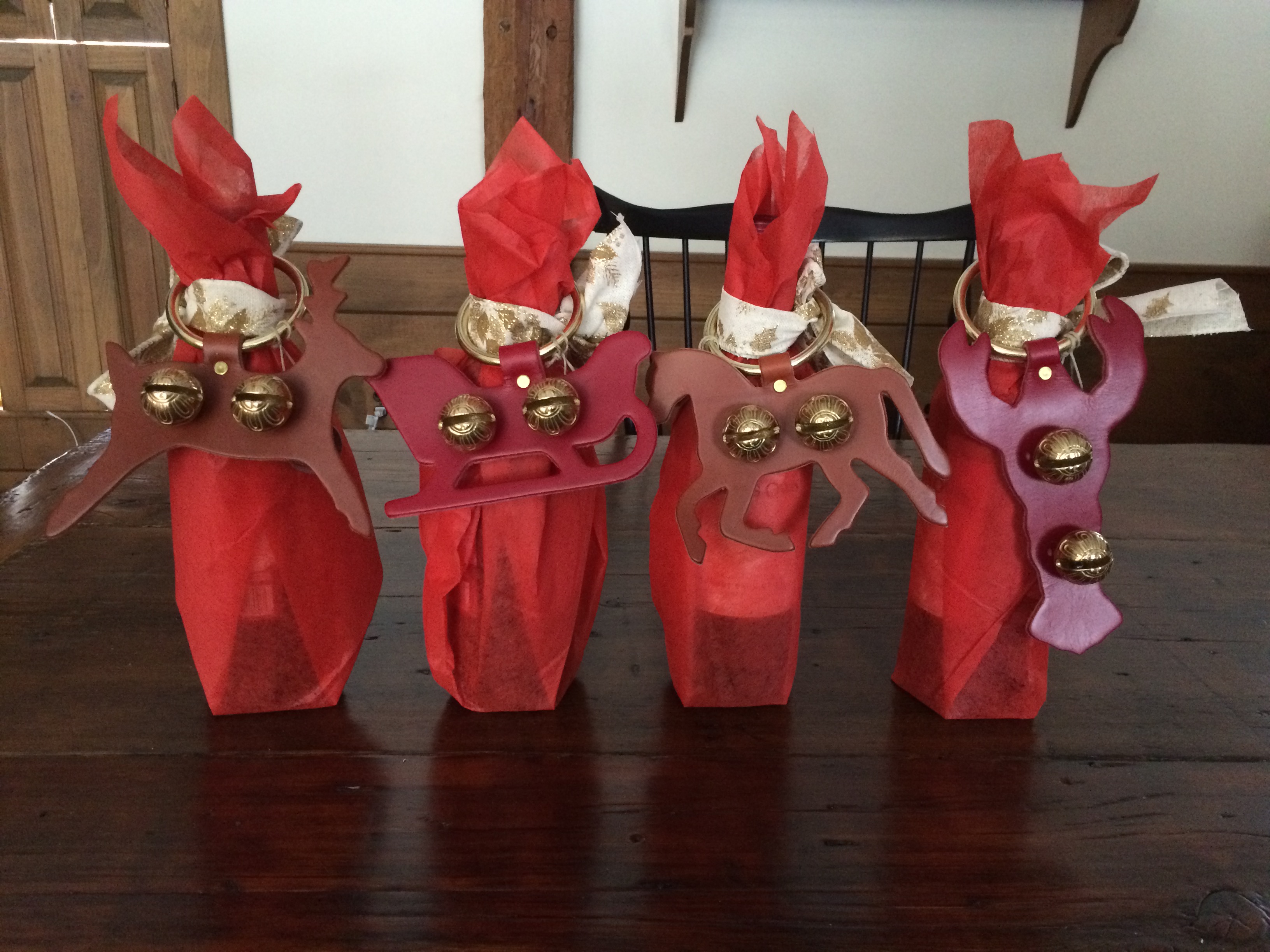
It has become increasingly difficult to find craftsmanship of enduring quality, created with a sense of thoughtfulness and respect for traditions past.  New England Bells, headquartered in Lempster, NH, offers both.  Only solid brass bells etched with the typical Fleur pattern (once popular in the 19th century) are used, carefully designed to assure the proper pitch and tone according to size.

Here is just a small sampling, which will be given as gifts to friends and family:

IMG_0336

Their dog bells, designed to fit over the collar are especially charming.  It was hard to resist picking one up for our beloved Newfoundland:

IMG_0368

IMG_0396

One can never have too many photos of one's dog.

One can never have too many photos of one’s dog.


IMG_0373

The bells can be found in select local shops (Spring Ledge Farm in New London and the Henniker Farm and Country Store come to mind), as well as online: http://www.newenglandbells.com.

THANKSGIVING SHAKE AND BAKE (IT’S NOT WHAT YOU THINK)

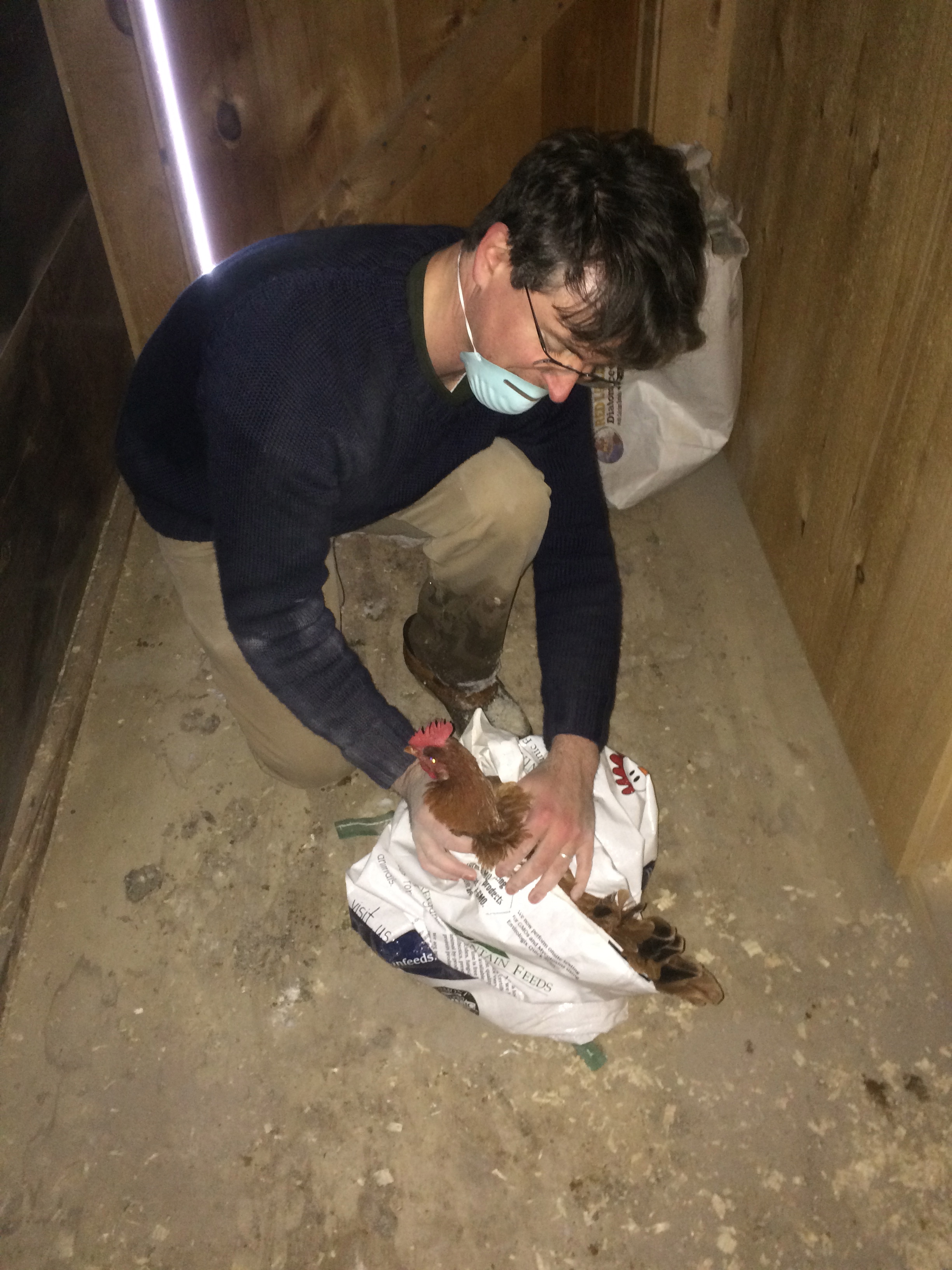
A hen being immersed in diatomaceous earth

One of our hens being immersed in a diatomaceous earth bath

(Note: the following was posted retroactively, having actually occurred the day before Thanksgiving, 2014)

As with any endeavor involving farm animals, one is bound to run into health issues both minor and otherwise. The expert anticipates and plans for such occurrences, while the uninitiated must learn the hard way through experience.  The latter was one of those occasions in our case.

It was to be the last warm day of the season and I thought we’d give the chickens one final romp though the great outdoors before being cooped up for the winter.  They collectively leapt at the opportunity and were out the door to freedom as soon as it was opened.  A lone hen lingered behind, idling listlessly by one of the feeders.  Closer observation confirmed that something was clearly wrong.  With some help from my husband, we gathered up the hen, placed it in a medium sized box with fresh pine wood shavings and took a trip to Concord Area Veterinary Emergency Services (CAVES).  Casually glancing around the waiting room, I made what can be confidently categorized as one of the more unwelcome discoveries had to date.  There on the flaps of the box were crawling hordes of pin head sized creatures, seemingly gaining in mass by the moment.  Having no idea how I’d not noticed them earlier, I then looked down and could see plainly that they were also all over my hands, wrists and jacket.  Unfortunately, having something of an insect phobia (a curse that befell me at a very young age and not at all advantageous to life in the country), I entered into a mild state of what might best be described as barely functional revulsion.  A young girl came in shortly thereafter and sizing up the situation, informed me that these nearly microscopic harbingers of death were in fact mites – most probably northern fowl mites to be exact – and that furthermore, it is not at all uncommon to find them lurking about in the chicken coop.  The root cause for their most objectionable arrival could be any number of reasons.   The important thing, she said, was that the entire coop (as well as the birds) needed to be sterilized from top to bottom in order to be rid of the problem.  The vet on call arrived, assessed the bird and summarily informed me that while surgery was an option, euthanasia was really the most humane course of action given the circumstances.  (*) The diseased bird was a good deal past saving and even surgery offered very slim chances for its survival.  Quite embarrassingly, my eyes began to well up a bit at this news. Further to my embarrassment, I realized about half way through the visit that the vet on call was none other than the husband of a woman I’d met through friends at a dinner a few months ago.  Possibly half the town might soon know that I’d been visibly distraught over a chicken by the end of the week.  (In  defense, my husband and I are vegetarians and while we do eat the eggs produced, the chickens themselves are more like pets to us than anything else so it was somewhat of an emotional reaction on my part).

Several tissues (for the mites, not the tears) and one less chicken later, I emerged rather dejectedly from the vet’s office.  It was on the drive back that I began to mull over the next steps in earnest.  There had been talk of needing to clean out the coop as well as the birds.  Ray Clarke, our half-year round groundskeeper had left for Florida in mid-October and wouldn’t be returning until next May, so no help could be expected on that front.  My husband had work meetings to attend and it dawned on me that the bulk of this clean-up business was going to fall entirely to me.  Given the forecasted snowstorm for the following (Thanksgiving) day, the task was impossible to put off for even a very short length of time.  Though not unfamiliar with coop cleaning as a part of regular maintenance, this mite infestation fell into an entirely different category.  I stopped in at the local farm and country store for supplies as well as advice from one of the girls who works there.  As expected, she not only knew what to do but was also thoroughly acquainted with the process, having been through it several times with 400 of her sister’s own birds.  Her instructions were to shovel out the entire coop, scrub it from top to bottom with bleach and boiling water and apply a generous dusting of diatomaceous earth over all surface areas, including nesting boxes and perches.  A fresh bed of pine shavings would then need be applied but no more than 3-6 inches was necessary.  (I had read earlier that a full 10-12 inches was recommended, per “Story’s Guide to Raising Chickens” but she begged to differ.)  The coop cleaning itself would take at least 6 hours by my calculations.  But there was the matter of the birds themselves.   Each would require a diatomaceous earth “bath” before being returned to the coop.   Simply put, each bird was to be placed into a bag roughly one third full of diatomaceous earth, turned upside down and shaken – the idea being that the shaking itself would generate the right amount of dusting to cover the entire surface area of the bird, ensuring that the mites in turn would receive the appropriately lethal dose of the dust.  And now, dear readers, you understand the meaning of the phrase “shake and bake” in this context (or more appropriately “shake, no bake” as one woman in town correctly pointed out. ).

I slogged through the unglamorous chore of purging the coop of its used wood shavings and deposited them by the cartload into the woods behind our house.  Dusk was approaching and the shake and bake itself had to wait until the following day.  The chickens, meanwhile, were temporary boarders in the guinea hen coop while their own housing was being decontaminated.  They had remained there overnight as well, since it made little sense to put contaminated chickens into a now sterilized coop.  What the guinea hens thought of this arrangement is impossible to say but little seemed out of the ordinary the next morning when my husband and I went in to check on them.  We determined that all was well and it was time to prepare the dust bath. It is advisable to wear dust masks, eye protection and gloves for such a task as the inhalation of the dust is irritating to the nose, eyes and nasal passages.  Diatomaceous earth works by absorbing the oils and fats from the cuticle of the insect’s exoskeleton, causing insects – mites, in our case – to dry out and die. Its sharp edges are abrasive, thereby speeding up the process and it remains effective as long as it is kept dry and undisturbed.  The earth itself is made from the fossilized remains of tiny, aquatic organisms called diatoms. Their skeletons consist of a natural substance called silica. Over a long period of time, diatoms accumulate in the sediment of rivers, streams, lakes, and oceans. Today, silica deposits are mined from these areas.

The most challenging aspect of the dust bath was getting hold of the chickens themselves.  They were still lodged with the guinea hens, who by nature are more high strung.  This made the task even more of a challenge than it would normally have been.  The scene was something like this: door to coop opens,  guinea hen screeching and flapping about commences, chickens simultaneously disperse and make a run for it in all directions, wood chips and feathers fly and the would-be bird catcher stumbles around with arms outstretched, trying desperately to get hold of a bird – any bird.  Admittedly and as I later learned, there are easier ways to go about the job but neophytes as we were, did not realize it at the time.  One by one we did manage to get each bird out of the guinea hen coop into the waiting dust bath and then returned to it’s own coop.  Deviating a bit from the advice given to hold the birds upside down in the bath, we instead held them upright.  I found that holding the birds sideways after securing them did calm them down considerably – even the roosters, which were more difficult to deal with as compared to the hens.  After about an hour or so, the last chicken was dusted and so were we.  Covered in a light film of grime, we walked through the barn back into the house.  The shake and bake was a success.  No sign of the mites could be found as little as one week later and they have not returned since.

(*) A few days after, a friend of mine and I were doing some in-town Christmas decorating.  During conversation I happened to mention the unfortunate chicken incident.  We were at the local lumber store picking up supplies and the clerks there expressed incredulity at hearing the story.  “You mean, you had to have the chicken put down, right?” one of them had asked.  “No”, my friend corrected. “She had it put to sleep – at the vet’s”.   After a momentary blank stare they remembered that I was originally from out of town and a good laugh was had by all – including me.

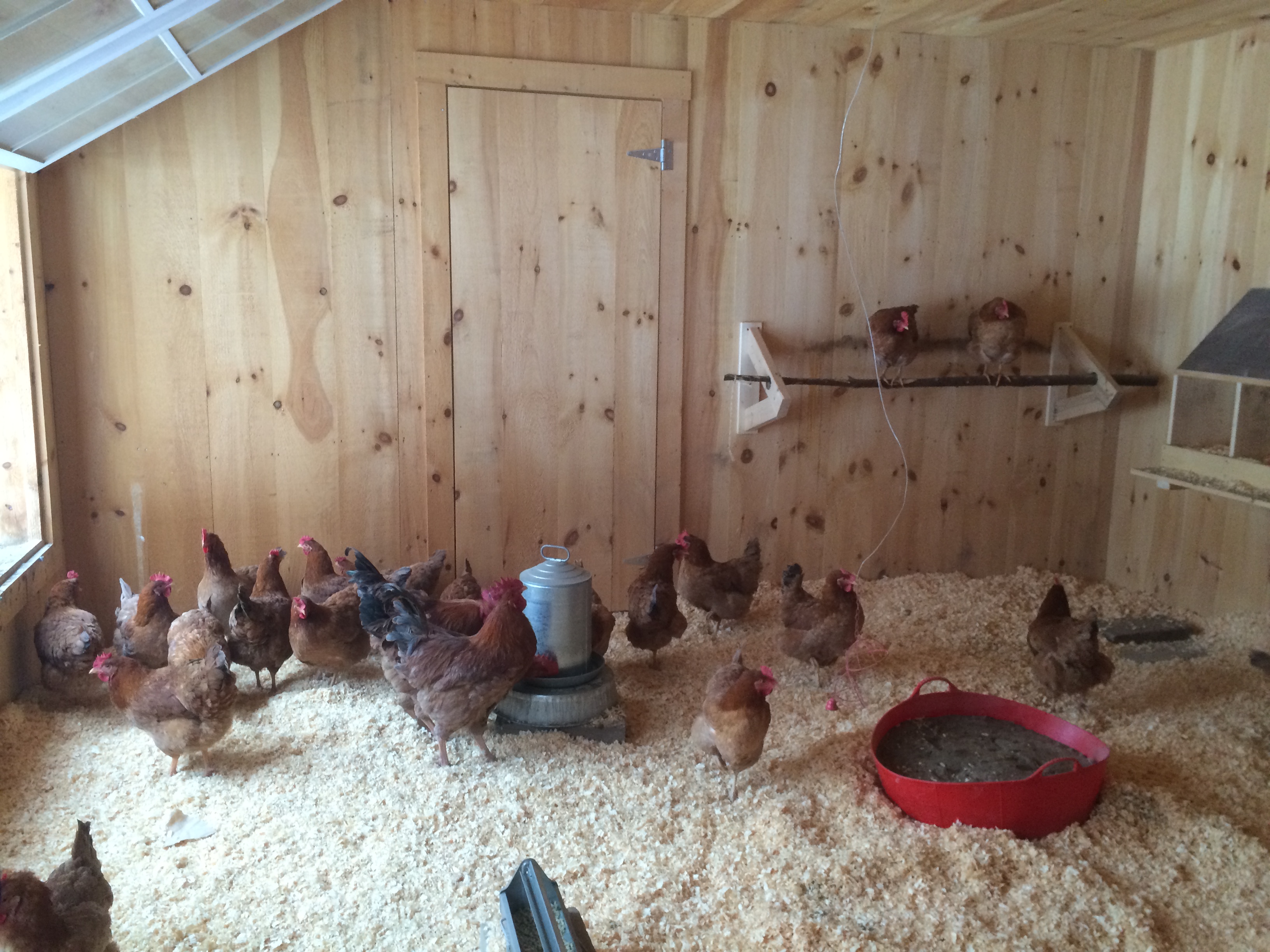
The coop, post clean-up.

The coop, post clean-up. The red bin pictured is a make-shift dust bath, containing a mixture of dry soil and diatomaceous earth.  This will help to curtail the development of any future external parasites.