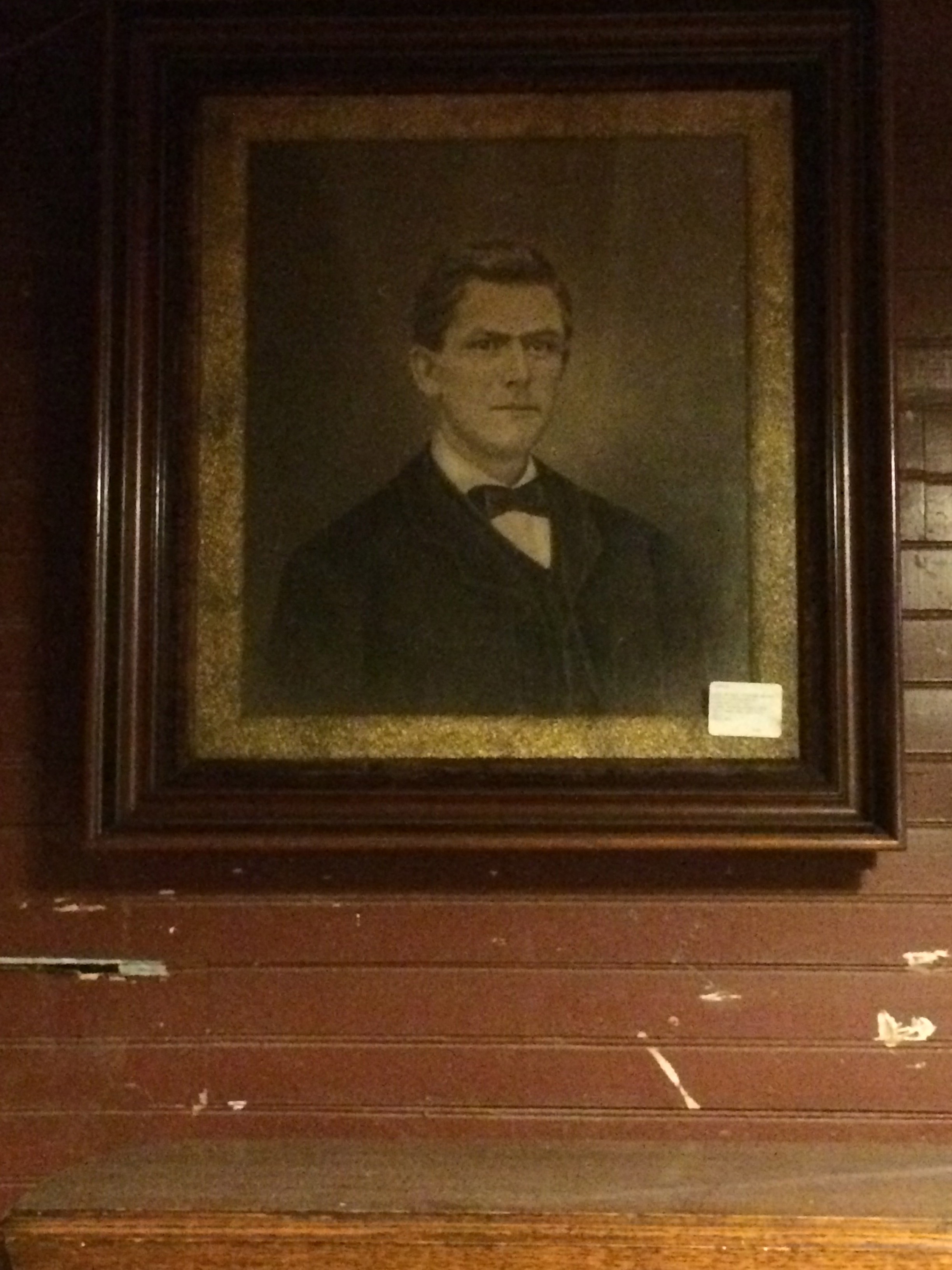
INSTANT RELATIVE

IMG_4190

A conversation with a friend the other day recalled a memory from last summer that might well have remained dormant otherwise.

One meandering afternoon found me puttering around in a local antiques shop recommended by a casual acquaintance.  New Hampshire being home to some of the best and oldest antiques shops in all of New England, it’s always interesting to contemplate the past, possible uses for many of the obscure, now obsolete objects one comes across.  It’s also a bit of an adventure to hunt for some as-yet, undiscovered treasure.

On this particular afternoon, I happened to stumble upon the thoughtful looking portrait above and inevitably found myself wondering who it might have been.  Further, I wondered who might have use for it now and found it a bit depressing that it had fallen out of the hands of both family and friends, only to be impersonally discarded in a commercial shop.

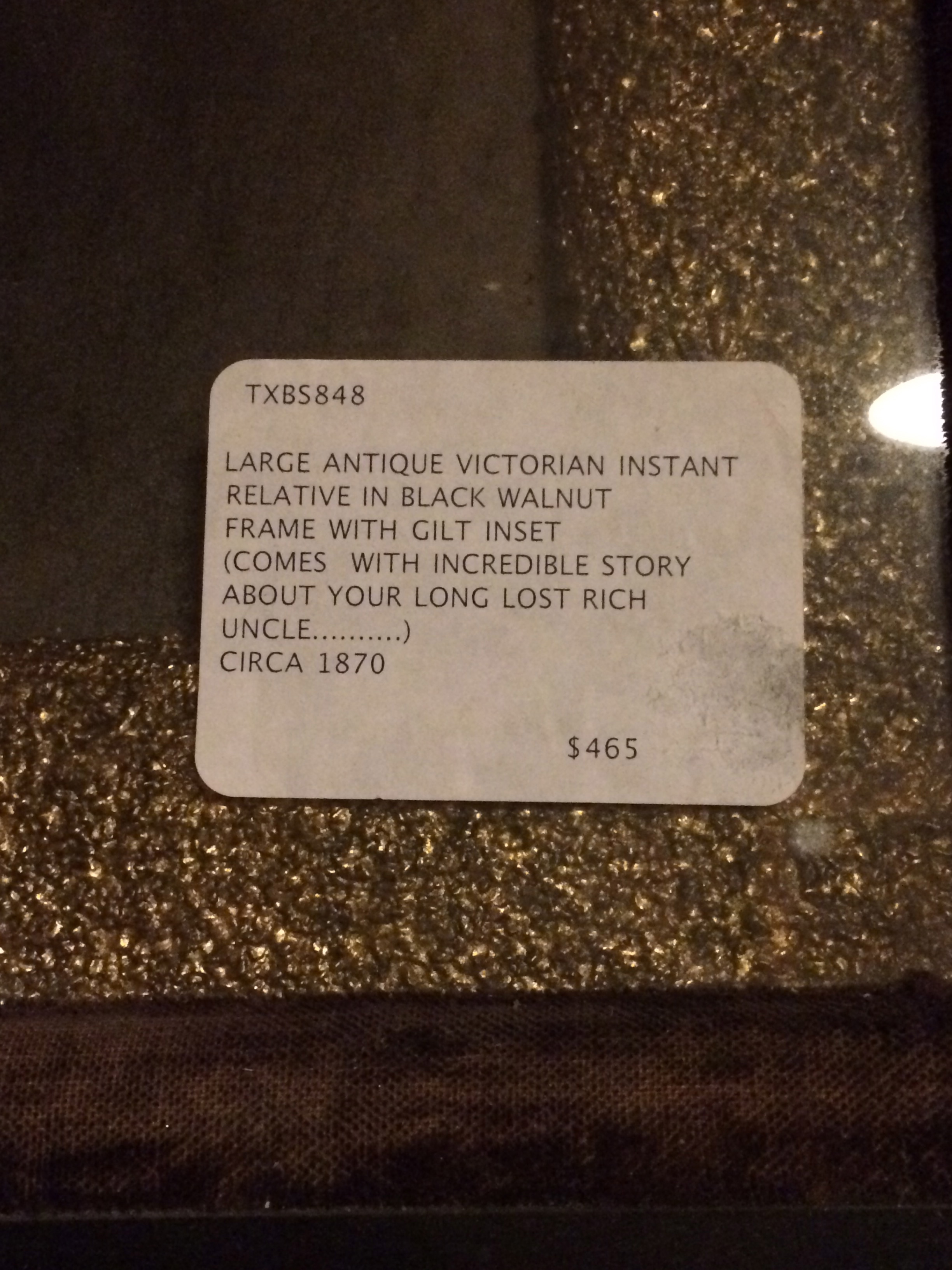
I took a closer look at the tag in the lower right hand corner of the frame.

And saw this:
IMG_4187

Chuckling in spite of myself, the picture of a bored clerk attempting to insert a bit of comic value into what was essentially an unsellable item came immediately to mind.  The shop manager, noting my apparent interest, wandered over to make an introduction.  I good-naturedly commented on the clever tag, right down to the ridiculously random $465 asking price.  Looking more than serious, she assured me that in fact this sort of thing was quite popular, and that indeed such “instant relatives” were currently very much in vogue.

Still feeling sure that the whole thing must be a gag,  I laughed in response, though this time a bit of uncertainty on my part insinuated itself into the situation.  By no means am I an expert in the world of antiques.  I merely know what appeals to me when I see it and being naturally curious, make every attempt to learn as much as possible about the things I appreciate and admire.  But this was too much to be believed.

After much to and fro about the matter, it became distressingly clear that the manager was speaking in earnest.  The portrait on display was in fact being marketed for the express purpose of deception.  This rather disturbing revelation brought about yet further questions.  The entire premise of such a purchase extended far beyond the occasional, innocuous white lie, wading treacherously into the dark waters of pathology. How to keep such an elaborate ruse going  – especially amongst close friends and family?  Would the portrait necessitate hurried banishment to a remote corner of the house upon the arrival of some unexpected, incredulous visitor?  Would some people have to be let in on the sham, while others were kept in the dark?  It all seemed completely bizarre and far too much trouble to go to.  I left the shop totally bewildered and had all but forgotten about the incident until the previously mentioned chance conversation brought it to mind.

Feeling perhaps a bit morbidly curious, inspiration struck earlier today to revisit that old antiques shop, despite the promise I’d made myself never to return.  An overwhelming desire to know what became of the old portrait had suddenly taken hold.   I walked into the shop and there is was – in precisely the same spot that it occupied nearly a year ago – though a slightly thicker layer of dust looked to have accumulated since then.  Immensely heartened, I turned to leave, having satisfied my curiosity.  So “instant relatives” are all the rage, are they? Stuff and nonsense! I hold to my original “comic value” theory.
 

MAPLE SUGARING

IMG_4152

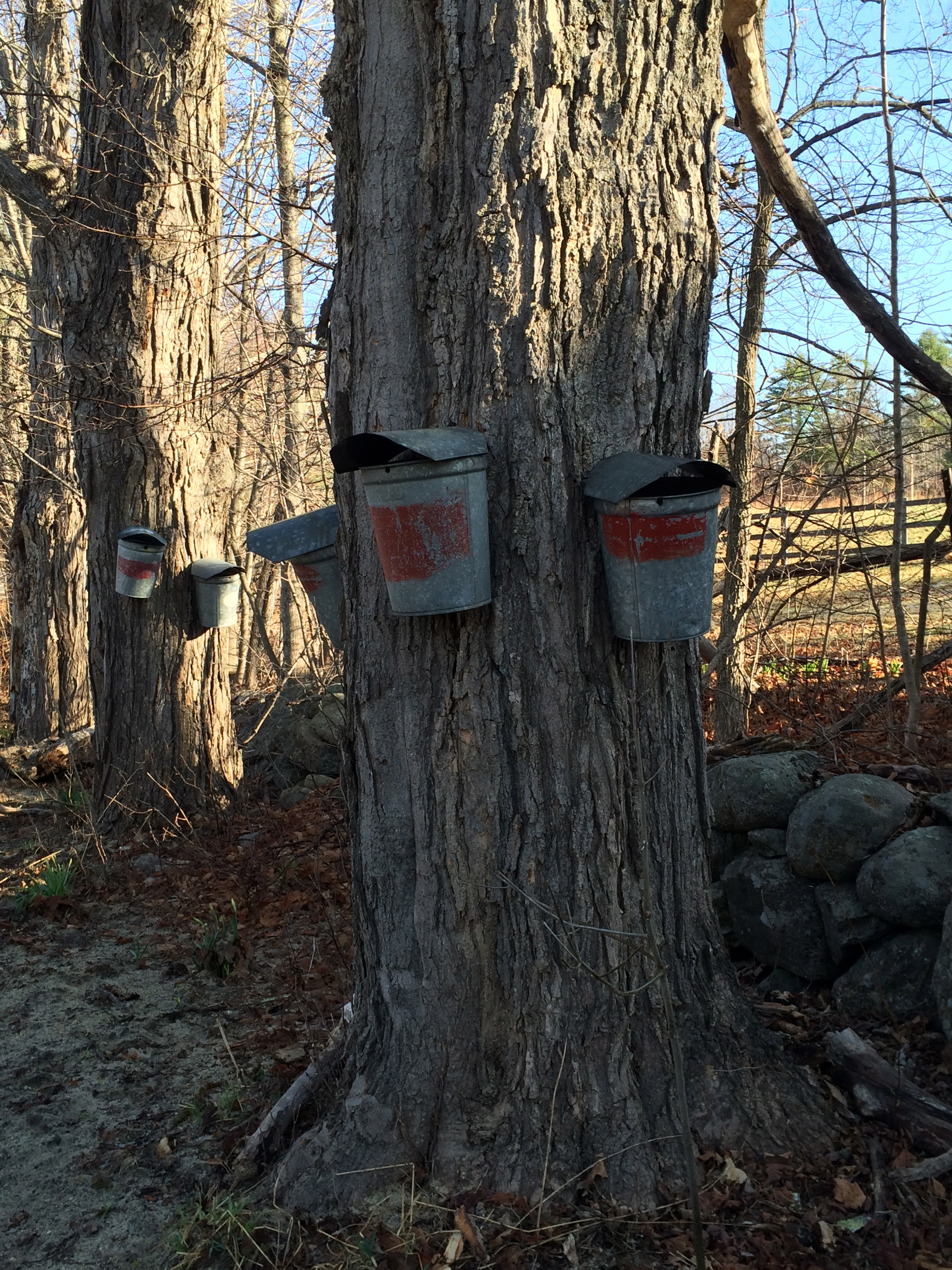
Maple sap pails – a welcome sign of spring.

Sugaring season in NH runs from roughly mid-February to mid-April, depending on the weather. Below freezing nights and warm sunny days (generally up to 45 degrees F) create the pressure needed for a good harvest, as the sap runs best under these conditions.

Each year, our friends at Stoneridge Farm include a bottle of eagerly anticipated, fresh maple syrup in one of their weekly CSA shares.  The long wait through the winter makes the first bottle of the season even more precious.  A recent visit to the sugar house was an interesting learning experience, and offered an in depth view of the process:

IMG_3967

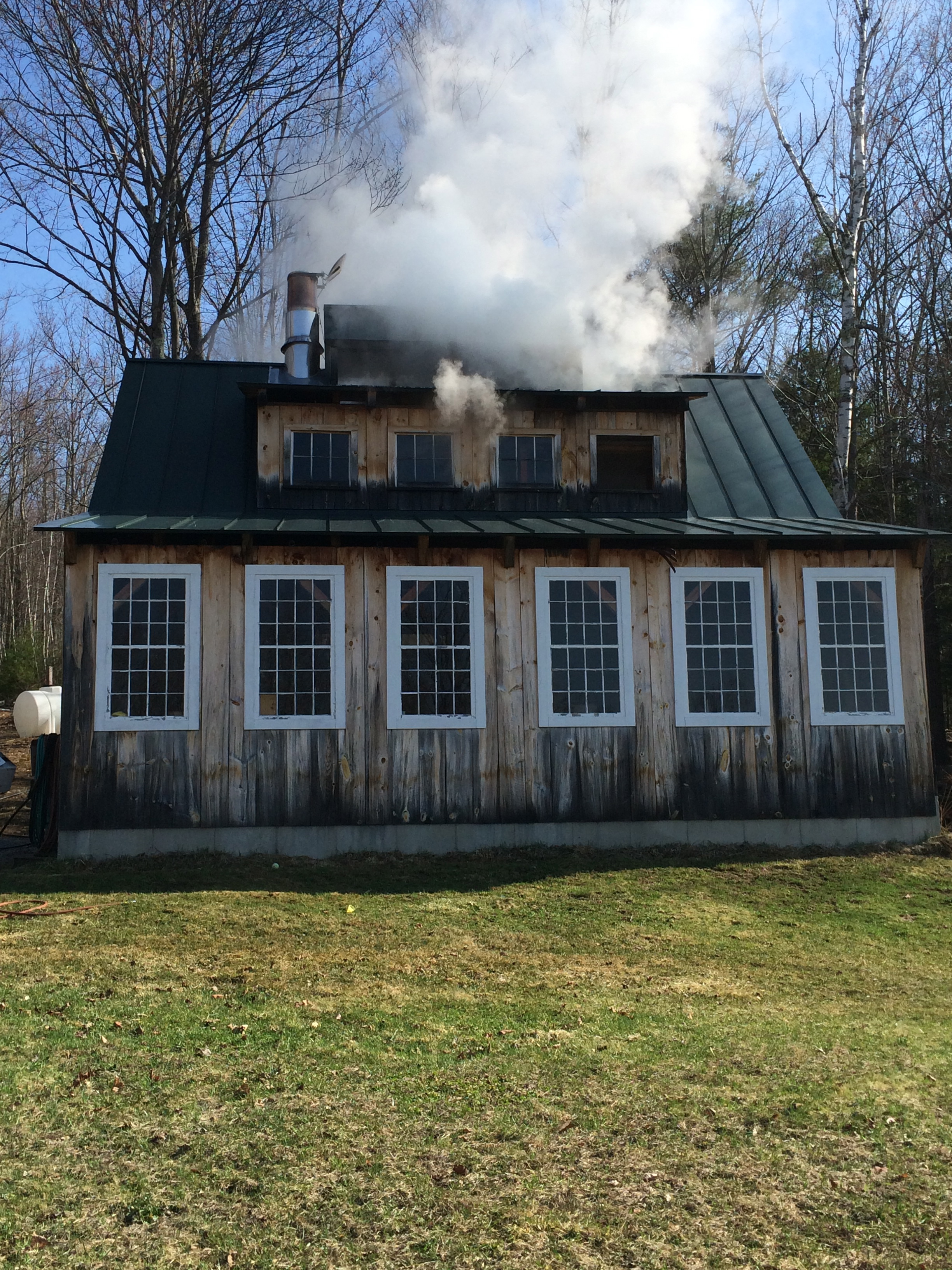
The sugar house

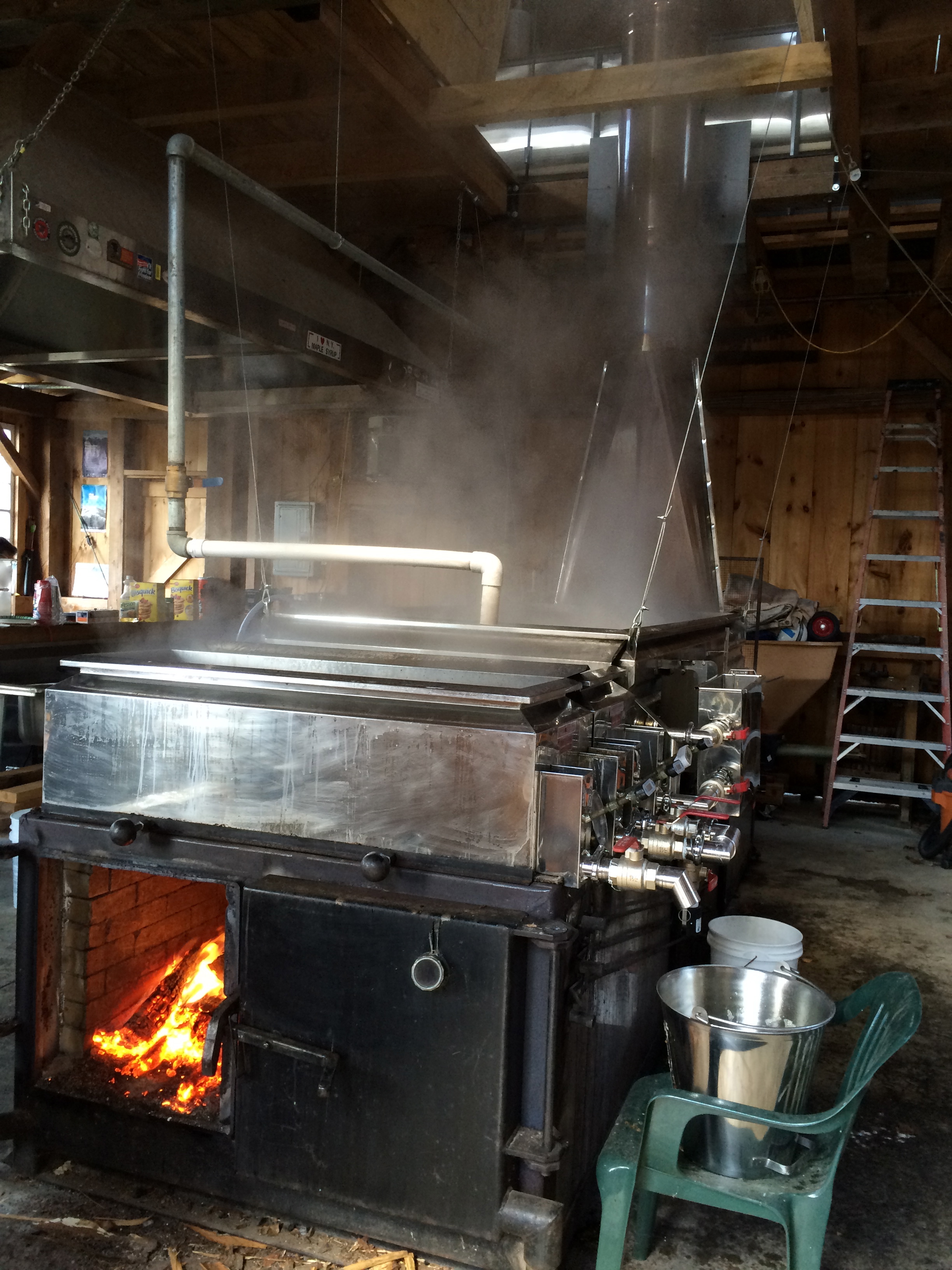
Sap is collected and boiled down in this wood fired evaporator:

IMG_4094

Roughly 200 gallons of sap are boiled off per hour.

IMG_3975

This particular tank holds up to 1,000 gallons.

IMG_3976

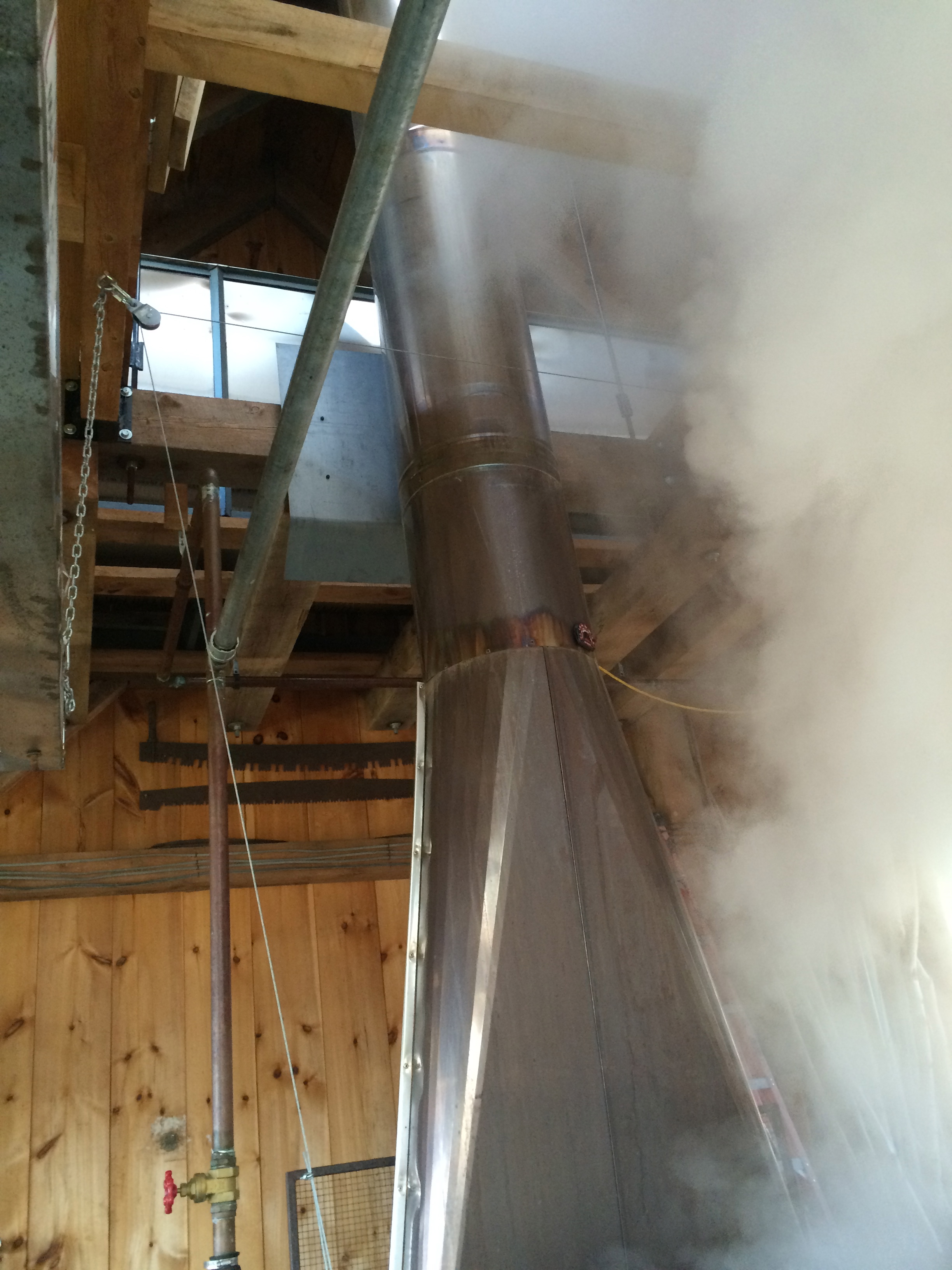
Steam rising from the evaporator pan

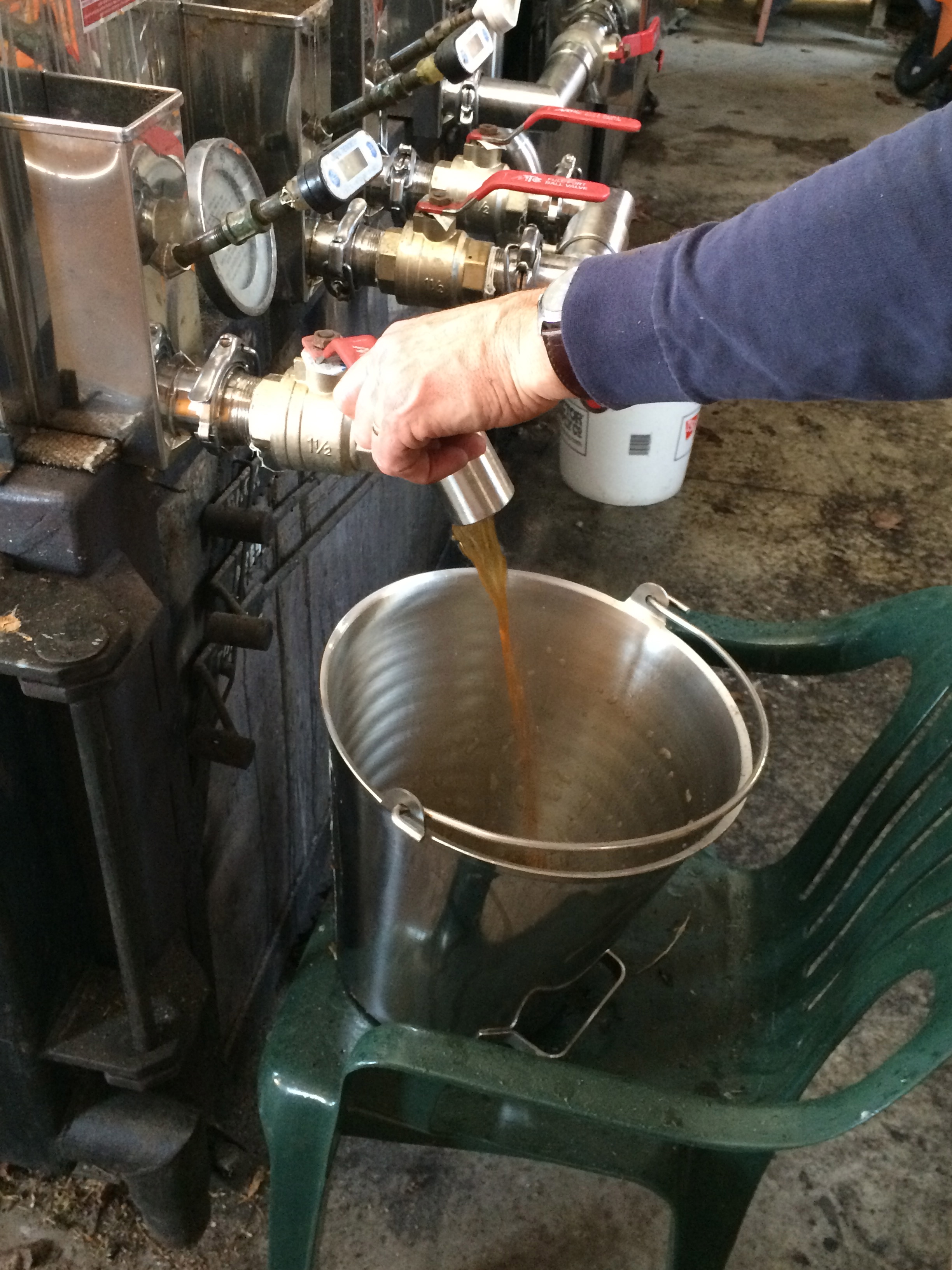
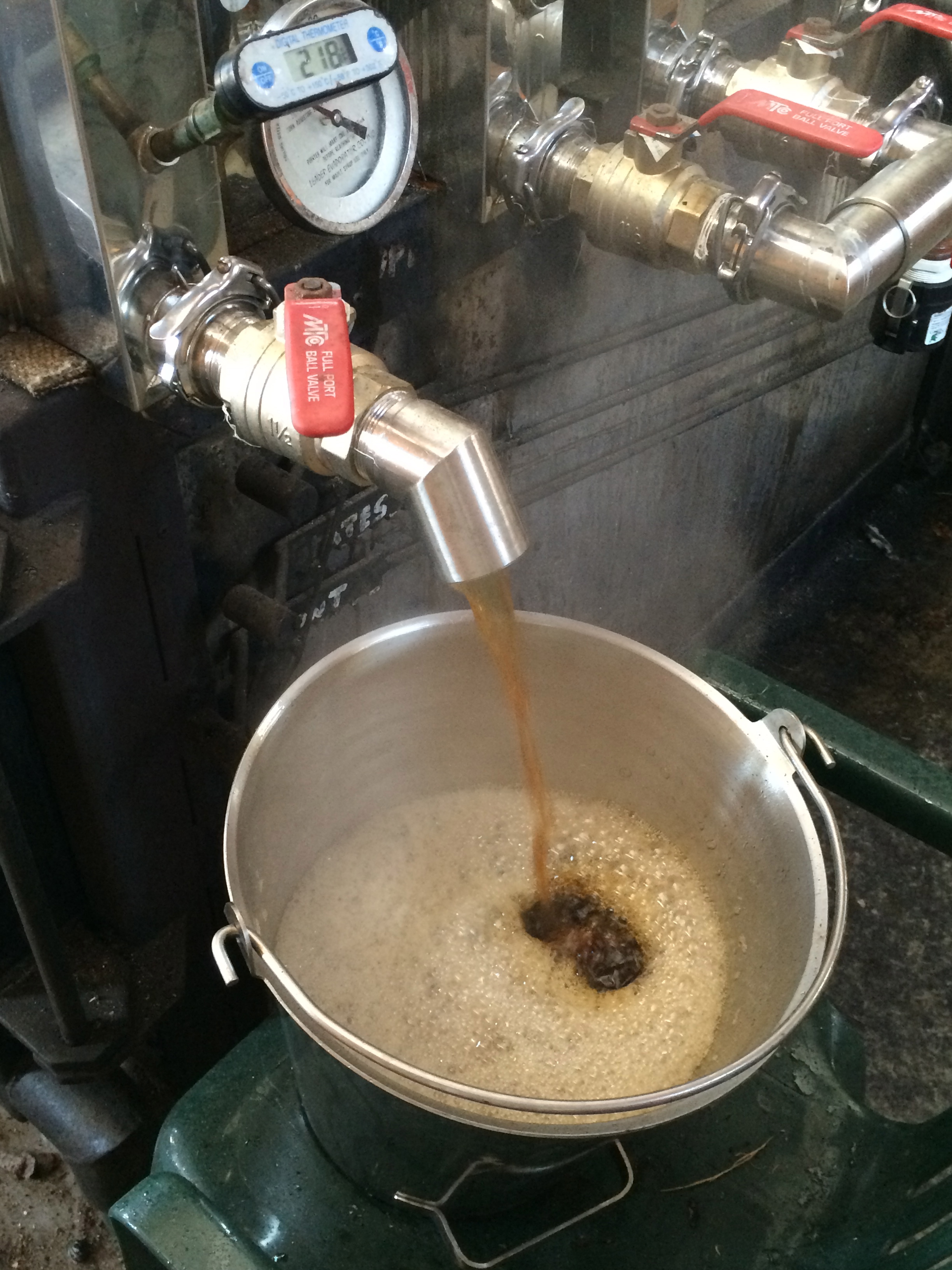
After water and other sediment is boiled off, the sap is concentrated until it reaches the proper density:

IMG_4005

IMG_4012

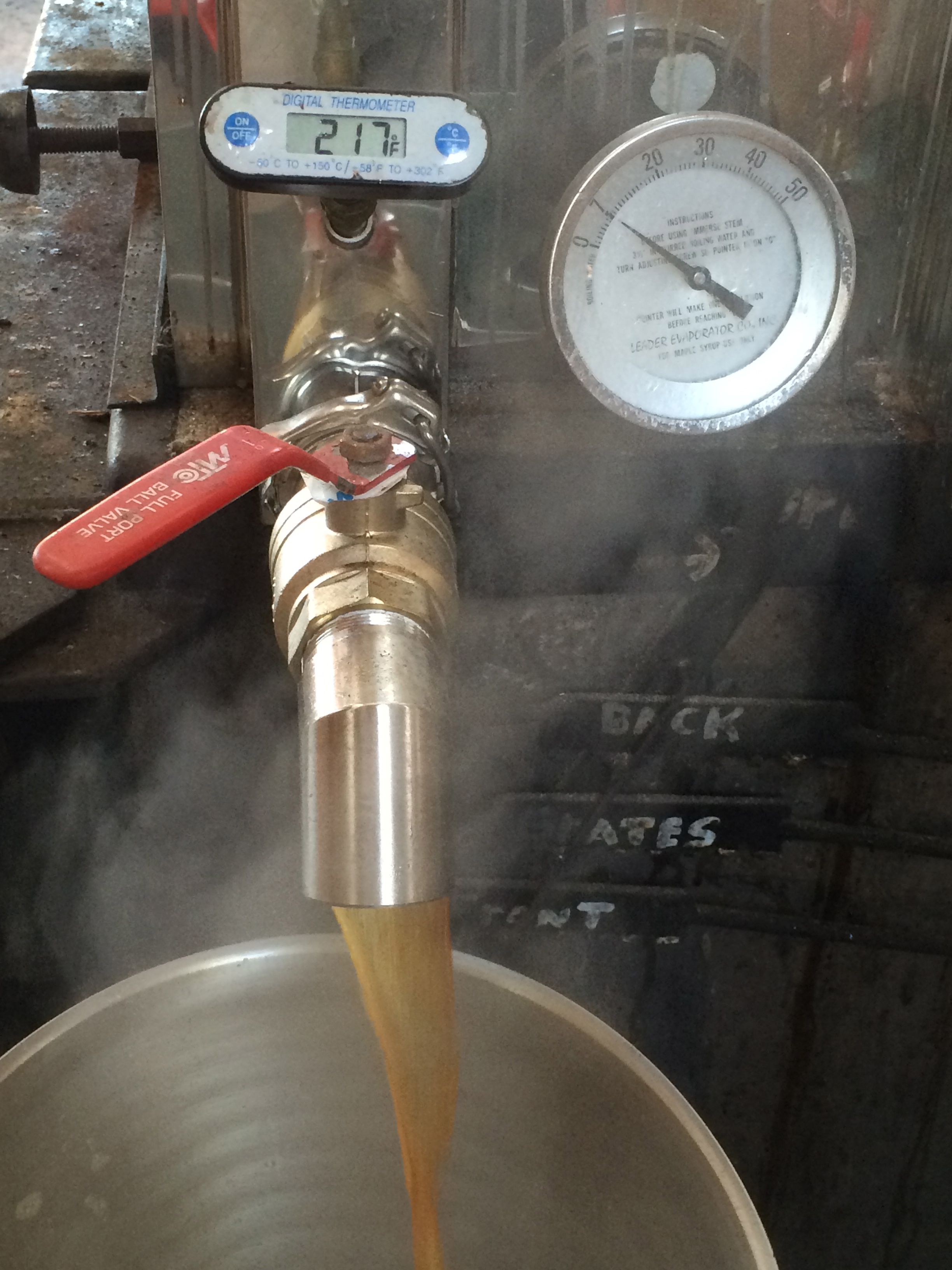
The syrup is ready at 7 degrees above boiling point, which varies daily depending on weather and atmospheric pressure.

IMG_4008

Transferring to a finishing pan to fine tune sugar content:

IMG_4105

Finishing panIMG_4103

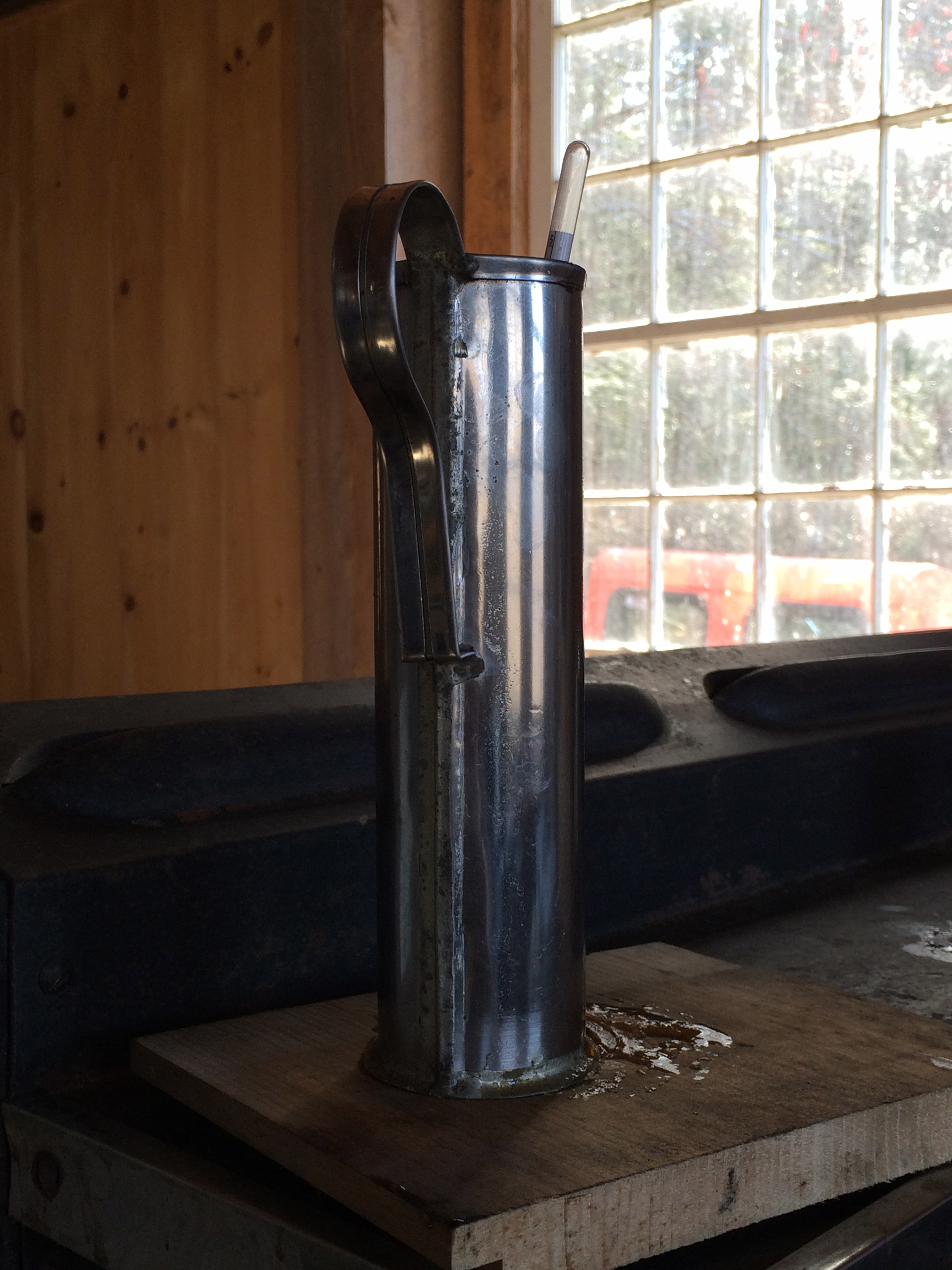
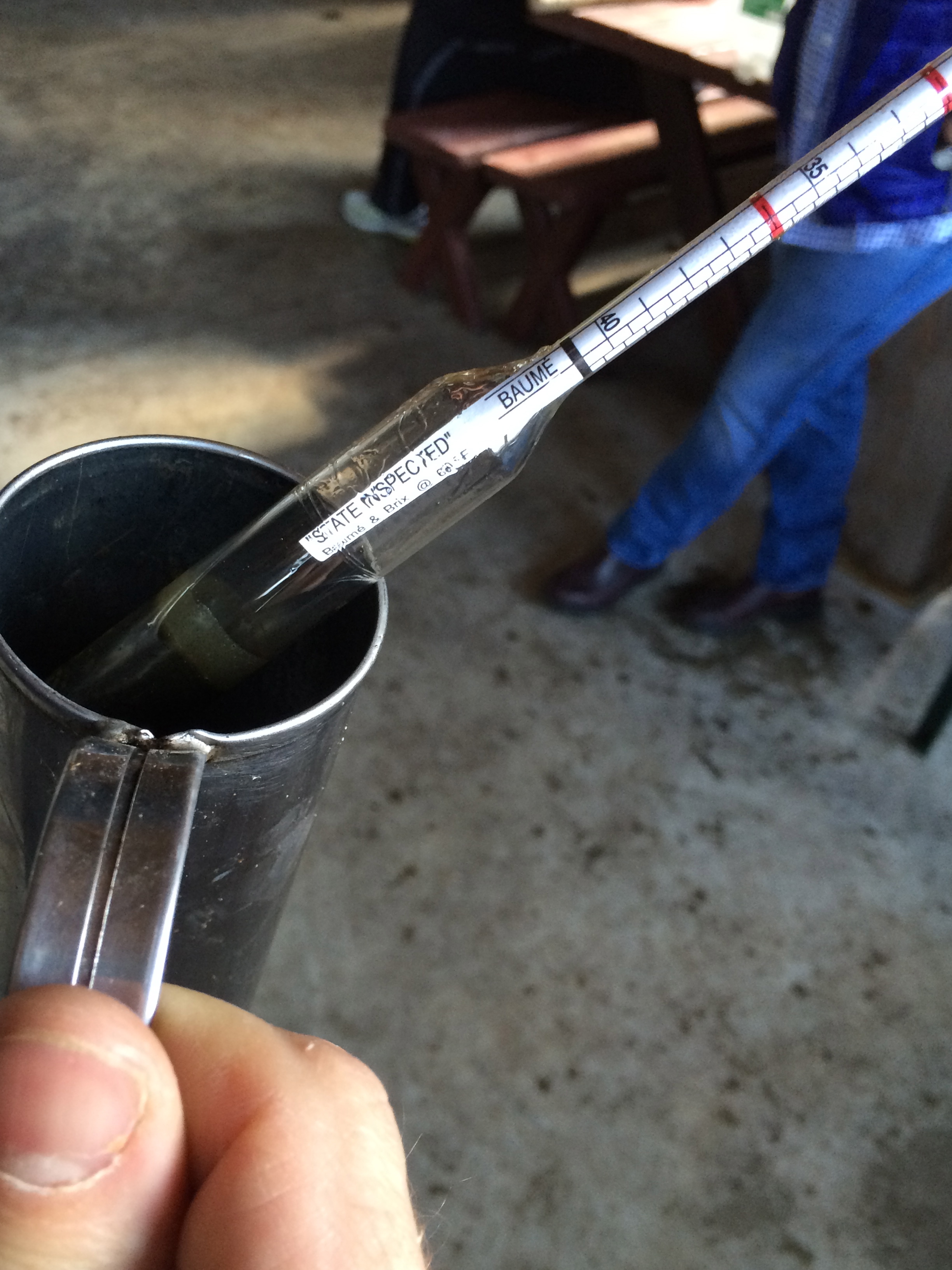
A Baume (Bé°)/Brix (°Bx) hydrometer is used to determine sugar content and density:

IMG_4035

Brix measures the sugar content of an aqueous solution while Baume measures its density.

IMG_4079

Checking a batch sample

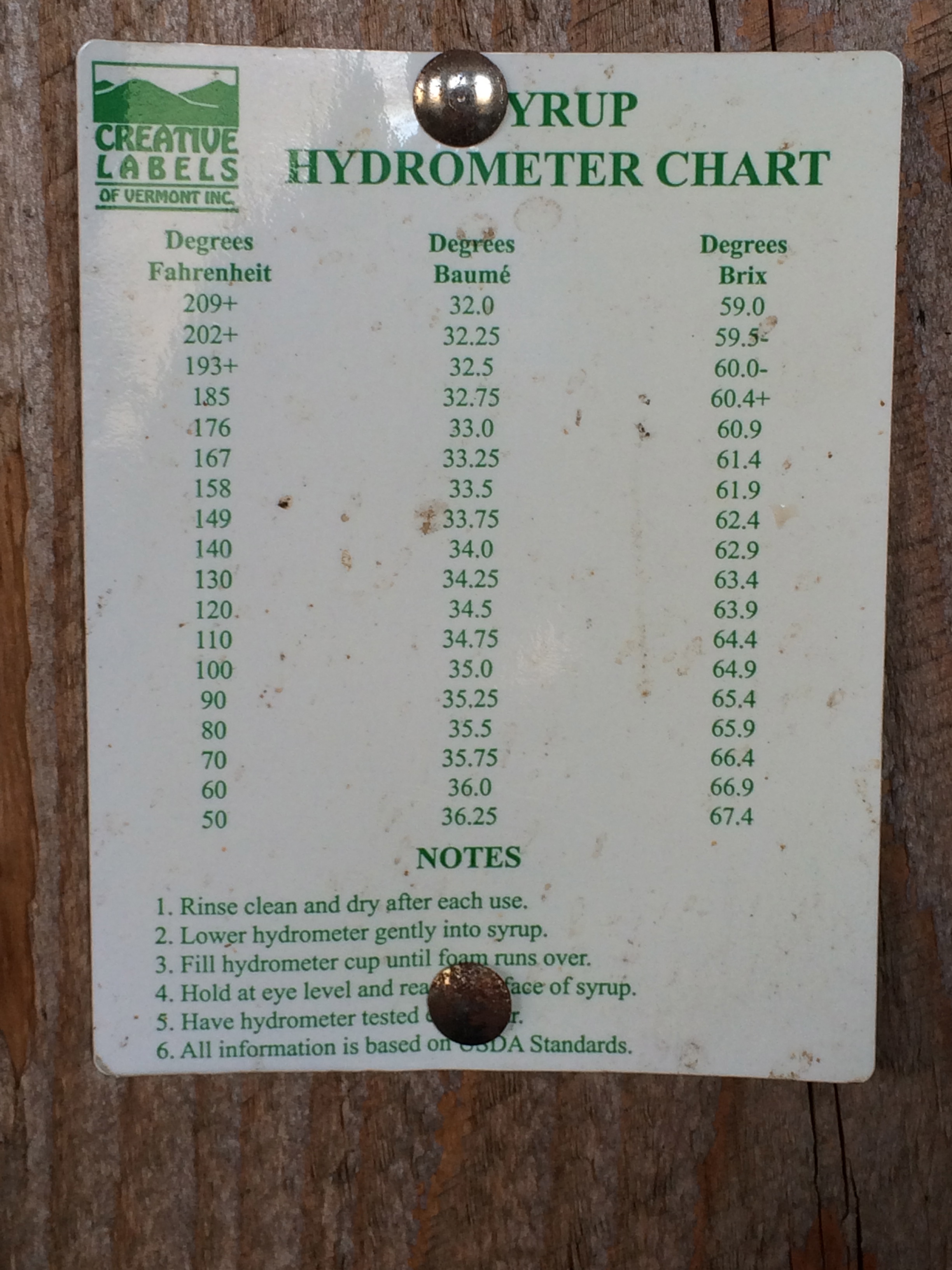
Strictly speaking, though the temperature at which sap becomes syrup changes depending upon barometric pressure and elevation from sea level, the density is constant at a given temperature.  (Ex. – syrup will always be 32 degrees Baume, at 211 degrees F.  However, as temperature changes so does the density.)

A hydrometer chart is key, as it includes the proper temperature conversions for the Baume scale:

IMG_4081

Filtration is the final step in the process:

IMG_4019

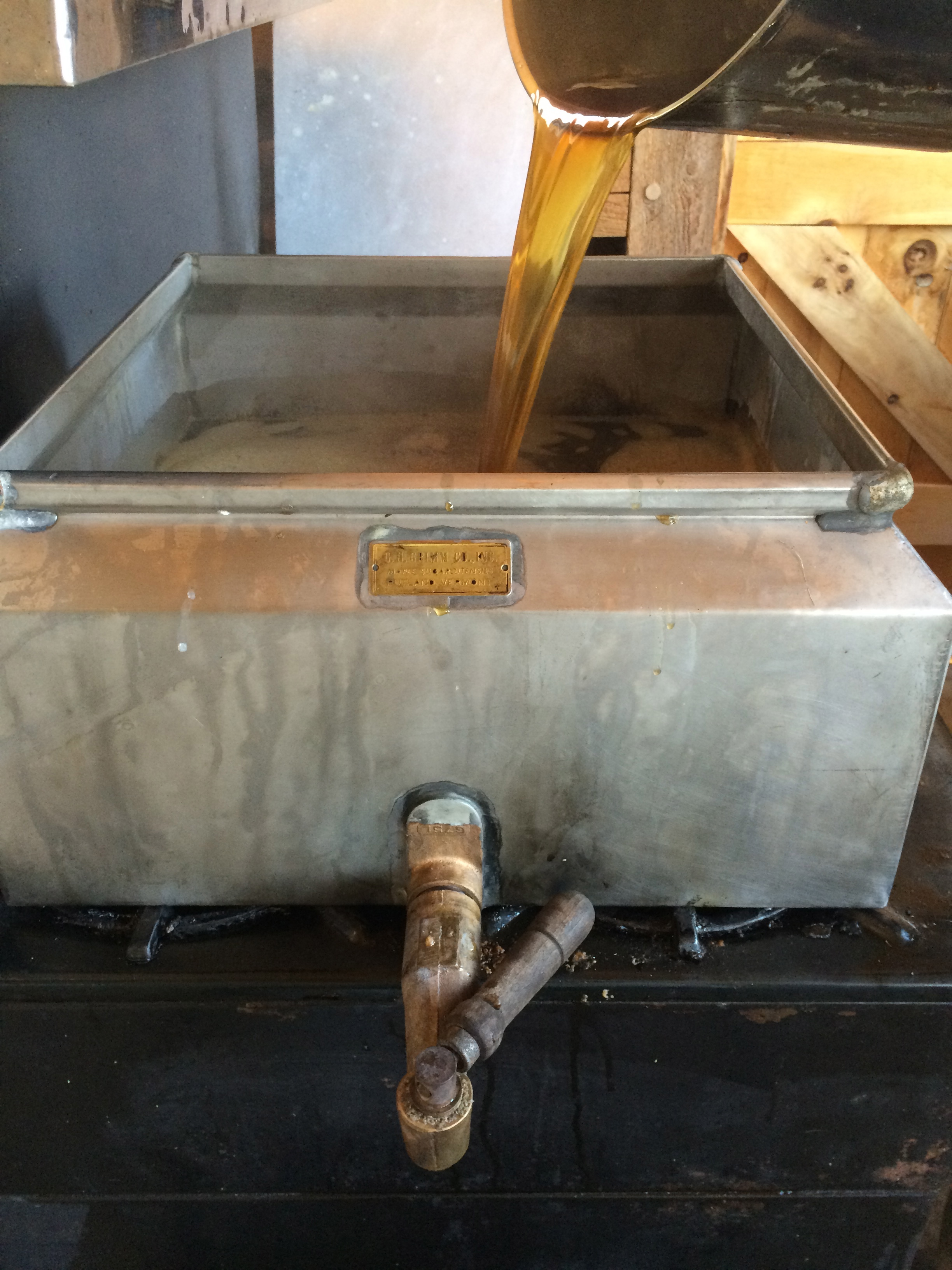
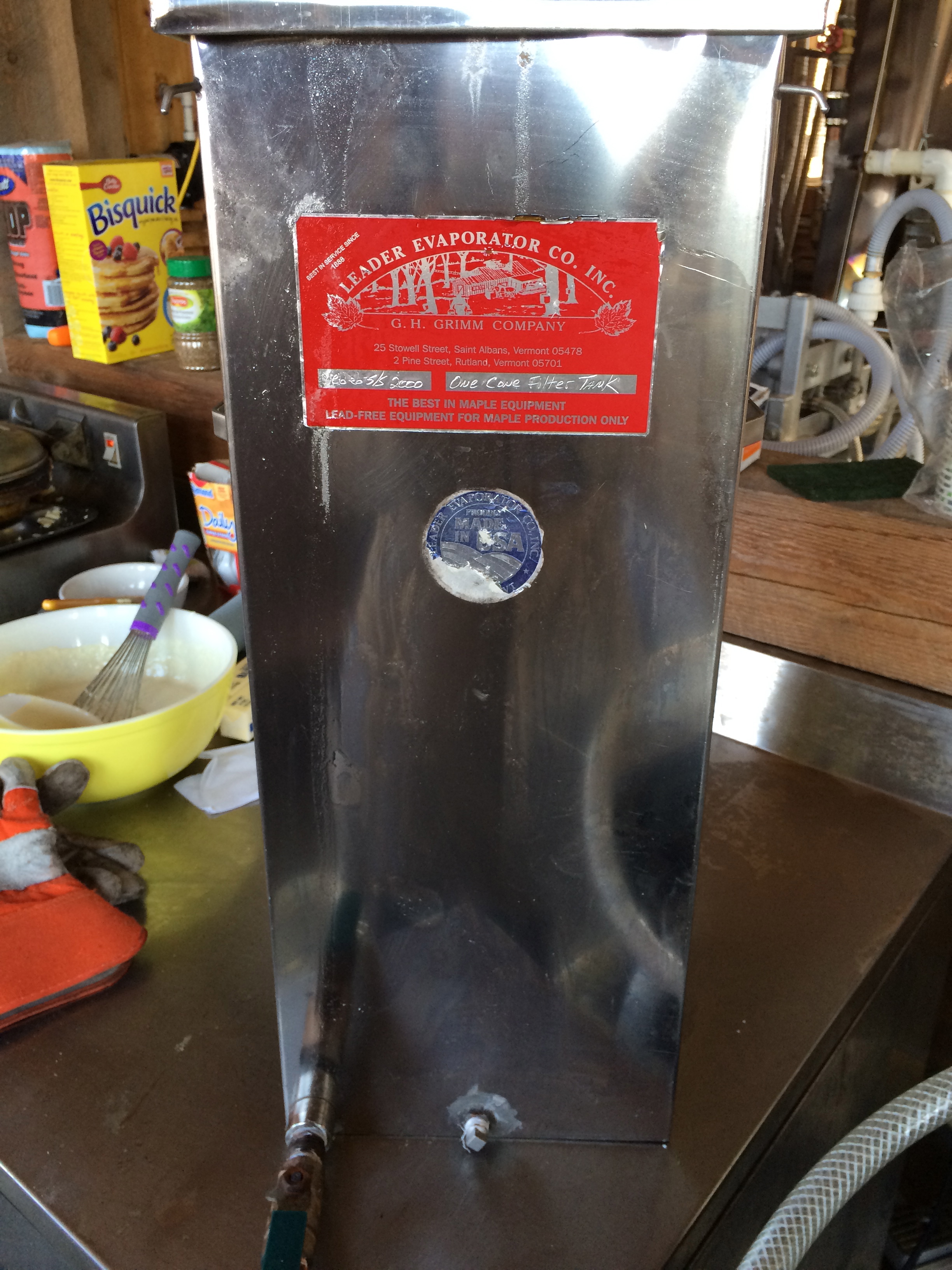
Filter tank

IMG_4016

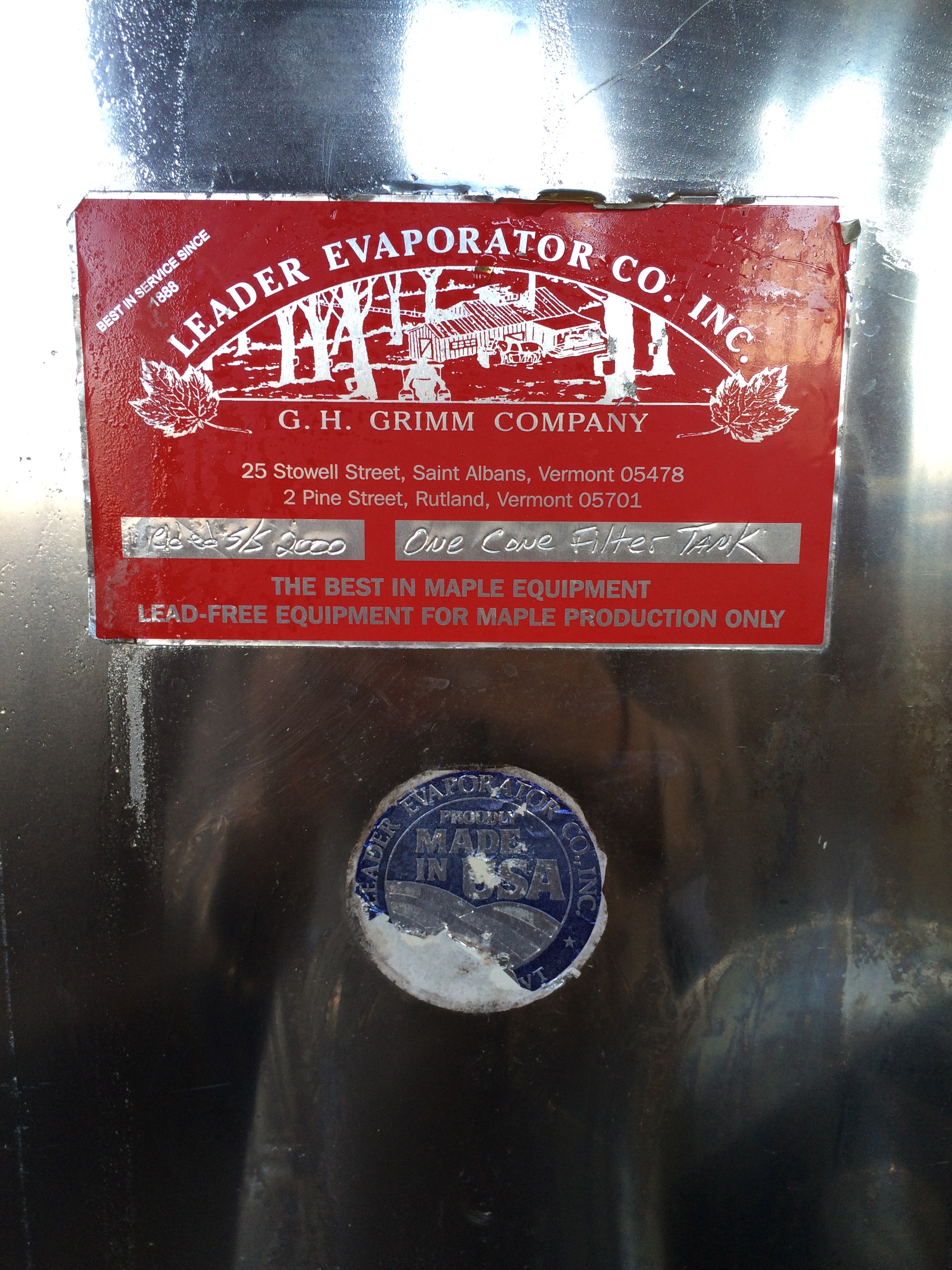
G.H. Grimm Company – formerly of Rutland, VT

IMG_3985

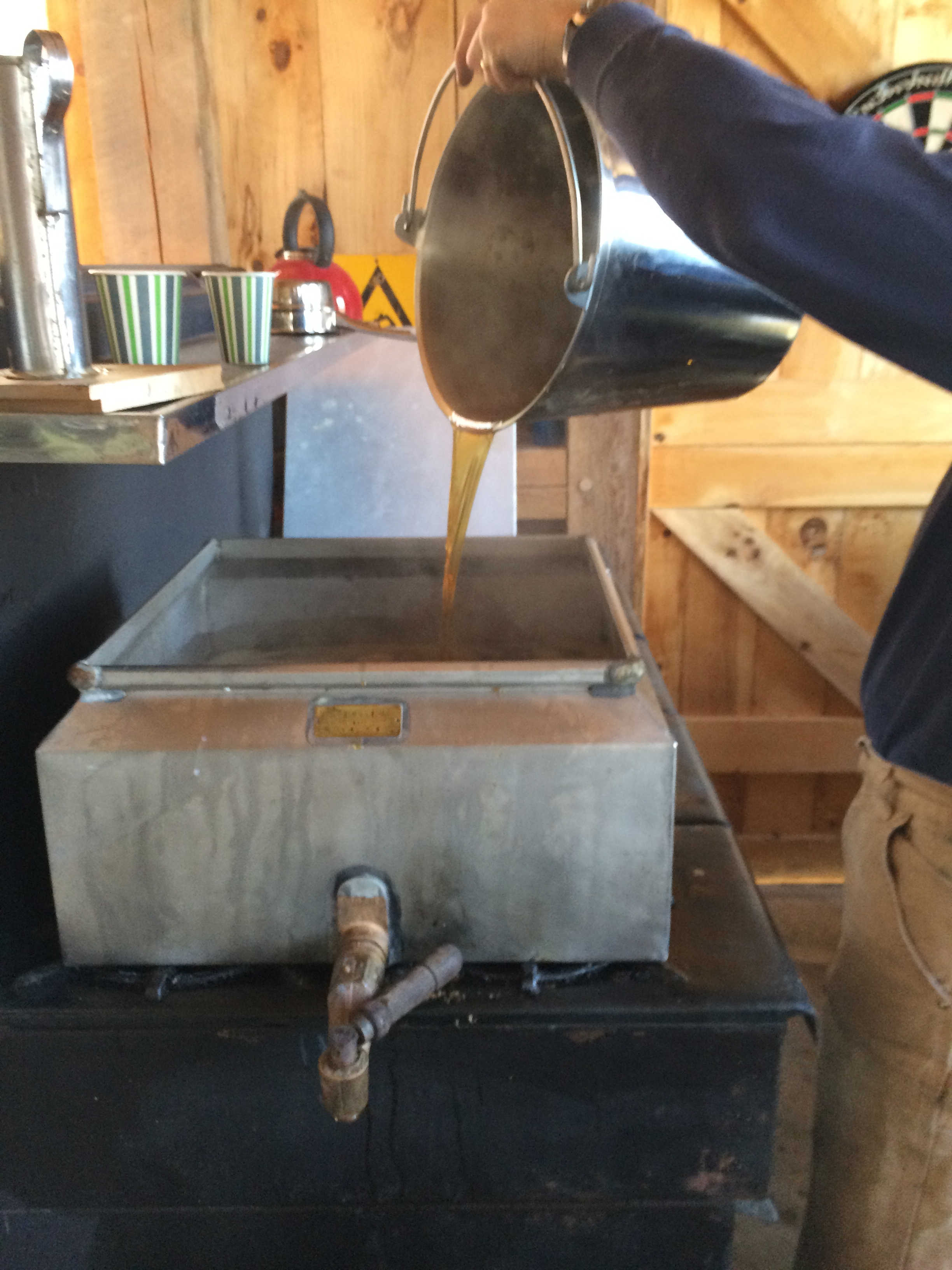
A filter press transfers the final product to a lined pan.

The filtration process takes about 15 minutes using this equipment.  There is plenty to do during the wait:

IMG_4069

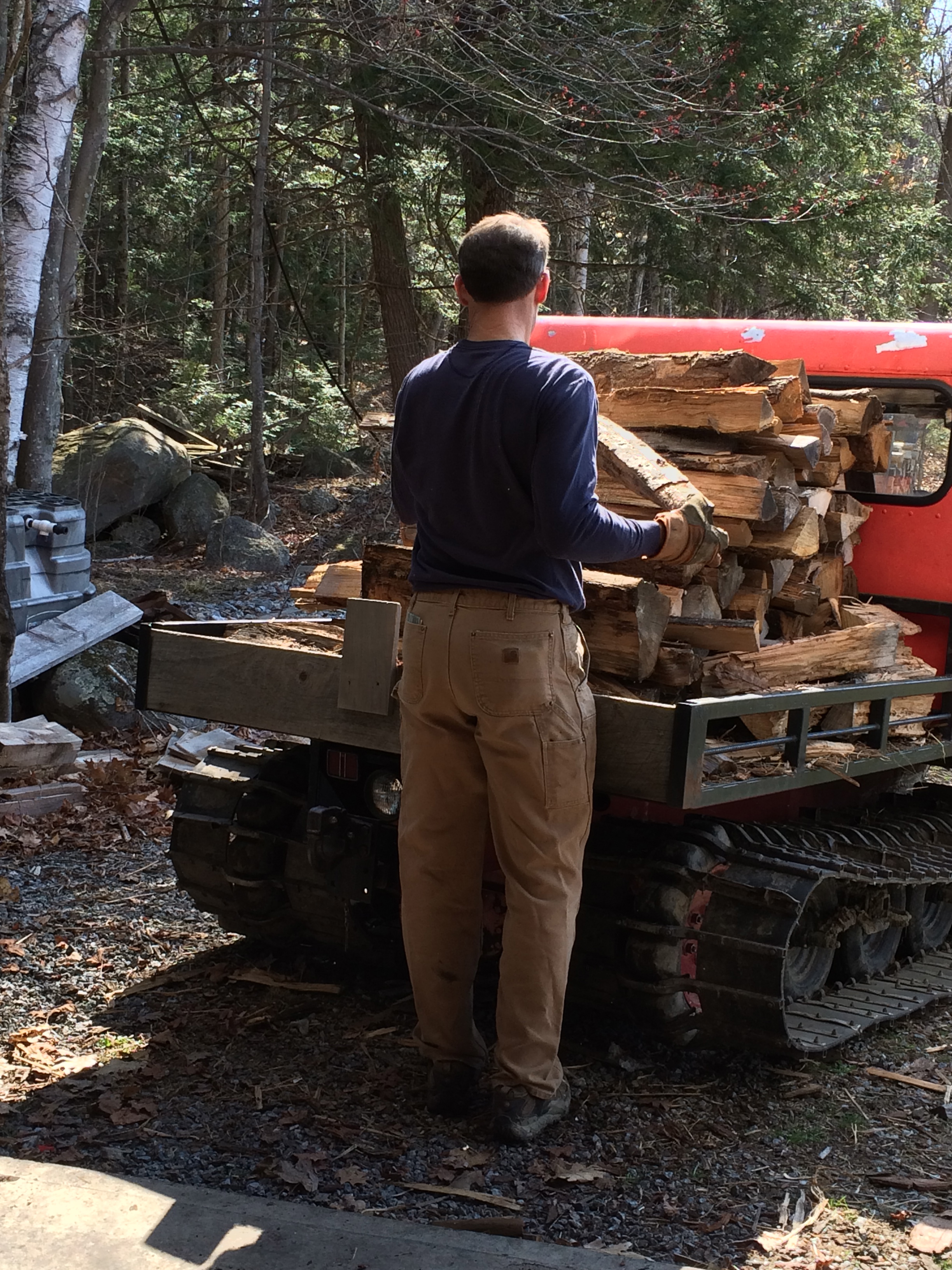
Replenishing the wood stove

IMG_4070

IMG_3987

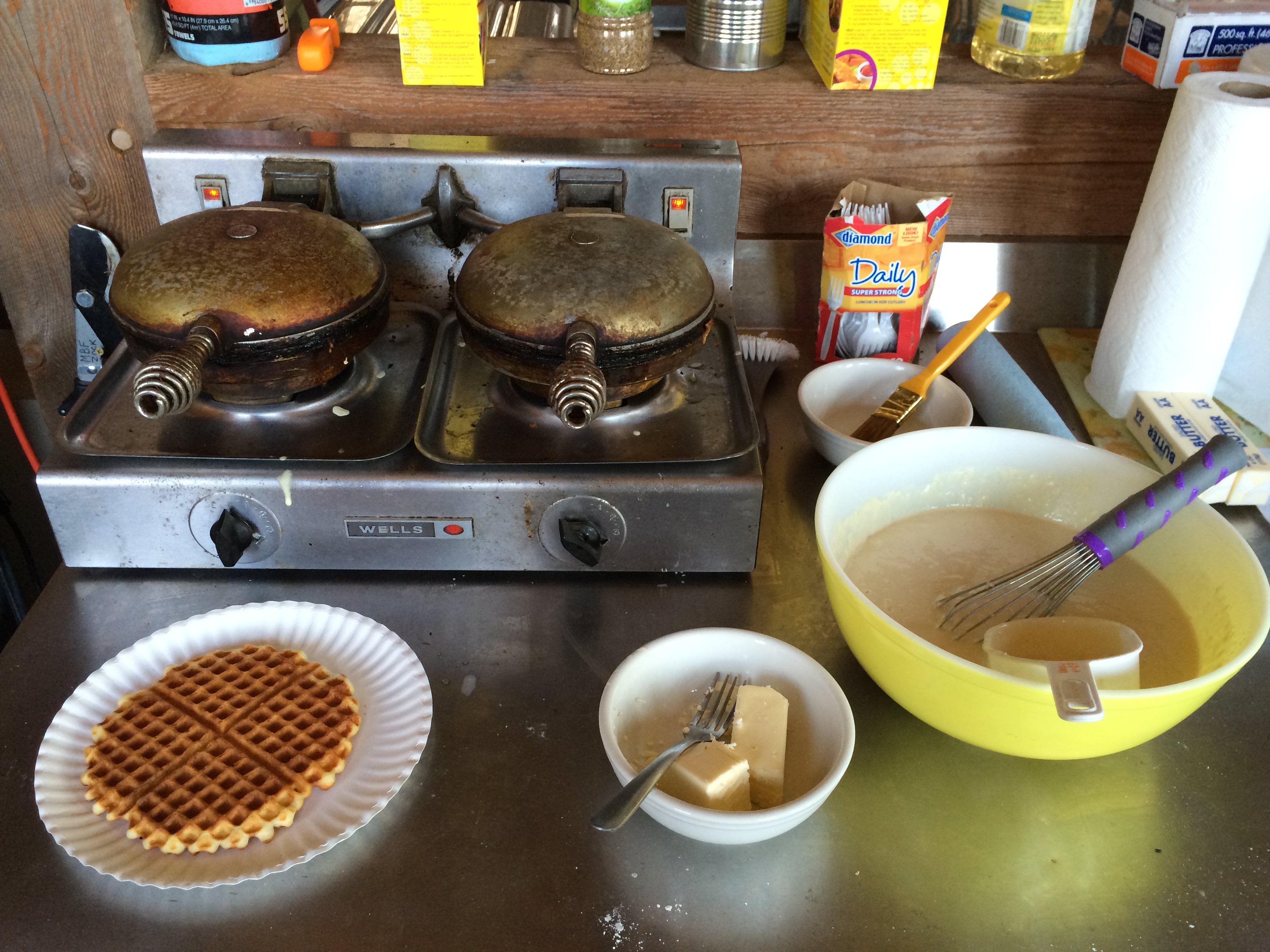
Preparing waffles

IMG_4059

IMG_4064

Admiring the view

IMG_4003

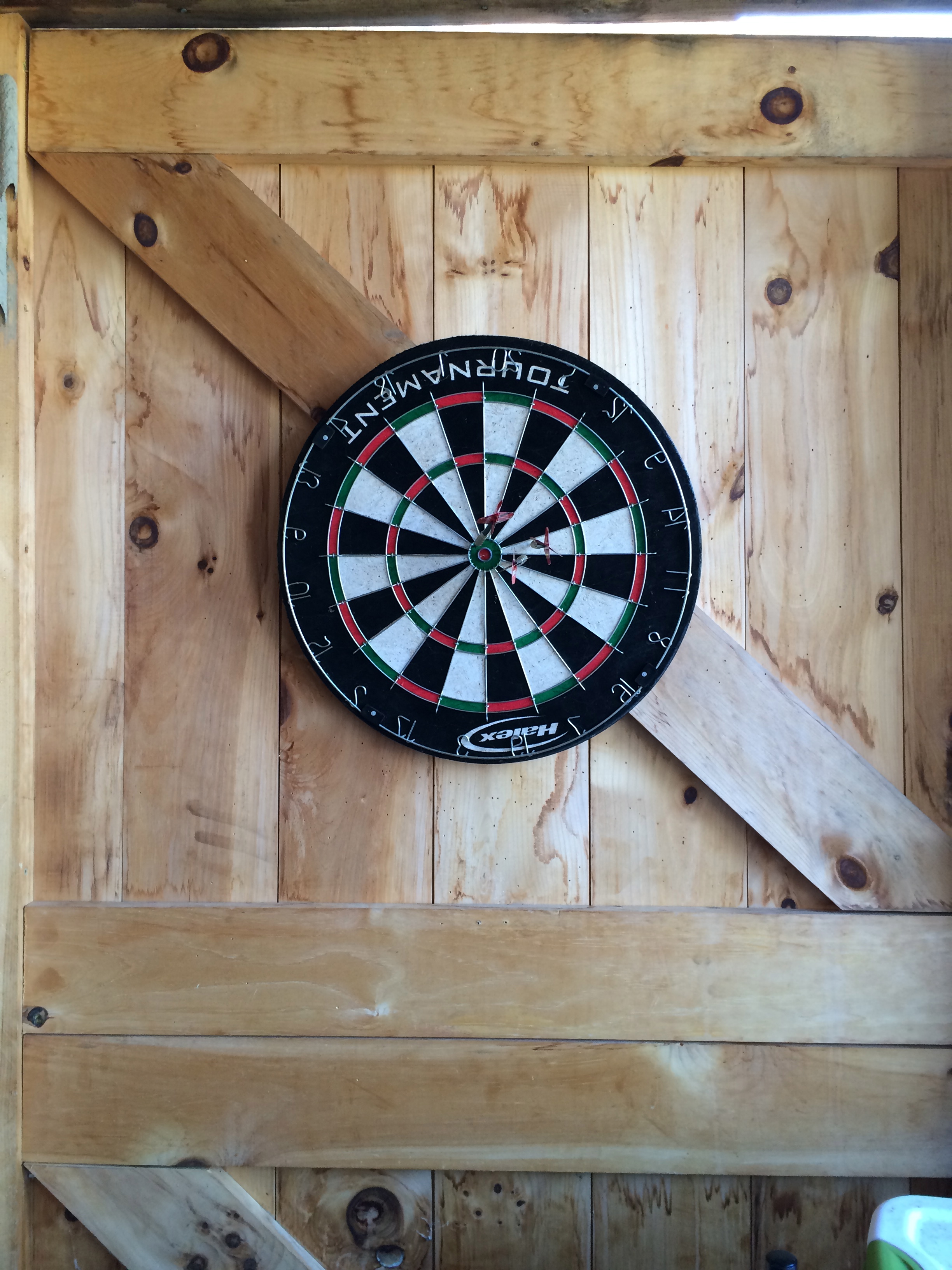
Darts, anyone?

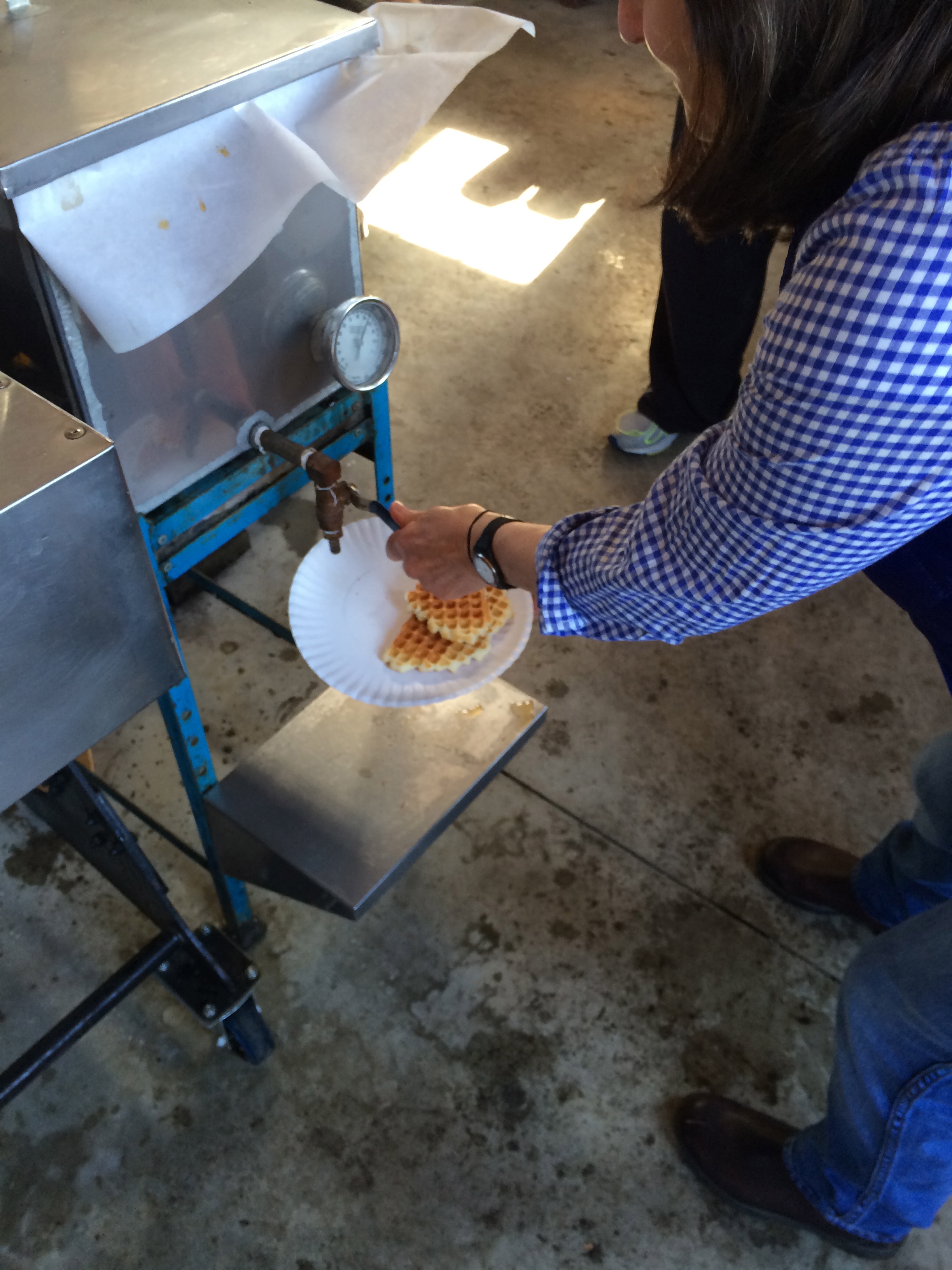
The syrup is finally ready for a test taste:

IMG_4020

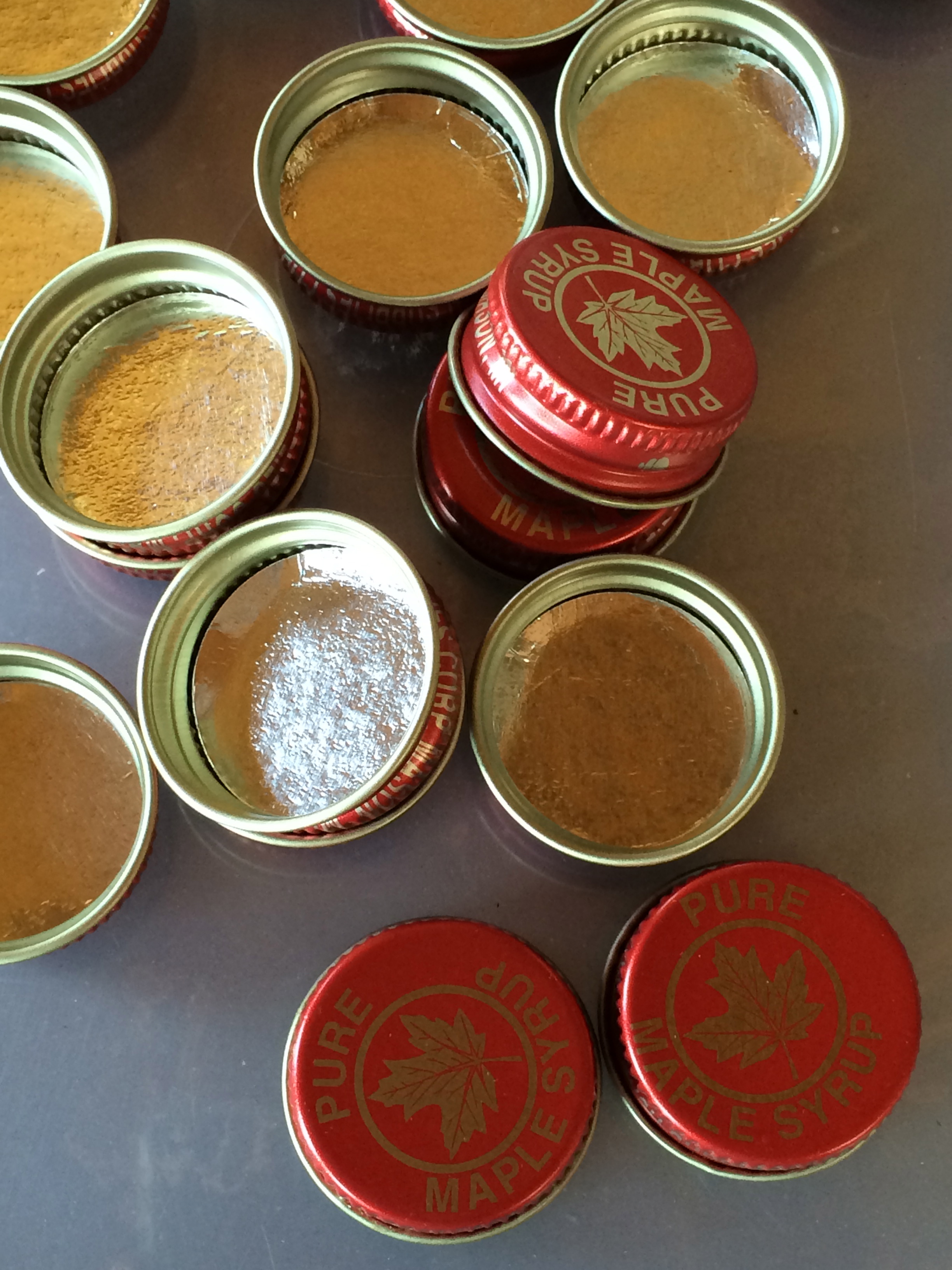
And bottling:

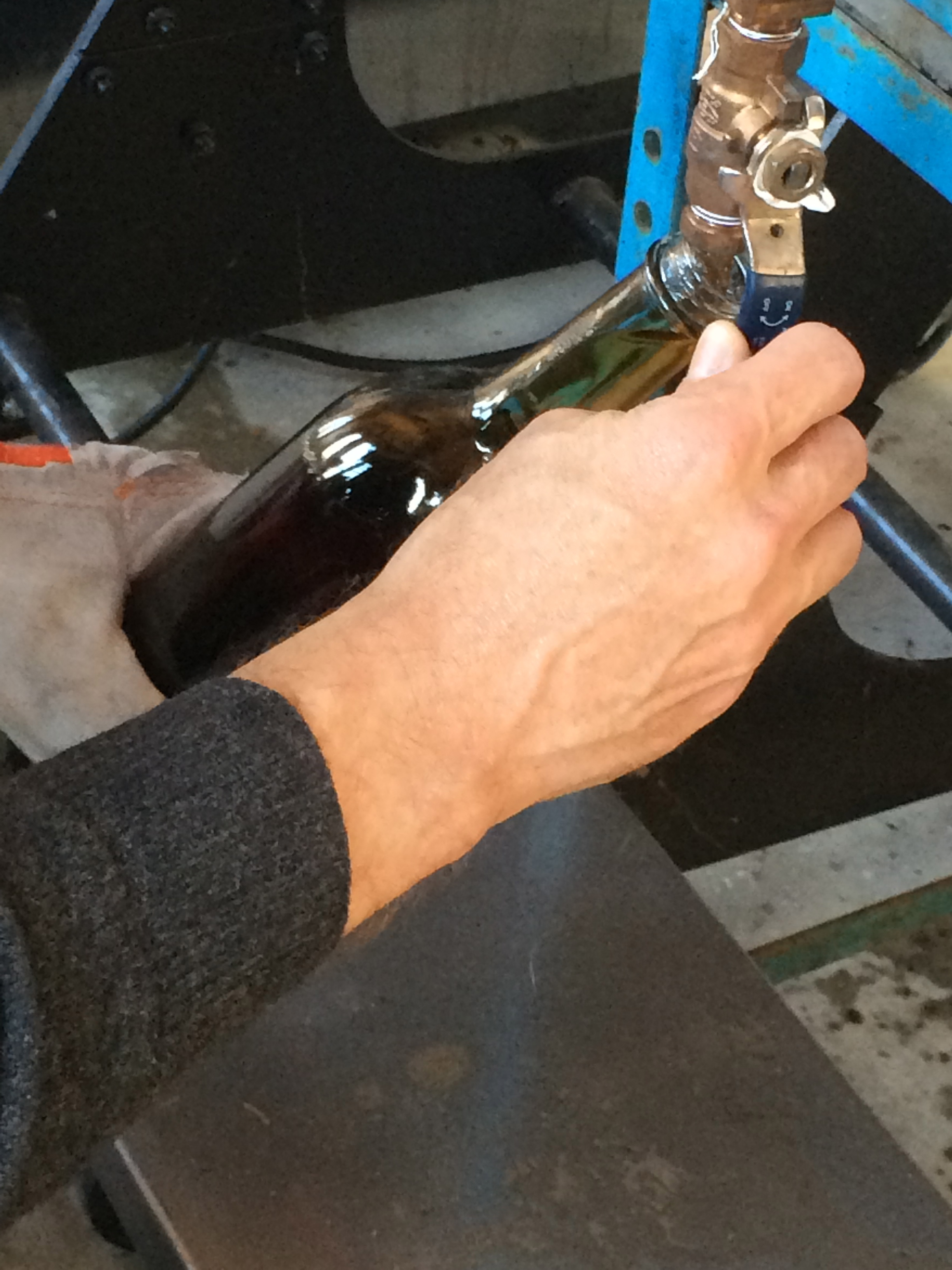
IMG_4049

Cases ready for bottling.

IMG_4045

10 gallons (60 bottles) is the yield for the day. It takes roughly 50 gallons of sap to produce one gallon of syrup.

IMG_4042

IMG_4052

Once filled, the glass bottles are stored upside down to ensure a proper seal.

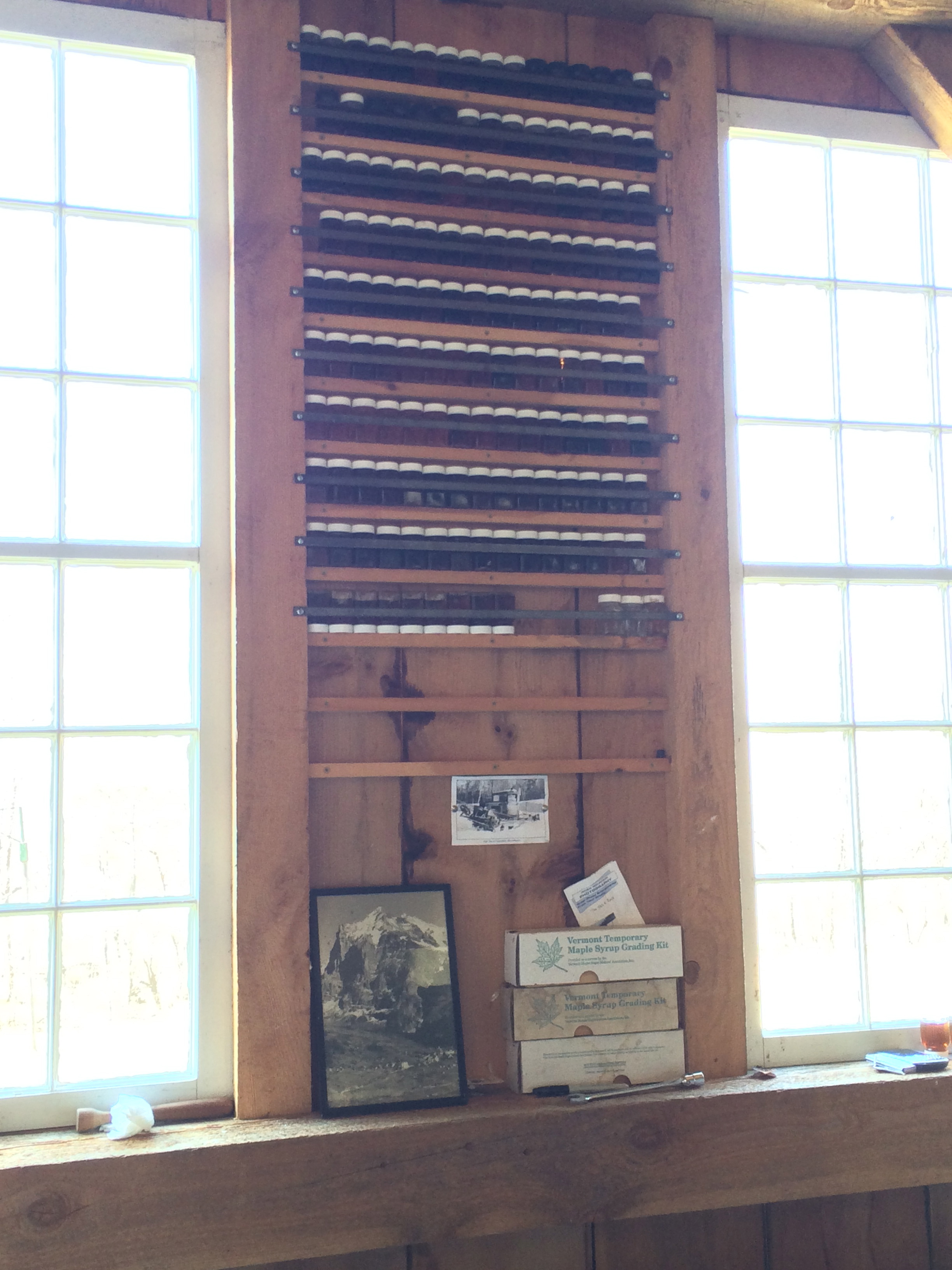
Shelves lined with small bottles from prior years of production serve as a guide for syrup grading:

IMG_4025

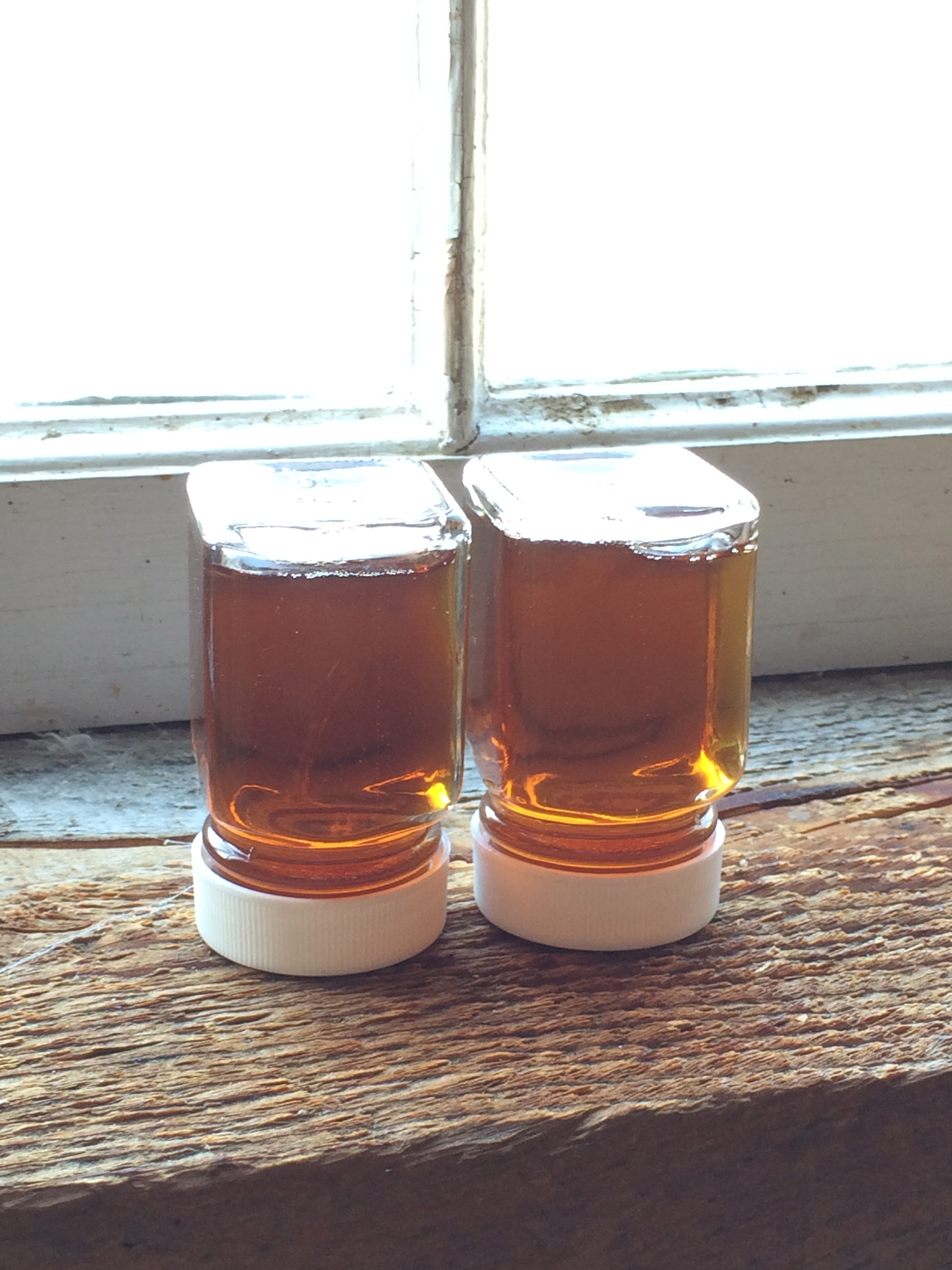
An outstanding specimen:

IMG_4102

I left with one bottle and placed several more on reserve for friends and family.  Pancakes and waffles are a certainty in the very near future!

For more information about Stone Ridge Farm and CSA shares:

http://www.stoneridgeorganics.com

http://localharvestnh.com/index.php/the-farms/stoneridge-farm/

http://www.americantowns.com/nh/bradford/organization/stoneridge-farm


POST EASTER BUNNIES

IMG_4156

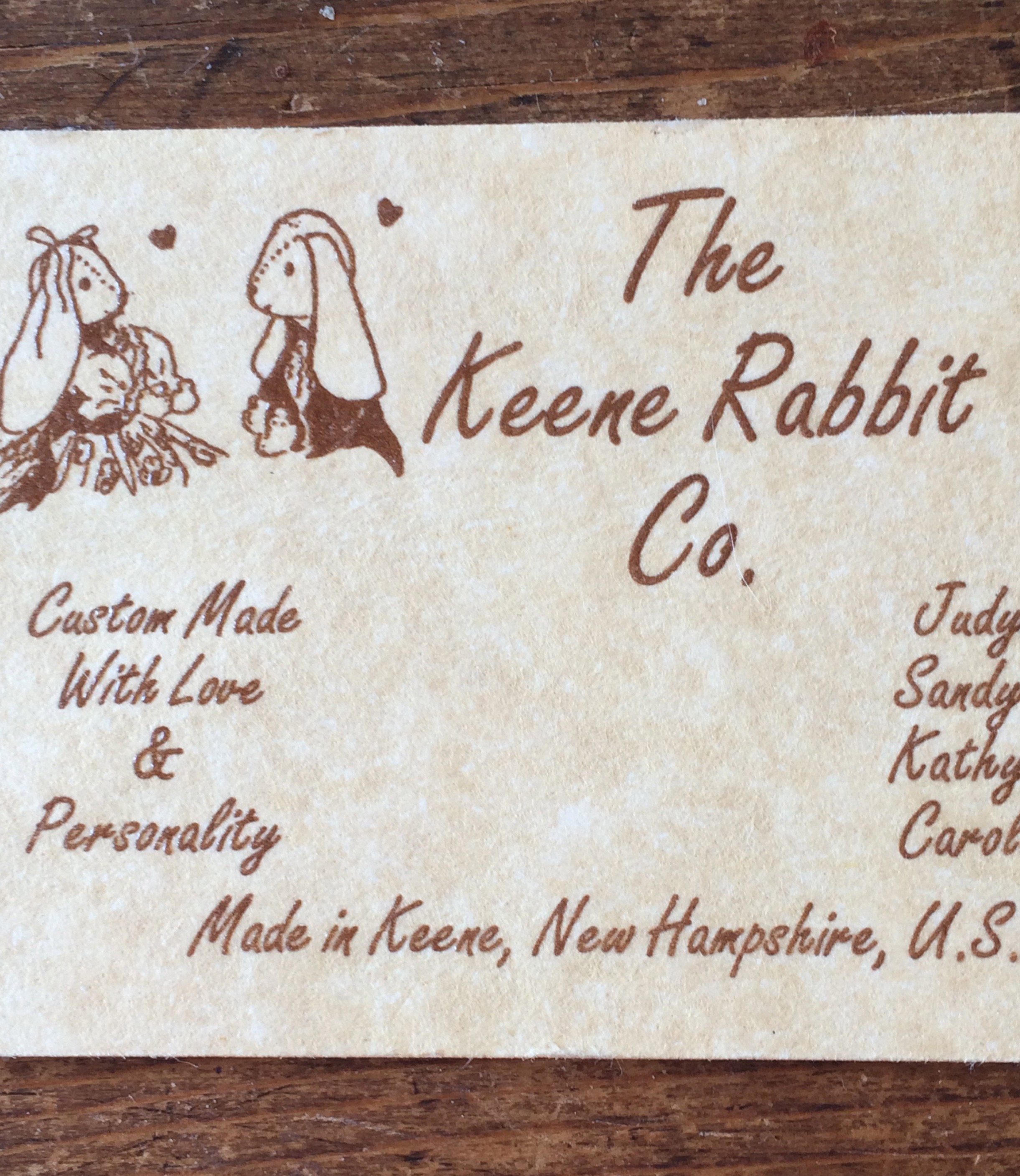
An old business card

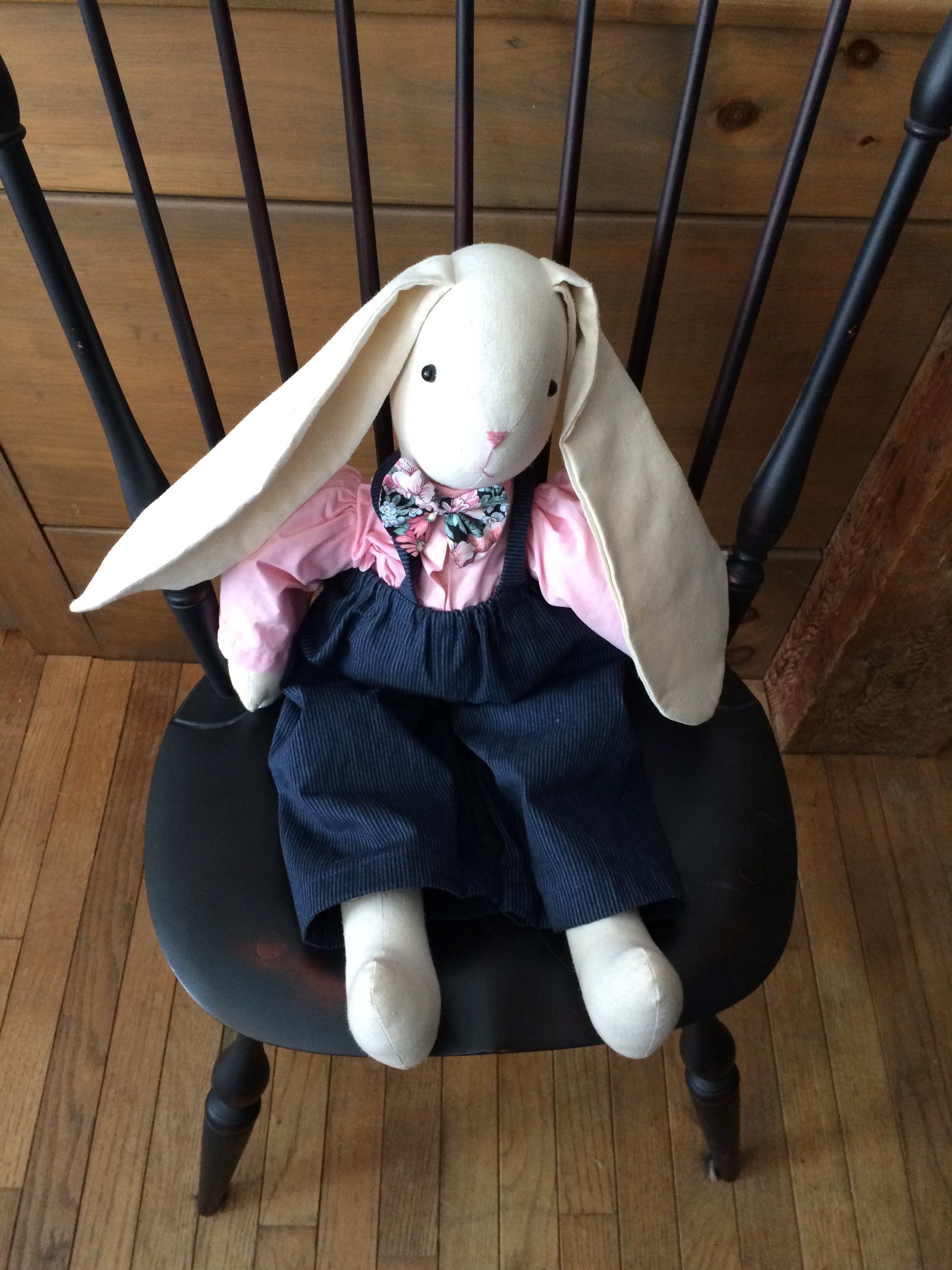
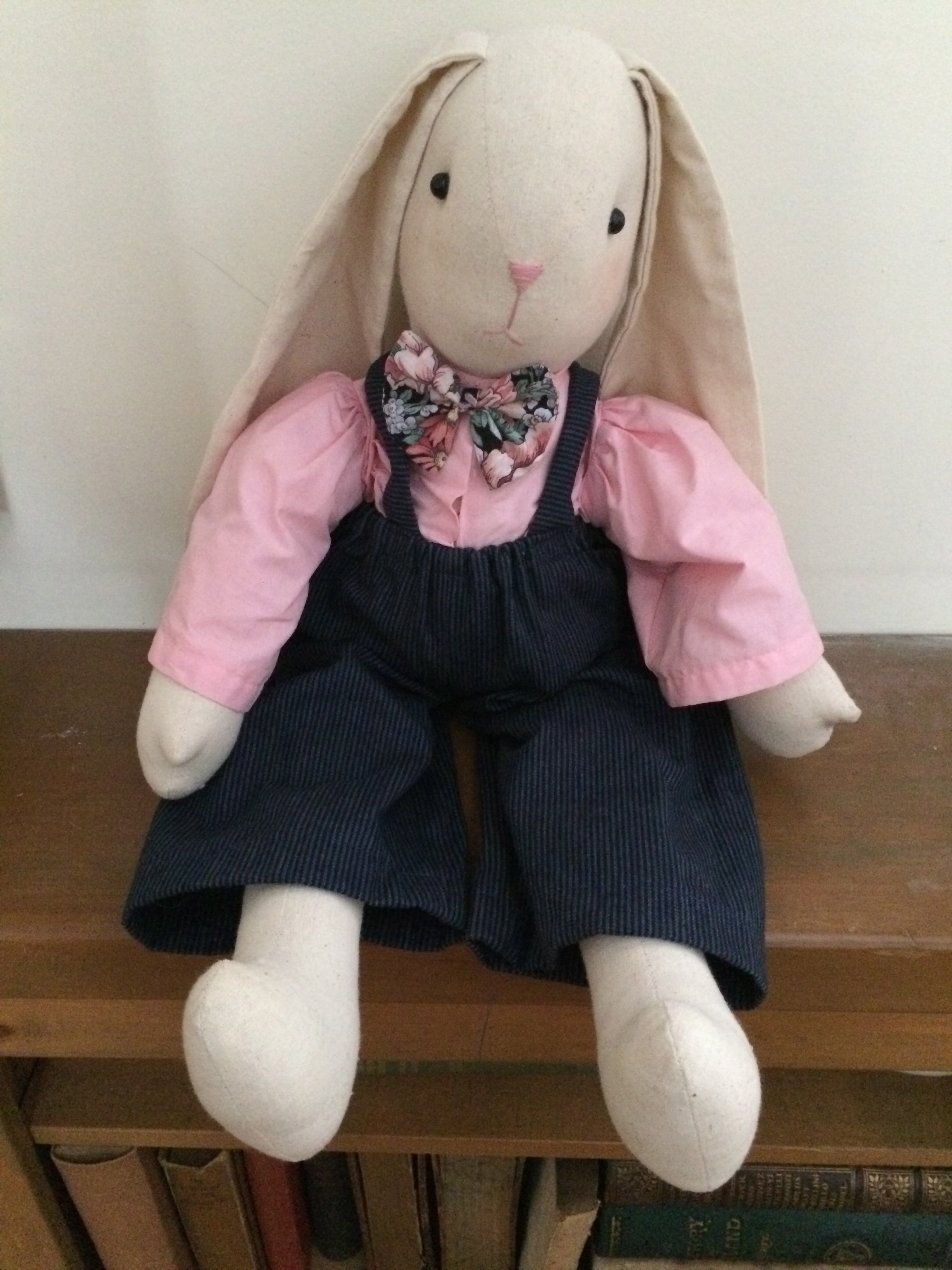
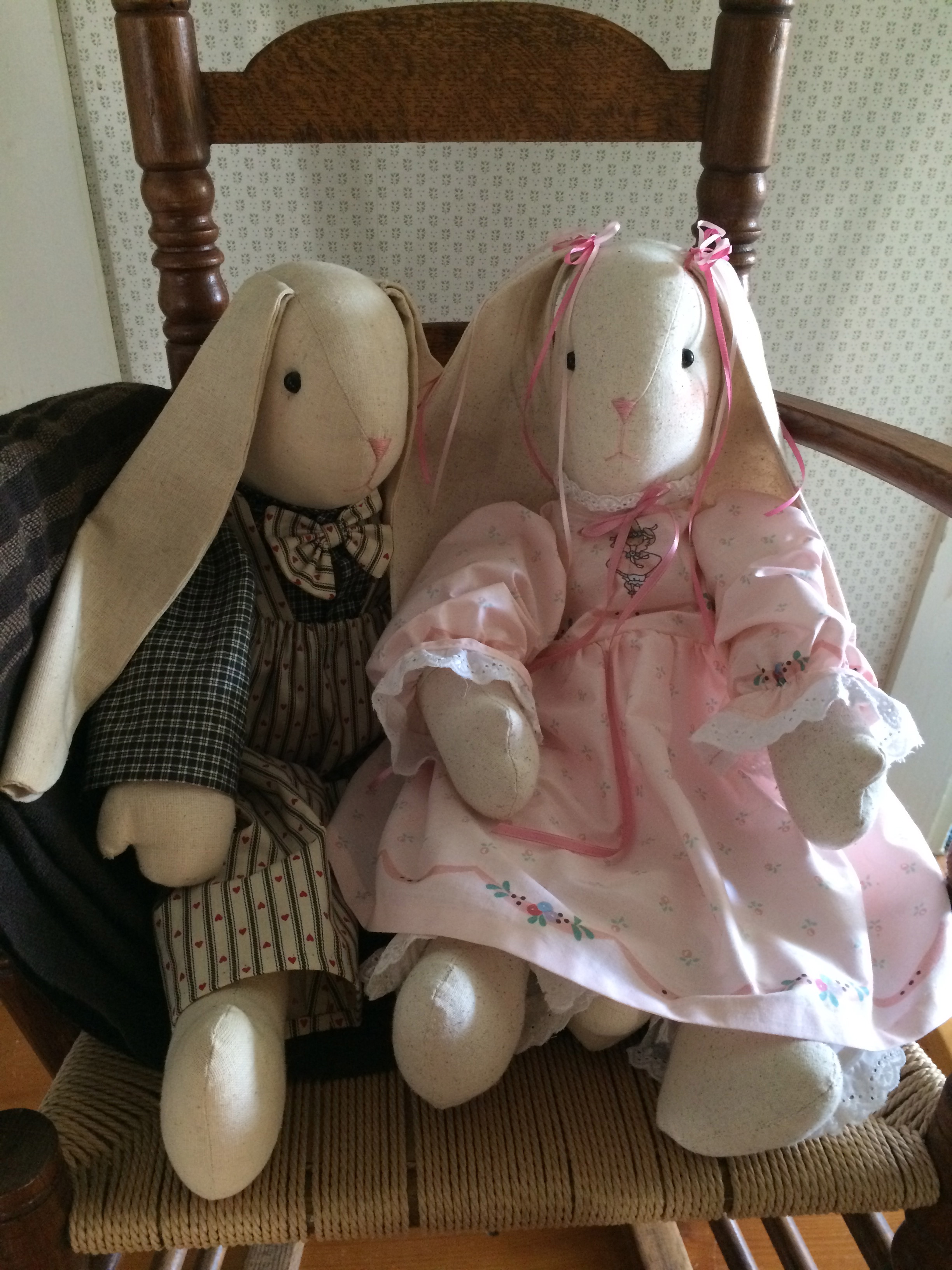
The Keene Rabbit Co. is no longer formally operating as a business.  However, a friend of ours offered an introduction to the former owner after we recently won this adorable stuffed bunny at a fundraiser auction:

IMG_0379   IMG_0383

The NH based company was founded by Judy Tobin, as a natural offshoot of a Wednesday evening sewing group.  Originally given as gifts to friends and relatives, the lop eared bunnies were eventually sent all over the country, even as far afield as Alaska.  One of the more memorable orders went out to a group of Russian orphans, befriended by Judy’s daughter, Elaine.

A vintage favorite of Judy’s:

IMG_3939

Circa 1980

IMG_3964

Fabric made in the USA

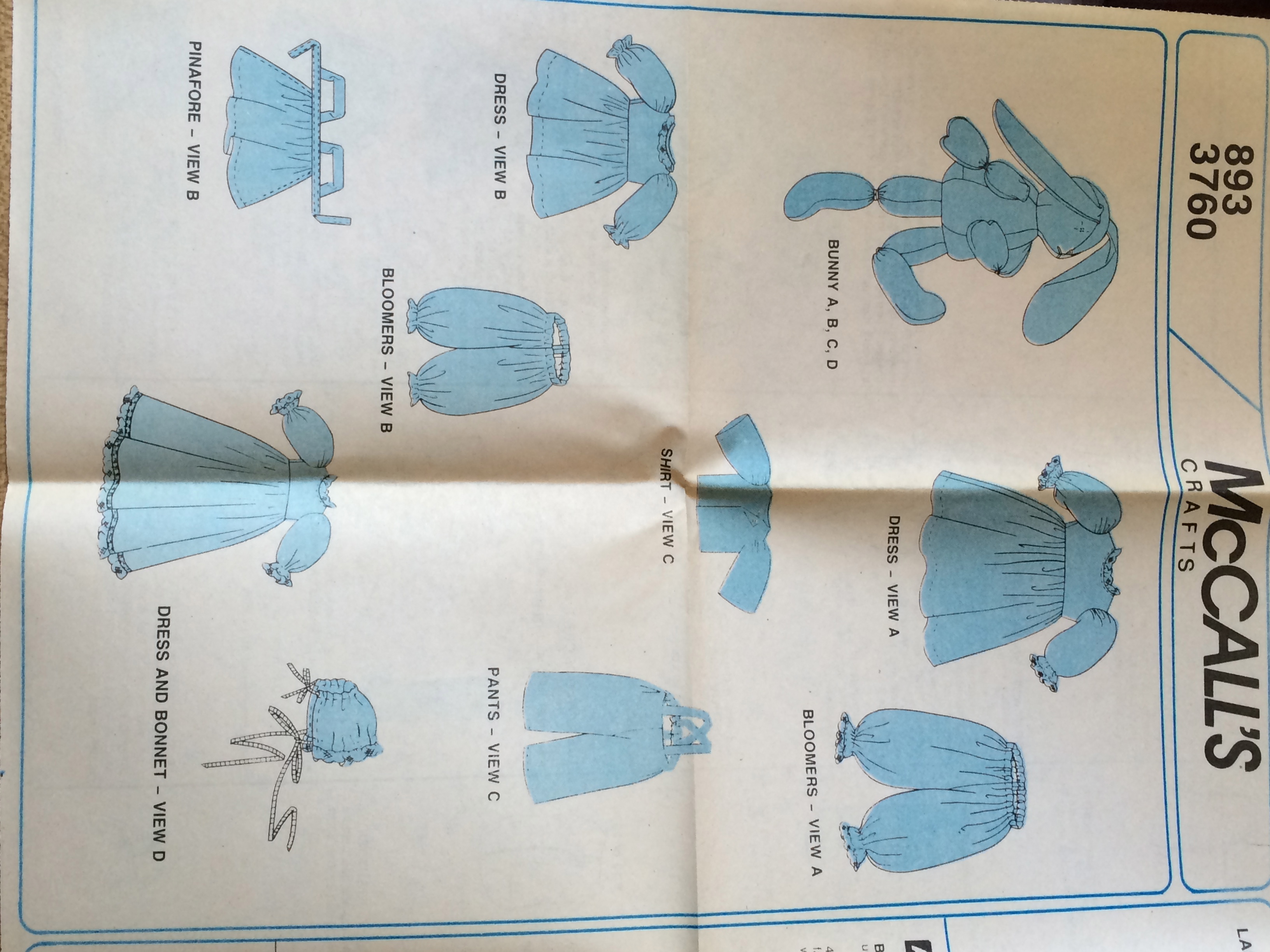
Instructions for an old McCall’s pattern, from which they were originally created:

IMG_3934

IMG_3933

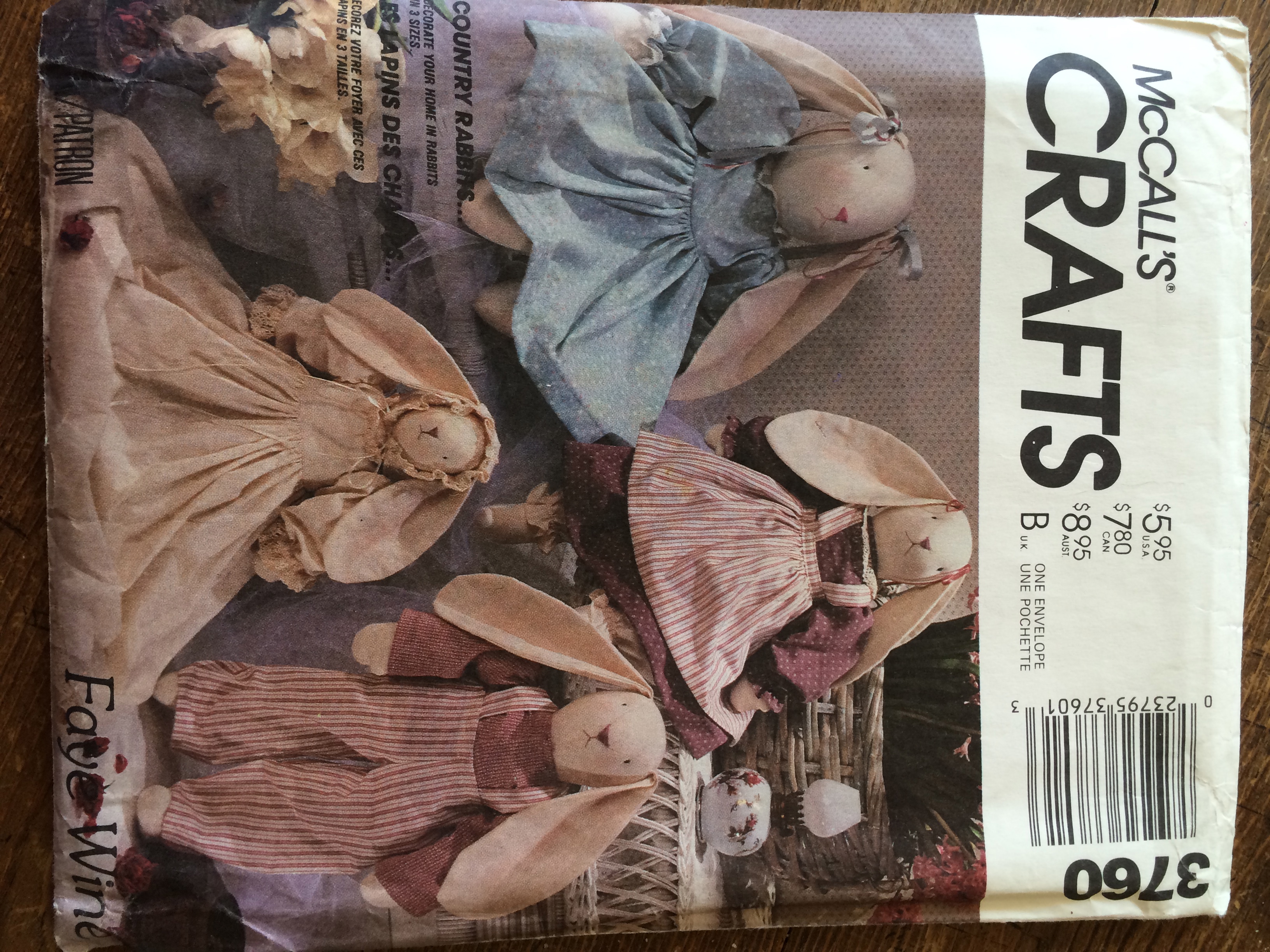
Packaging for the original pattern, no longer available:

IMG_3959

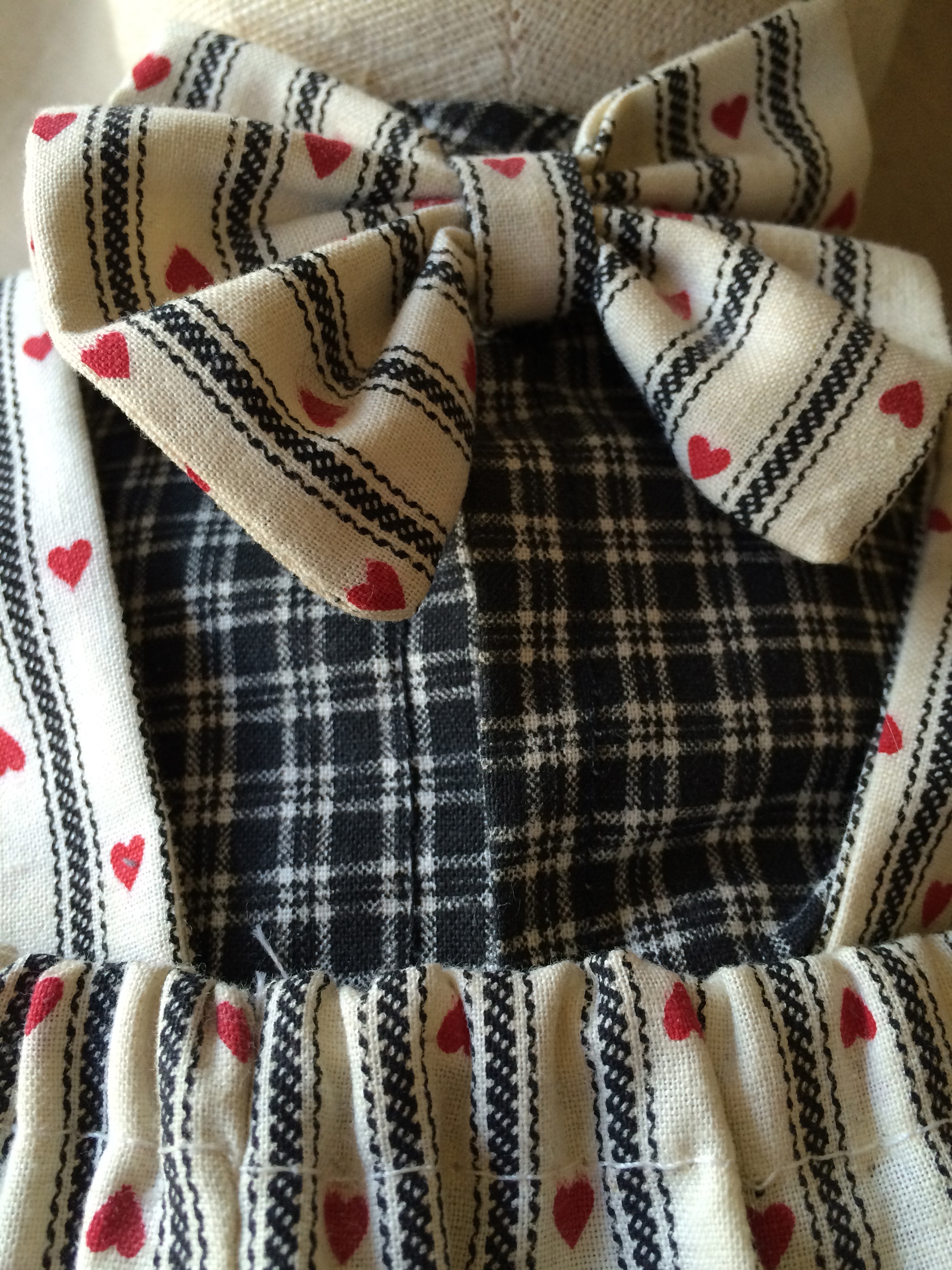
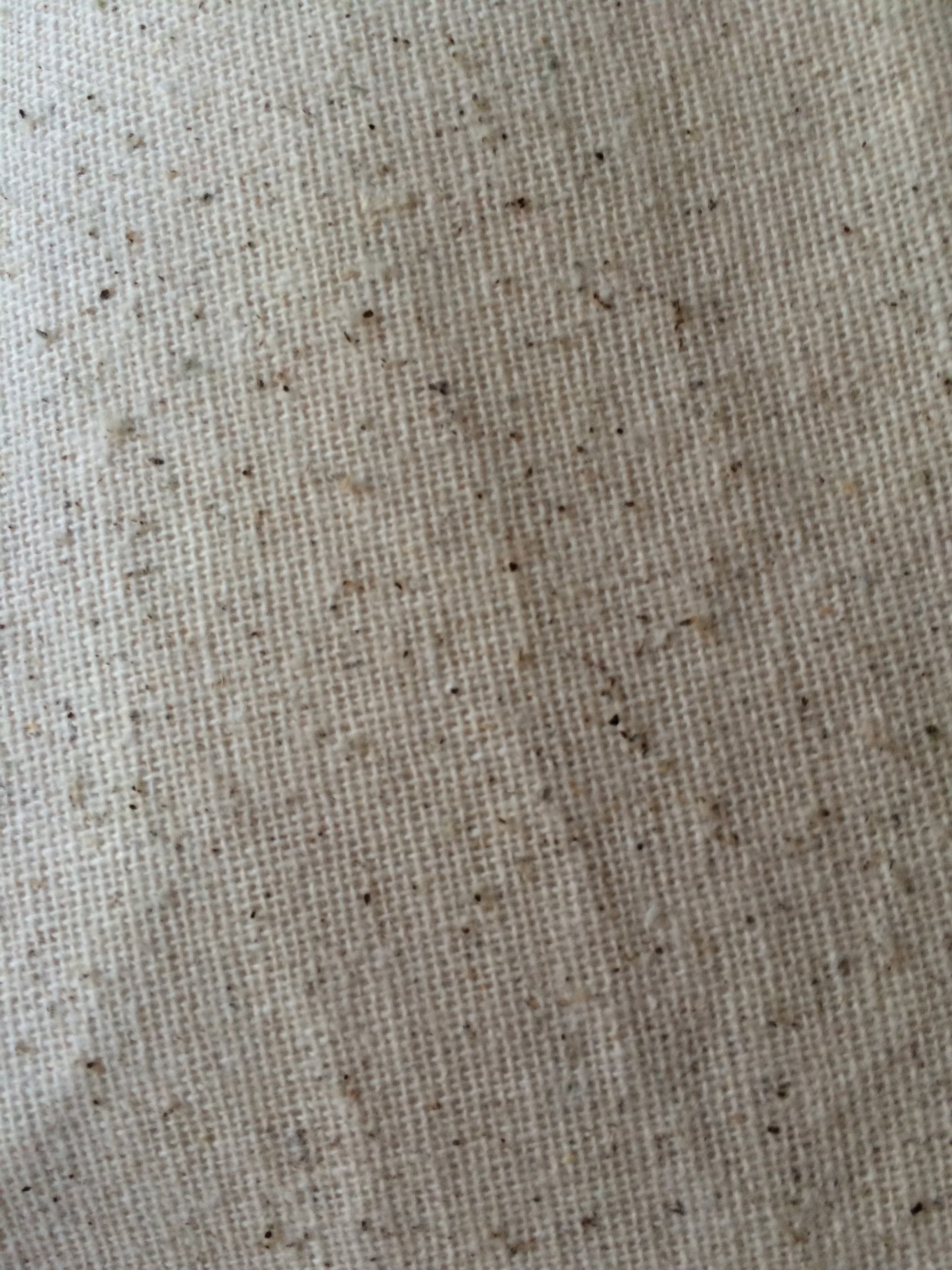
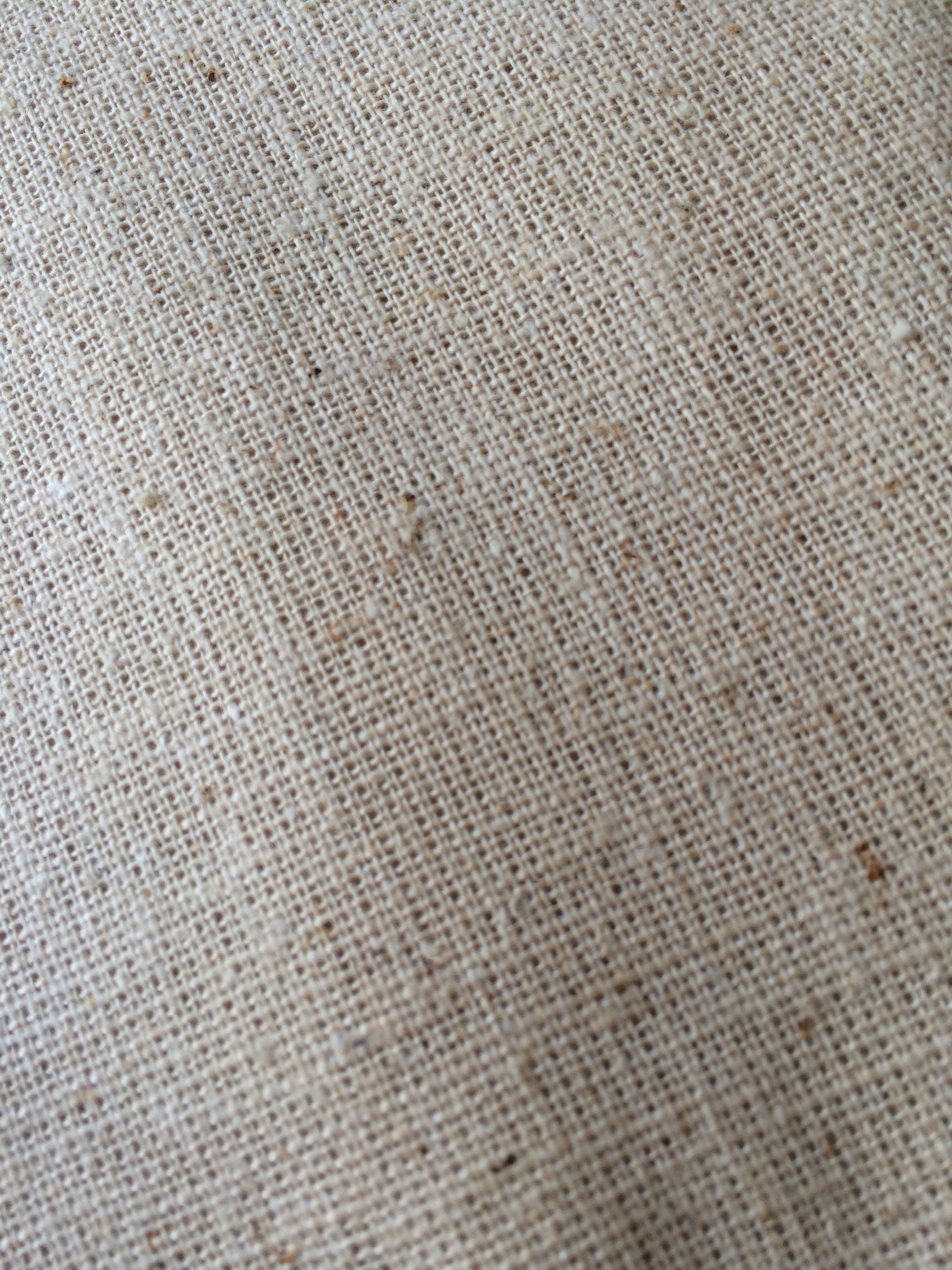
While the bunnies are still very occasionally made, a recent challenge has been difficulty in sourcing quality, US manufactured fabrics. The muslin on the left is well over 30 years old and has held up well, with very little pillage.  Contrast with it’s recently purchased counterpart on the right – made in China, grainier in texture and already showing signs of wear:

IMG_3965IMG_3966

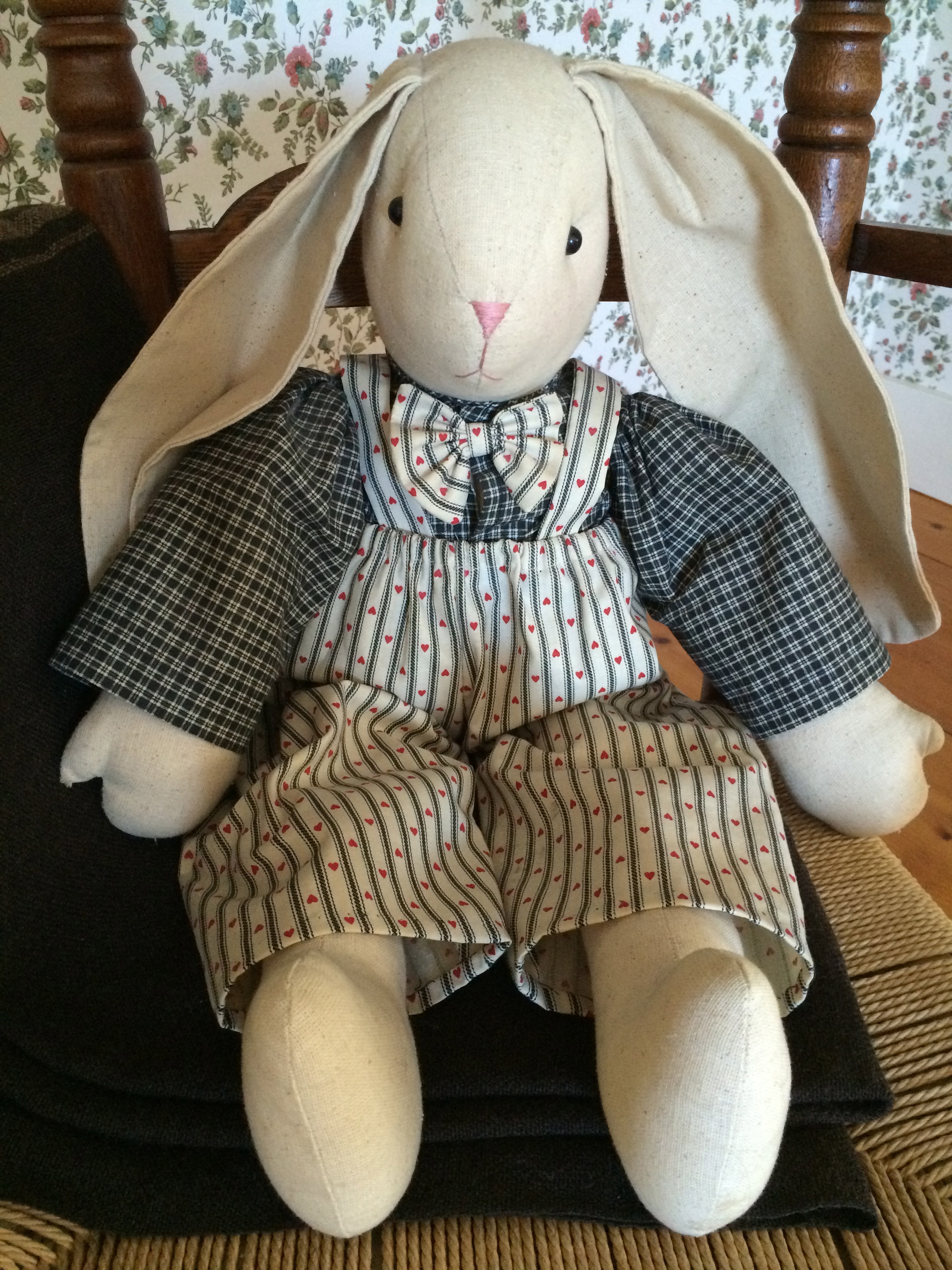
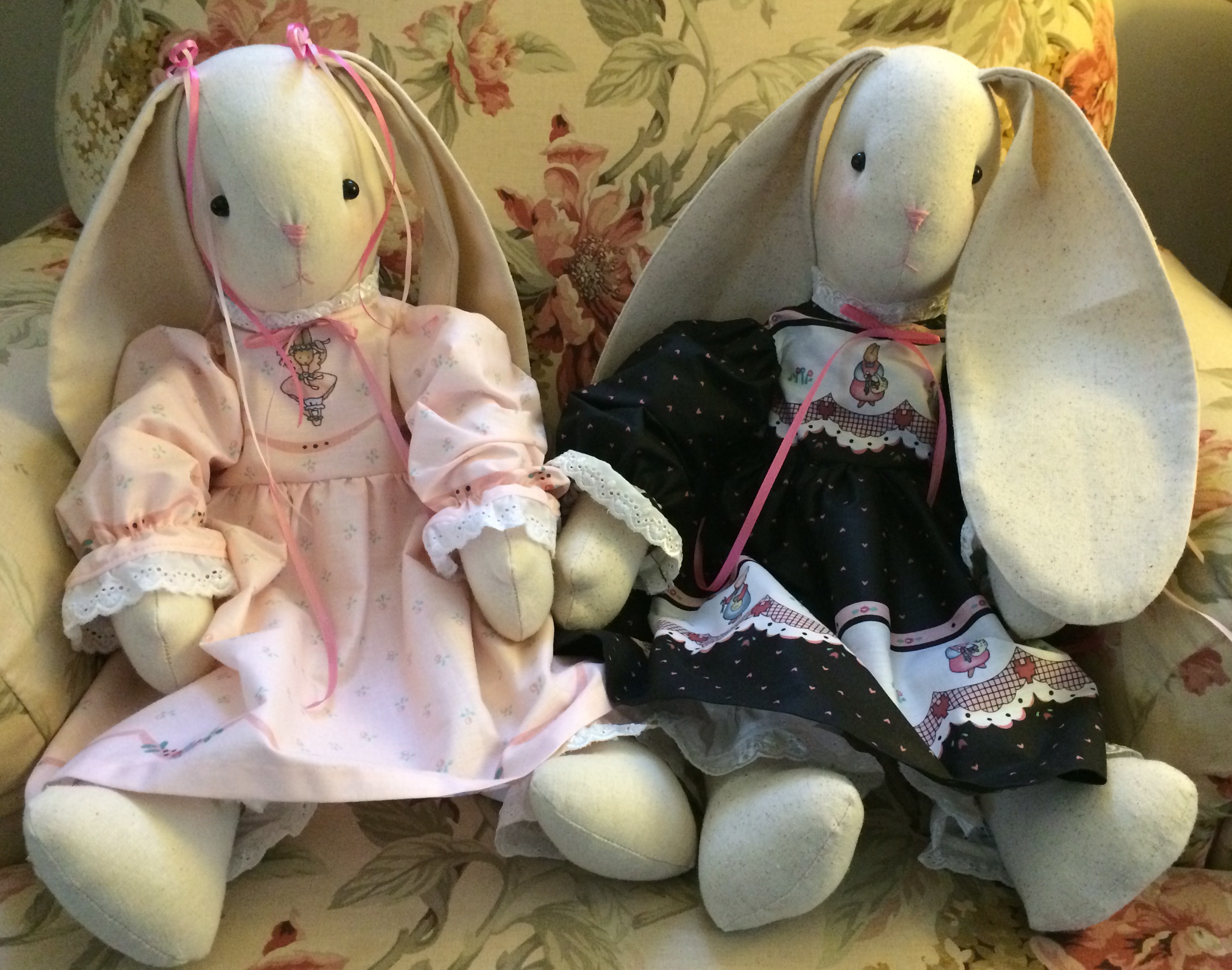
Two more bunnies, eagerly awaiting their new owner:

IMG_3935

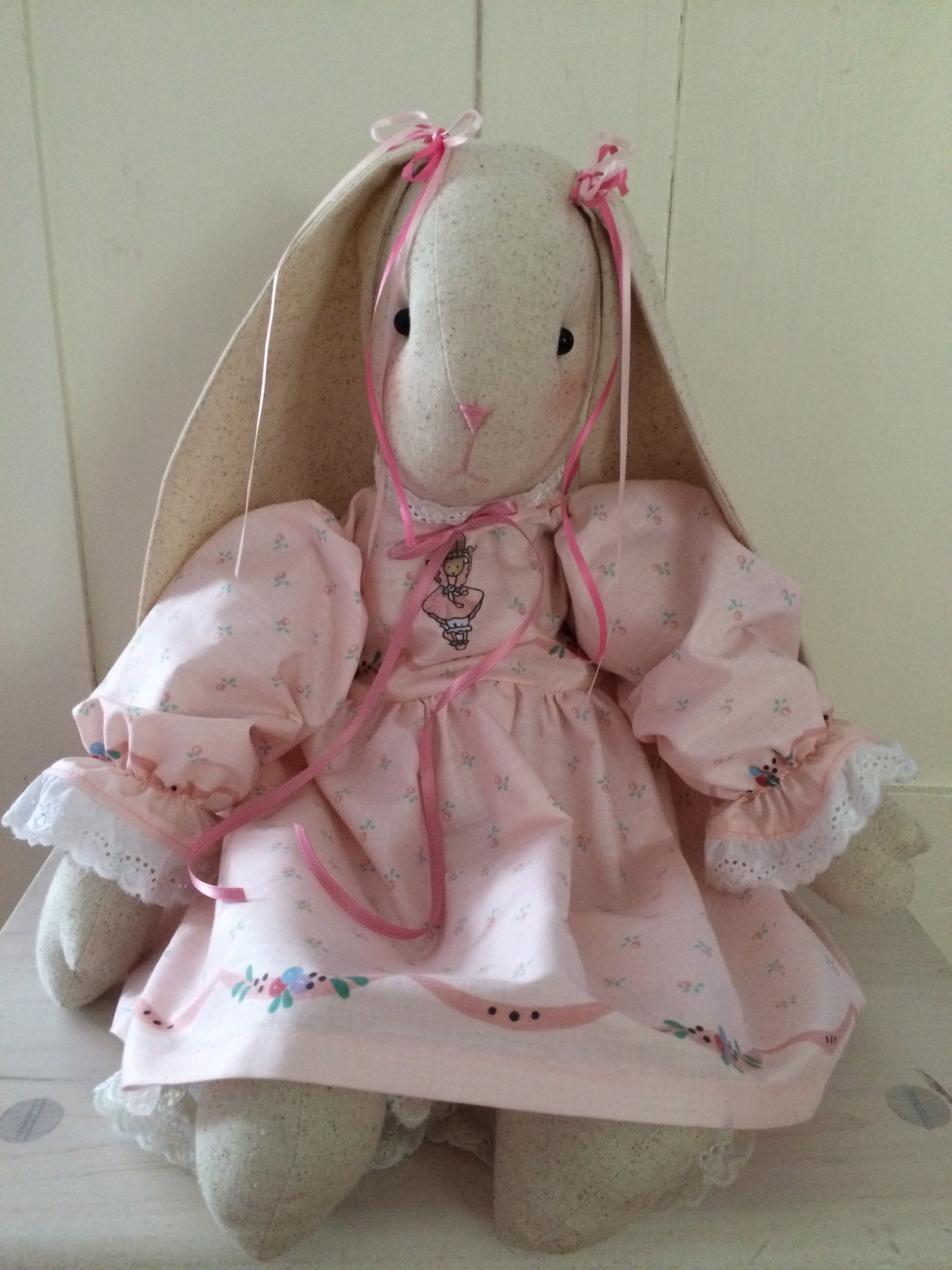
This one will go to our niece as a post Easter, birthday gift:

IMG_3951

Until then, it’s home will be this rocking chair:

IMG_3953


Thanks to Judy Tobin for sharing a few of her many delightful creations, which will be treasured for years to come!

LAKE SOLITUDE – A LAST LOOK BACK

IMG_3095

Spring was coy that year, and the cold season had a long and fretful death…”

Owing to a trip out of the country during the latter half of March followed by visits to relatives out-of-state for Easter holiday upon our return, this blog has gathered a bit of dust, as it were.  Contemplating the end of one cycle even as the next has arrived, and the appearance of snow flurries on the other side of the window pane only just earlier this morning, it seems appropriate to pay one last tribute to the cold season before fully embracing spring.

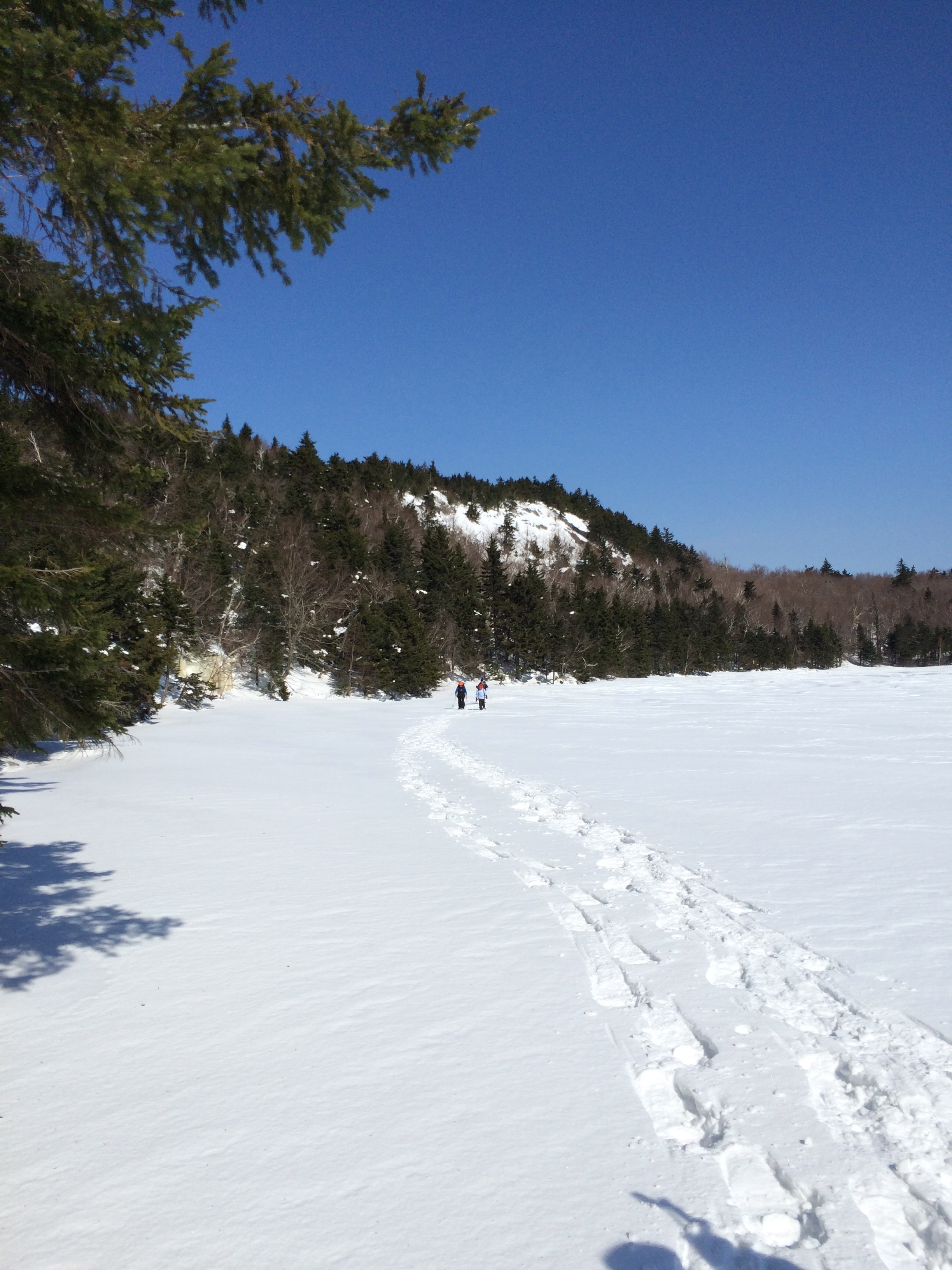
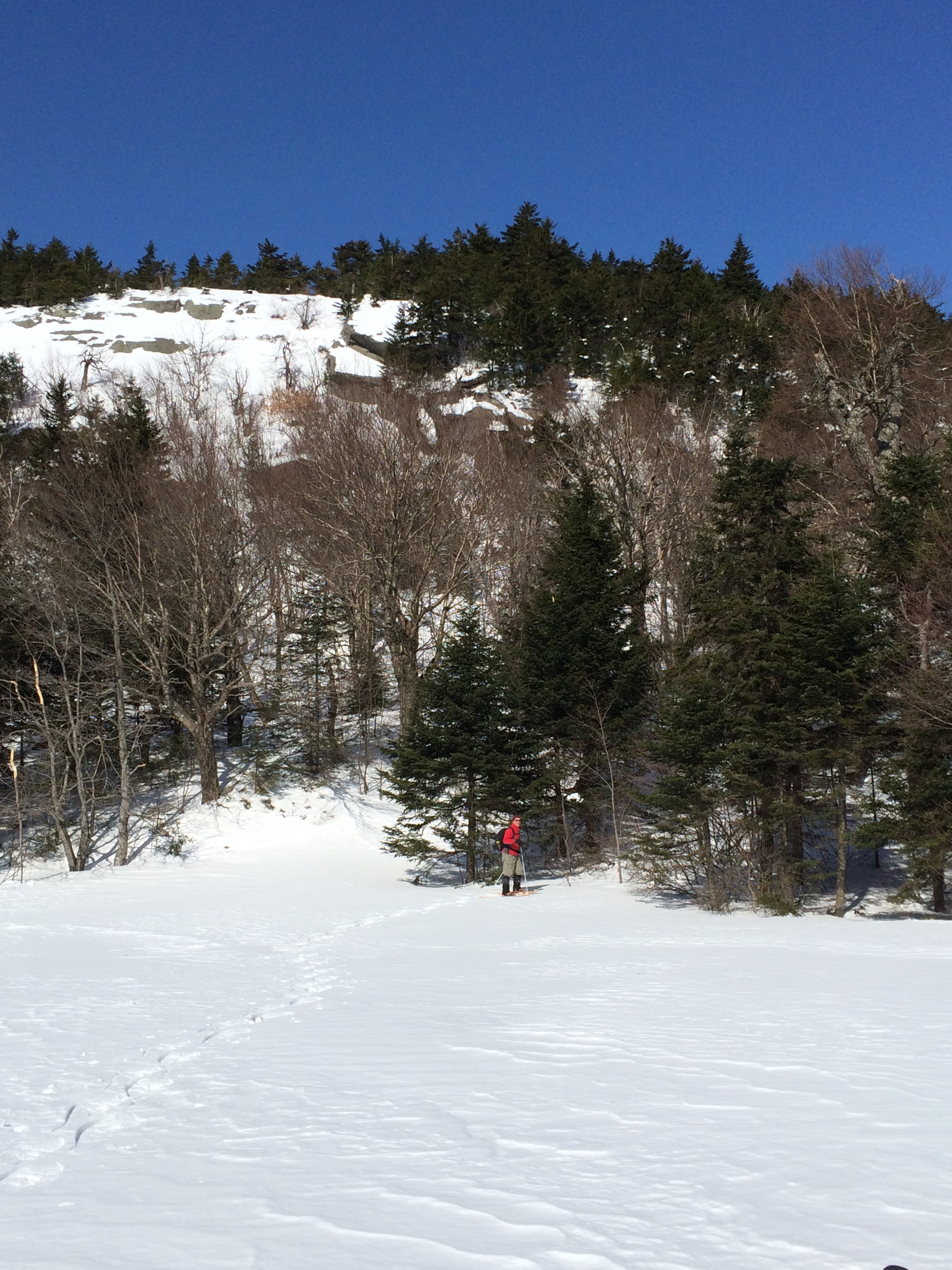
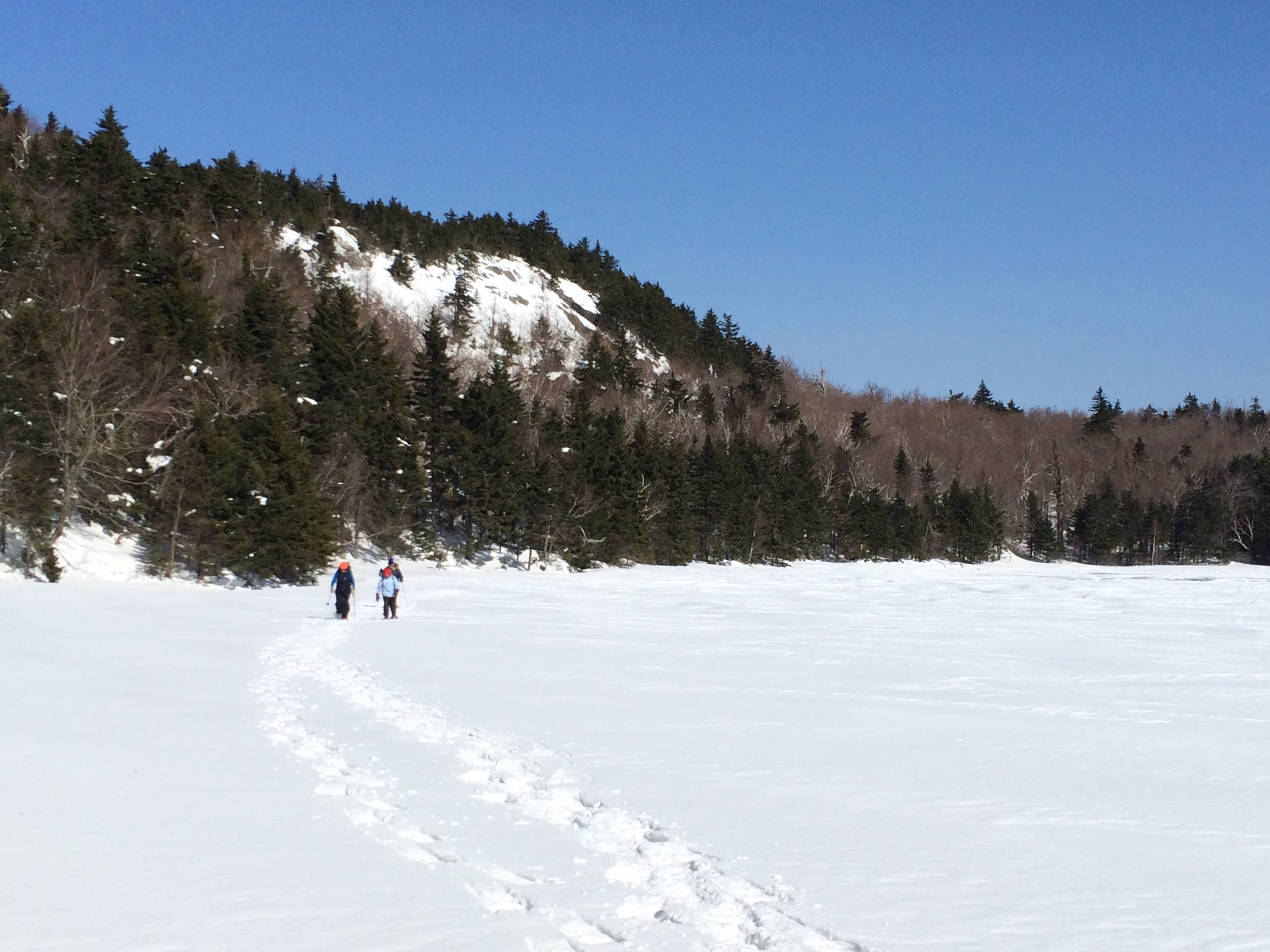
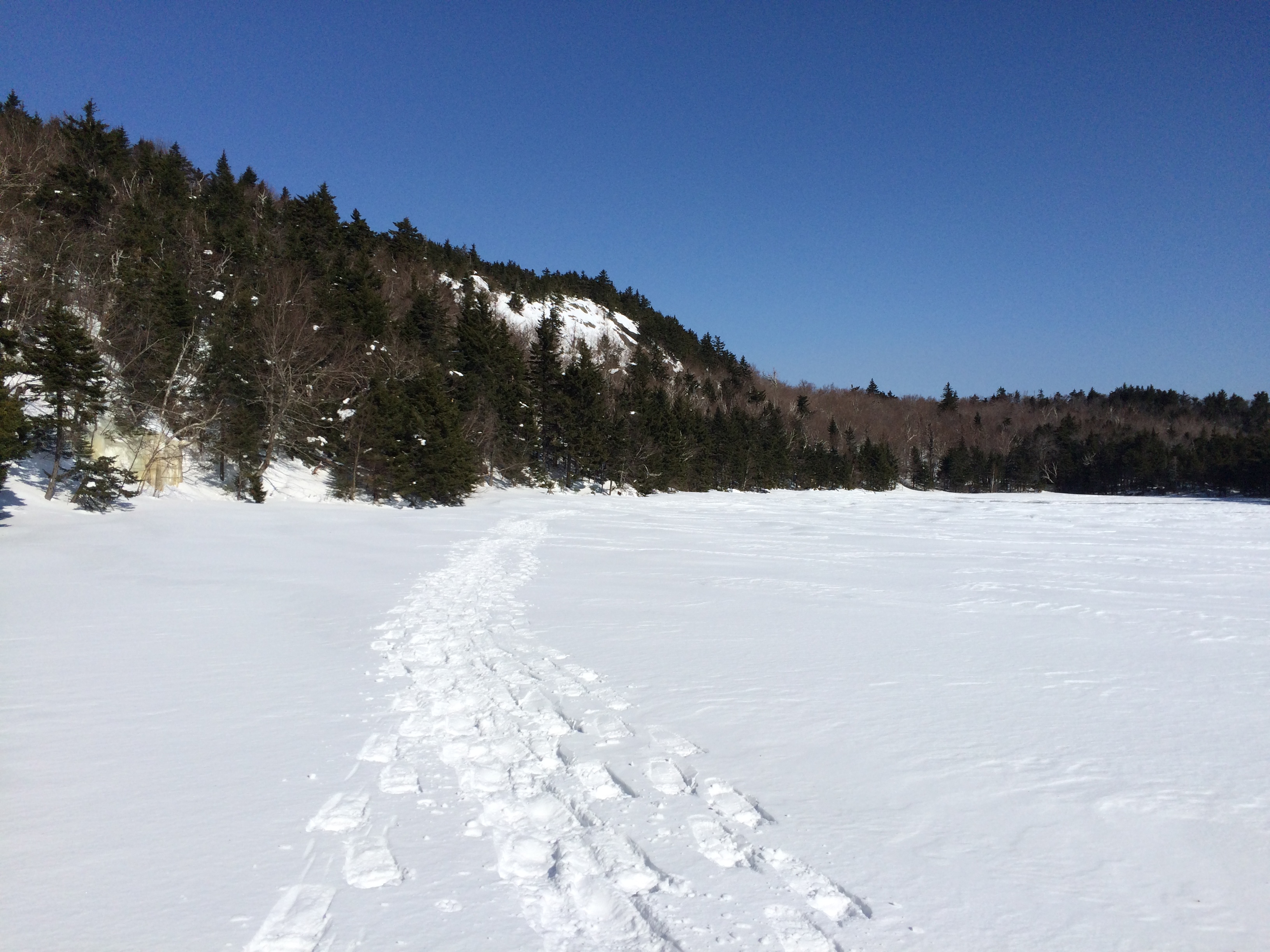
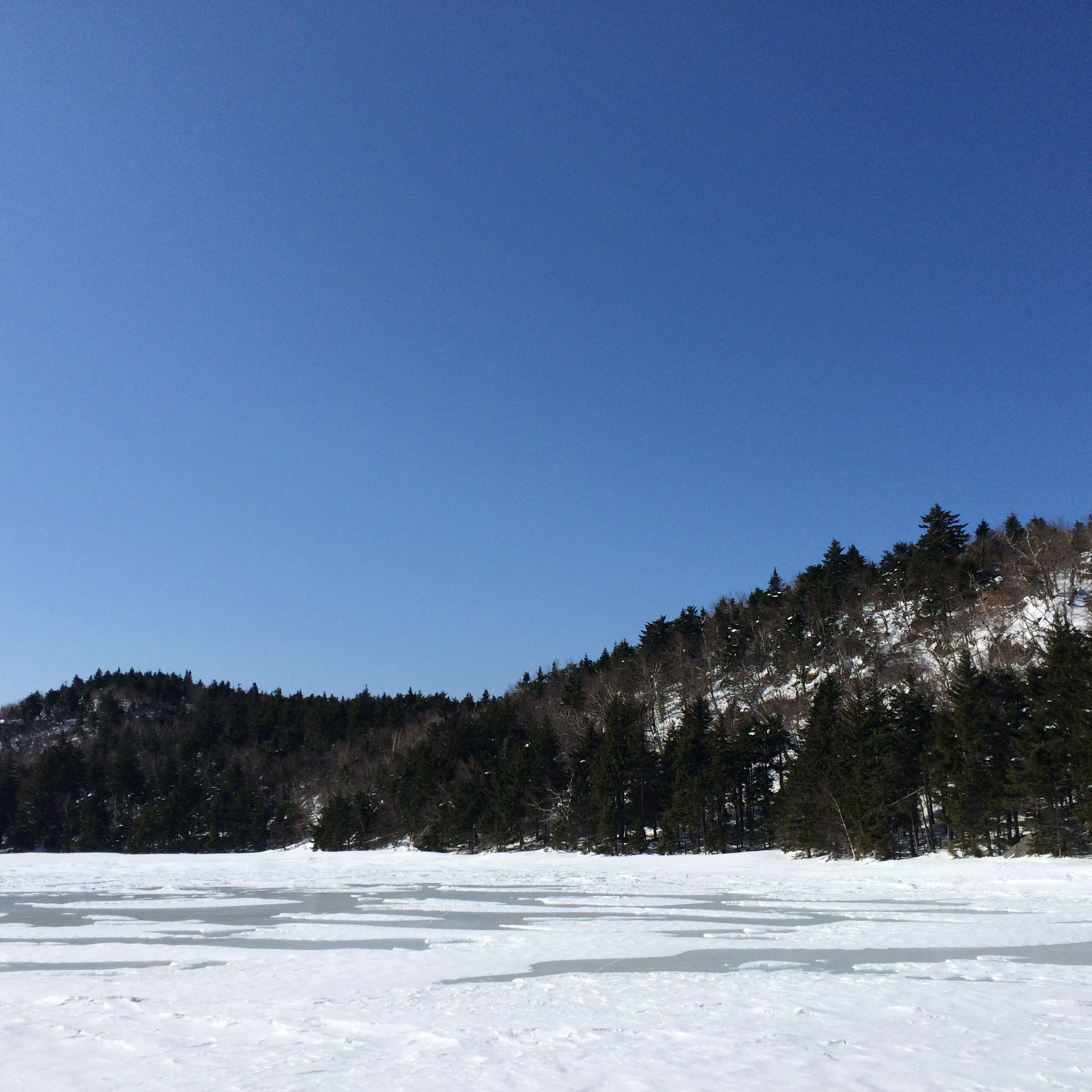
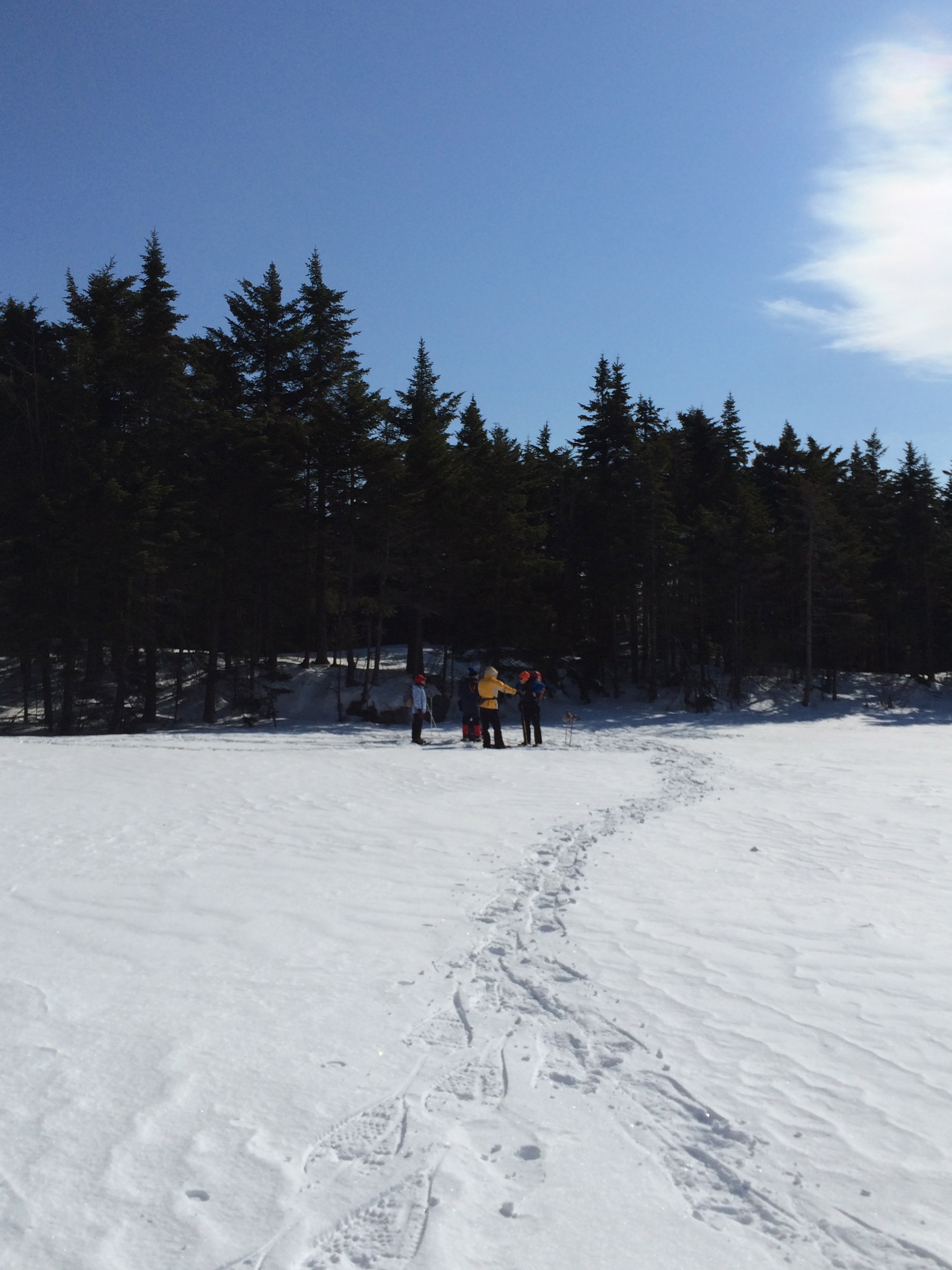
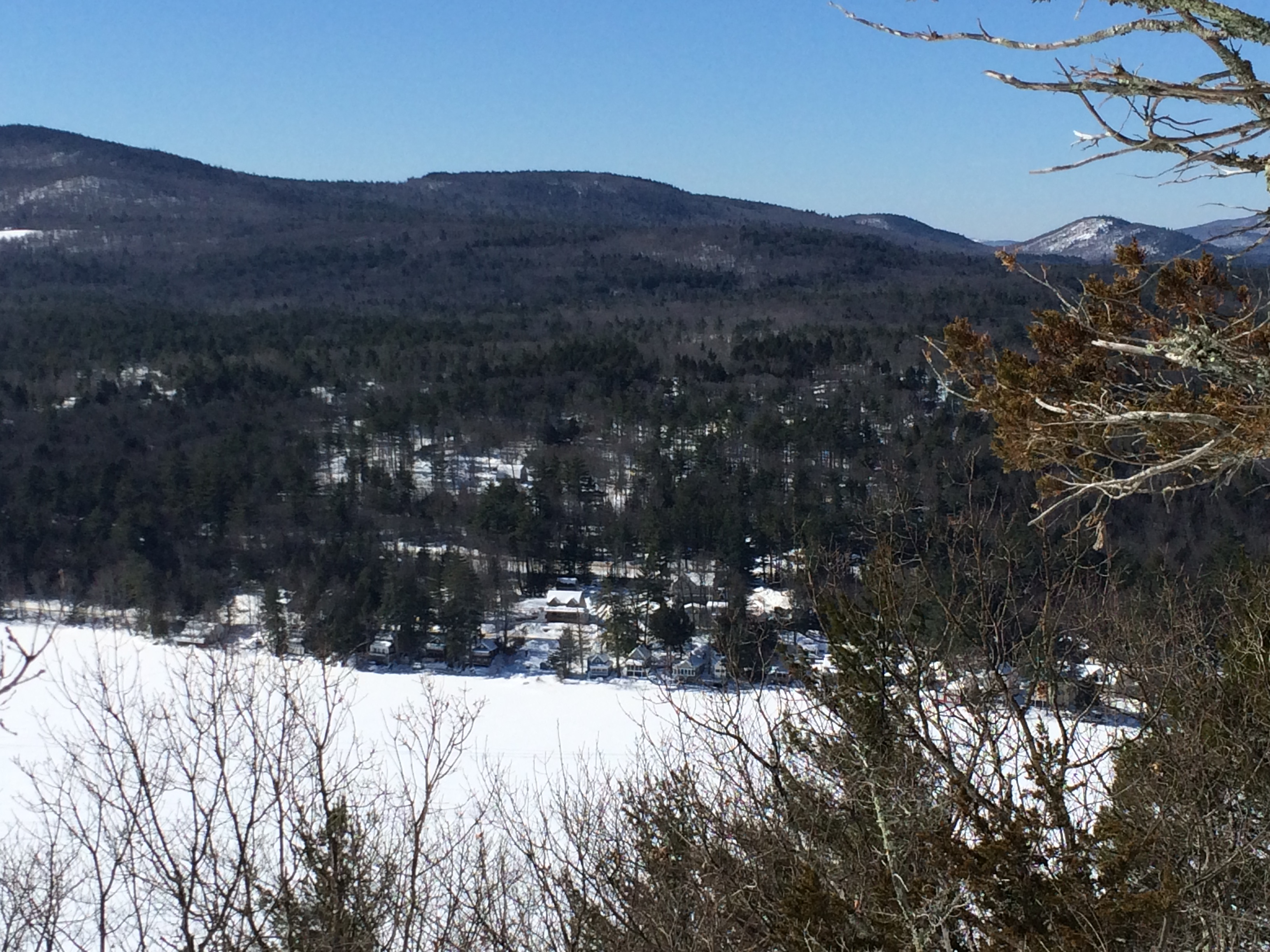
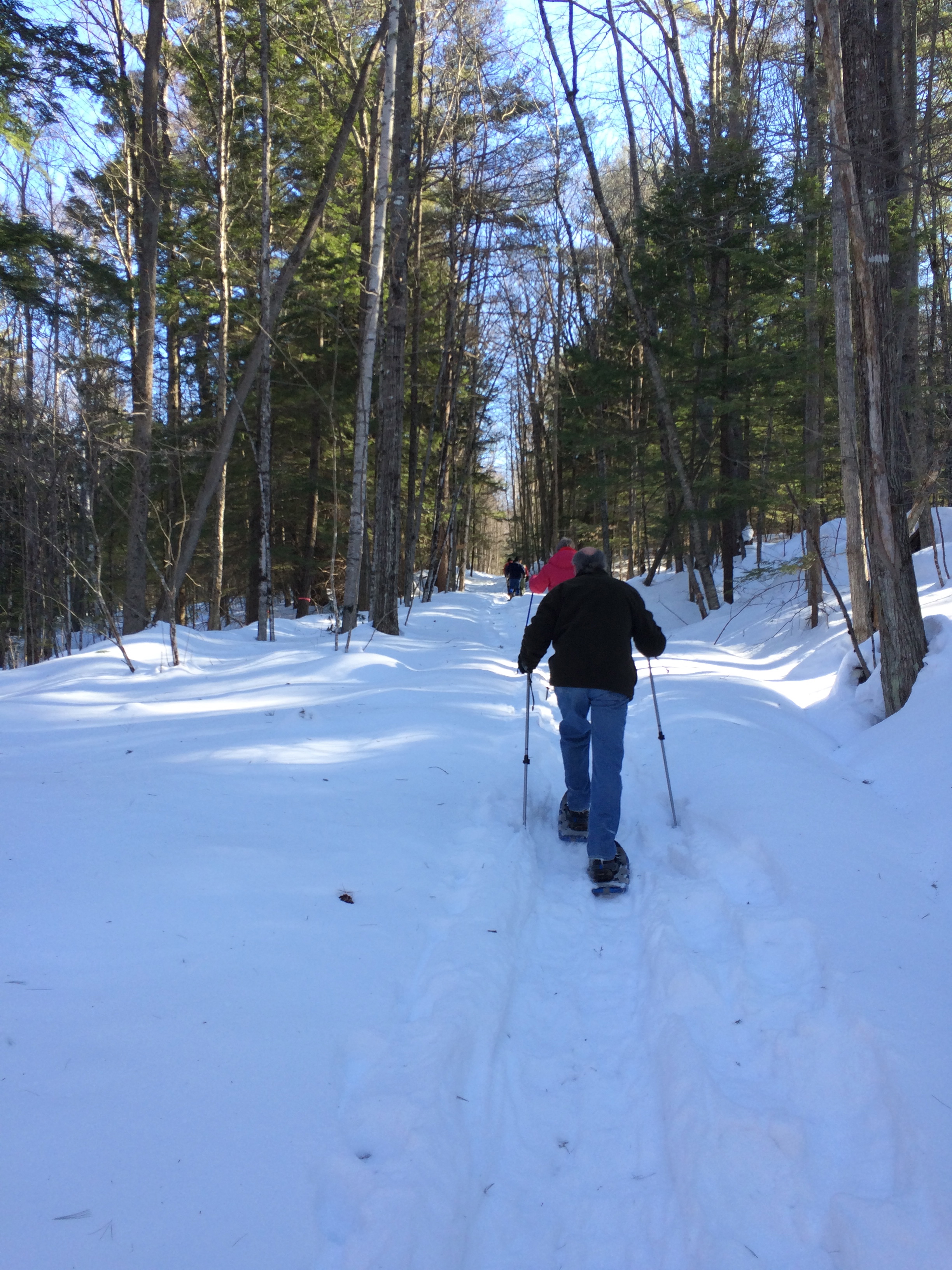
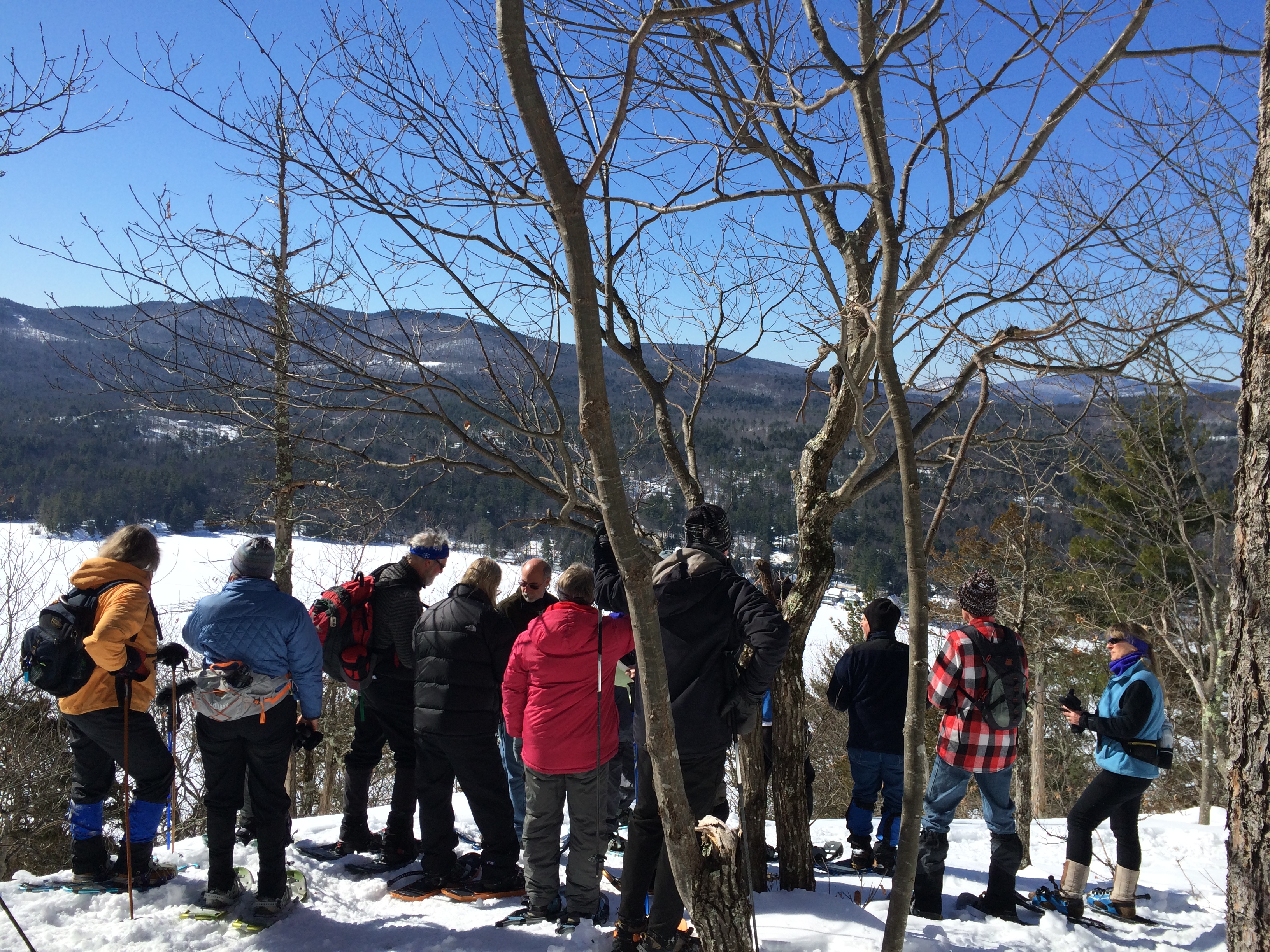
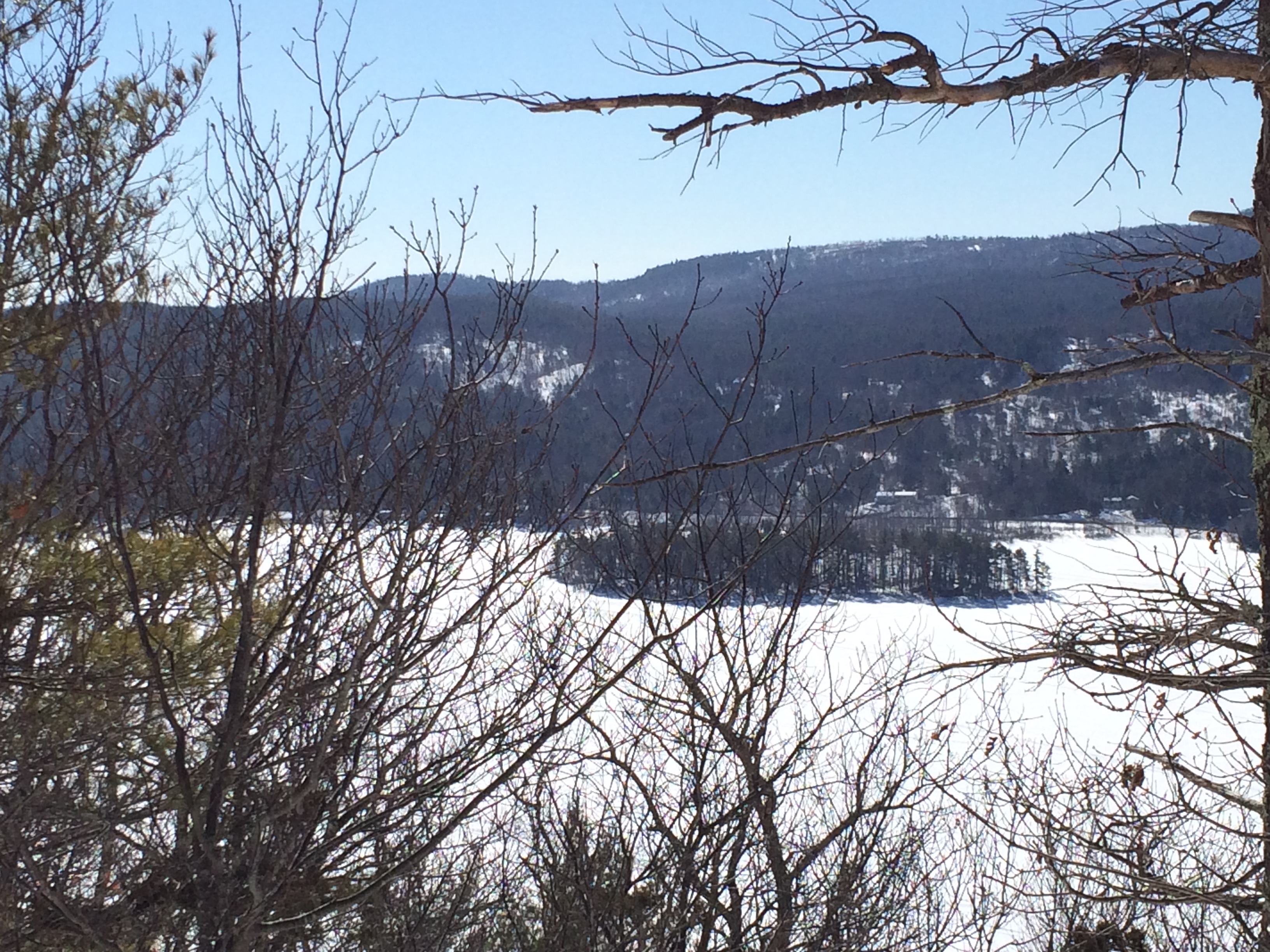
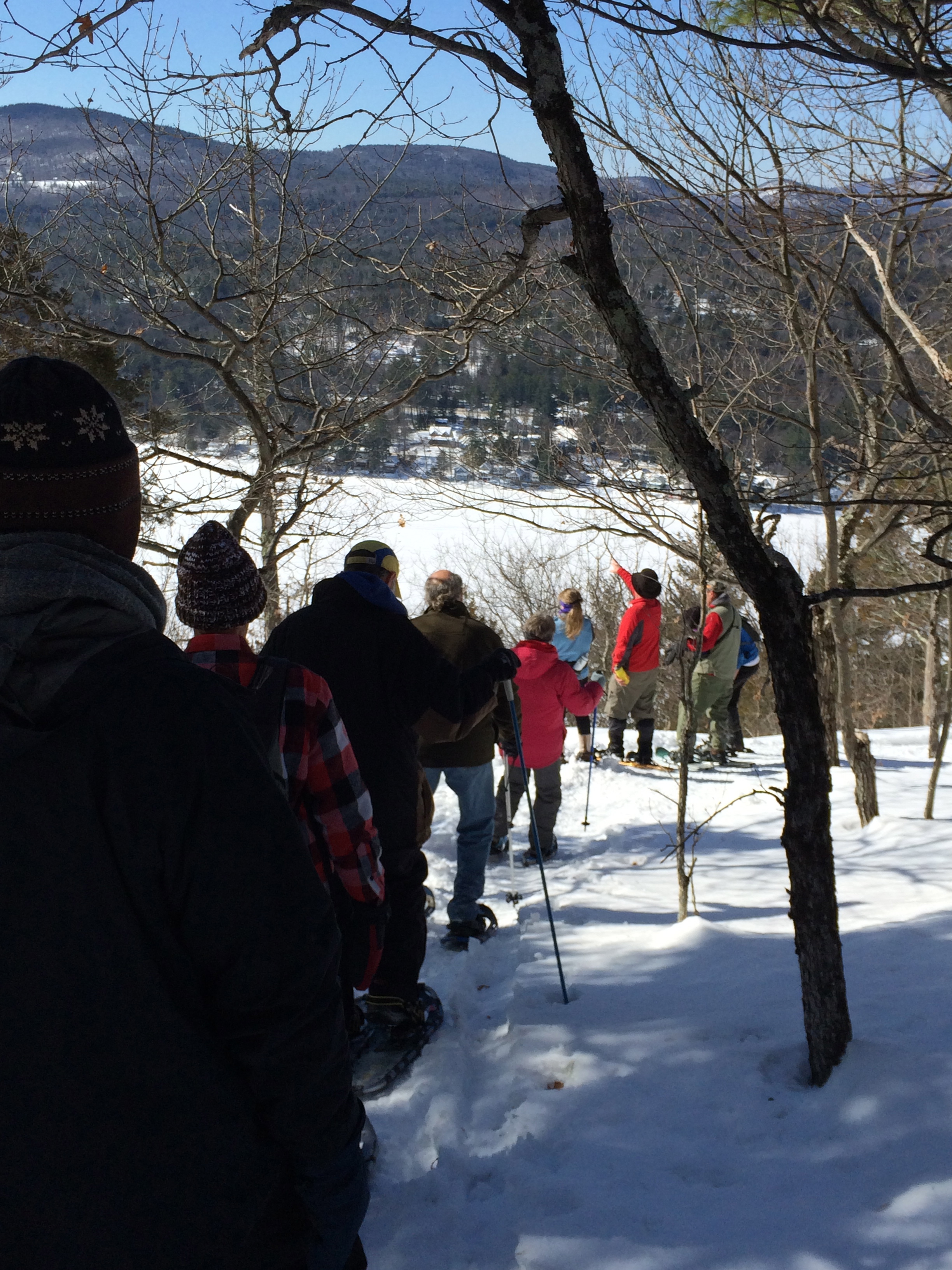
Our final winter trek was a test of endurance to Lake Solitude – a rigorous, 2 mile hike – much of it on steep, uphill terrain.  Circumstances were such that a very small group set out early in the day, while a few individuals who arrived a bit later ended up making most of the long hike to the top on their own.  The reward was a truly spectacular view of the Lake and the surrounding majestic peaks.  No less a reward was the opportunity for quiet reflection in the midst of an awe-inspiring and humbling expanse.

In no particular order, some impressions (literal and otherwise):

IMG_3079

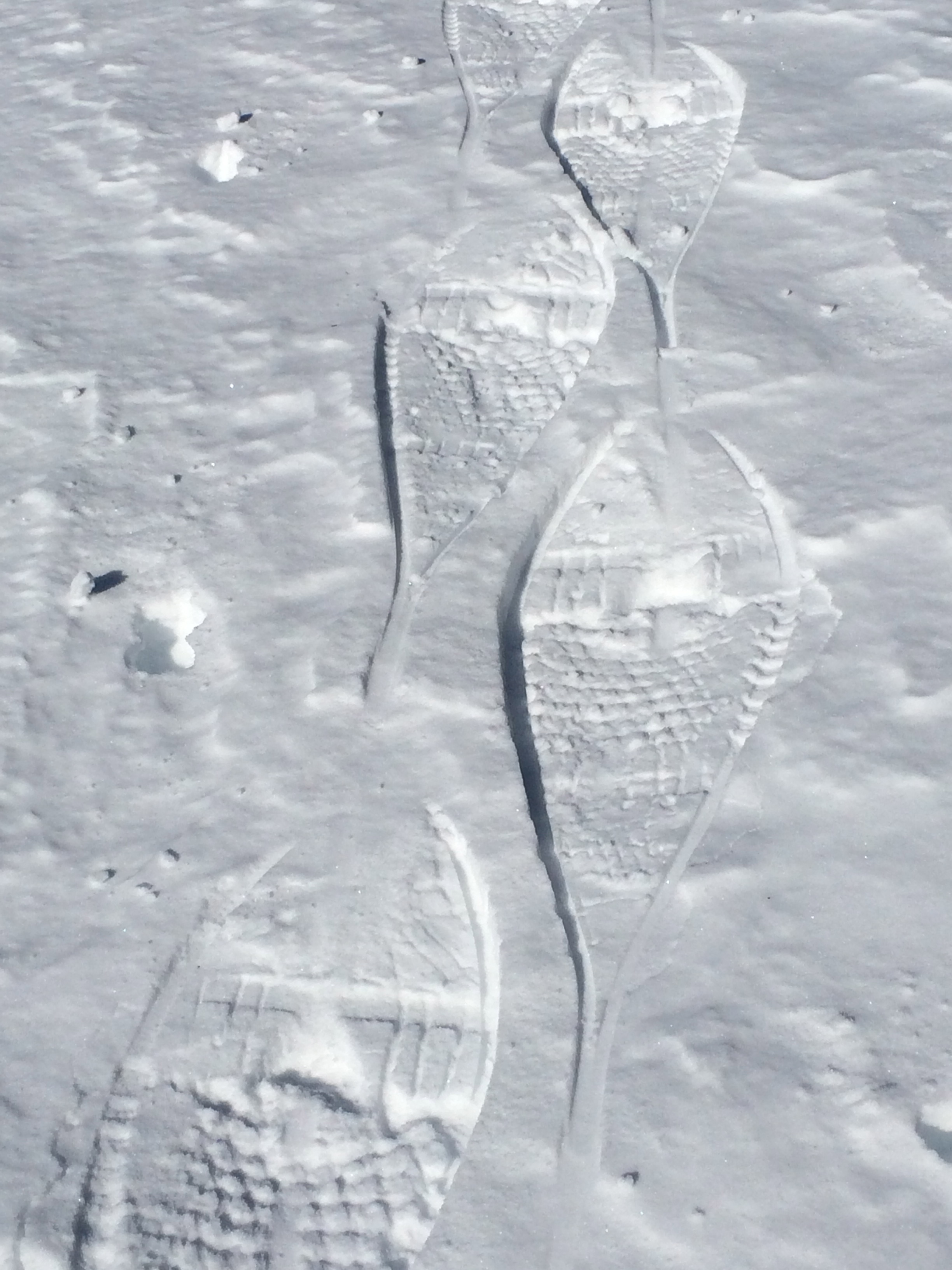
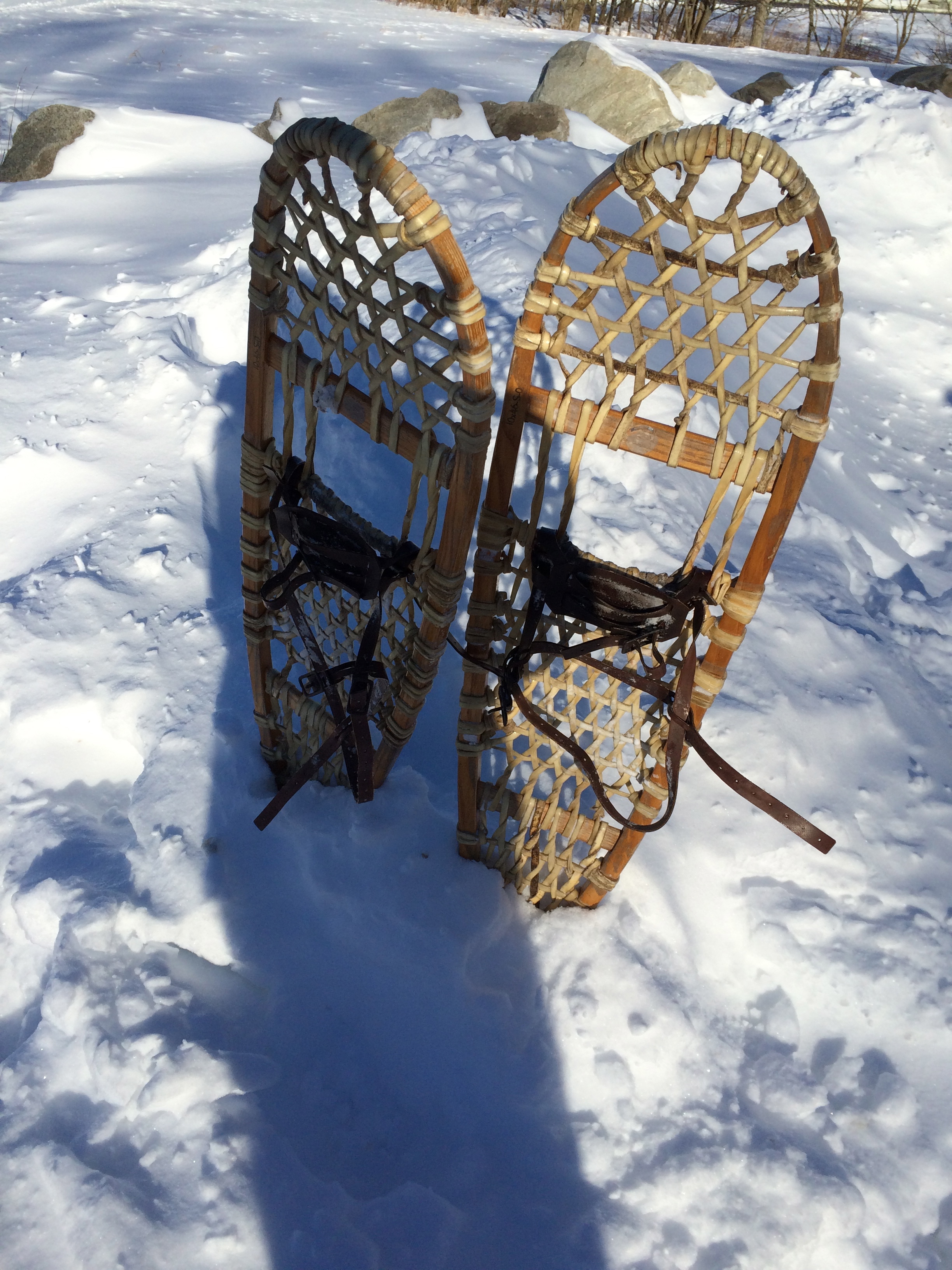
Snowshoes from the old school

IMG_3089

Virgin snow

IMG_3106

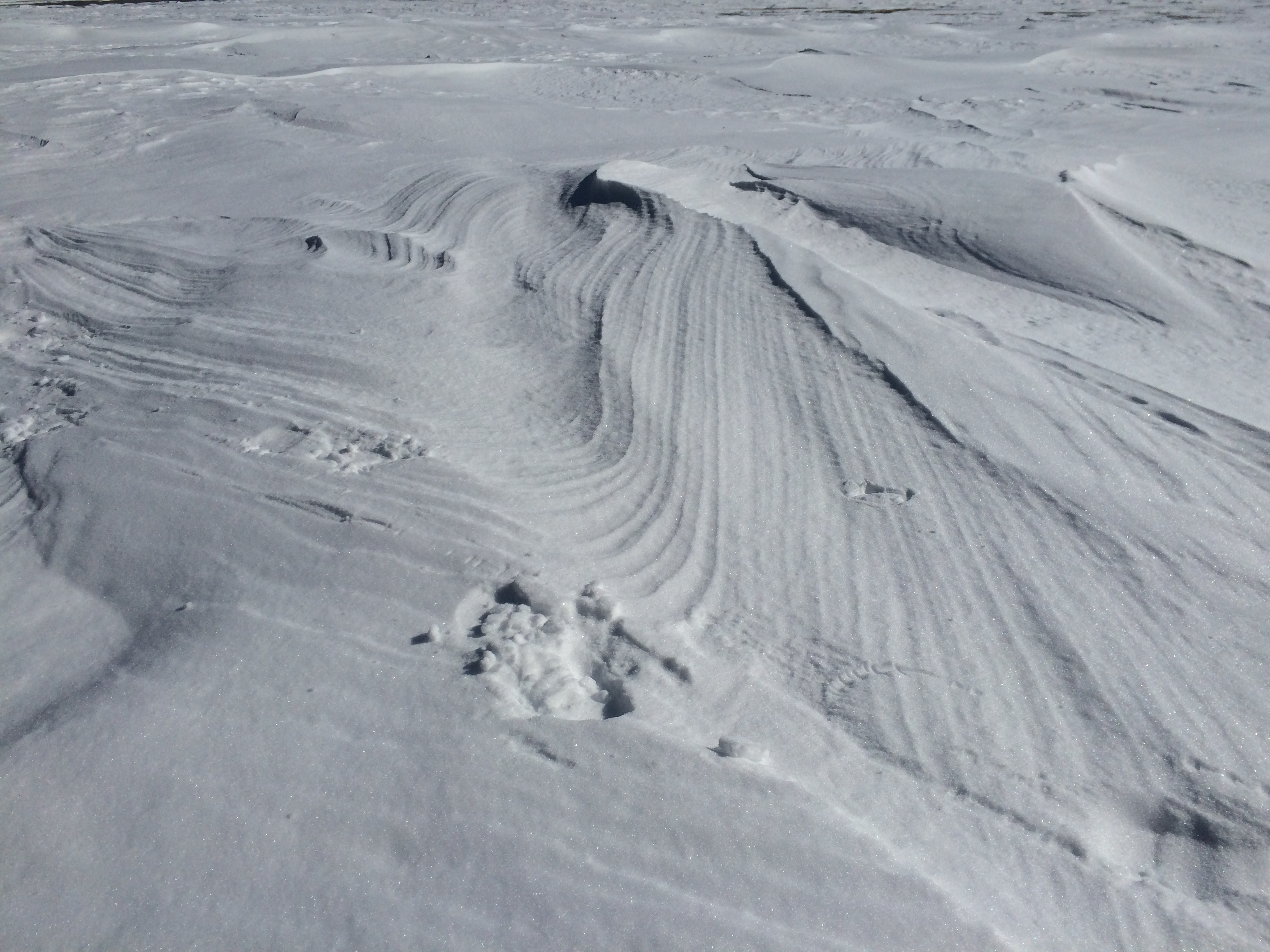
Swirling eddies

IMG_3082

A towering yellow birch

IMG_3077

Contemplation

IMG_3042

A glimpse of the clearing

IMG_3097

Two travelers…

IMG_3099

…and the tracks left behind

IMG_3052

A cloudless, cerulean sky

IMG_3083

A small band of adventurers

IMG_3104

A last look back…


WINTER HIKE – GUILD HILL

IMG_2775

Lake Massasecum overlook on Guild Hill

Sunapee Ragged Kearsarge Greenway (elsewhere referred to as SRKG on this blog) hosted another in their series of winter hikes this past weekend on privately conserved land in Bradford.  The 89 property includes part of Guild Hill, a prominent overlook to Lake Massasecum.  Of historical significance, it was originally part of one of the “Great Lots” granted to John Mason by the King of England in the 17th century.  In 2005, the land was placed into conservation under the Ausbon Sargent Land Preservation Trust.
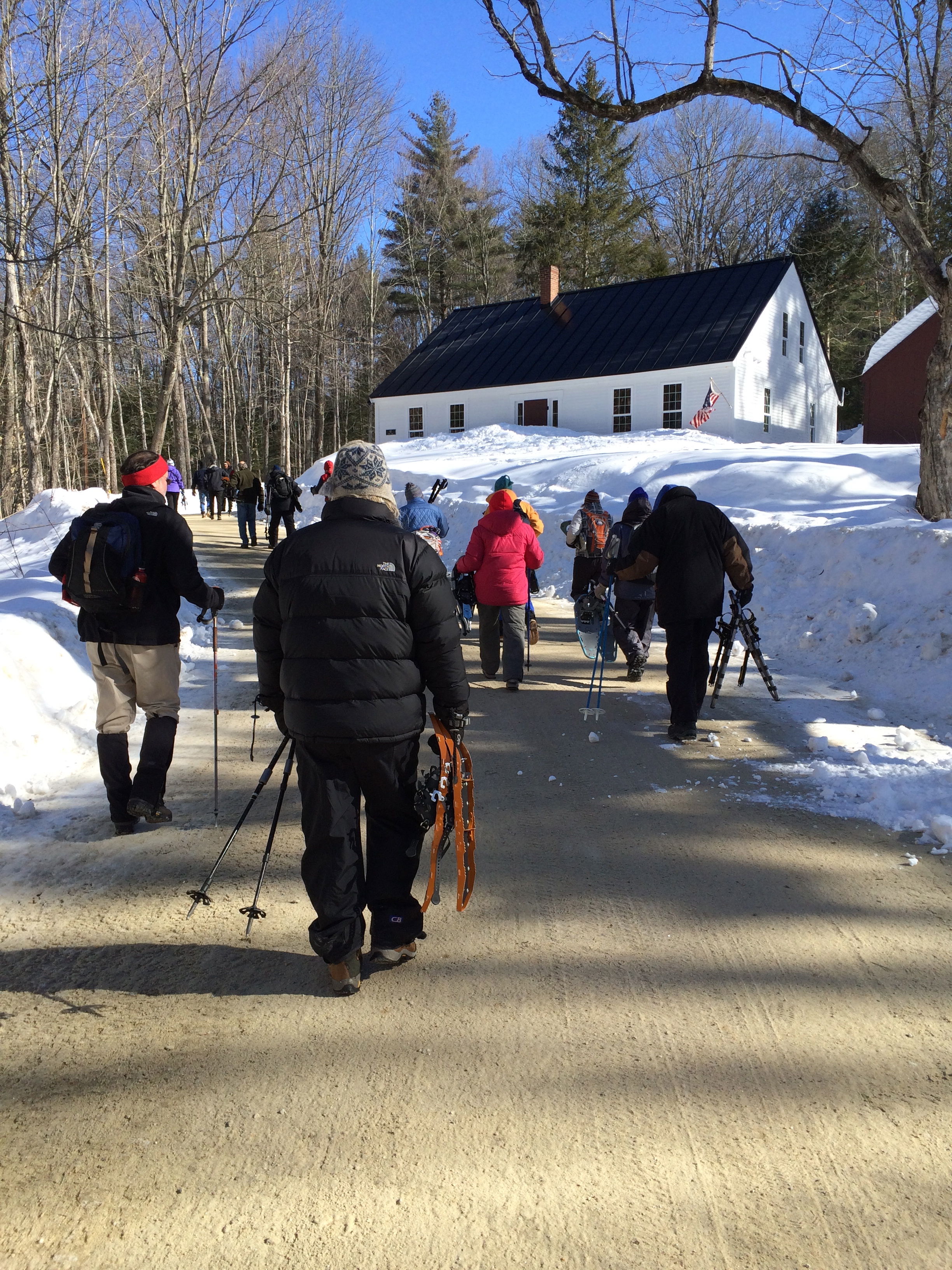
A short walk to the trailhead preceded the hike:

IMG_2714

Warming up

Getting started at the trailhead:

IMG_2718

The old, abandoned stretch of road

IMG_2720

A local celebrity was spotted along the way:

IMG_2726

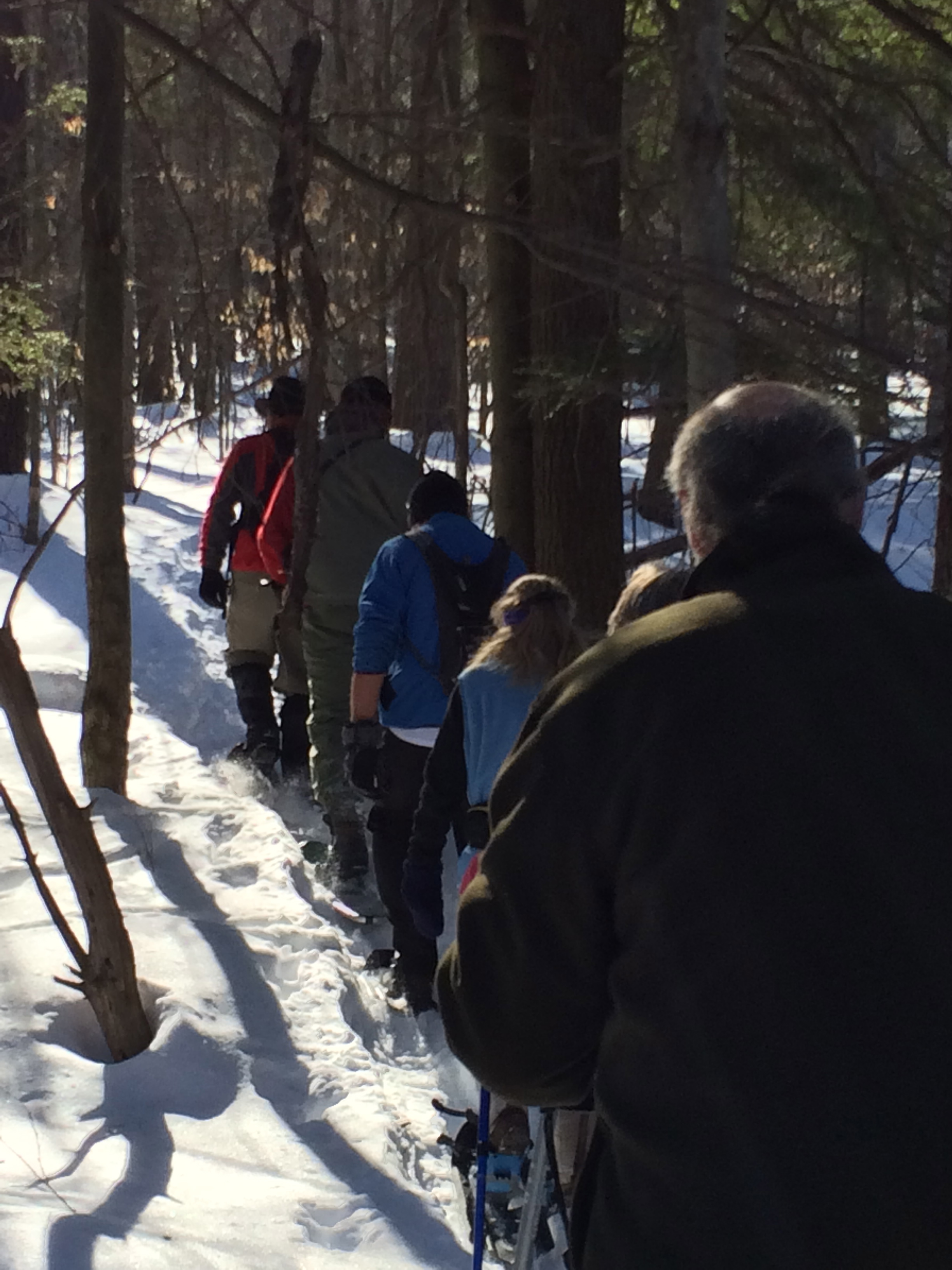
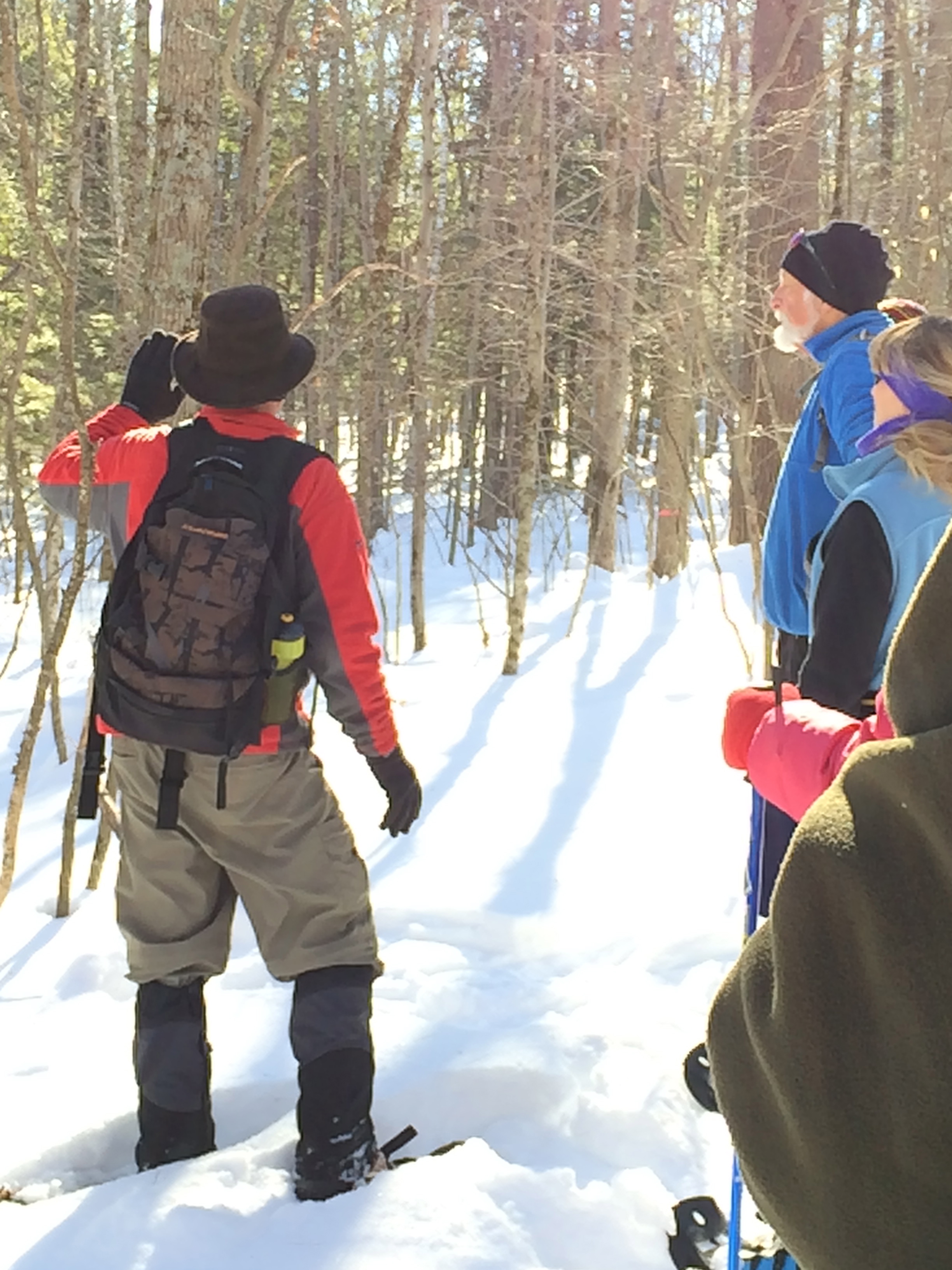
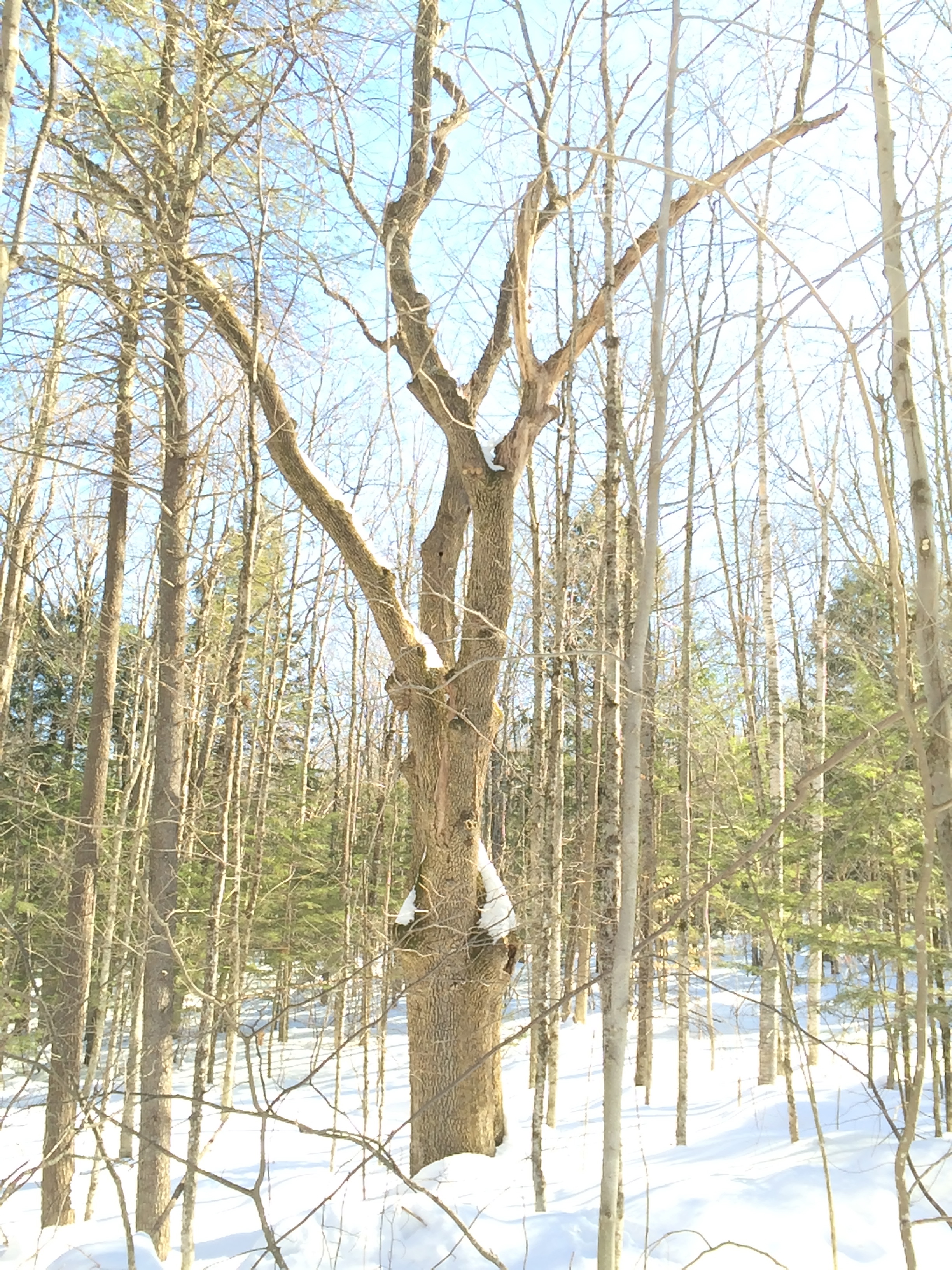
Hike leader, George, stops to point out the Merrimack County Big Tree Champion:

IMG_2728

A stately White Ash

The ancient giant above is listed in the NH Big Tree Register and also reigns as the NH state co-champion.

Other, less celebrated but still noteworthy trees were observed:
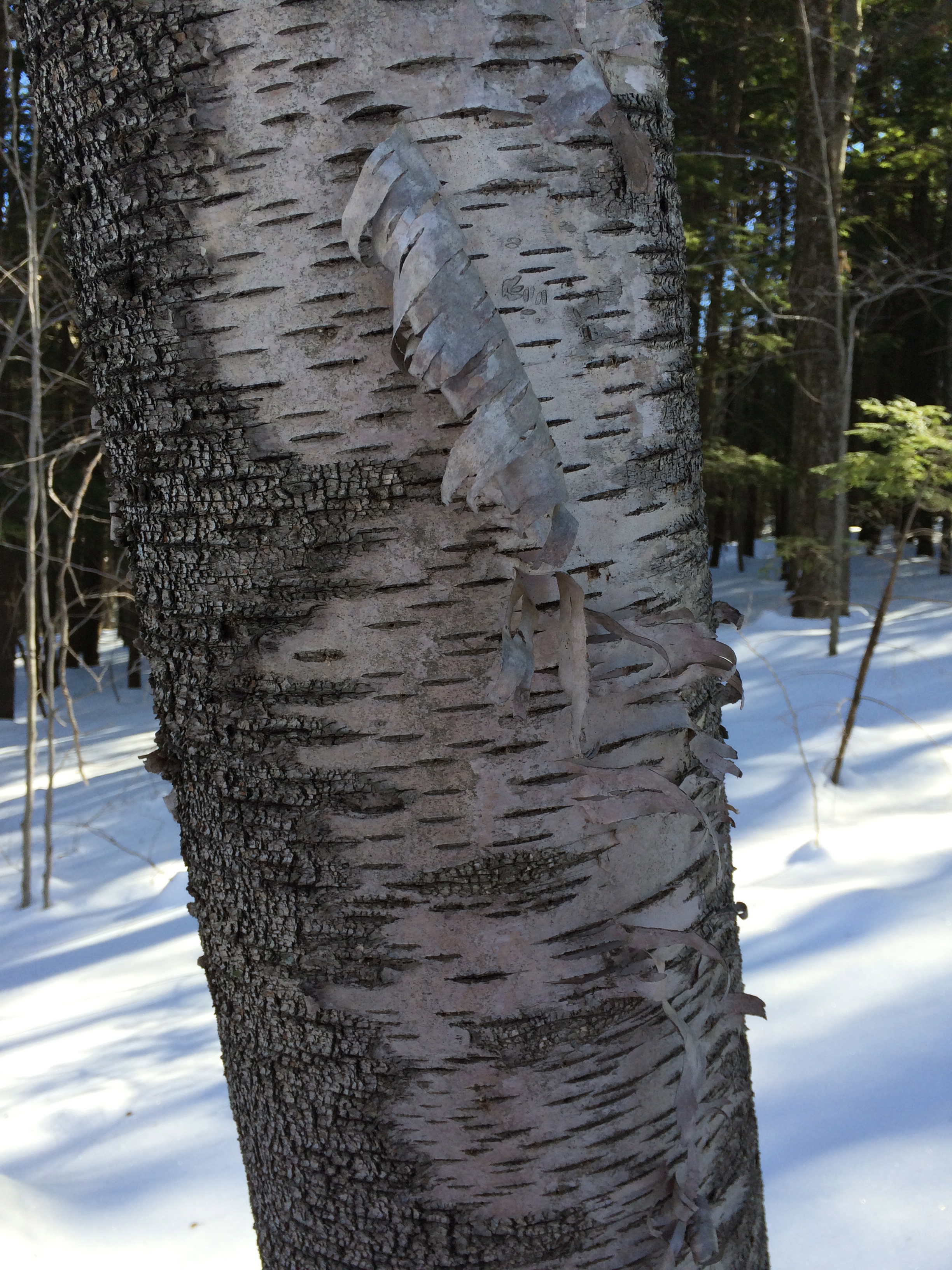
IMG_2737

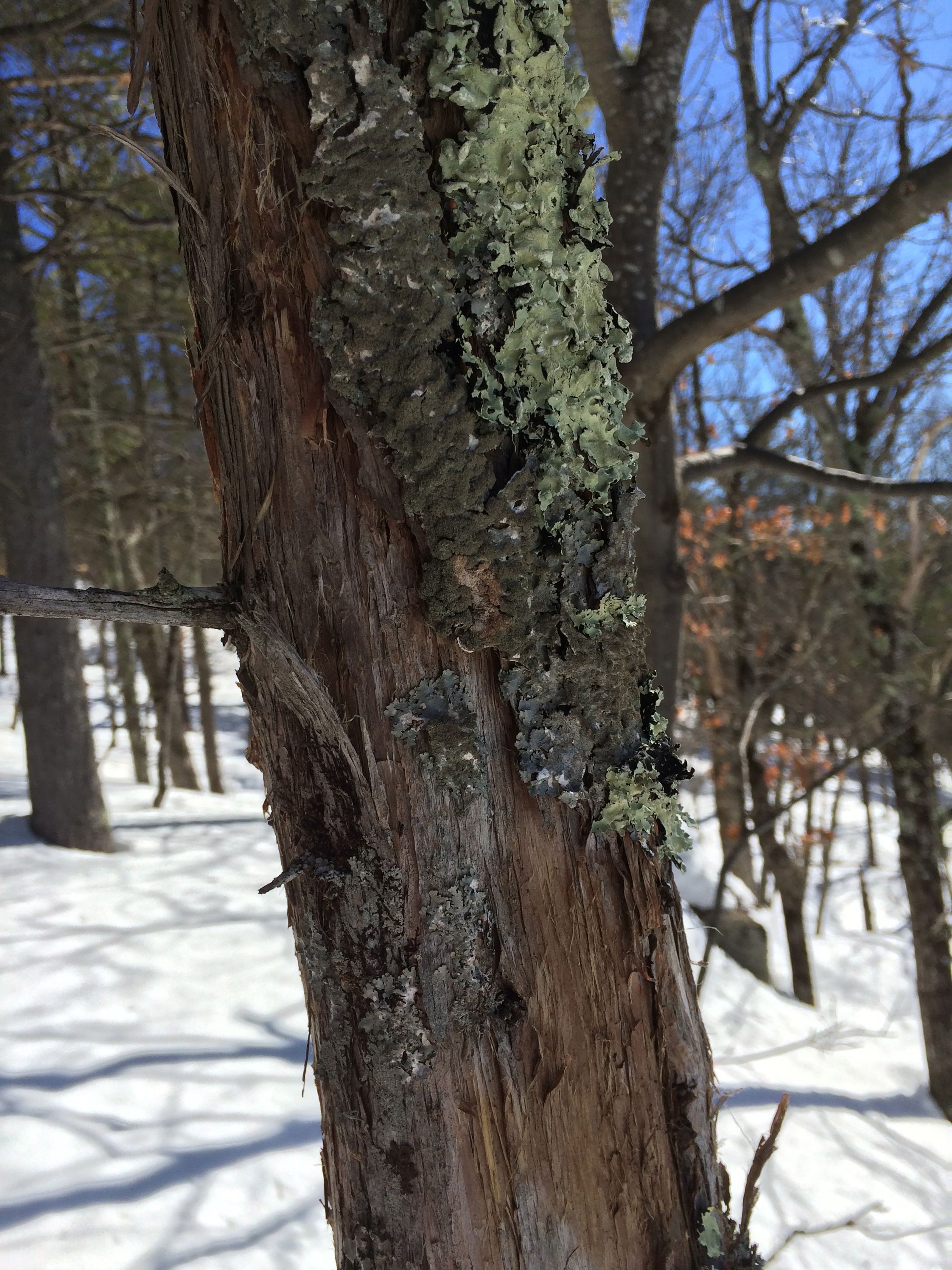
Paper birch – Ernest Thompson Seton’s “White Queen of the Woods”

IMG_2795

Red cedar – aka canoe cedar, known chiefly for its durability.
IMG_2817

And this embattled warrior

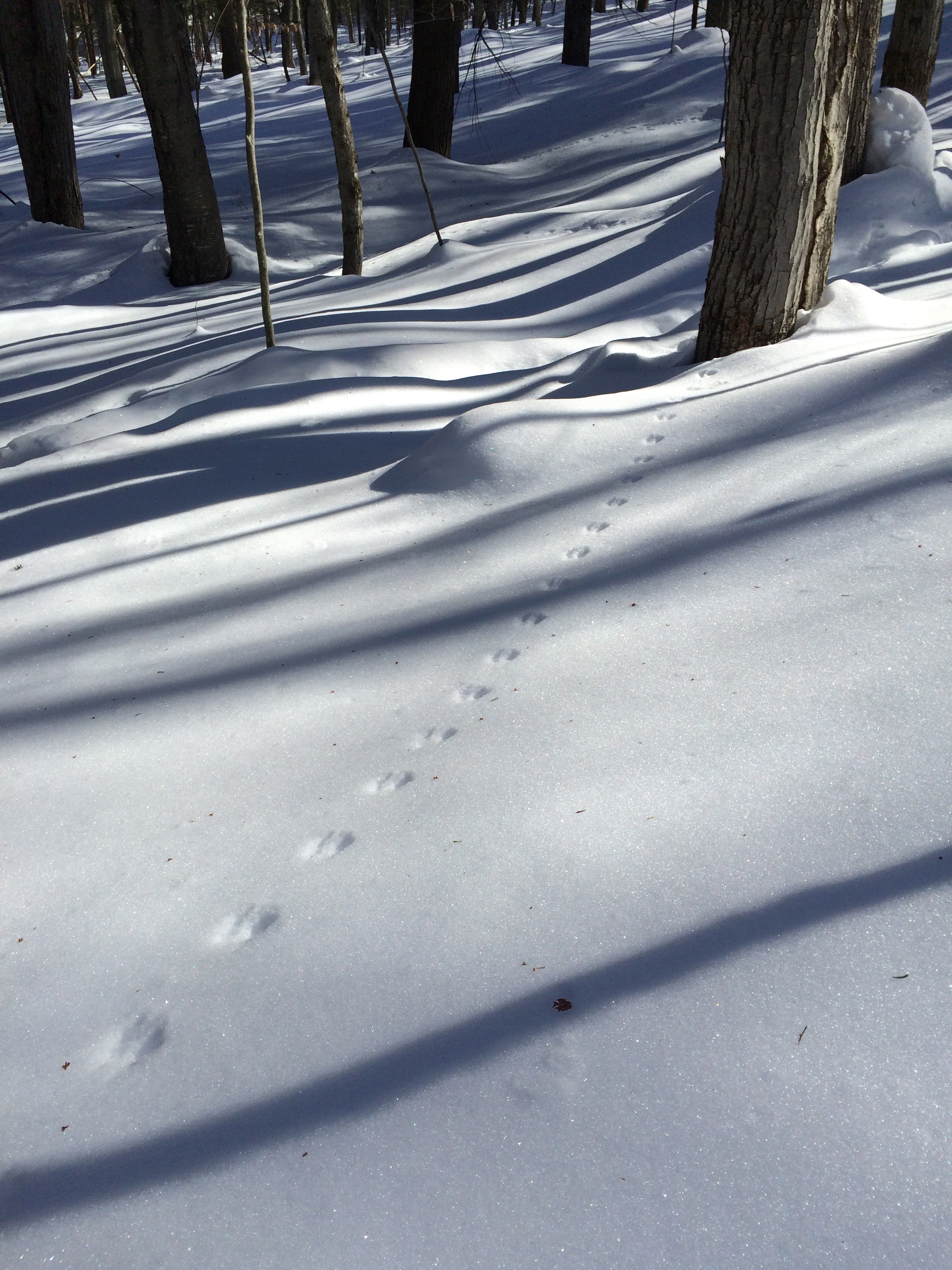
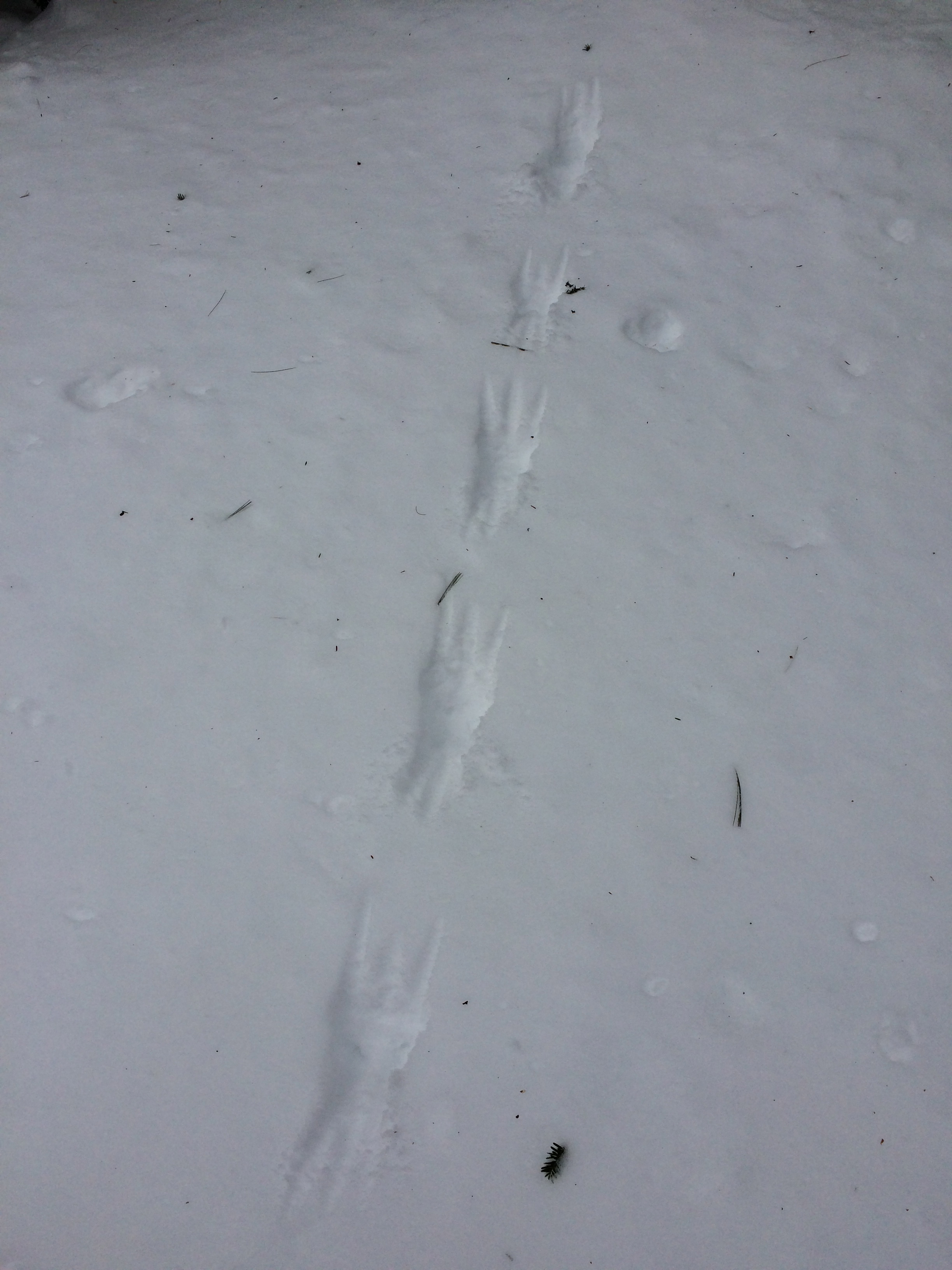
Snowshoe hare tracks dotted the landscape:

IMG_2732

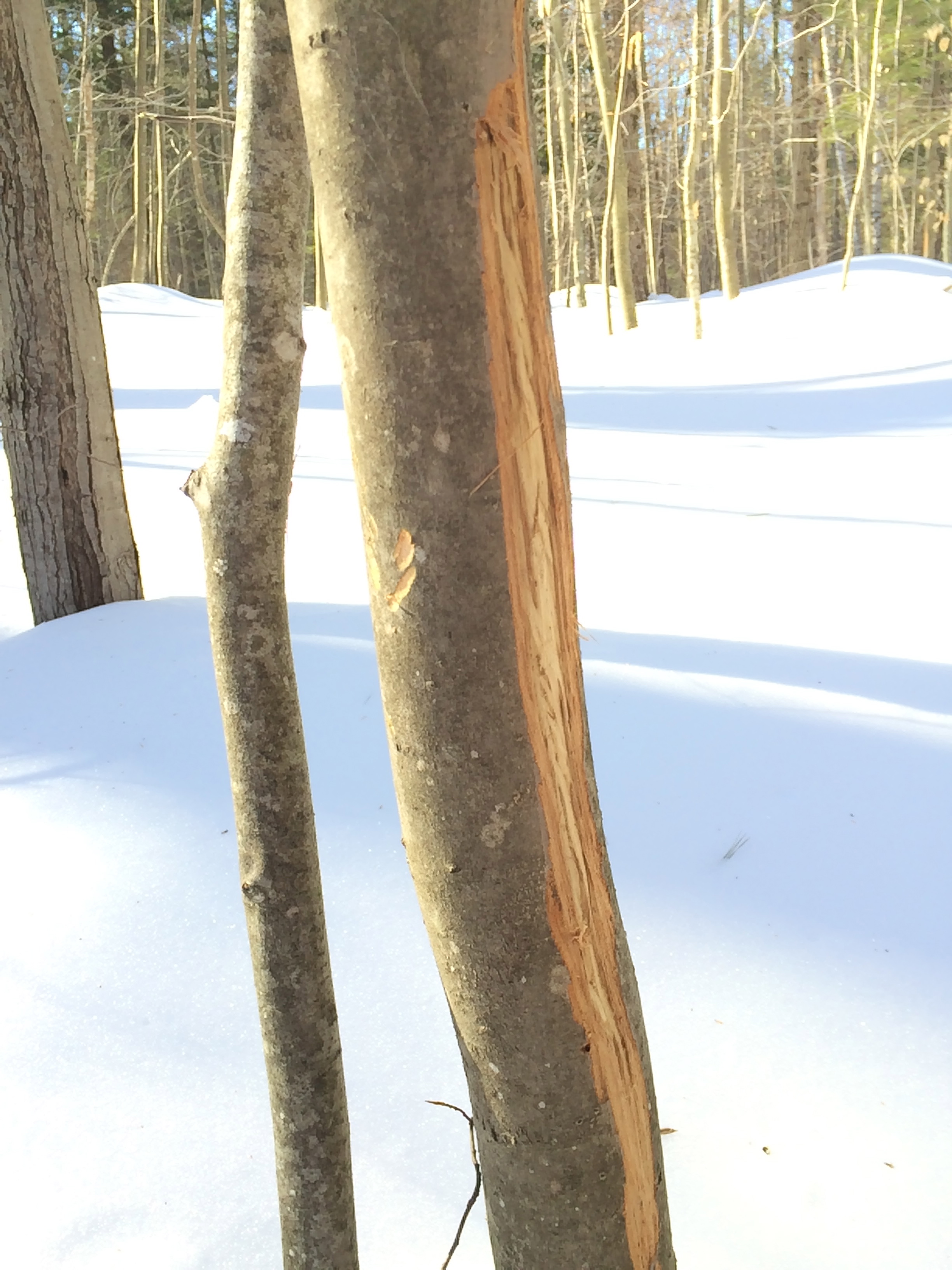
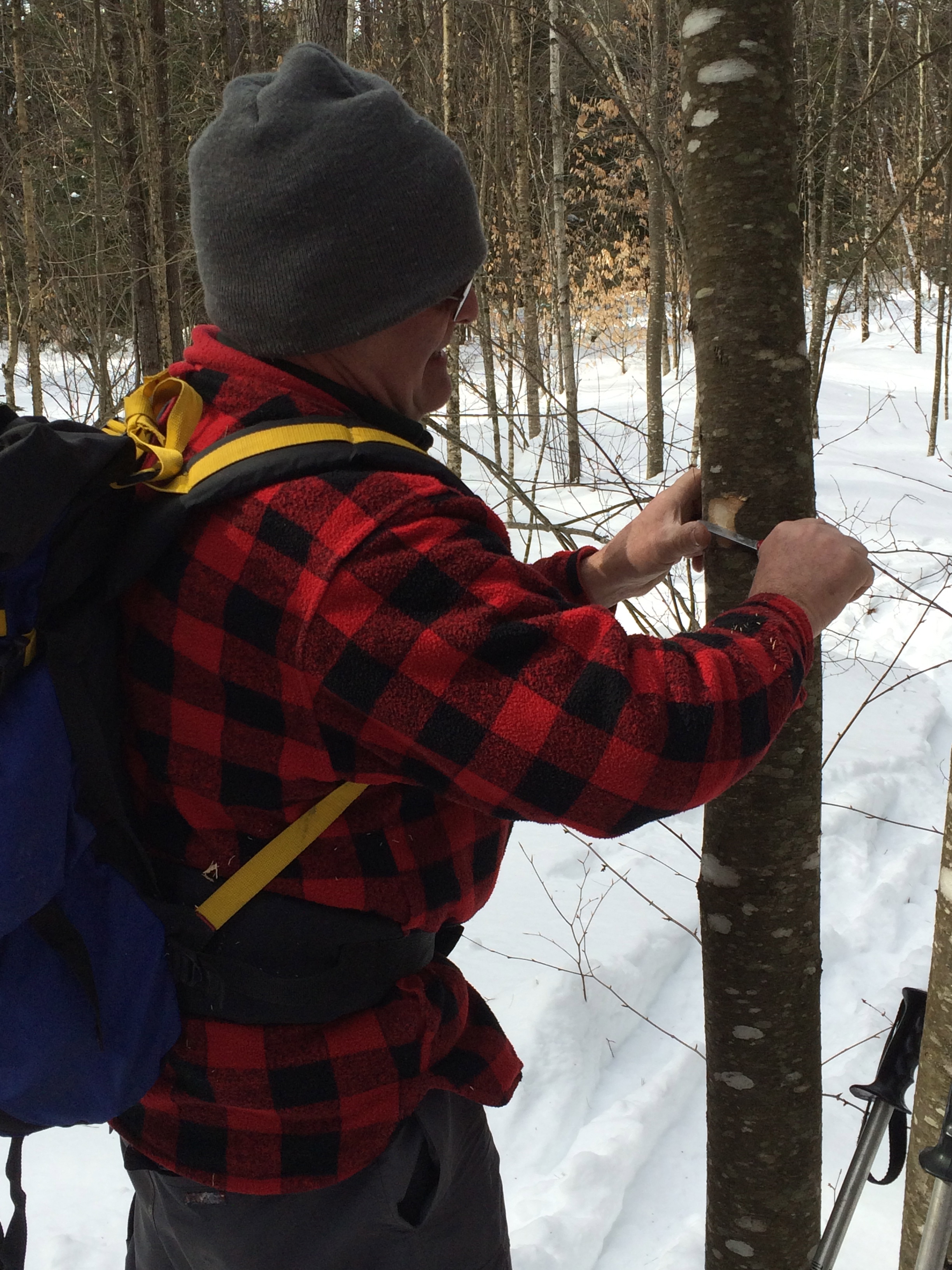
A moose bark scraping was not far behind:

IMG_2727

A territorial marking. The nutritious cambium layer of the bark also makes for a tasty winter snack.
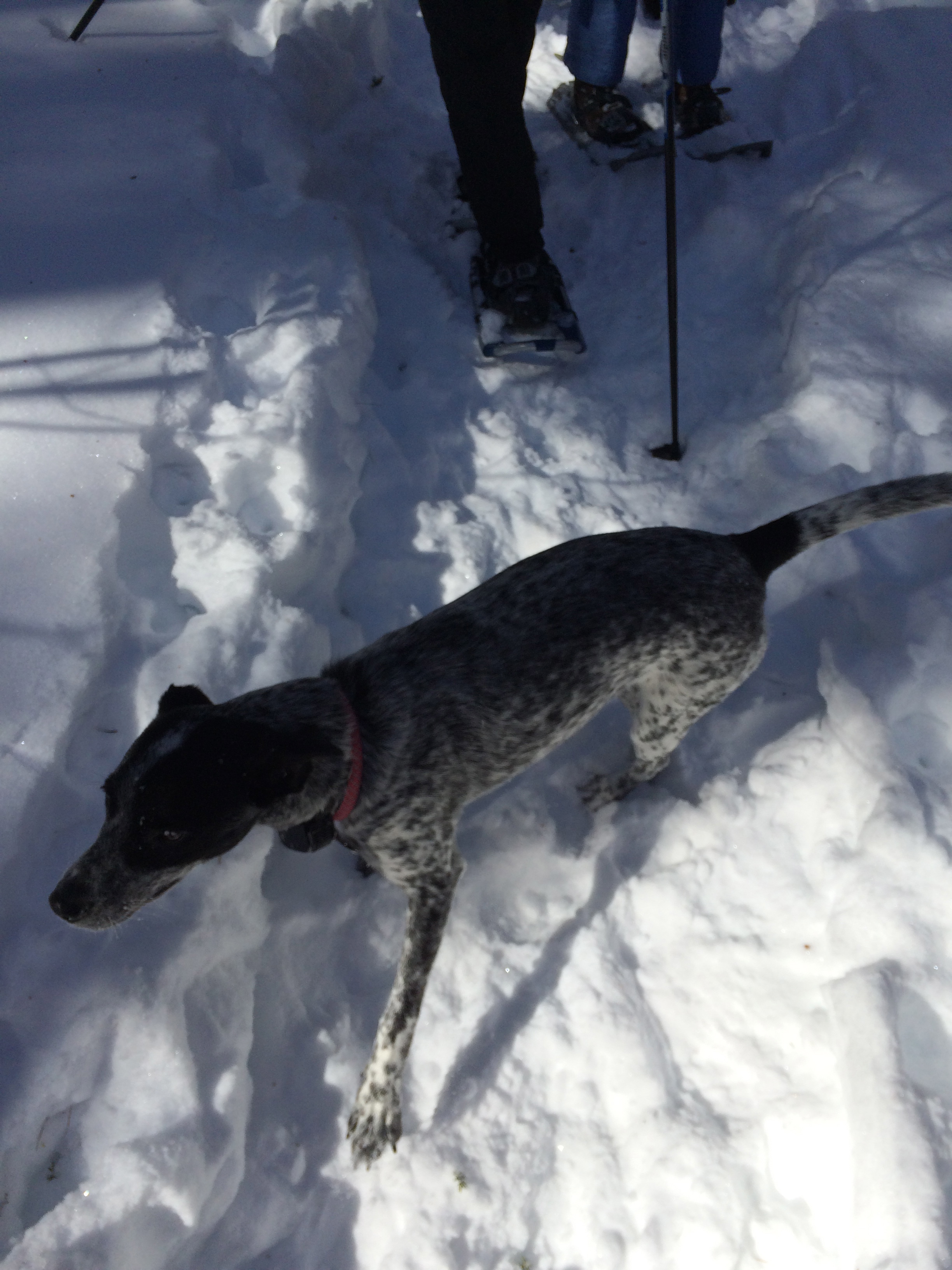
Friends Laurie and Anna were on the trail, with their dogs Goose and Bella:

IMG_2813

IMG_2814

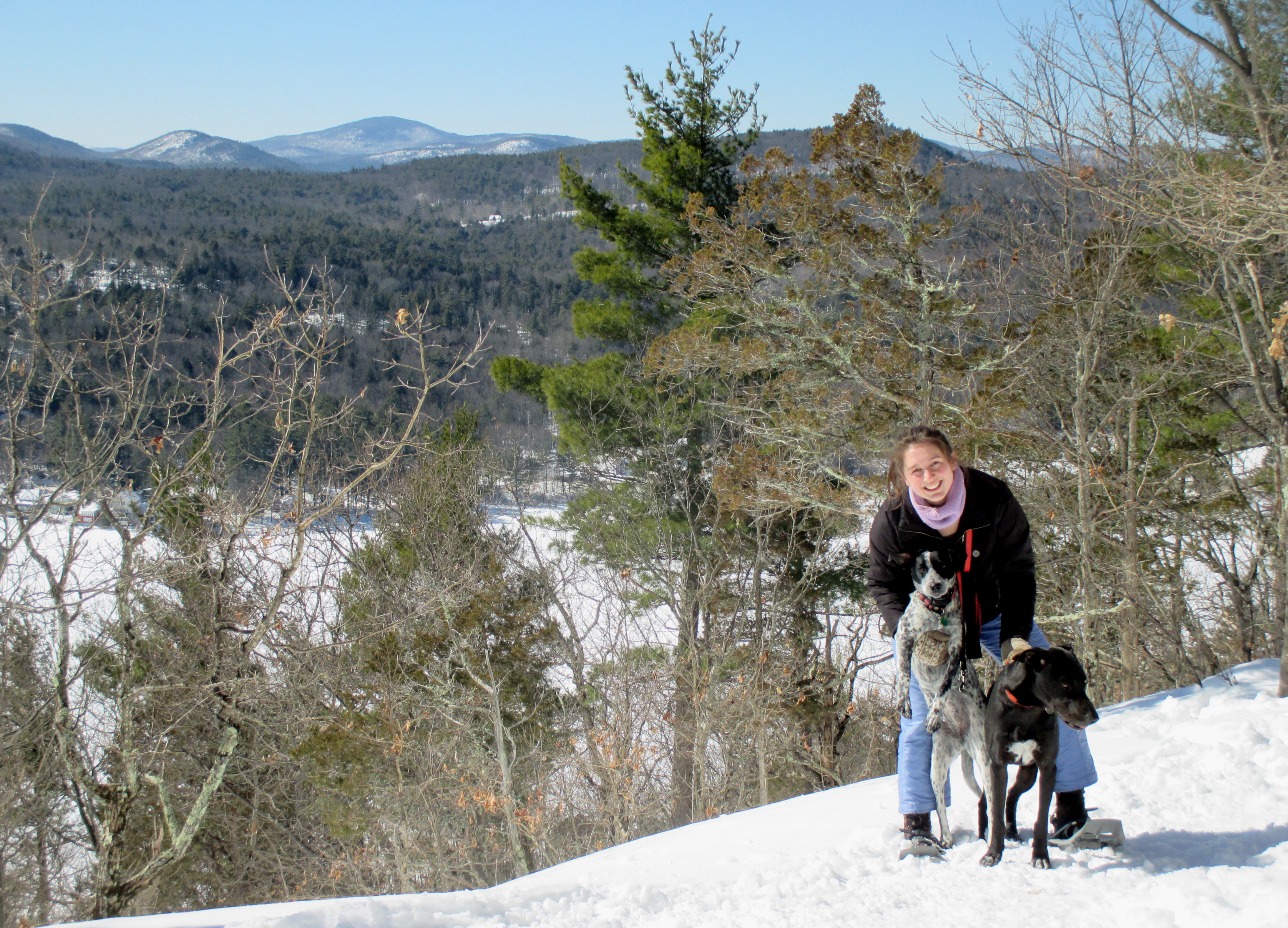
Impressive views of Lake Massasecum were a highlight of the day:

IMG_2788

Overlooking the lake

IMG_2777

Loon Island

IMG_2754

Spotting friends’ and neighbors’ houses from afar

IMG_3503

Goose and Bella, yukking it up


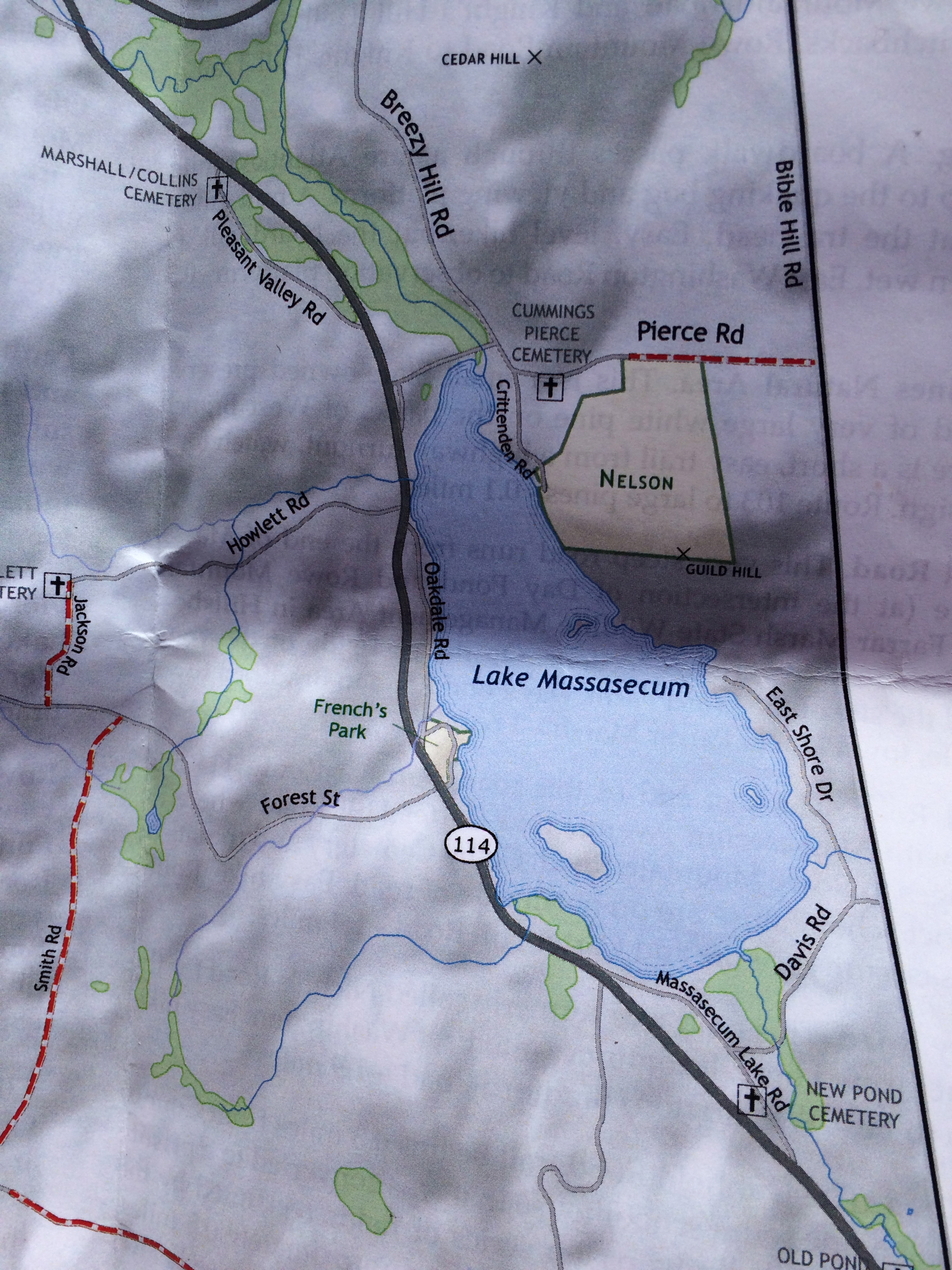
The trail map was consulted before heading back….

IMG_2781

IMG_2804

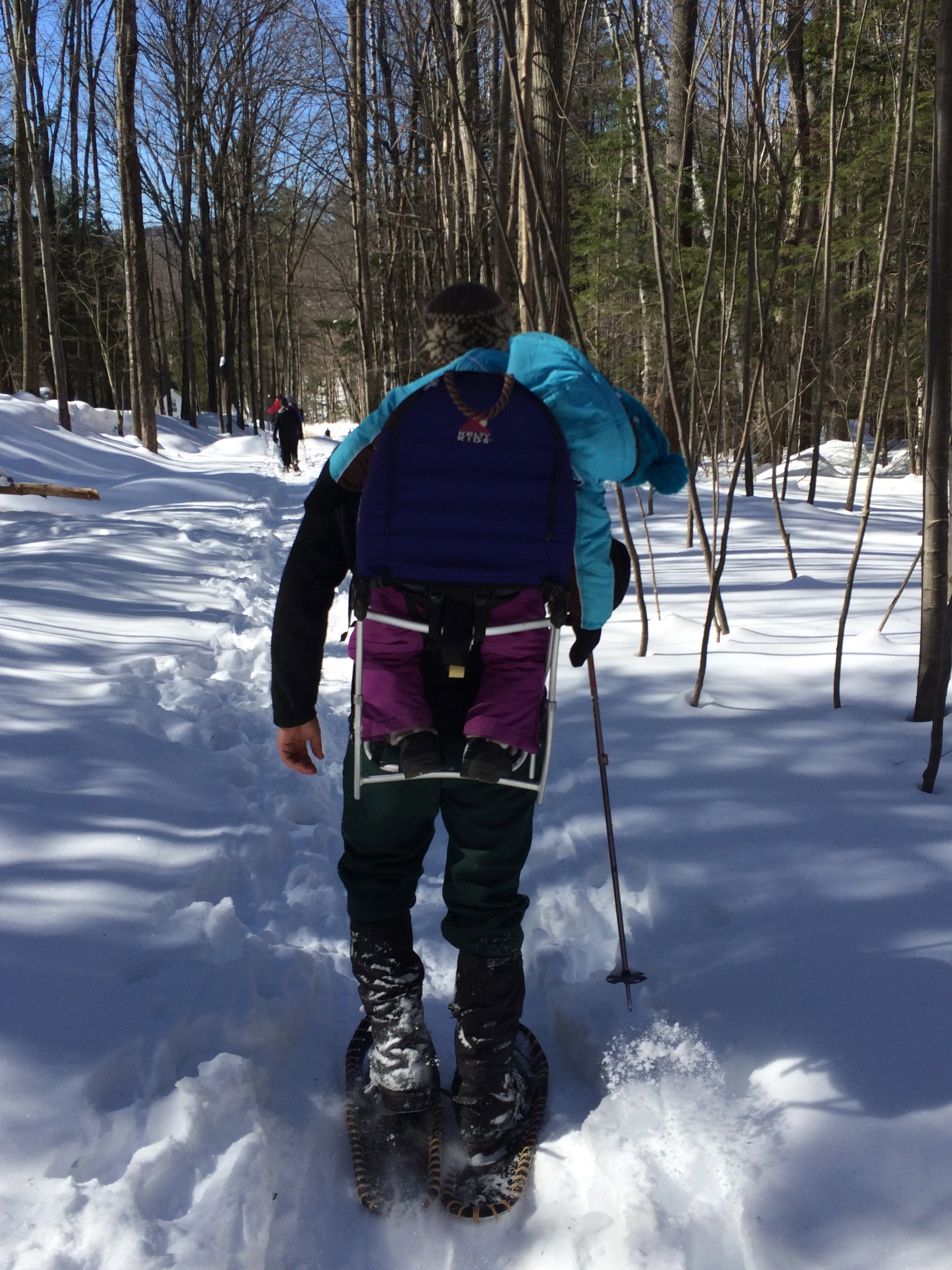
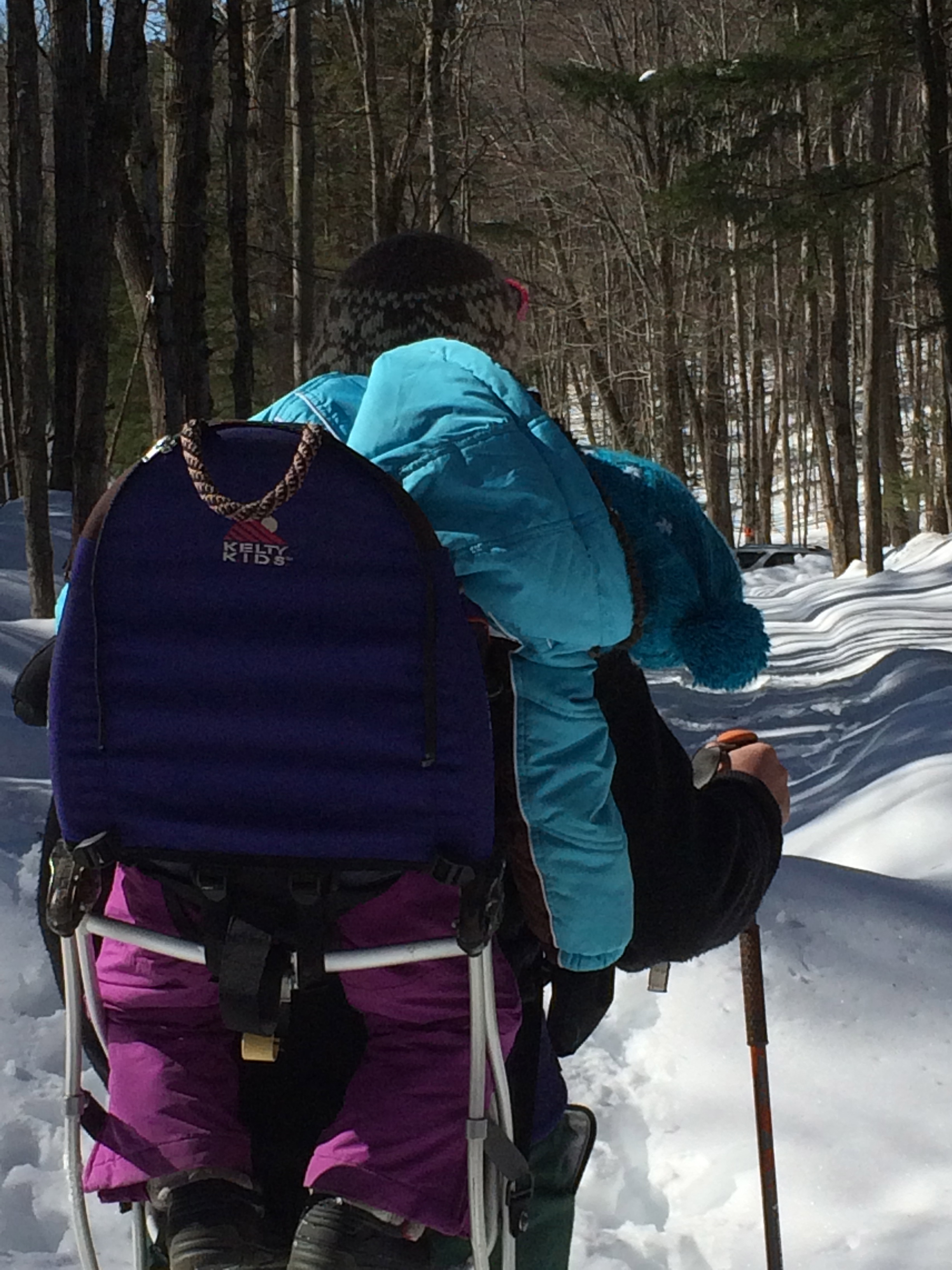
…and the youngest member of the troop decided it was time for a nap

IMG_2822

IMG_2825

Carry in, carry out

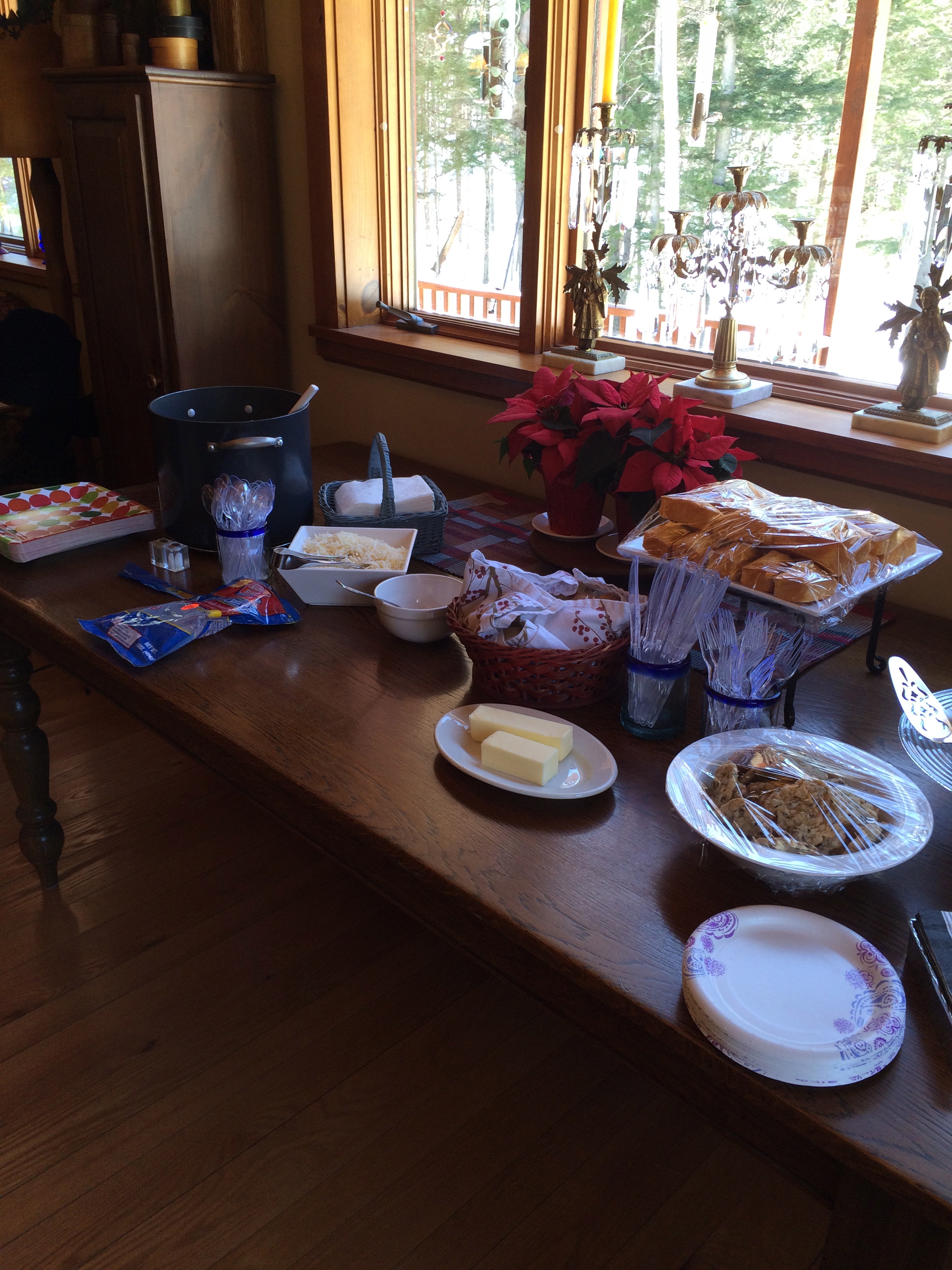
A delicious post-hike lunch was hosted by George & Kim:

IMG_2835

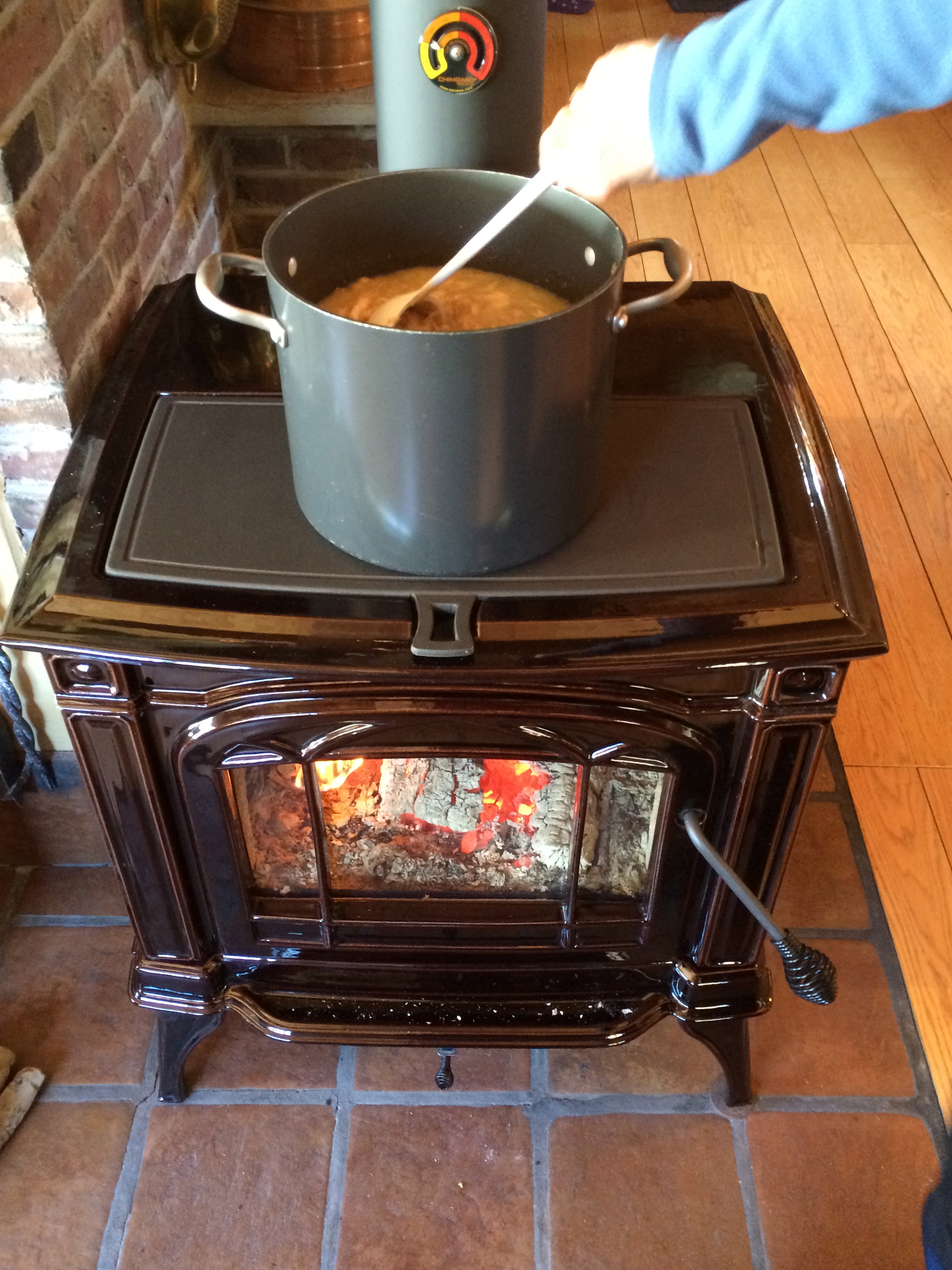
Heating up the chili

IMG_2833

IMG_2841

Cookies, cornbread and other goodies

IMG_2848

A happy taste tester

IMG_2846

Relaxing after the long day

An altogether glorious, winter afternoon:

IMG_3498


Related sites of interest:

Ausbon Sargent Land Preservation Trust – http://ausbonsargent.org

NH Big Tree Register – http://extension.unh.edu/Trees/NH-Big-Tree-Program


LANZ OF SALZBURG

IMG_2667

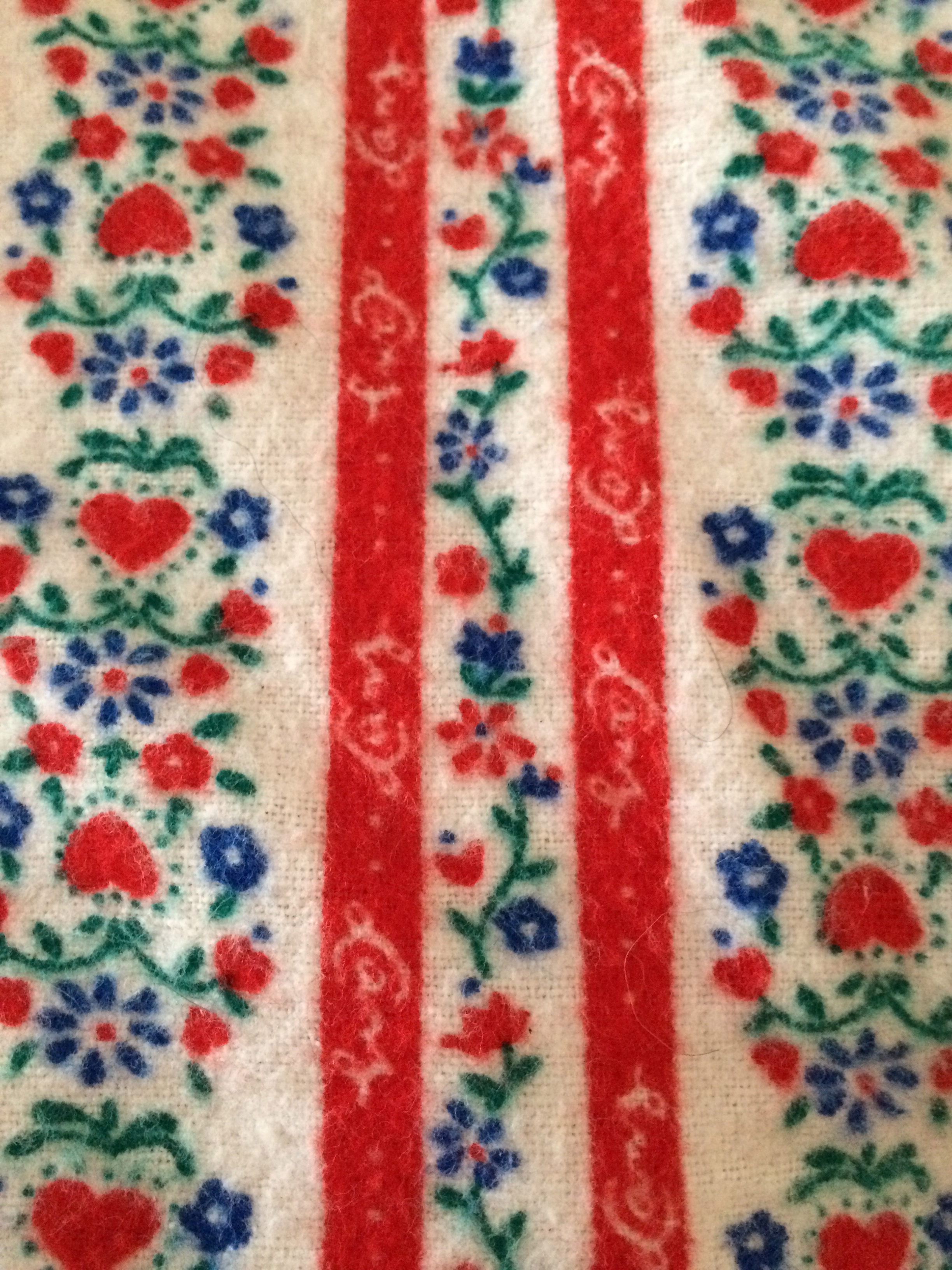
Lanz’s iconic Tyrolean print

Well loved for their traditional, Austrian inspired folkwear, Lanz has been a perennial favorite since the early 1920’s.  By the 1970’s, the US branch of the company consisted of two labels – Lanz Originals, which produced primarily dresses and Lanz of Salzburg, the sleepwear based line.  Around 2001, the company retired Lanz Originals but Lanz of Salzburg still operates today and continues to focus predominantly on sleepwear with some dresses, jumpers and separates also included in their offerings.

Recent weeks have seen their soft, flannel nightgowns increasingly in rotation, given persistent, subzero New Hampshire weather.  Not only are they comfortably warm and cozy, the charming Tyrolean prints bring cheer to even the dreariest of icy winter days.  Indeed it is sometimes tempting to lounge a bit longer than usual in the mornings, especially if curled up with a particularly good book.

IMG_2653


A few select items are available online at lanzofsalzburg.com but surprisingly more often than not, The Vermont Country Store carries a larger selection.  The only downside: garment labels no longer read “Made in USA with Love”.  Instead, as with so many others in the apparel industry and elsewhere, Lanz has shifted production to China.

WINTER HIKE – EAST ANDOVER BUSHWHACK

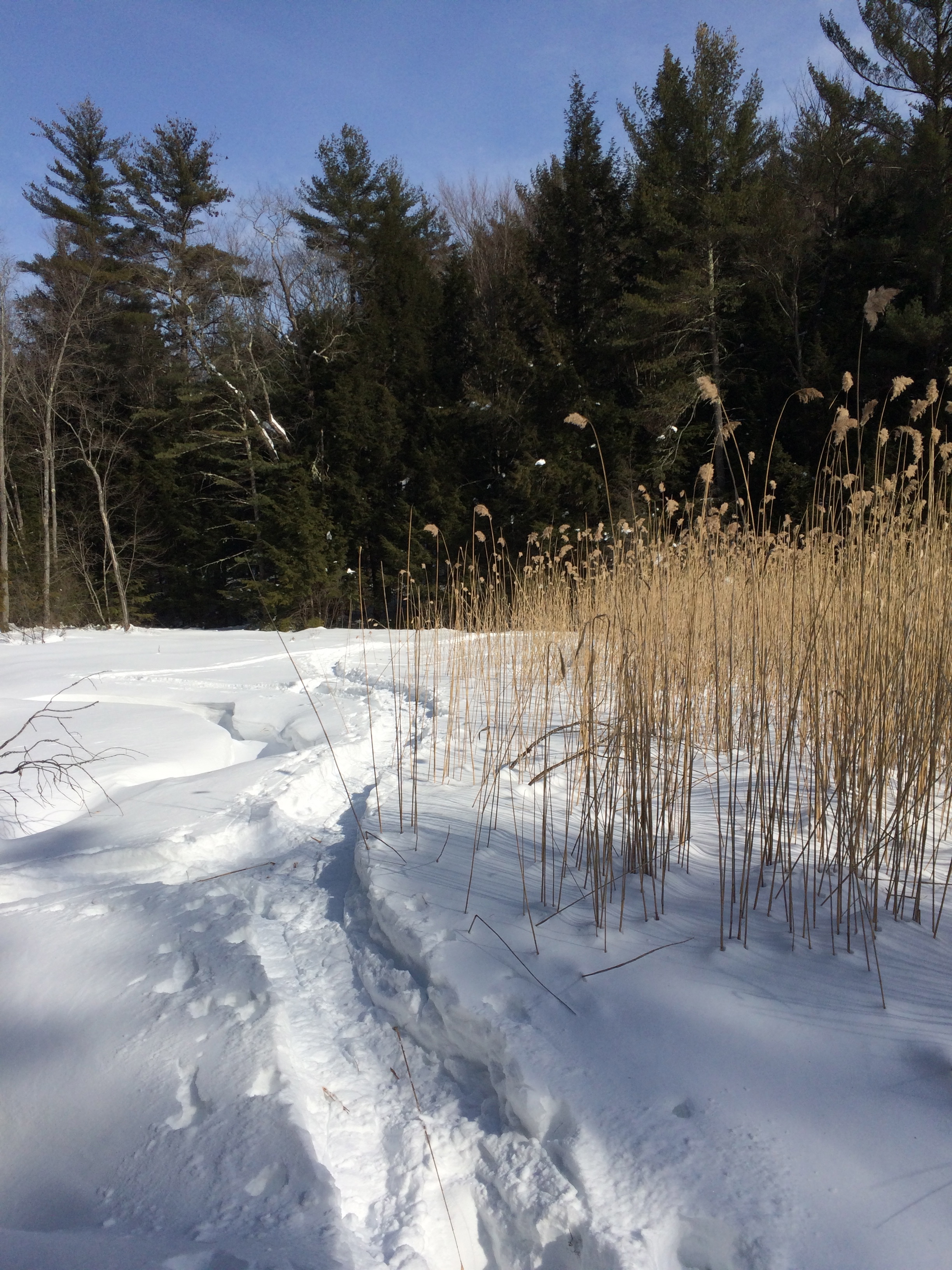
Hiking across the bog - East Andover

Hiking across the bog – East Andover

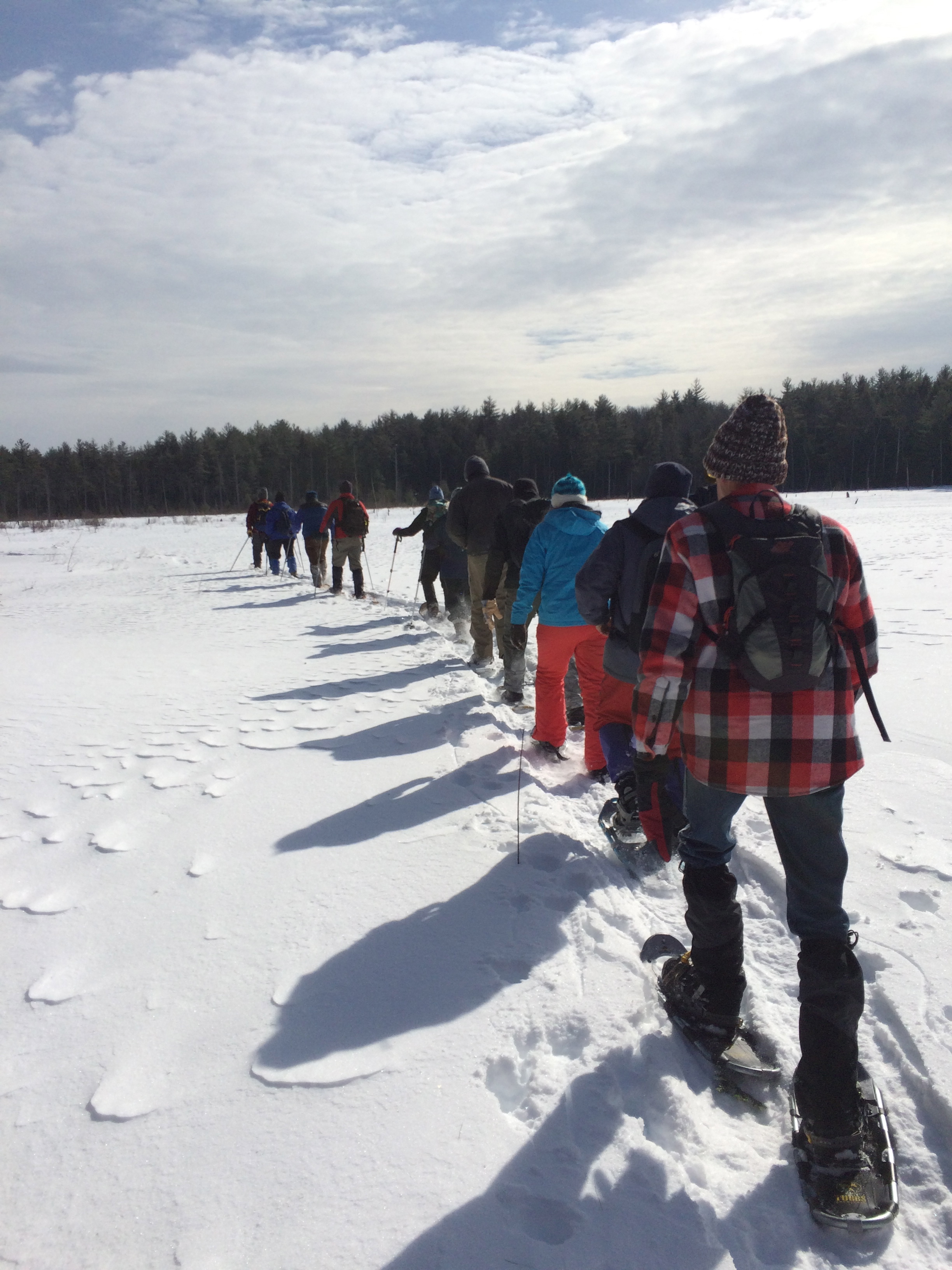
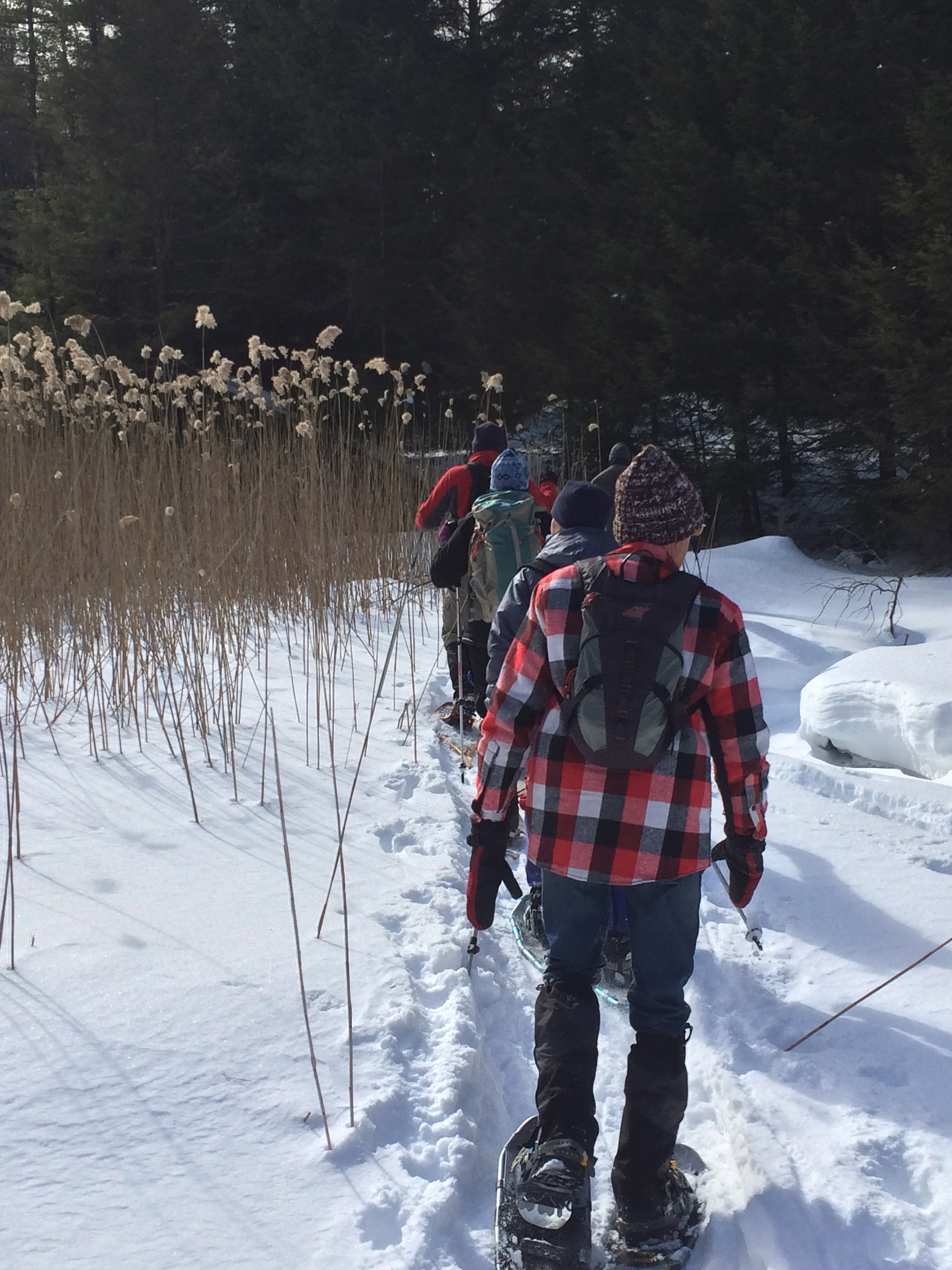
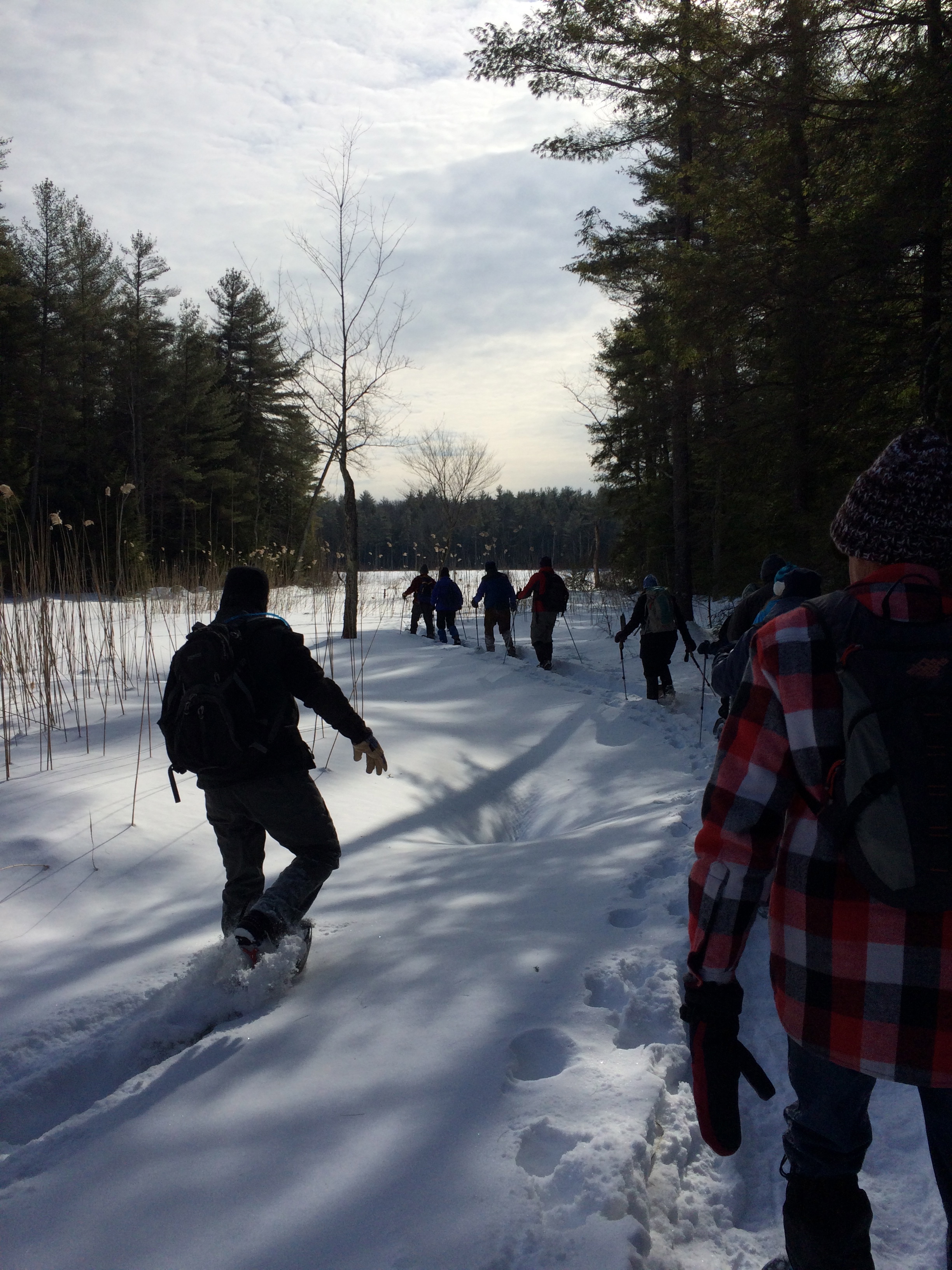
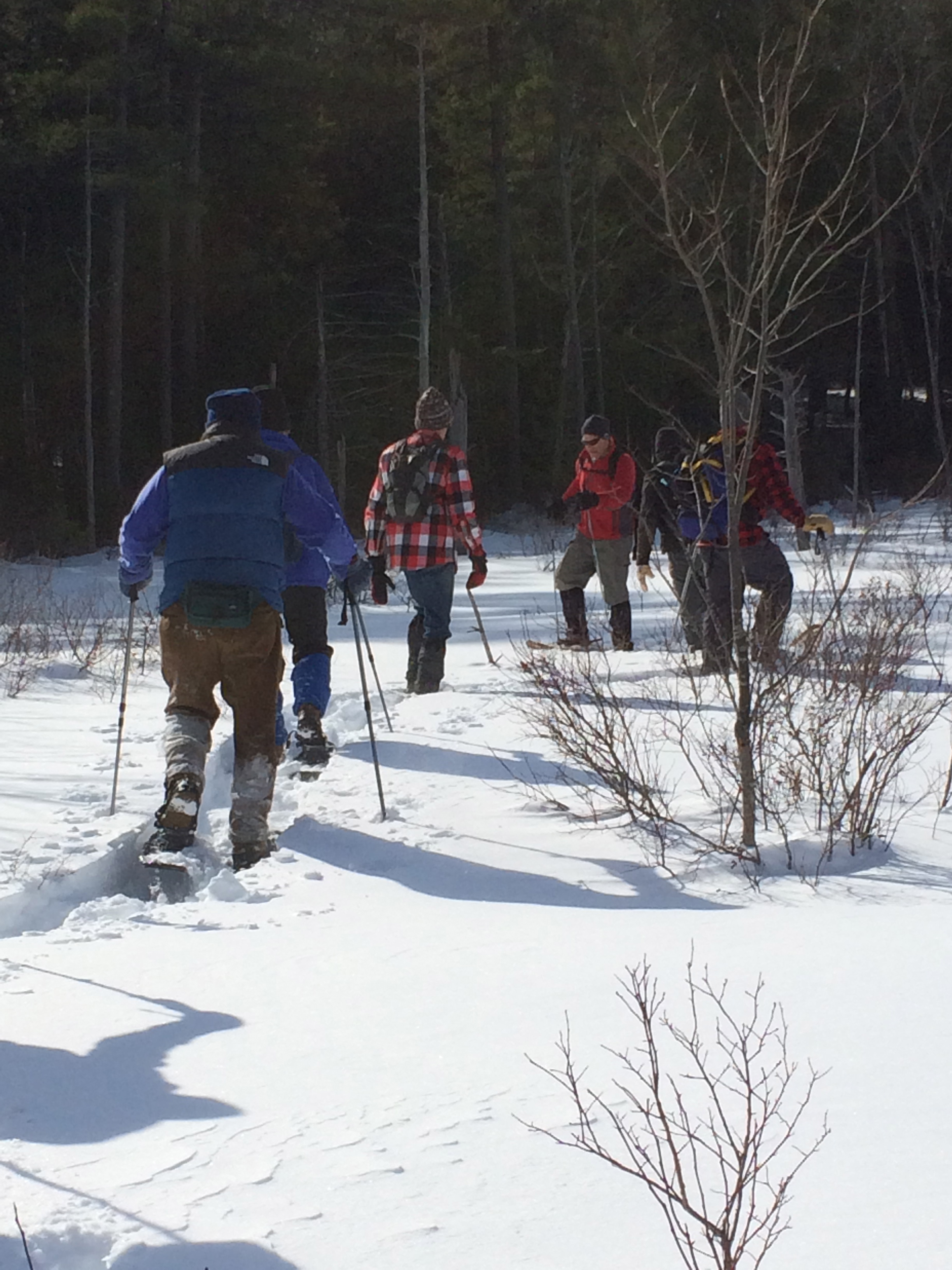
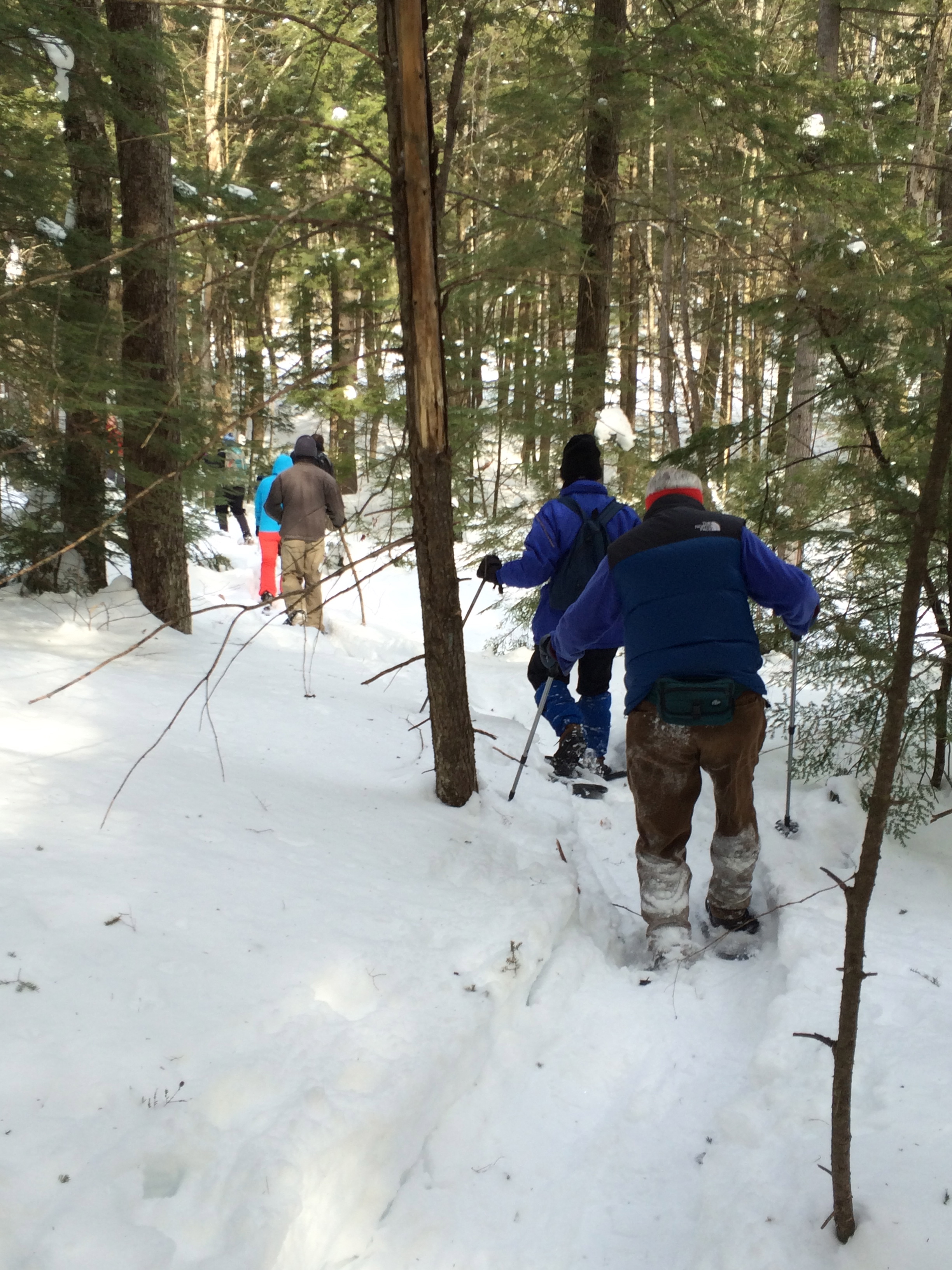
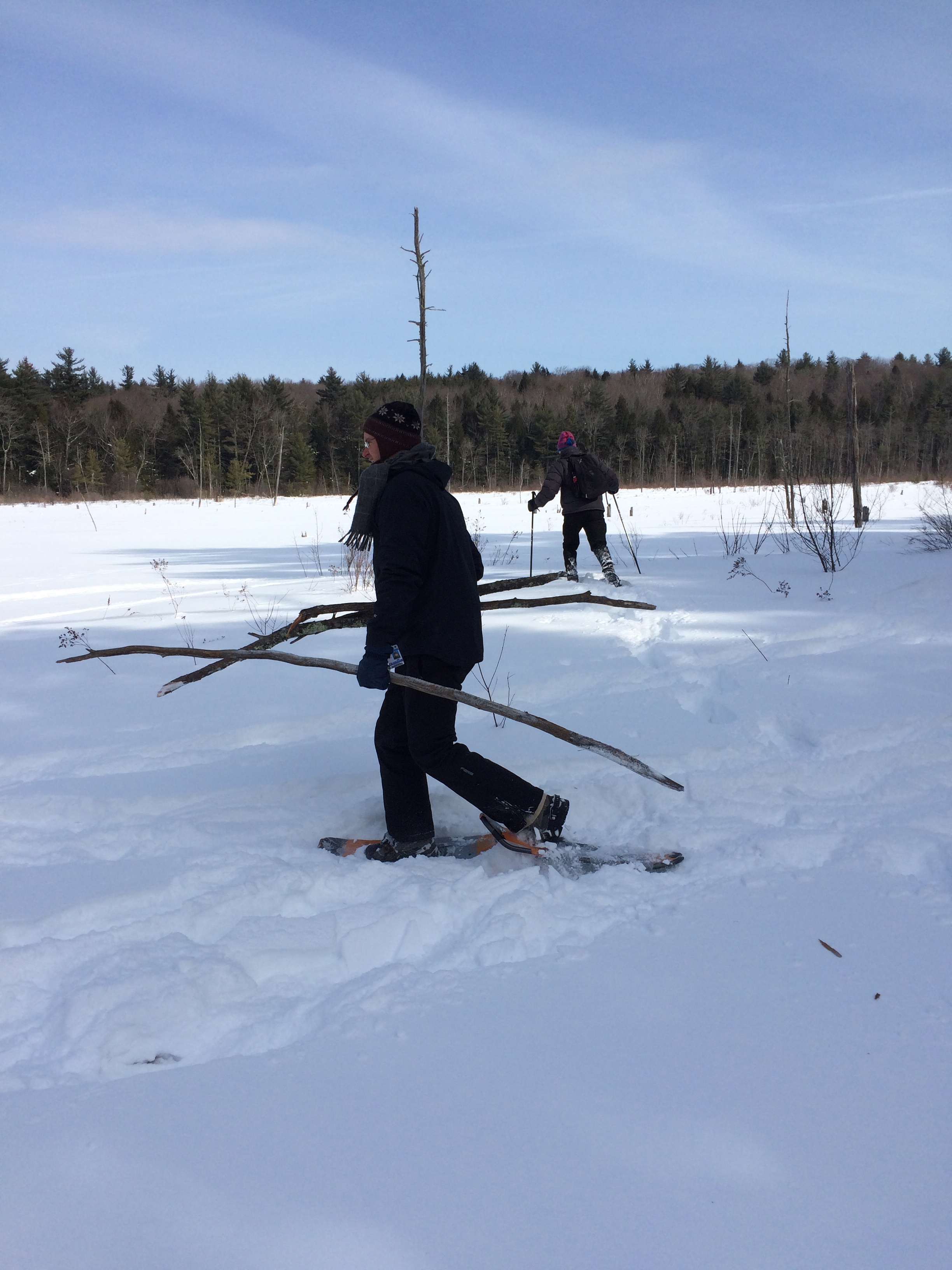
Each year, Sunapee Ragged Kearsarge Greenway hosts a series of winter (and summer and fall) hikes.  Being new to the group – and having missed the first two this season due to travel and other obligations – we were eager to make up for lost time.  This week’s hike was a bushwhack through remote parts of East Andover, led by avid outdoorsman Frank Baker, who broke out a trail in roughly 30″ deep snow the day prior.  (Unlike most other SRKG hikes, this was not part of the 75 mile trail system that the group regularly maintains).

With the exception of a few moderately steep but brief inclines, the terrain was fairly flat and easily navigable thanks in large part to Frank’s earlier reconnaissance.  Along the way, the group stopped to examine evidence of local wildlife, gather wood for a fire and brush up on s’mores making skills.

A few chance encounters:

IMG_2448

Tracks leading to a deer bed

IMG_2439

Slides- one of the more obvious signs of otter, commonly found near bodies of water

IMG_2627

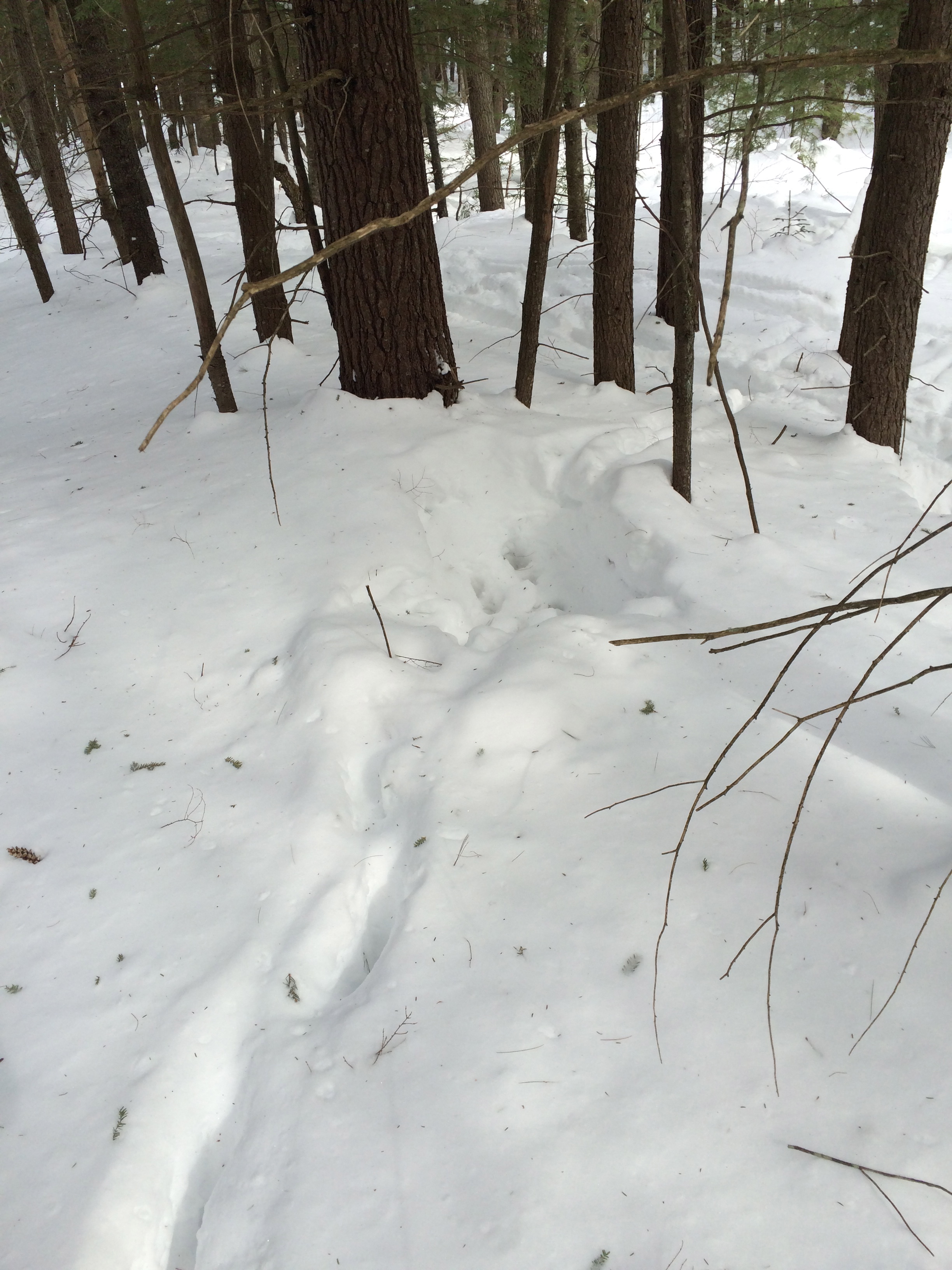
The source of these tracks were debated by a few but no firm conclusions were drawn.

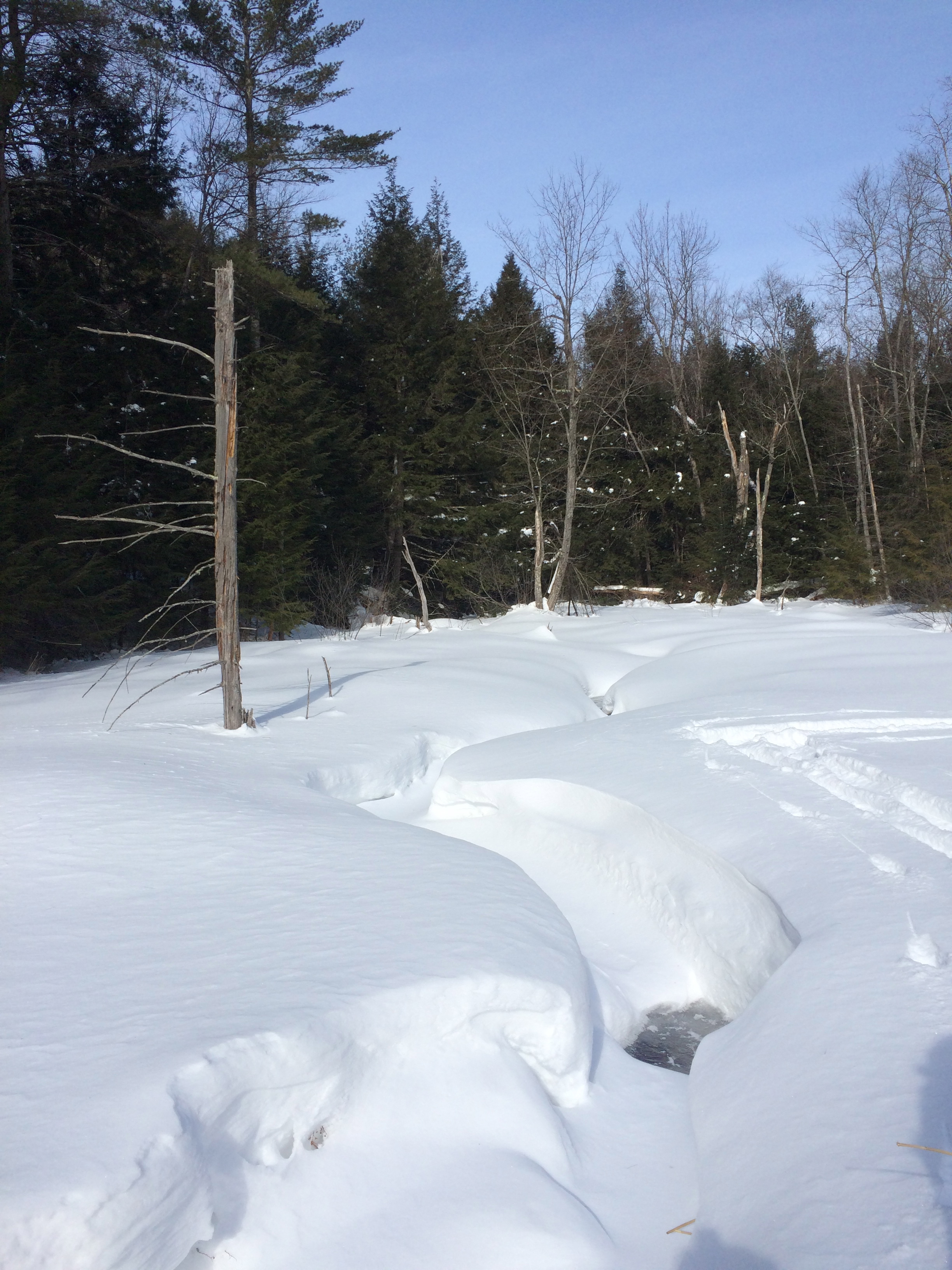
While much of the hike was through densely wooded areas, a trek into the bog was one of the highlights:

IMG_2467

Alongside a stand of phragmites

IMG_2471

Also known as the Common Reed. Exotic lineages have displaced much of the native populations. A source for further research: http://nerrs.noaa.gov/Doc/PDF/Research/Phrag_Final_2009.pdf

IMG_2470

A frozen stream winds its way across the landscape

IMG_2474

Heading off into the clearing…

IMG_2473

…and a look back before moving on

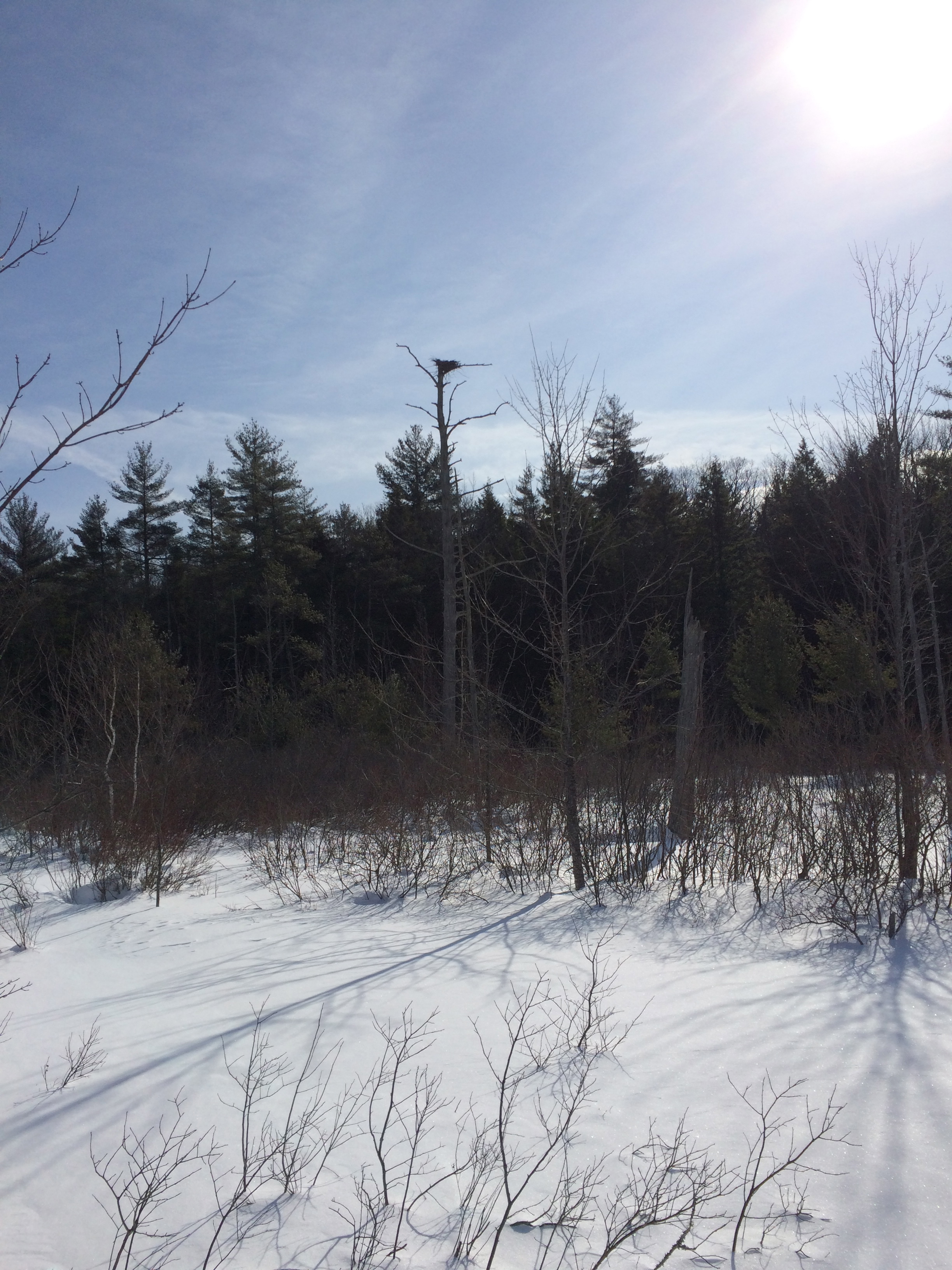
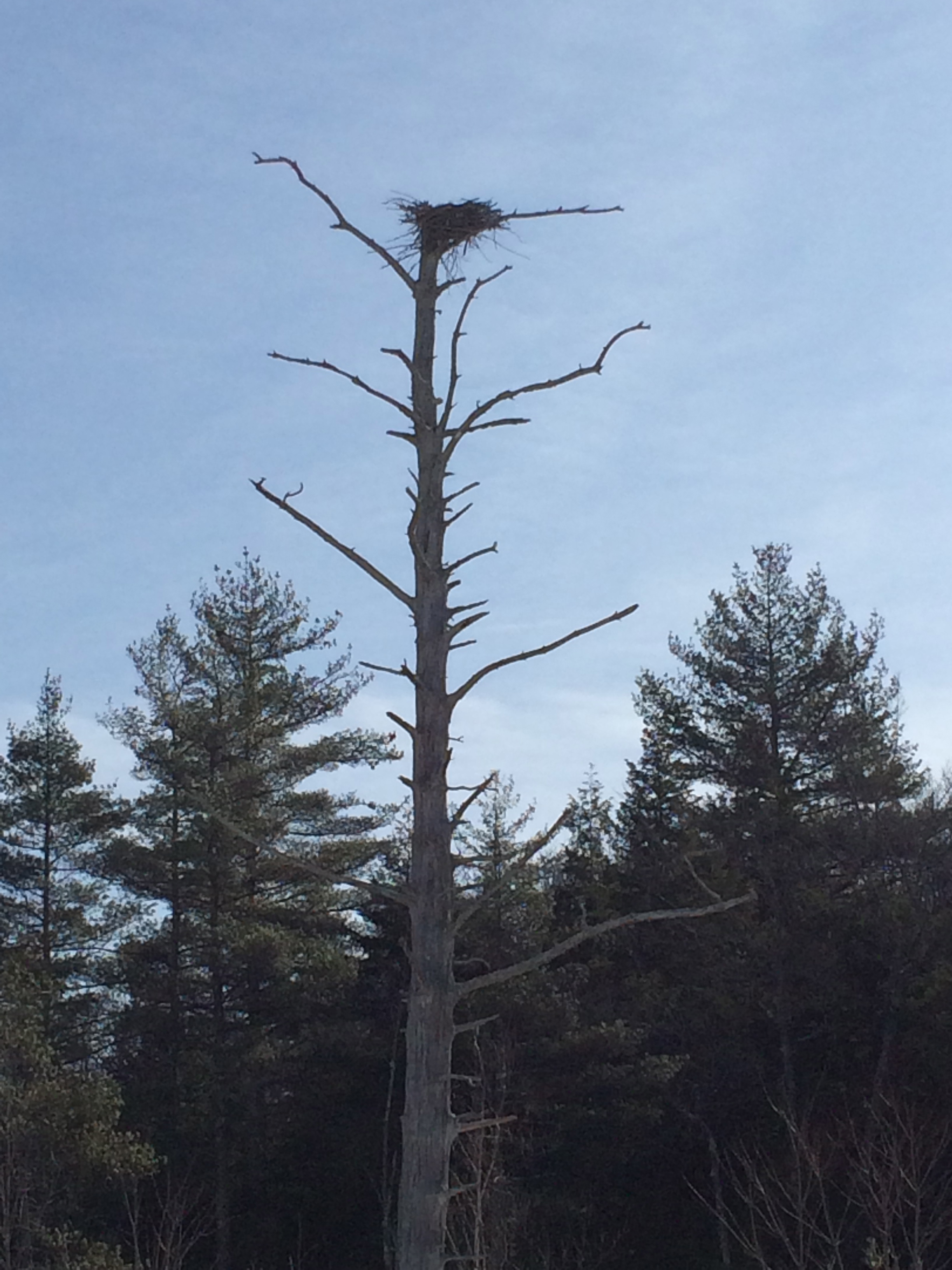
Additional sightings were made, including this heron’s nest:

IMG_2483

IMG_2489

A closer view

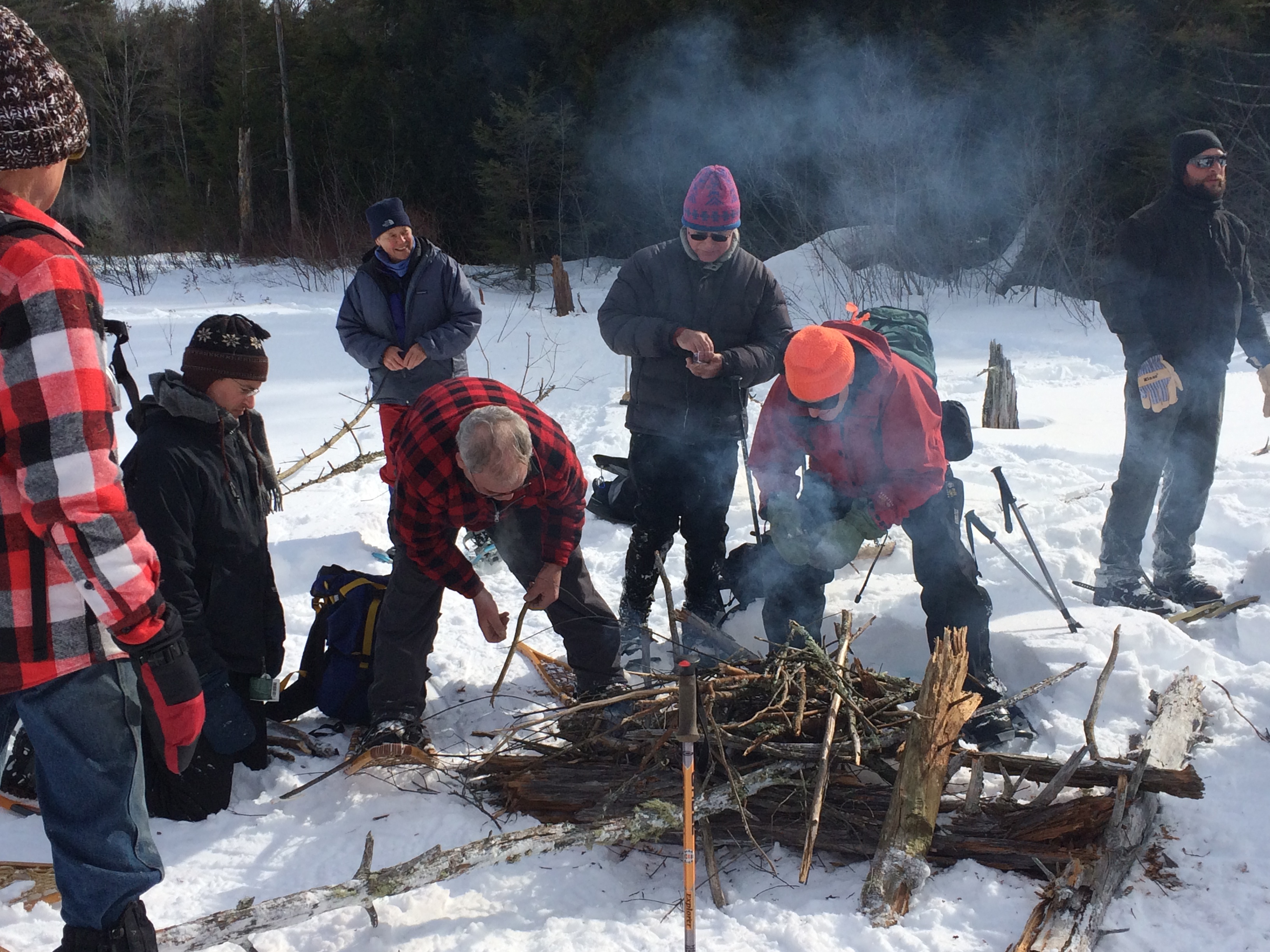
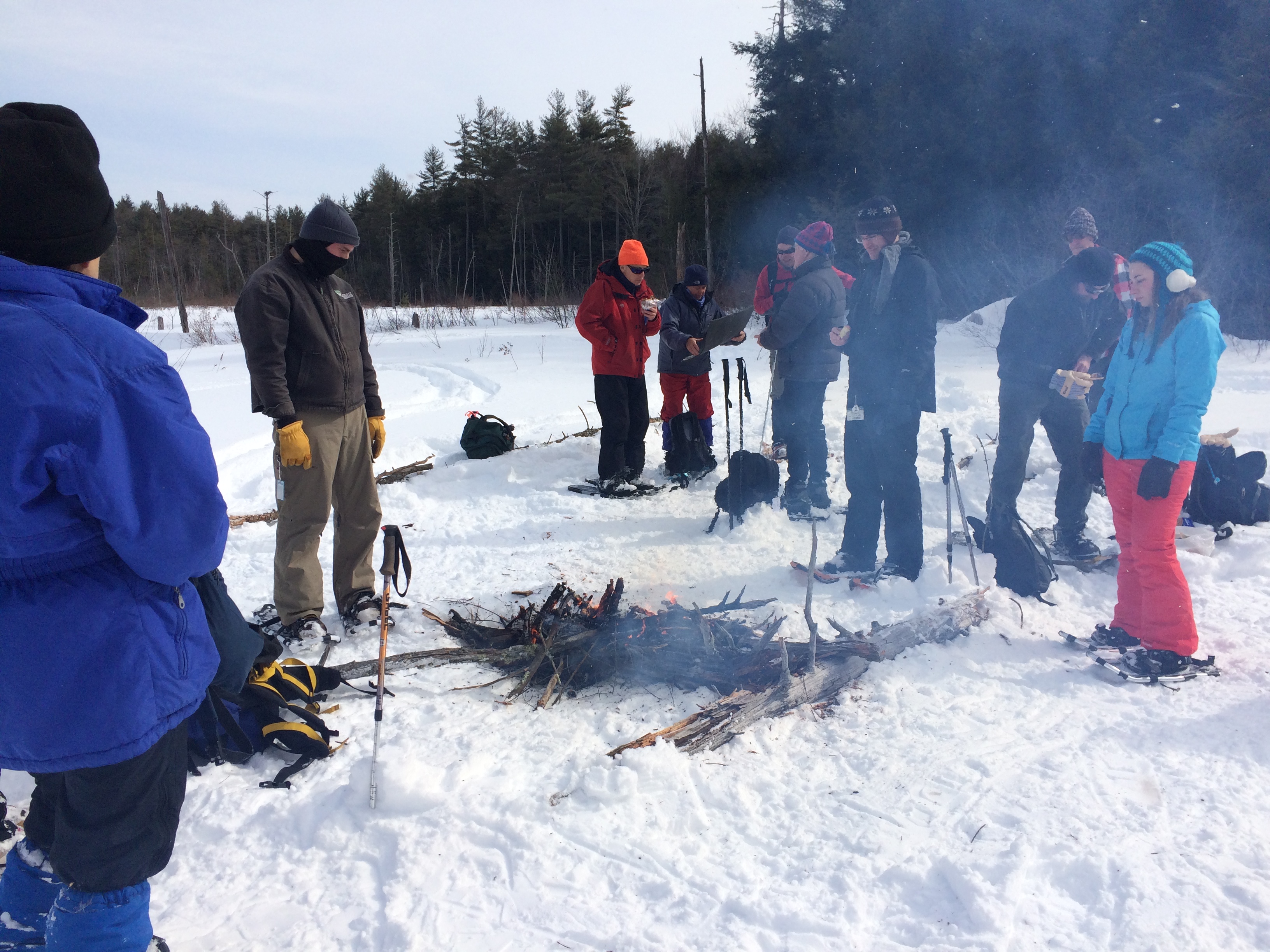
Once across the clearing, it was time for a much needed thaw-out:

IMG_2486

Scouting the best location for a bonfire

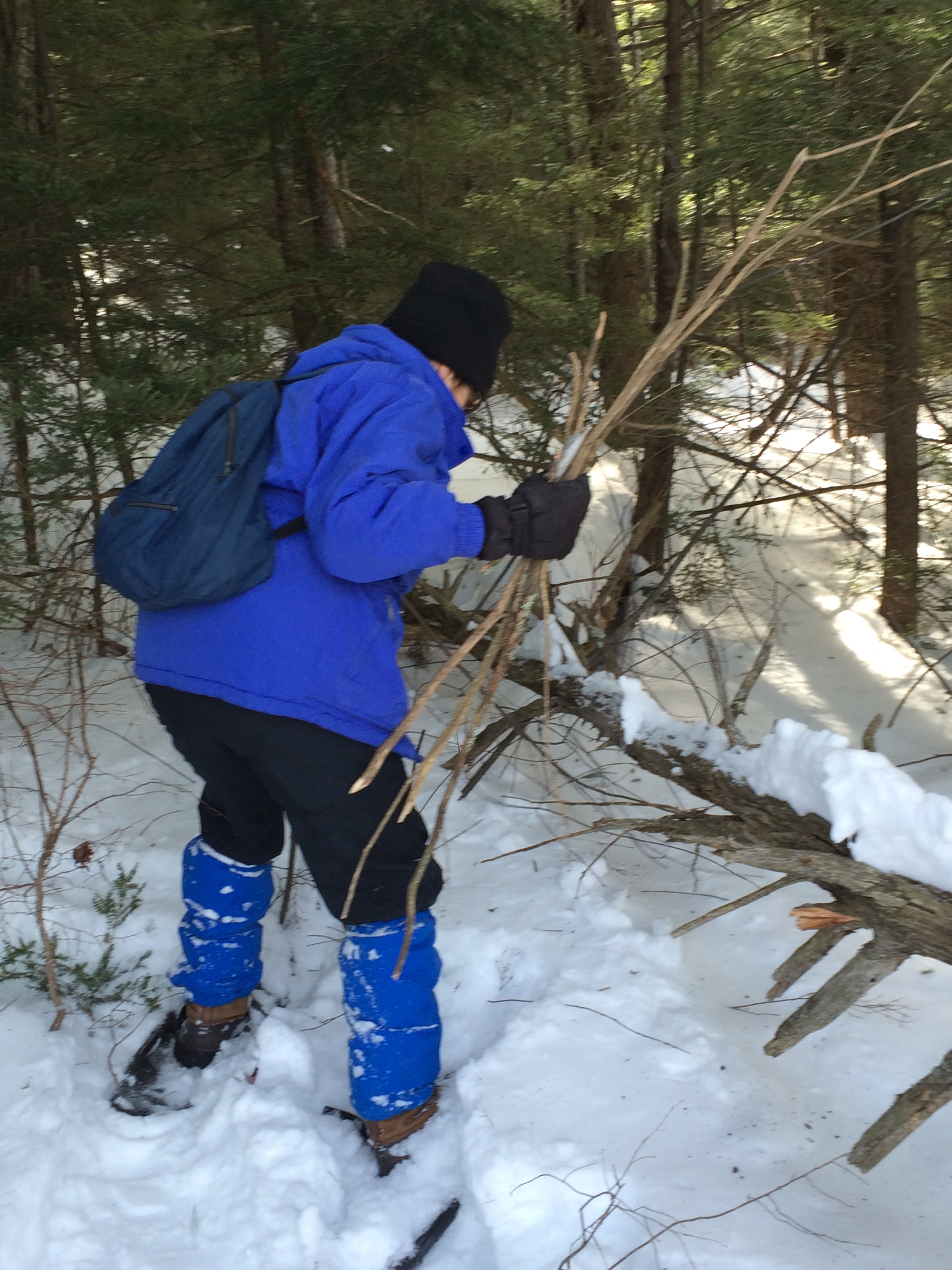
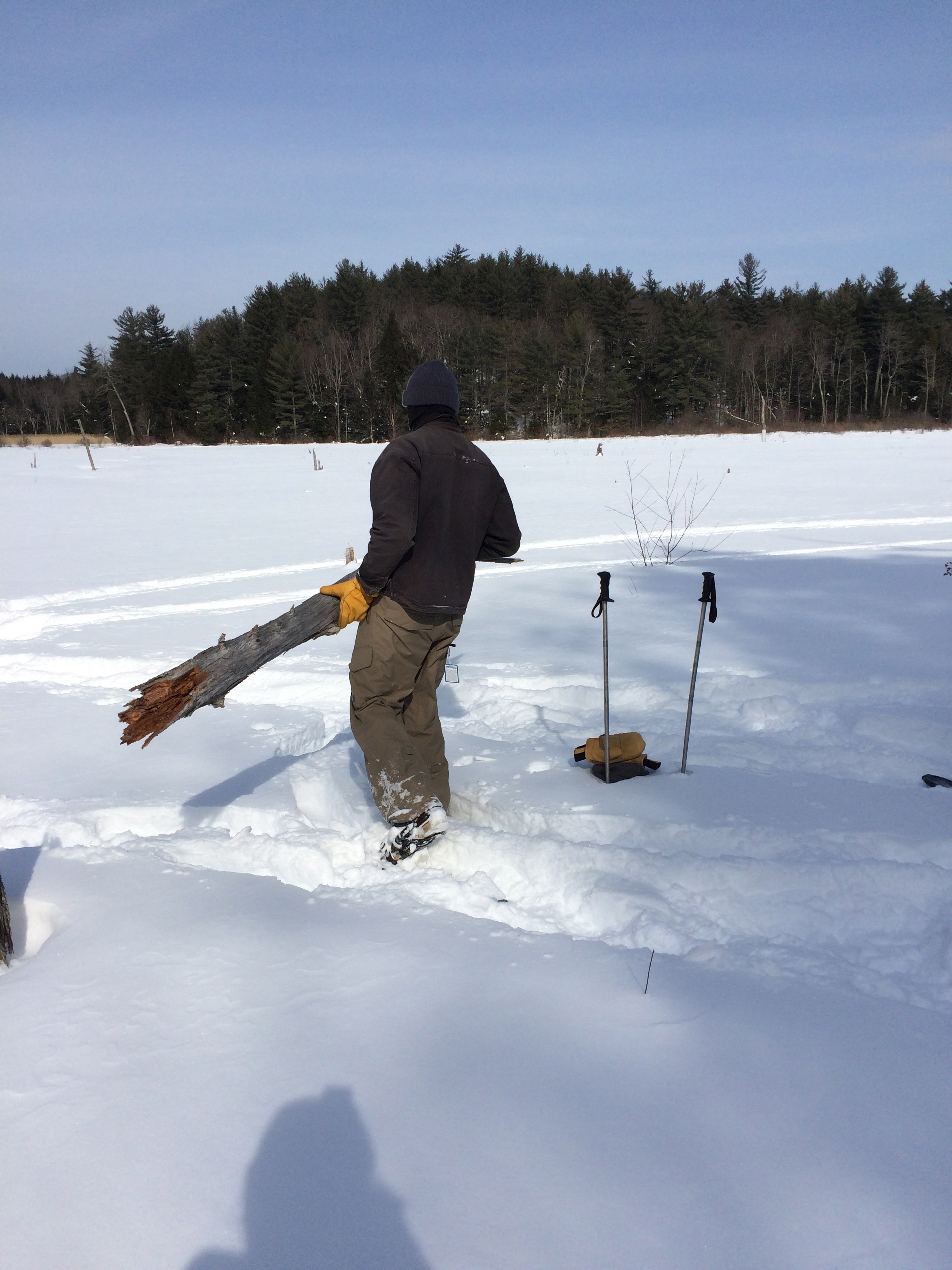
Wood was gathered:

IMG_2535

IMG_2529

IMG_2532

IMG_2527

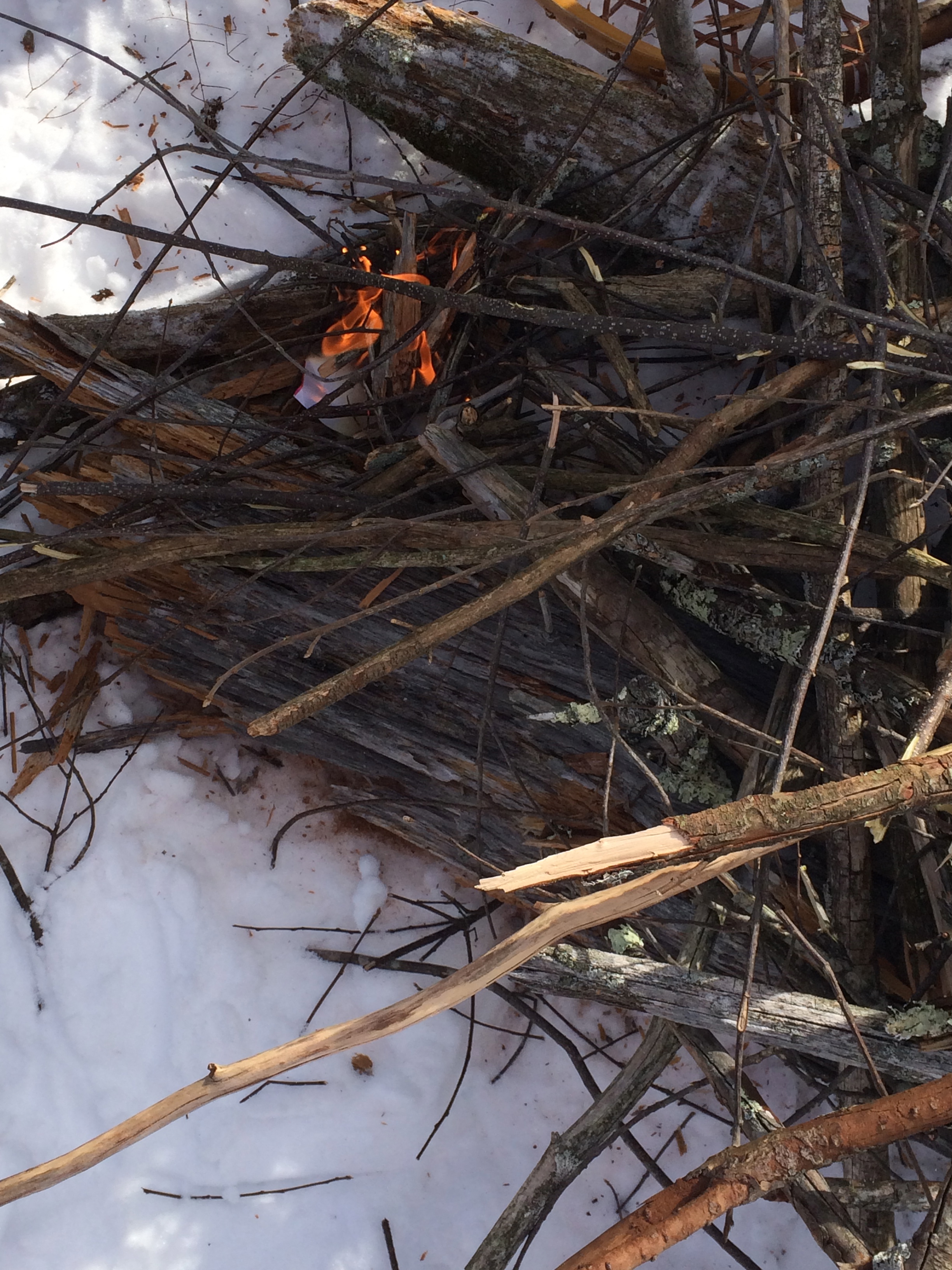
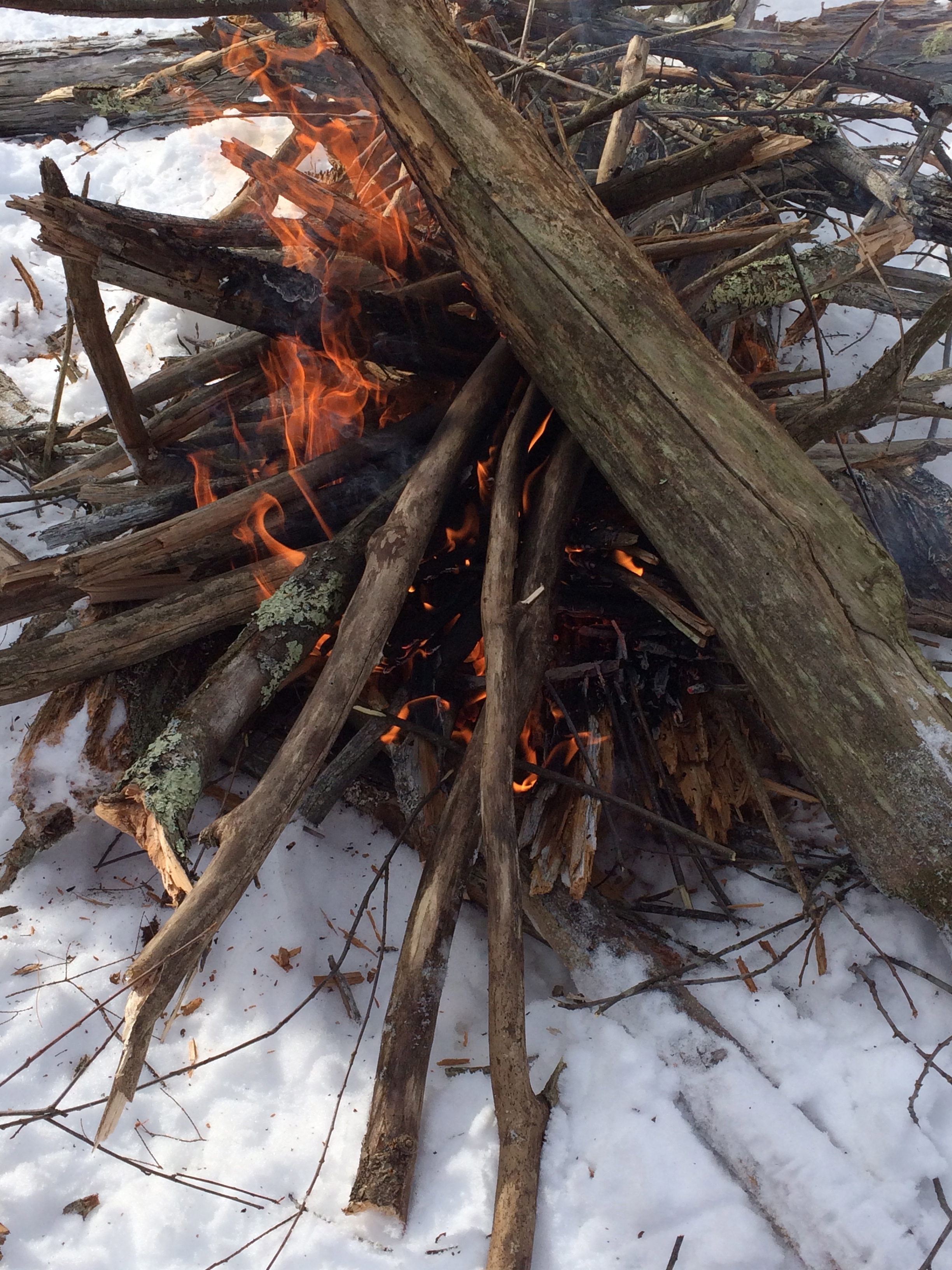
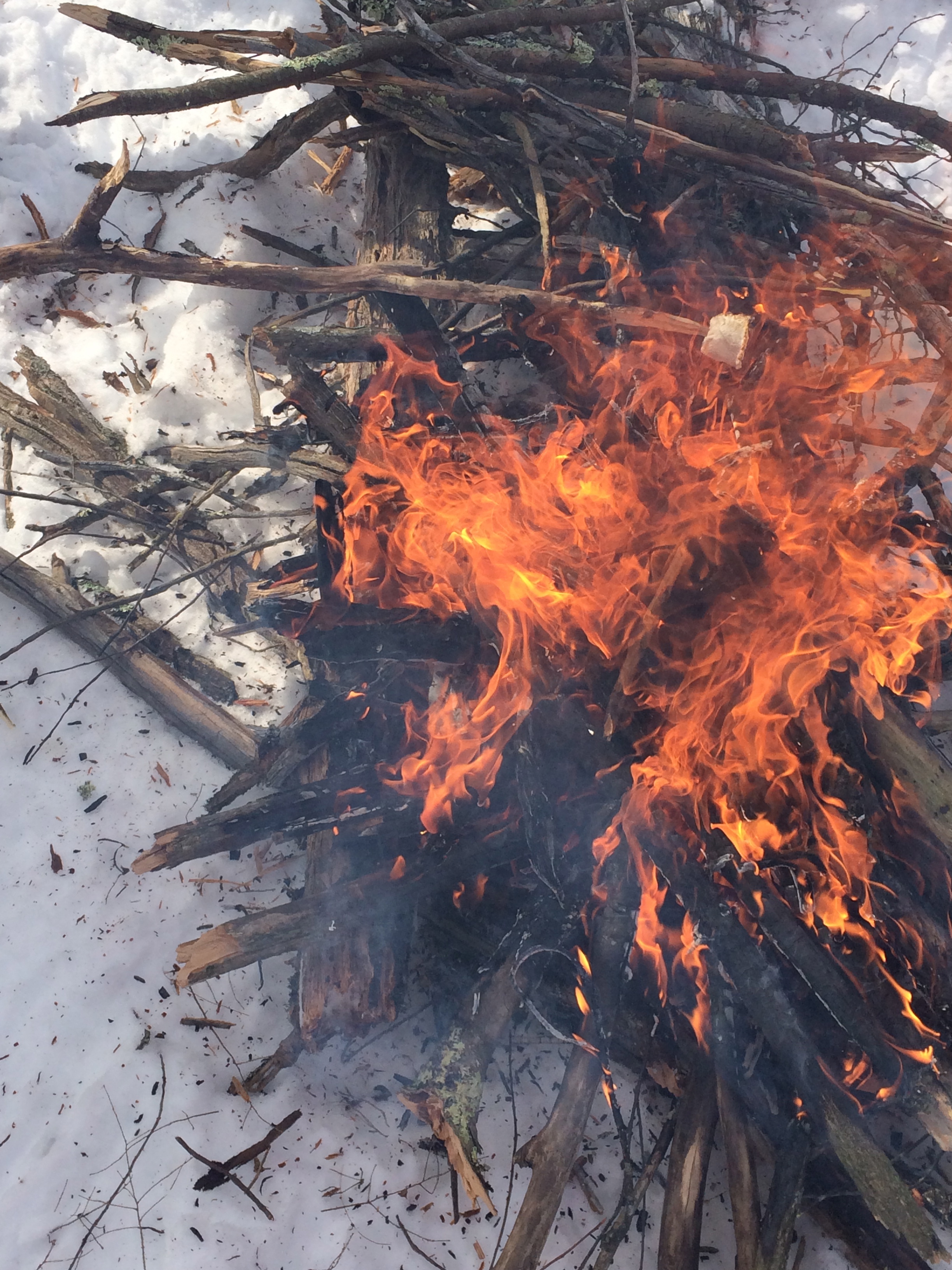
And little time was wasted starting the fire:

IMG_2564

IMG_2552

A flicker of flames looks promising

IMG_2567

Picking up a bit more

IMG_2565

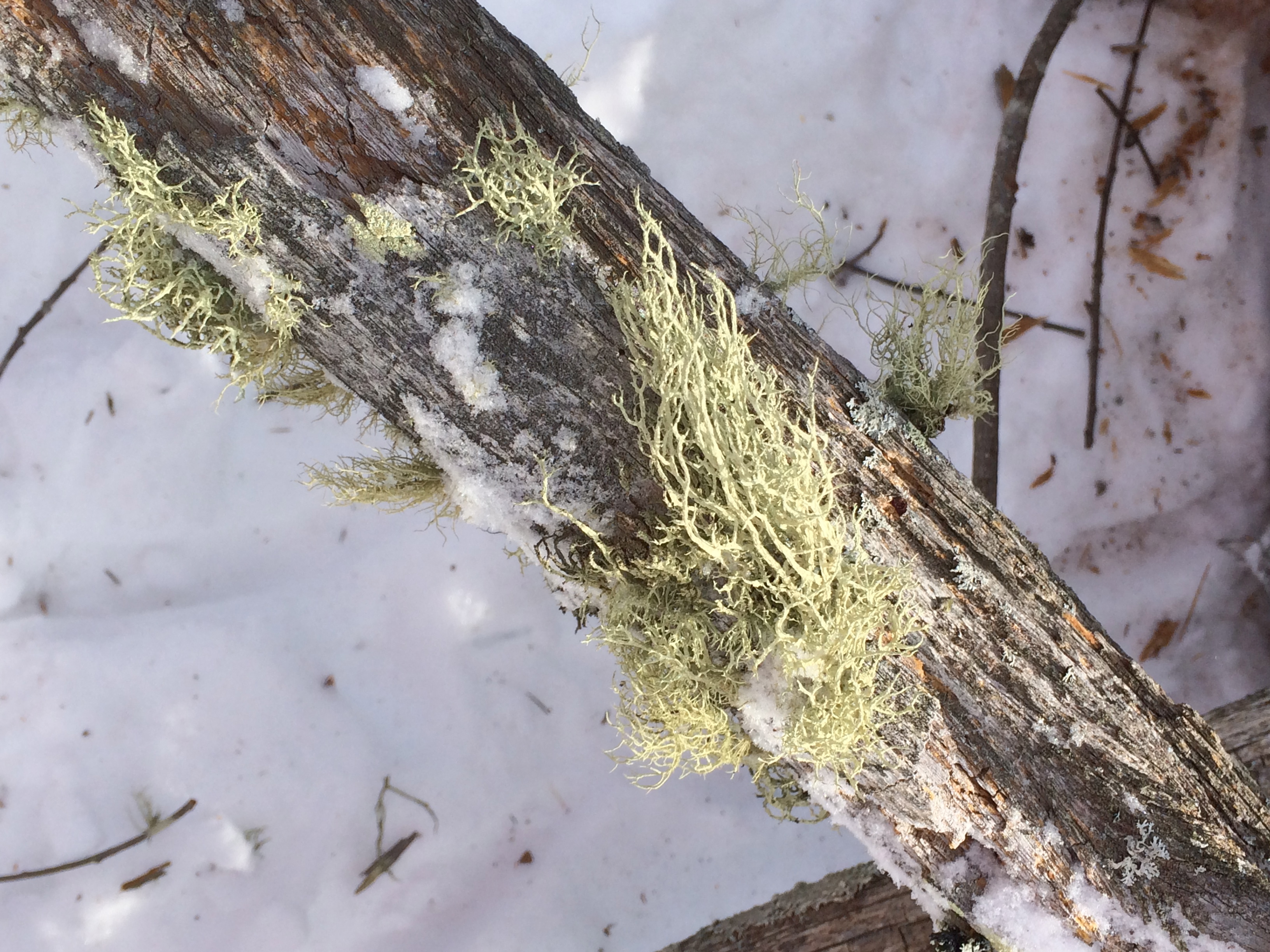
Old Man’s Beard, or beard lichen – a type of pale grey-green lichen commonly found on bark or twigs

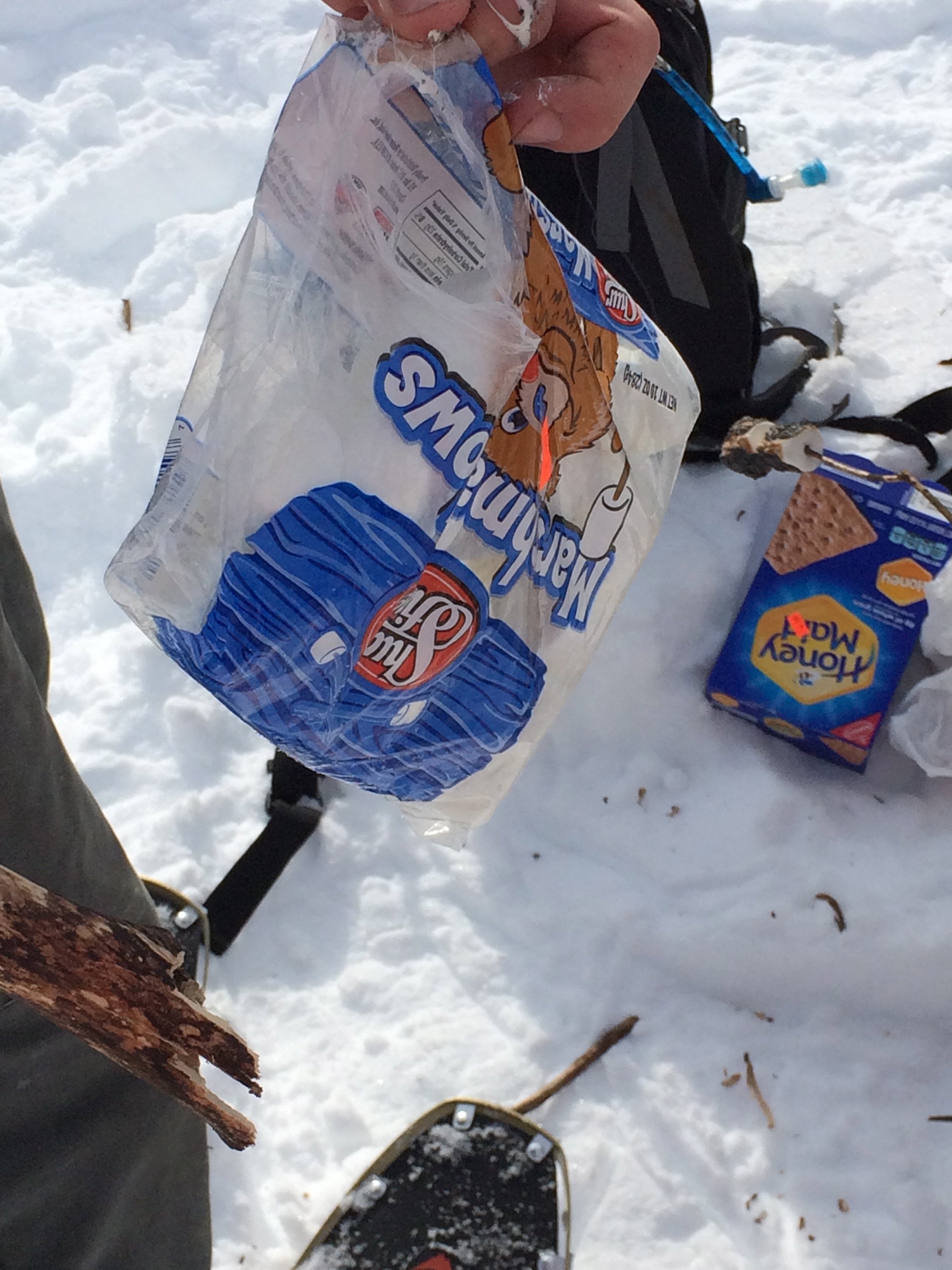
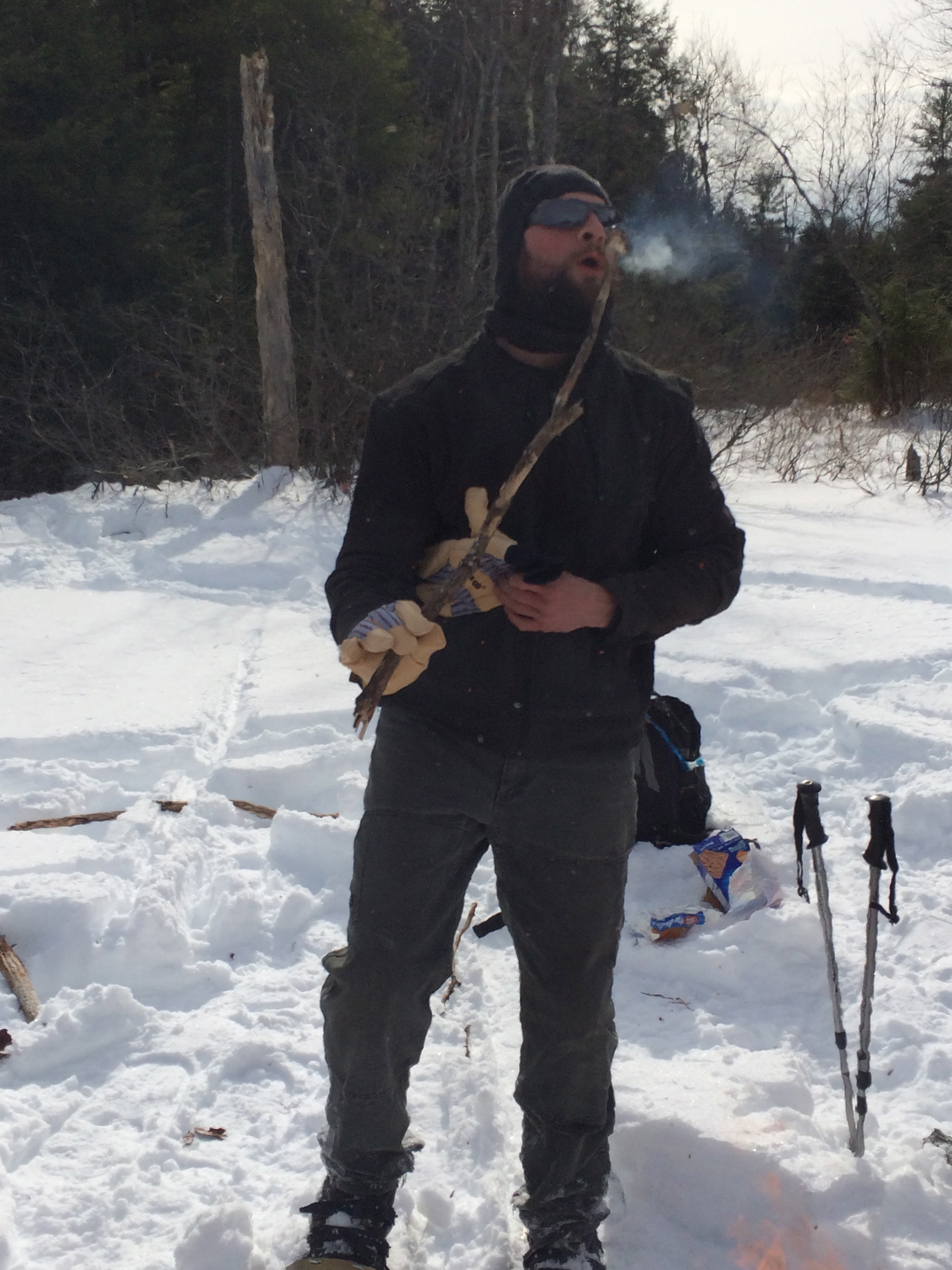
Roasted marshmallows are always a welcome addition:

IMG_2599

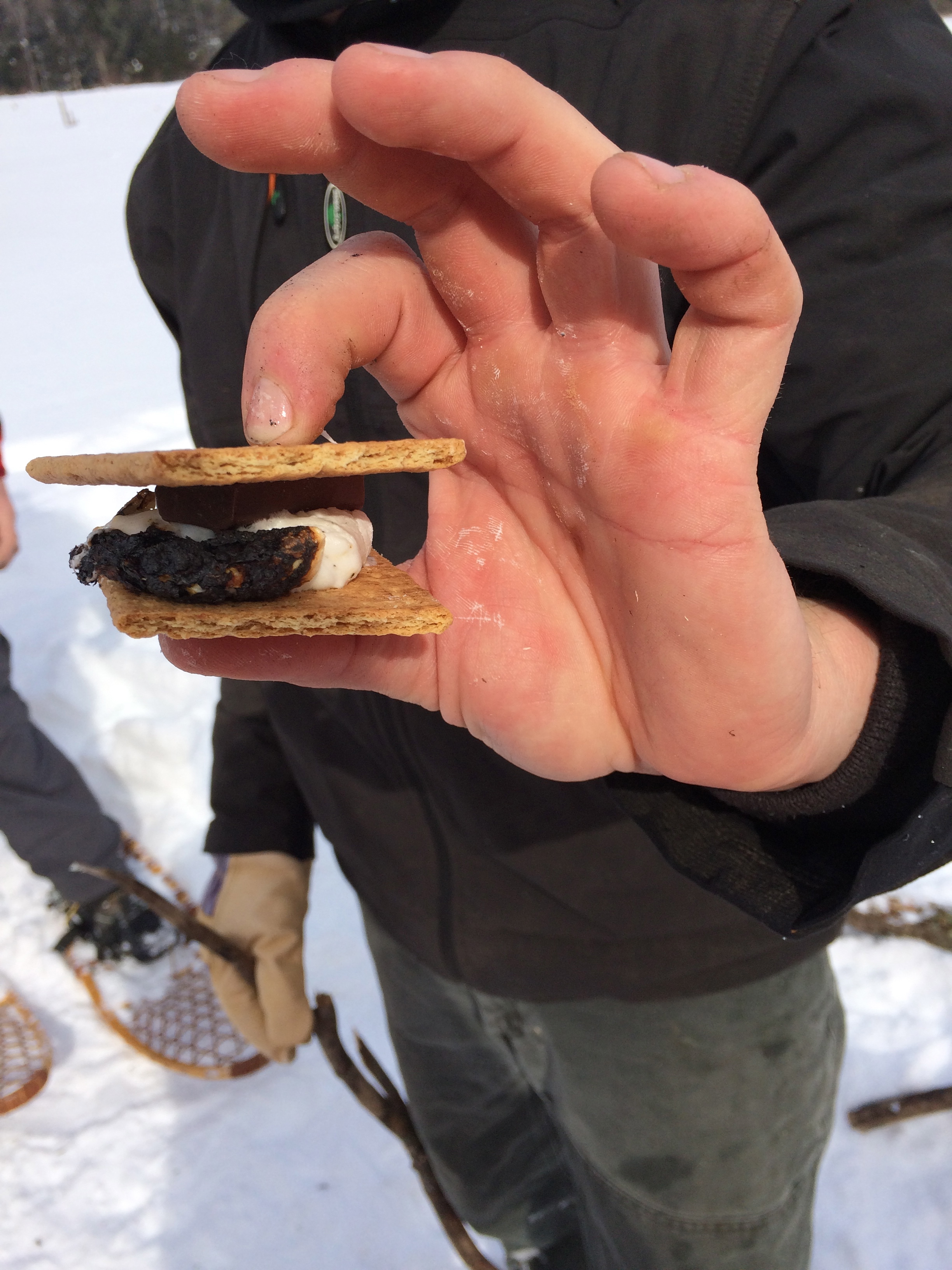
Breaking out the s’mores supplies

IMG_2600

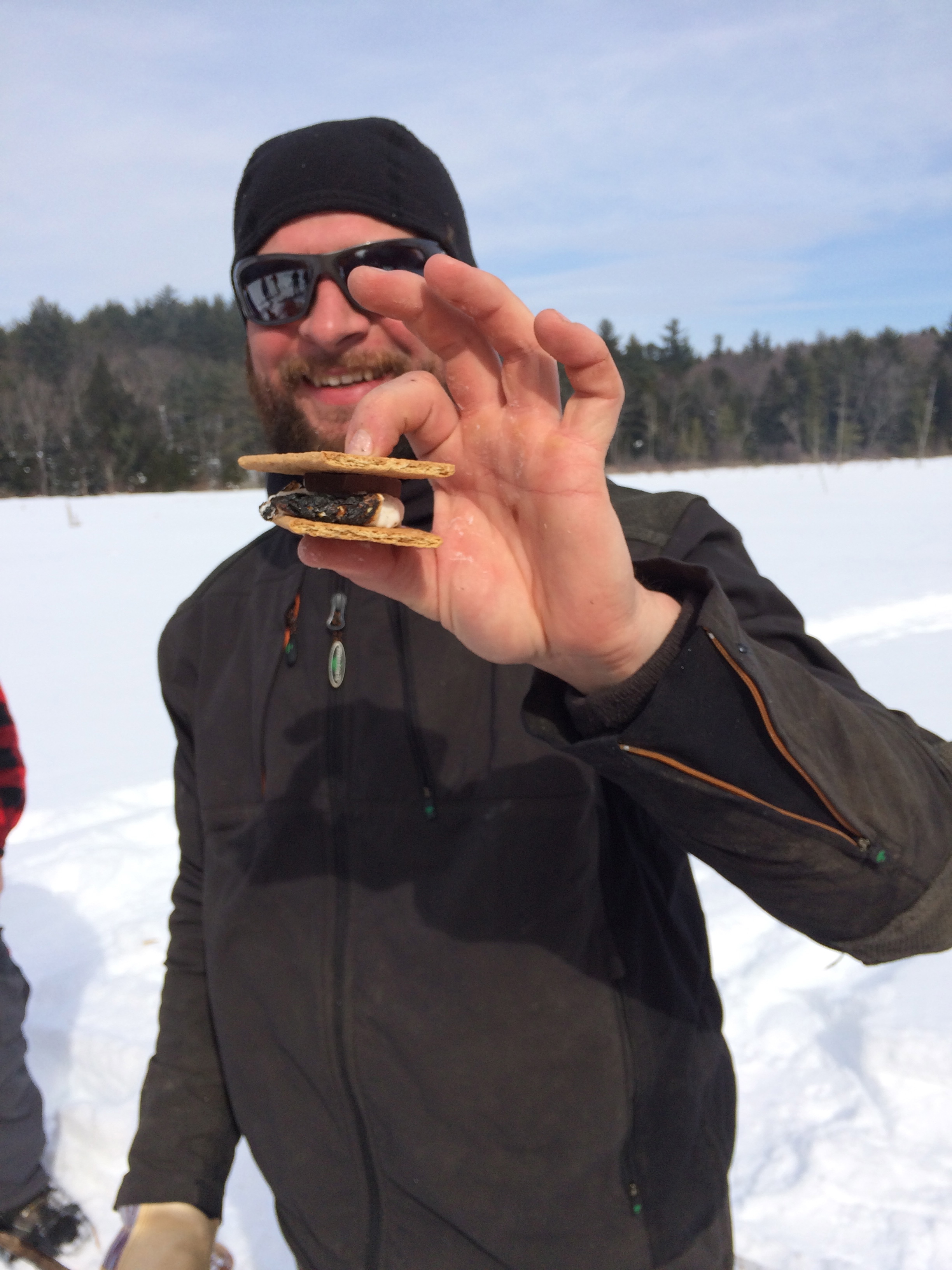
This first attempt was slightly overdone

IMG_2601

IMG_2596

But practice makes perfect

IMG_2597

A thorough thaw out was had by all.

IMG_2605

Then it was back into the woods and other natural wonders:

IMG_2614

IMG_2606

Black birch (also called cherry or mahogany birch), is known for its fragrant scent. Birch beer is made from the aromatic sap and wintergreen oil is extracted from the leaves.

IMG_2615

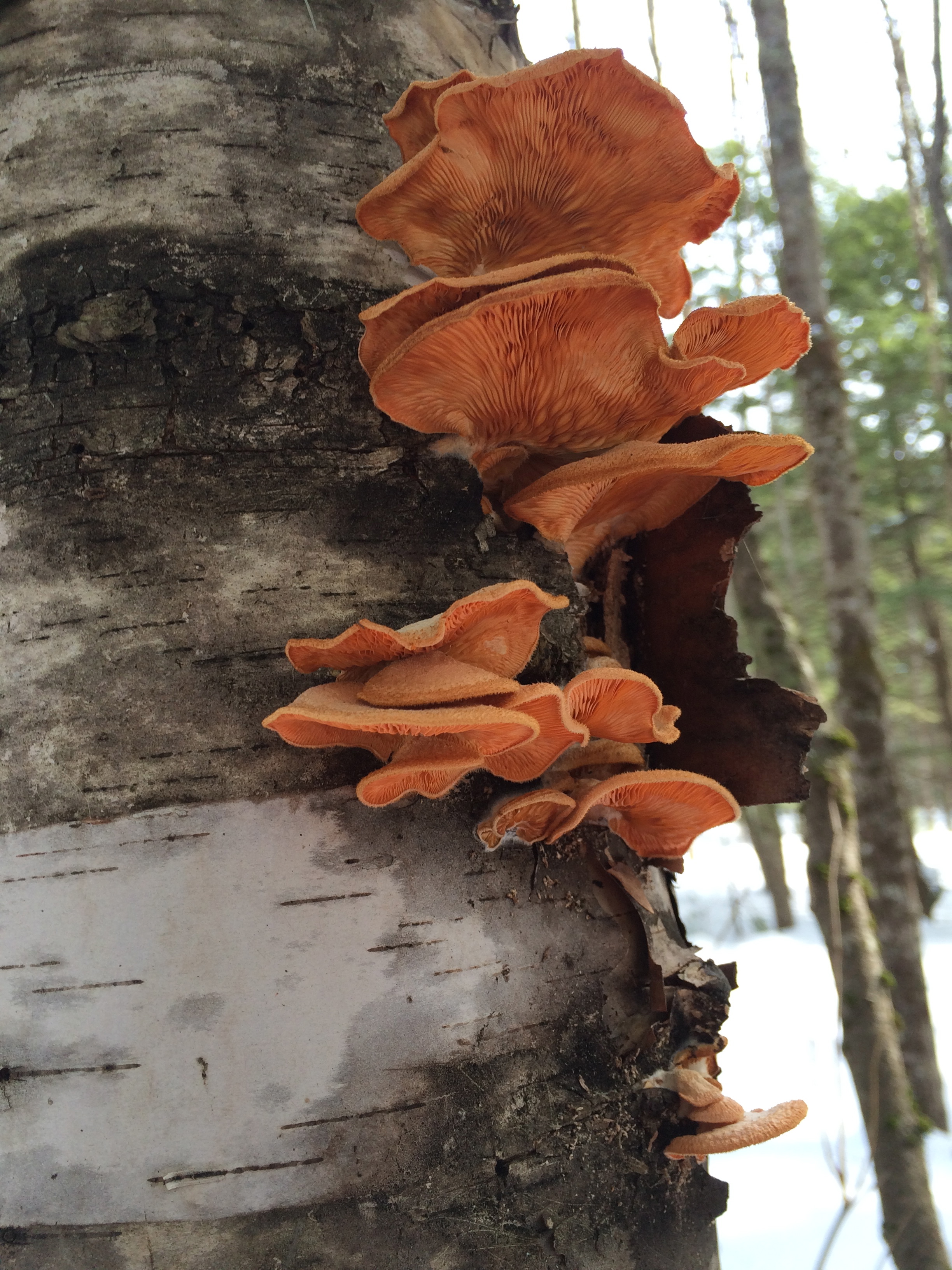
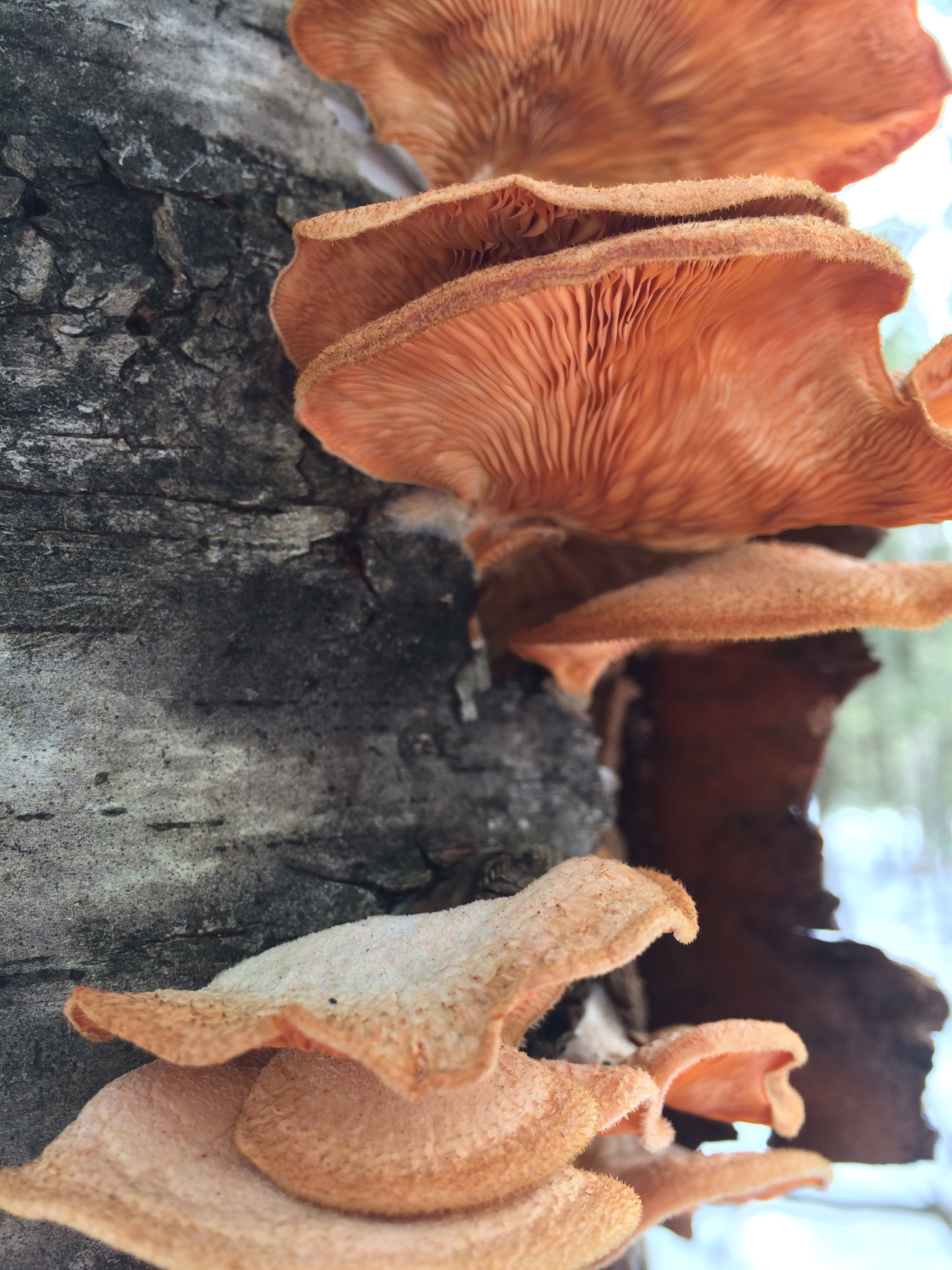
Panellus stipticus, commonly known as bitter oyster, the astringent panus, the luminescent panellus, or the stiptic fungus

IMG_2620

IMG_2630

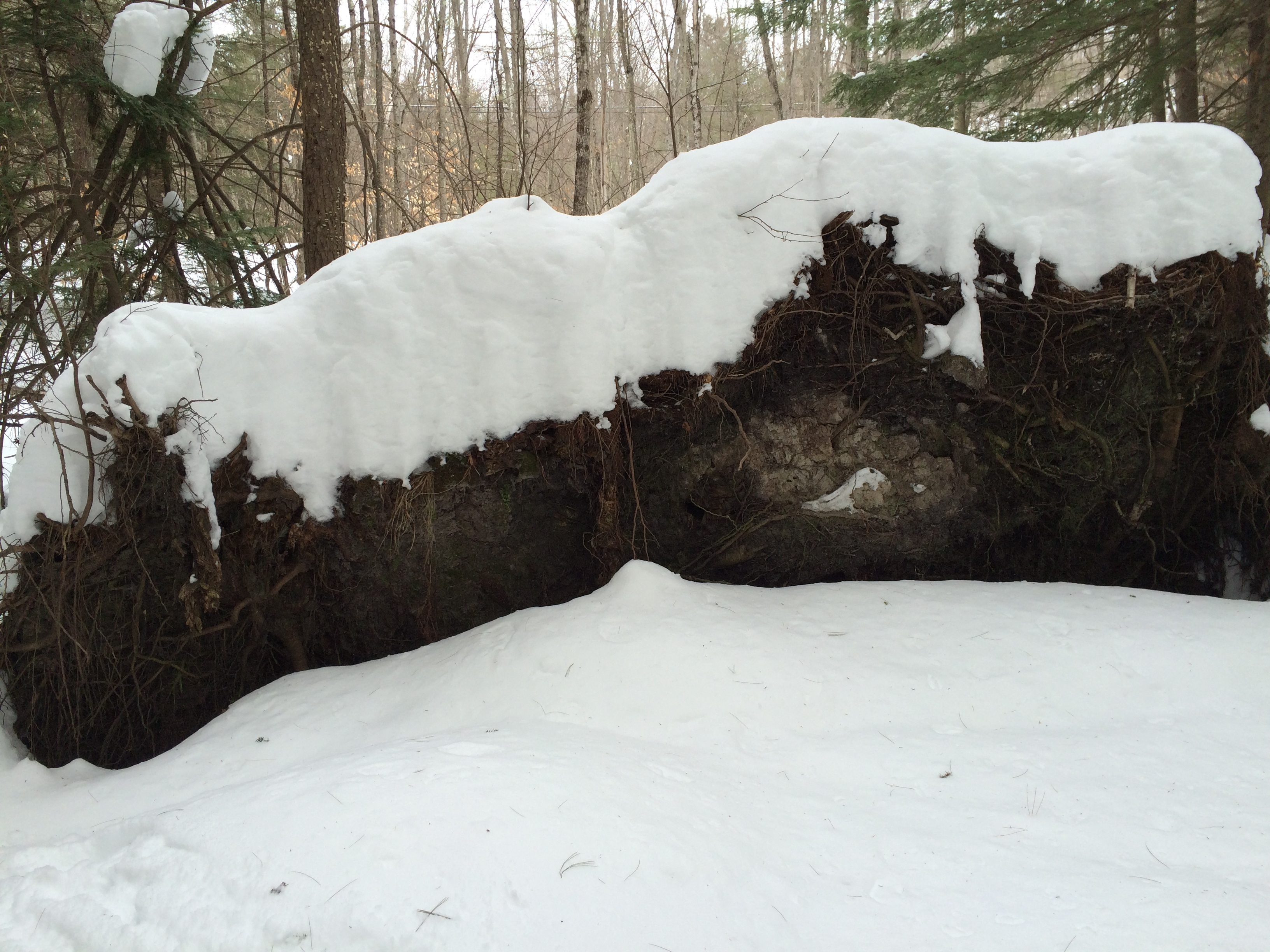
This looked like a boulder, from a distance

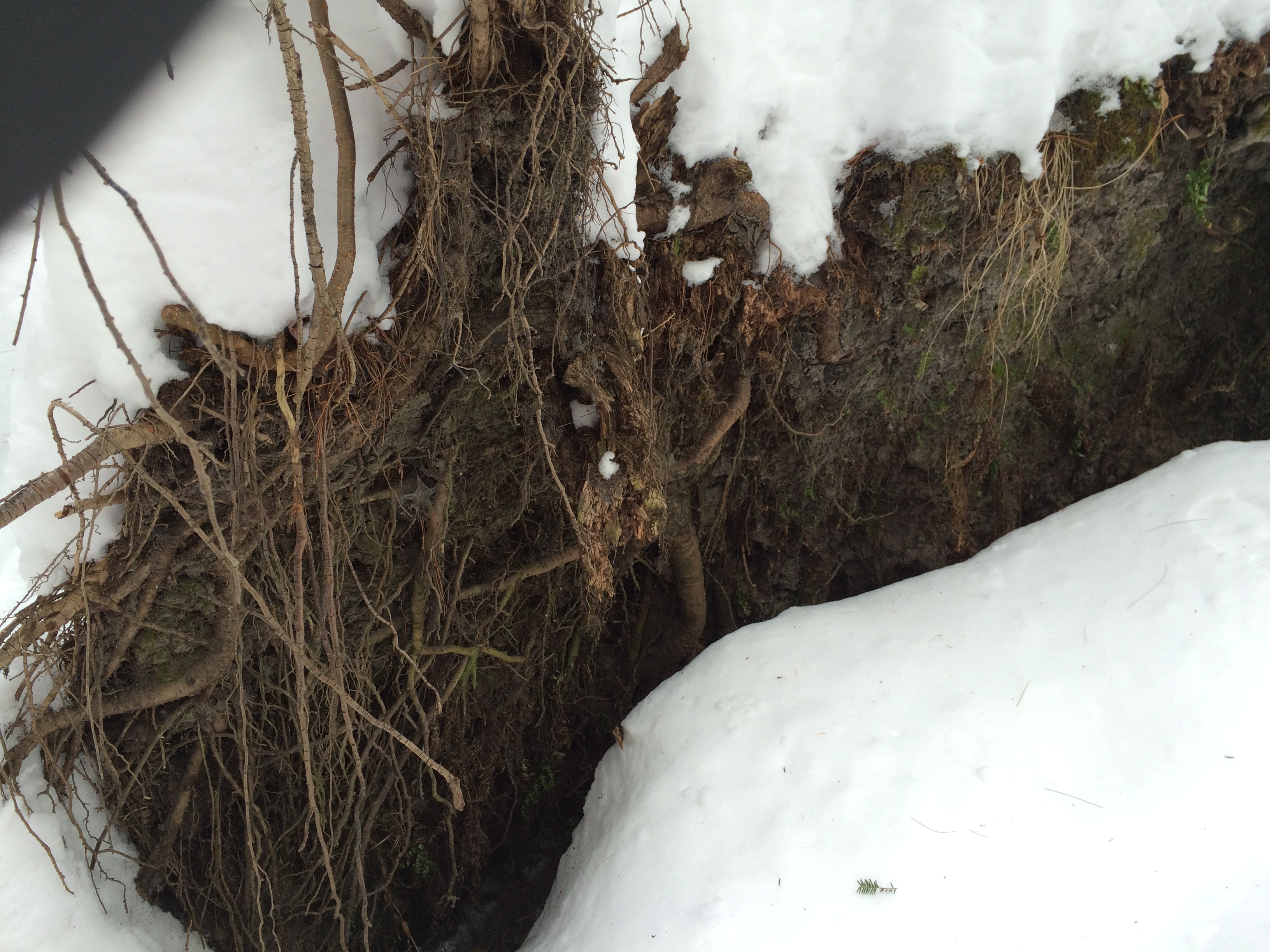
IMG_2631

Closer inspection revealed an uprooted tree

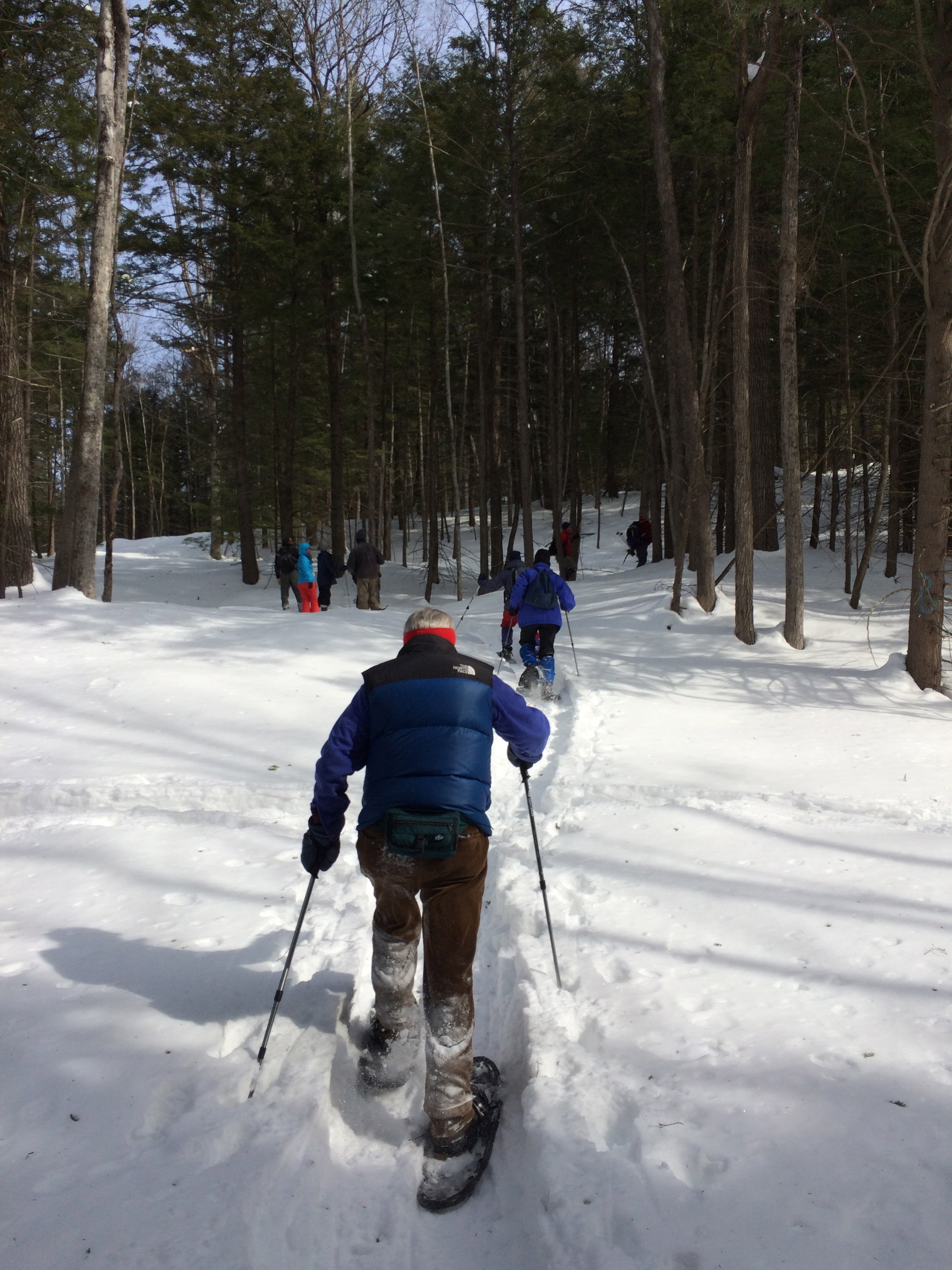
Here, a modest incline approaching the final leg of the hike:

IMG_2623

We headed home posthaste after the three hour excursion, having worked up quite an appetite.  The faint scent of woodsmoke lingered on well into the afternoon….

A complete schedule of winter hikes can be found on the                    Sunapee Ragged Kearsarge Greenway website: http://www.srkg.com/calendar-2/.


DARTMOUTH AIRES @ NEWPORT OPERA HOUSE

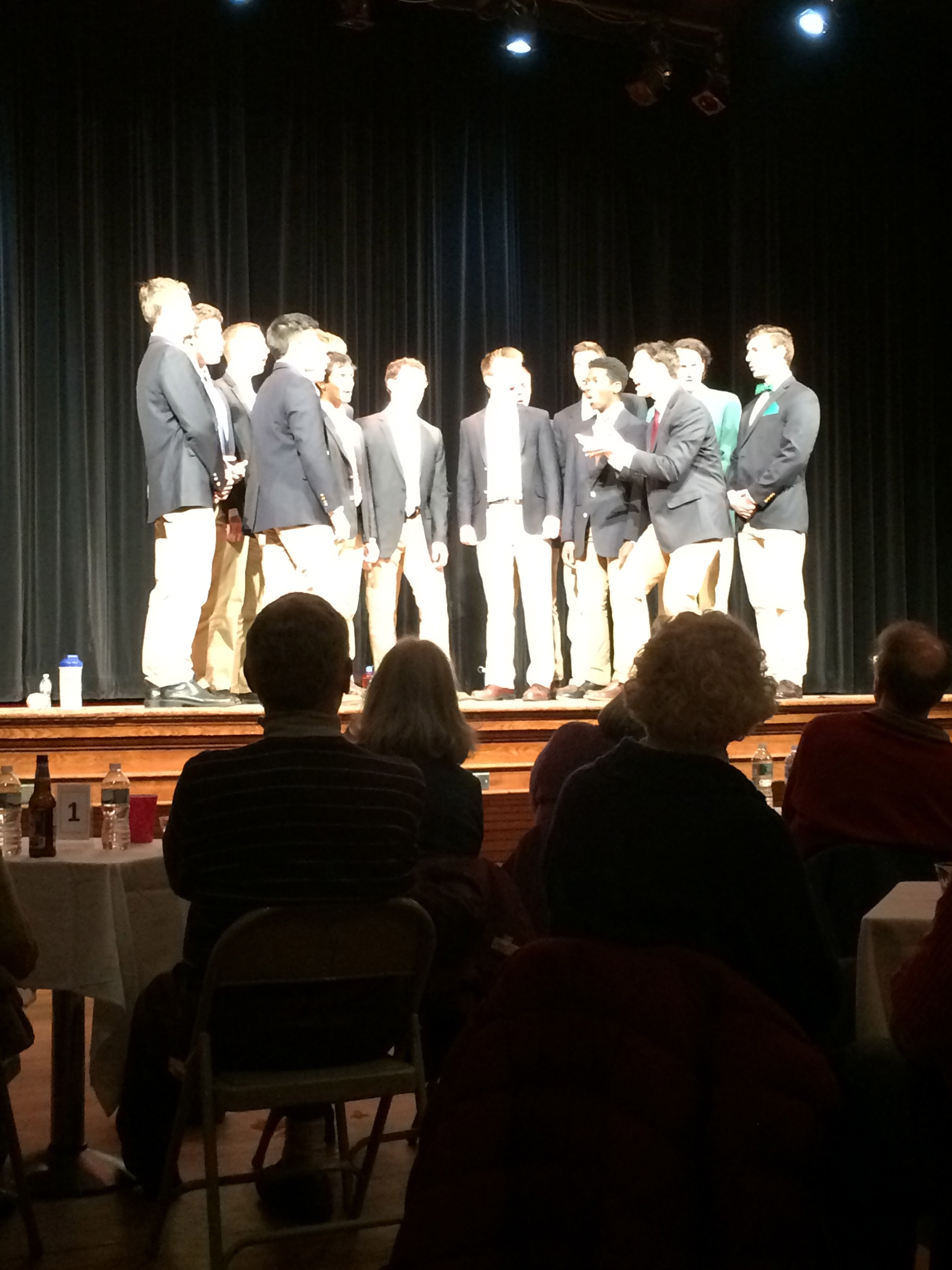
IMG_2334

The Dartmouth Aires, sans facial expressions due to stage light glare and impromptu, low quality iphone photo.

If one must venture out into a blizzard, spending Valentine’s Eve with the Dartmouth Aires is acceptable grounds for doing so.  Newport Opera House hosted the always lively, all-male a cappella group for the evening amidst a surprisingly generous turnout given weather and driving conditions.  (Starting late yesterday afternoon, well over yet another foot of snow fell across most of southern NH – Newport being no exception).

But the mood inside was spirited and the Aires made all forget (at least for a time) about the raging storm, as they regaled us with their own versions of everything from Taylor Swift’s “Blank Space” (“A song you’ve probably all heard and don’t like”,  we were cheerfully warned by the group’s leader) to the old classic, “Hanover Winter Song”.   The performance opened with Katy Perry’s “Dark Horse” and closed fittingly with “Dartmouth Undying”.  Peppered in-between were delightfully waggish renditions of pop favorites past and present – Mark Ronson’s “Uptown Funk” a particular standout.

IMG_2346

In more colorful garb – post intermission wardrobe change

Even the individual member introductions held halfway through the performance were appropriately self-deprecating: “I’m currently a sophomore at Dartmouth majoring in Rocket Engineering –  not exactly ‘rocket science’ “, offered one.  “I’m double majoring in Government and ‘Sucking Up’ “, quipped another.

While there, we picked up a copy of “Dartmouth Undying  – A Tribute to our Alma Mater”, which sustained us on the blustery, 20 mph drive back home.  Let It Snow!

The Aires perform weekly on-campus, in addition to a number of venues, mostly across the Northeast.  http://www.dartmouthaires.com is the place to go for up to date information on local events.


THE ENFIELD SHAKER SNOWSHOE FESTIVAL

IMG_2089

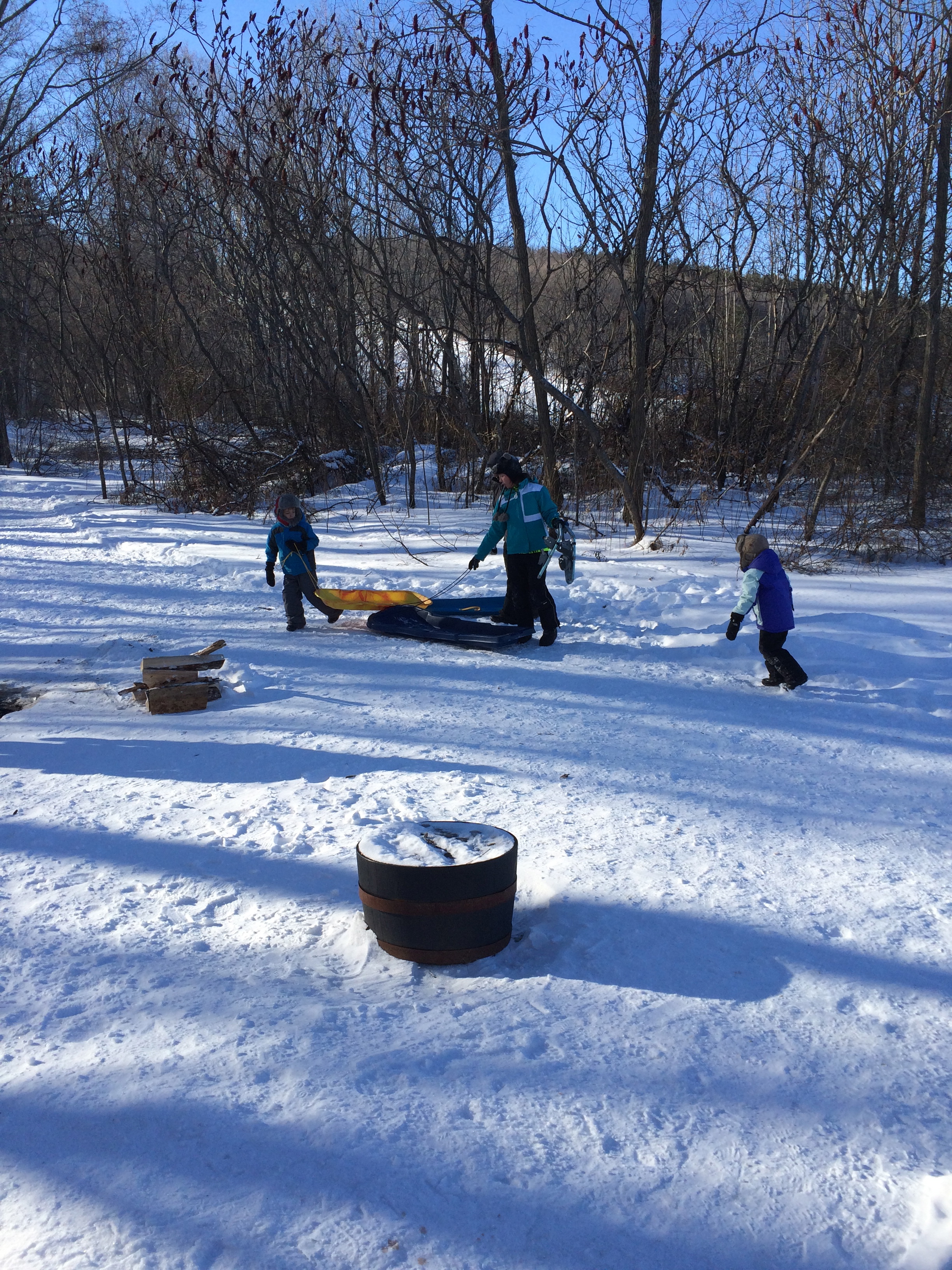
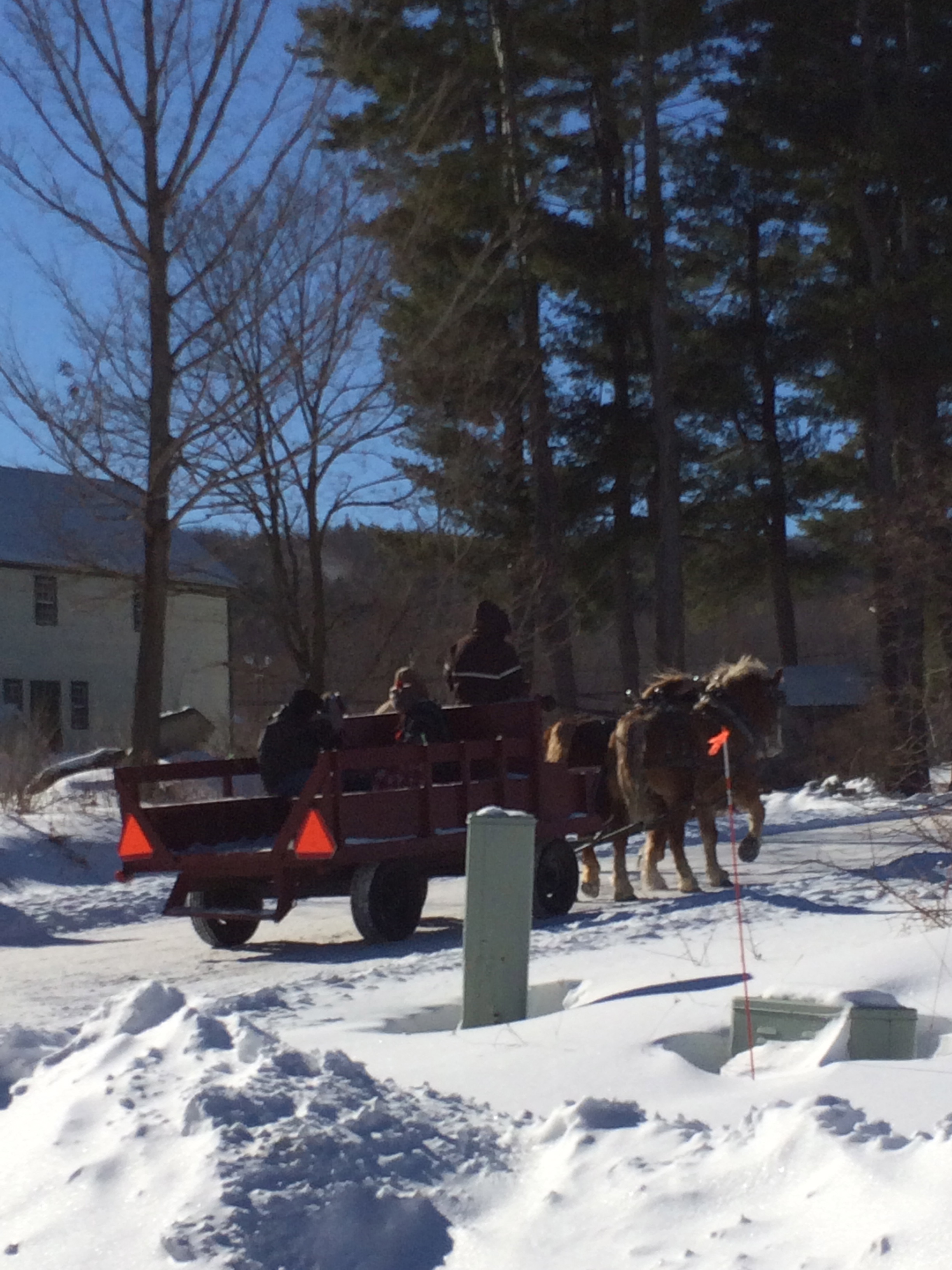
Last weekend, the Enfield Shaker Museum hosted its fourth annual Snowshoe Festival.  Horse-drawn sleigh rides, dog sledding and of course snowshoeing were all part of the day’s activities.  A scavenger hunt for children was held in the Museum and a representative from L.L. Bean offered snowshoe clinics to those who braved the frosty temps and high winds.  Clear, blue skies hovered in striking contrast over the wintry landscape.

Some images from the day:

IMG_2035

Stopping to pet the sled dogs in between rides

IMG_2086

Checking the harnesses…

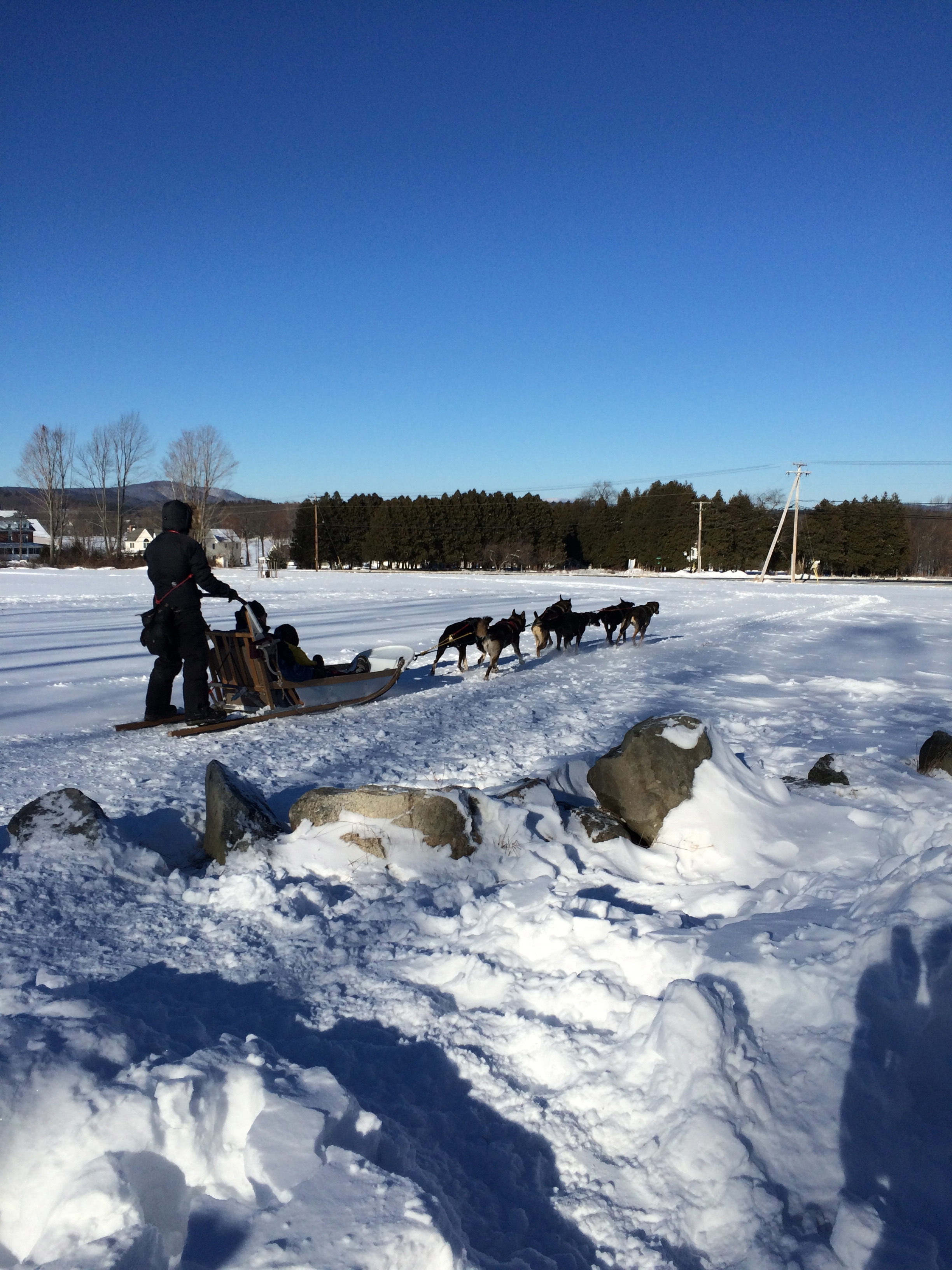
Takeoff

…and takeoff

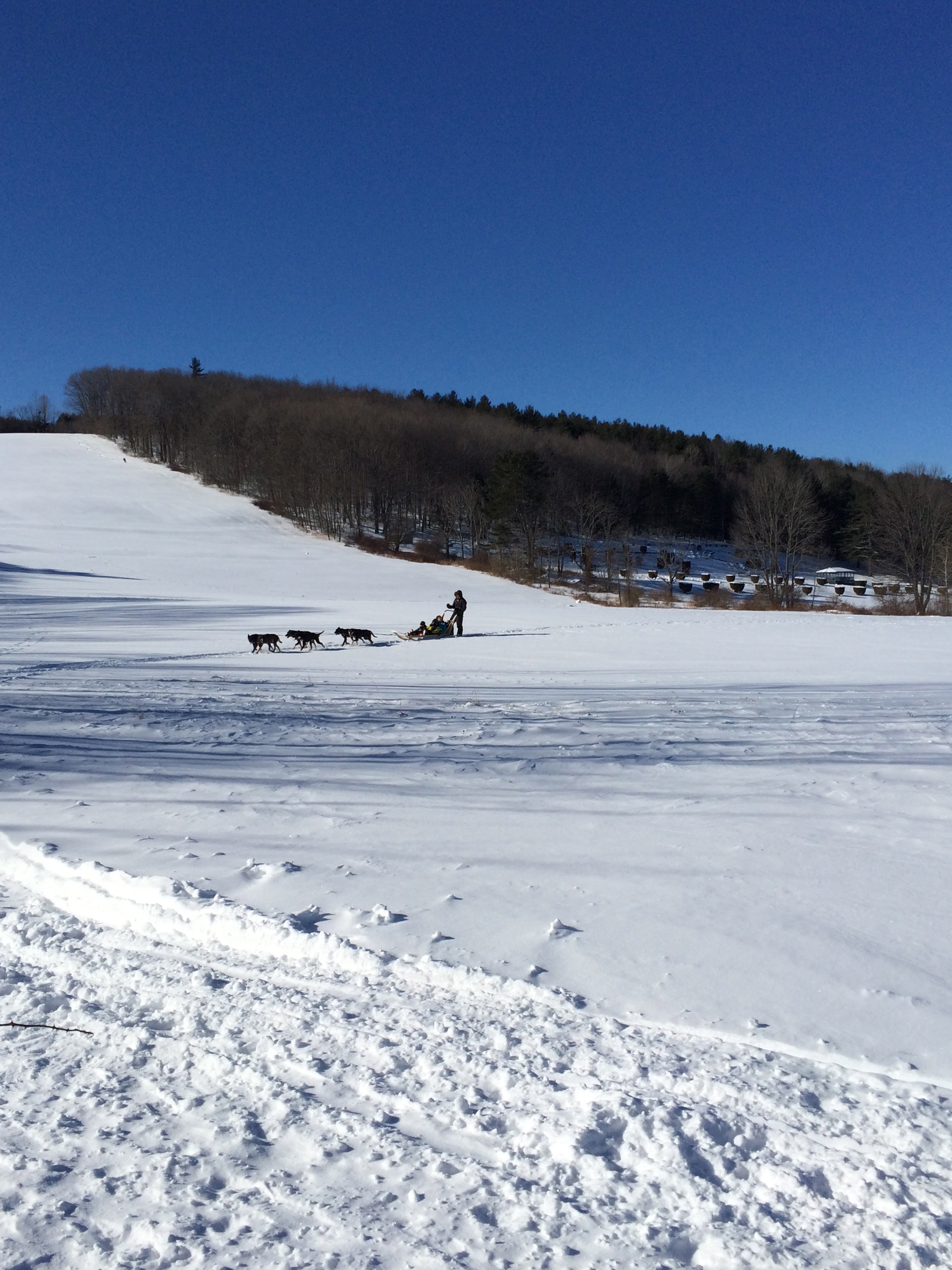
Originally, sled dogs were chosen for their size, brute strength and stamina, but modern sled dogs – as the ones above – are generally mixed-breed (‘Alaskan’) huskies who have been bred over generations for their endurance, strength, speed, tough feet, good attitude and appetites, and most importantly their desire to pull in harness and abilities to run well within a team.

IMG_2026

IMG_2083

Hauling snowshoes and sleds

IMG_2097

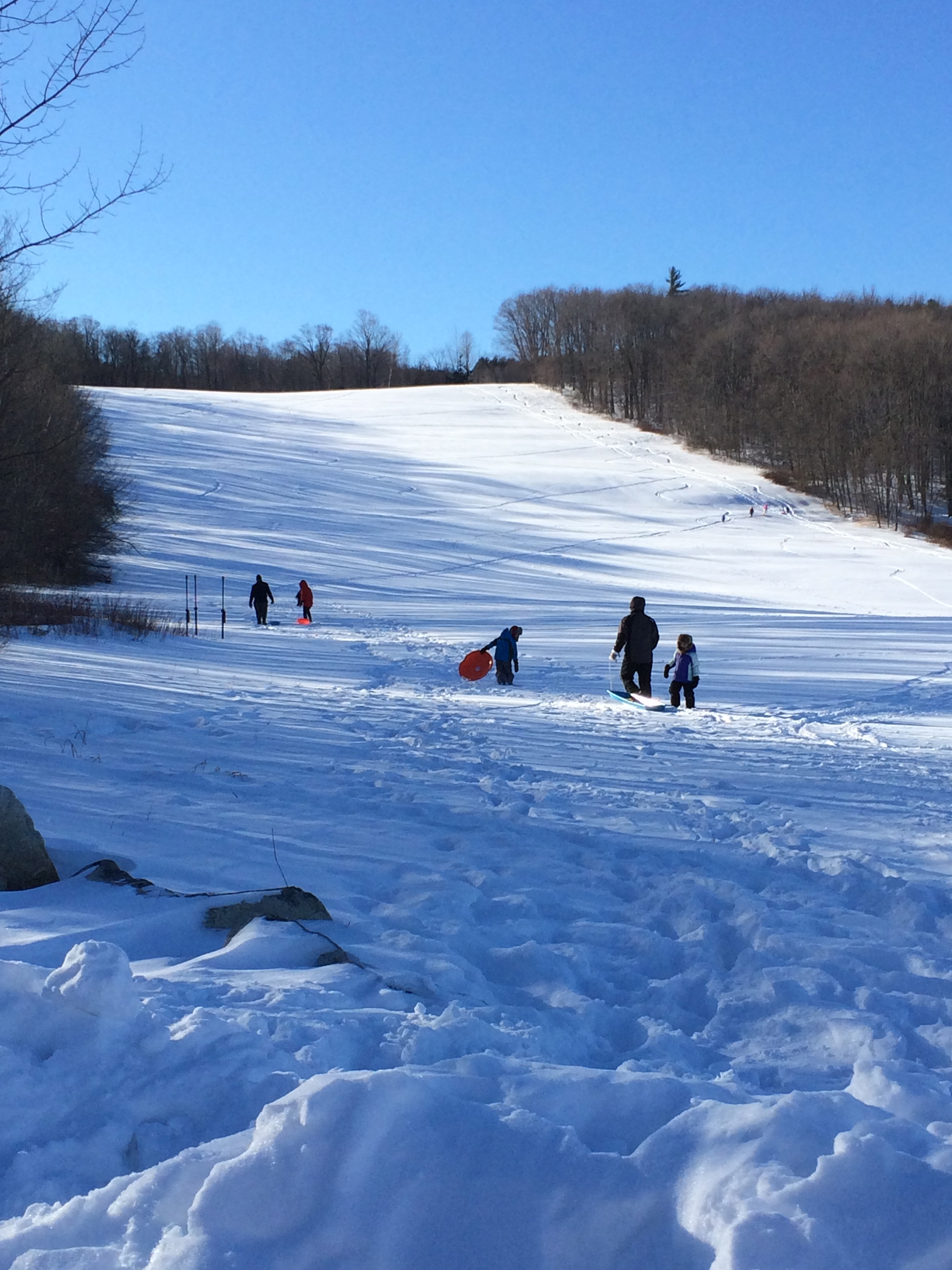
More adventurous souls took the ‘extended route’ to the top of the hill

IMG_2084

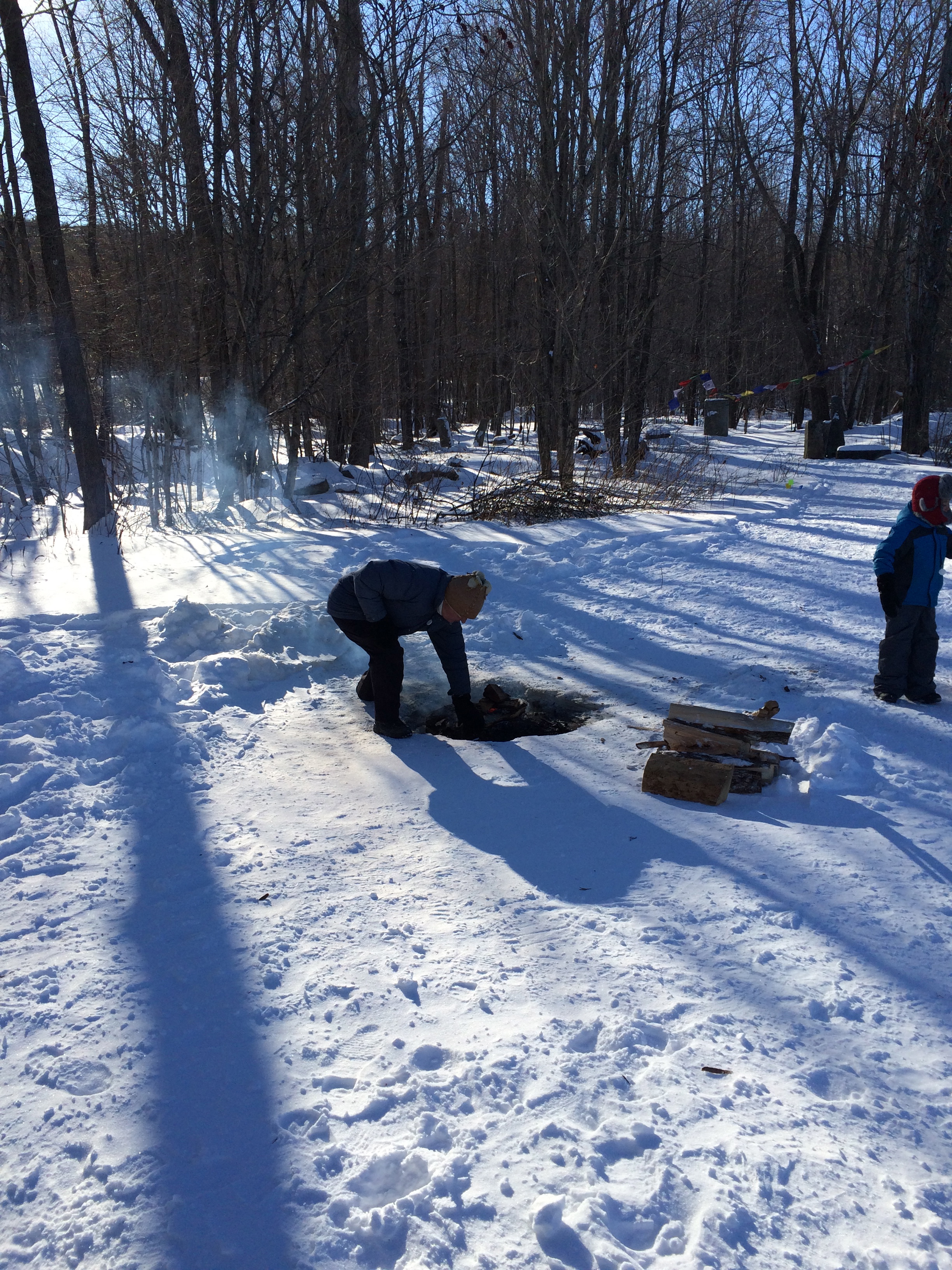
A volunteer tends to the fire pit

IMG_2015

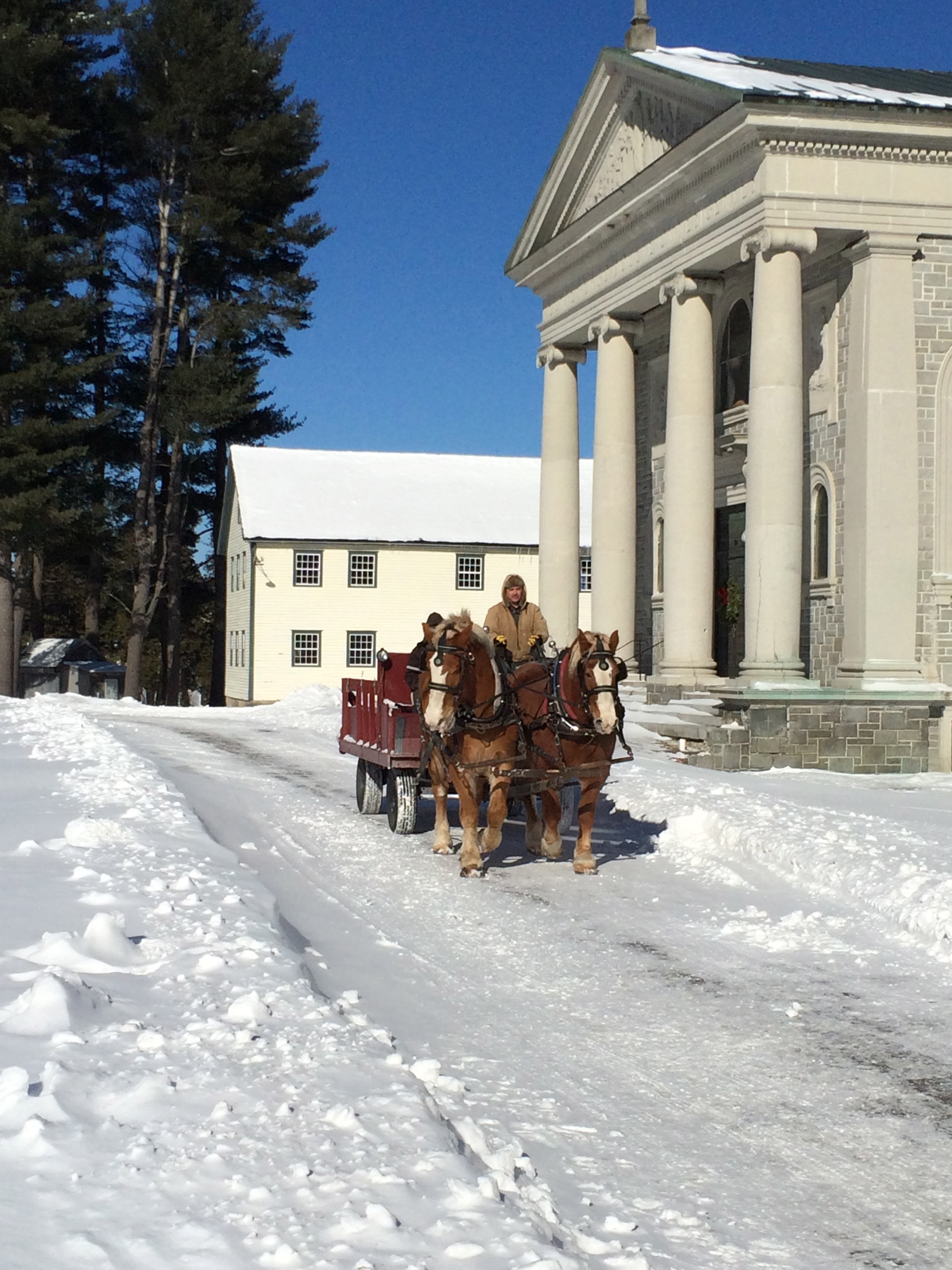
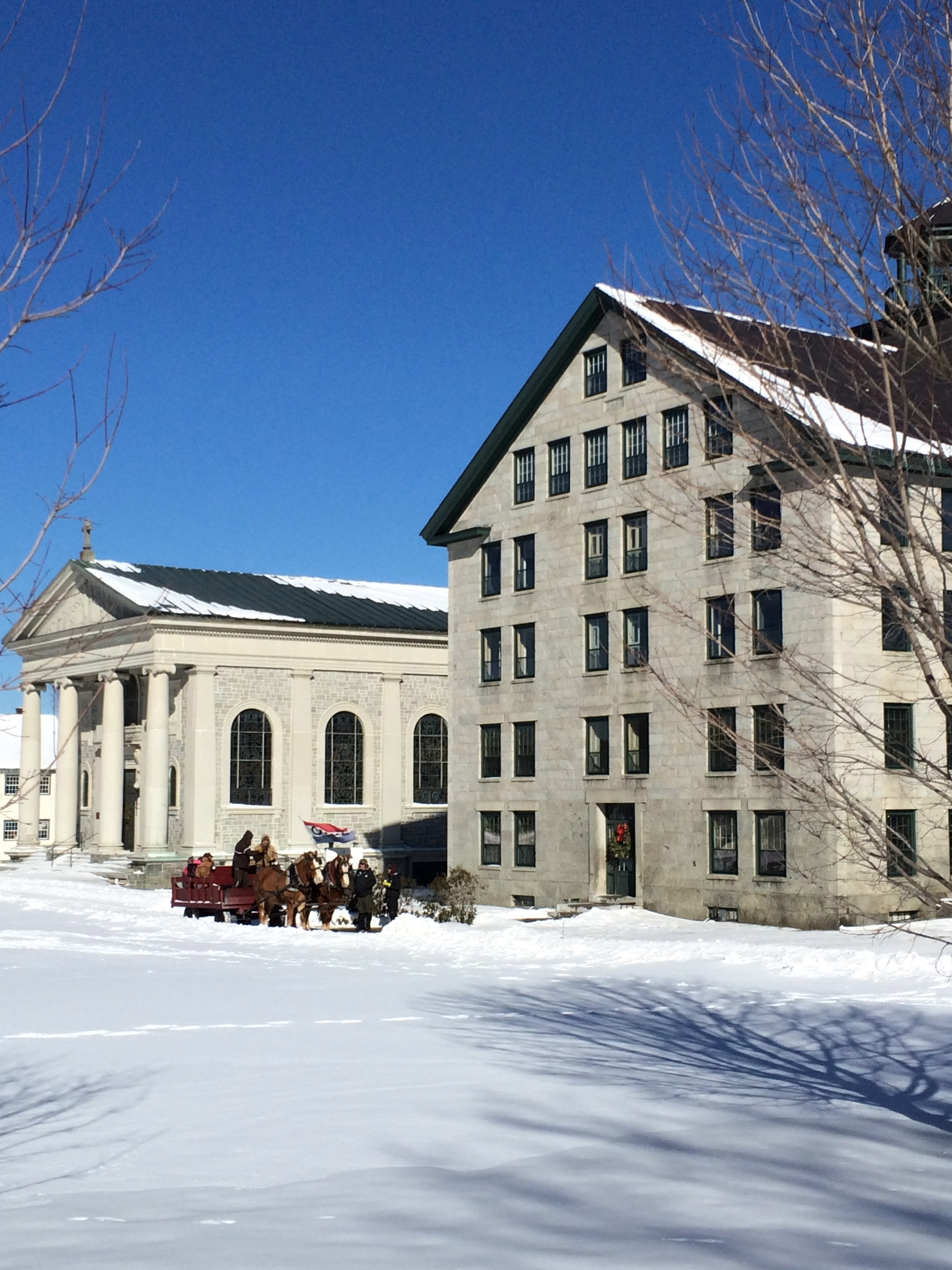
Horse drawn cart loops around the Mary Keane Chapel and the Great Stone Dwelling.

IMG_2022

The Great Stone Dwelling (on right), completed in 1841, was the greatest architectural achievement of the Enfield Shakers and the largest Shaker dwelling ever constructed. It now houses much of the Museum’s Shaker collections.

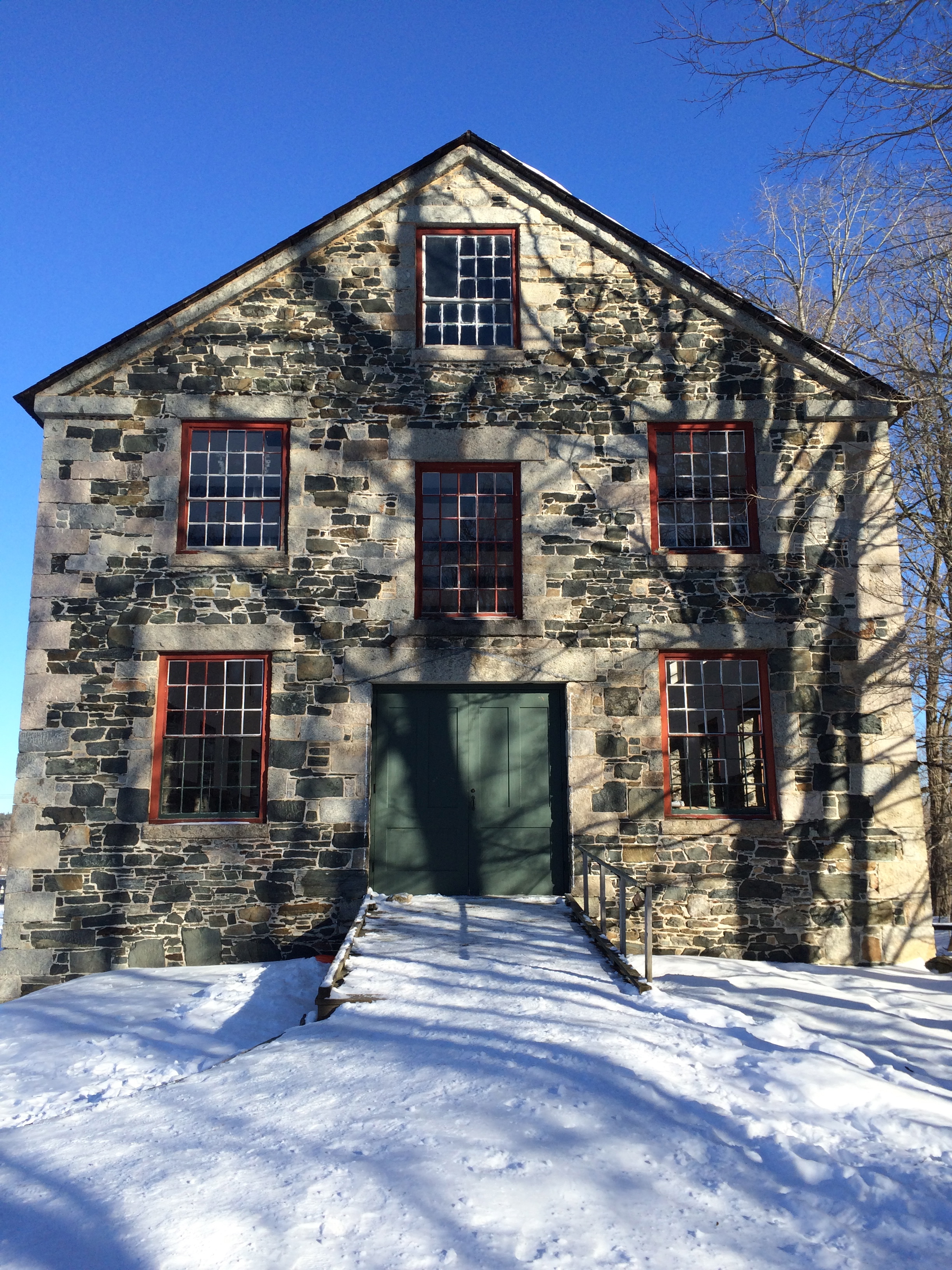
Standing opposite the Great Stone Dwelling is the Stone Mill – constructed in 1849 after its predecessor burned down on the same site. It once contained three stories of water powered machinery for a variety of trades.

IMG_2074

The Stone Mill

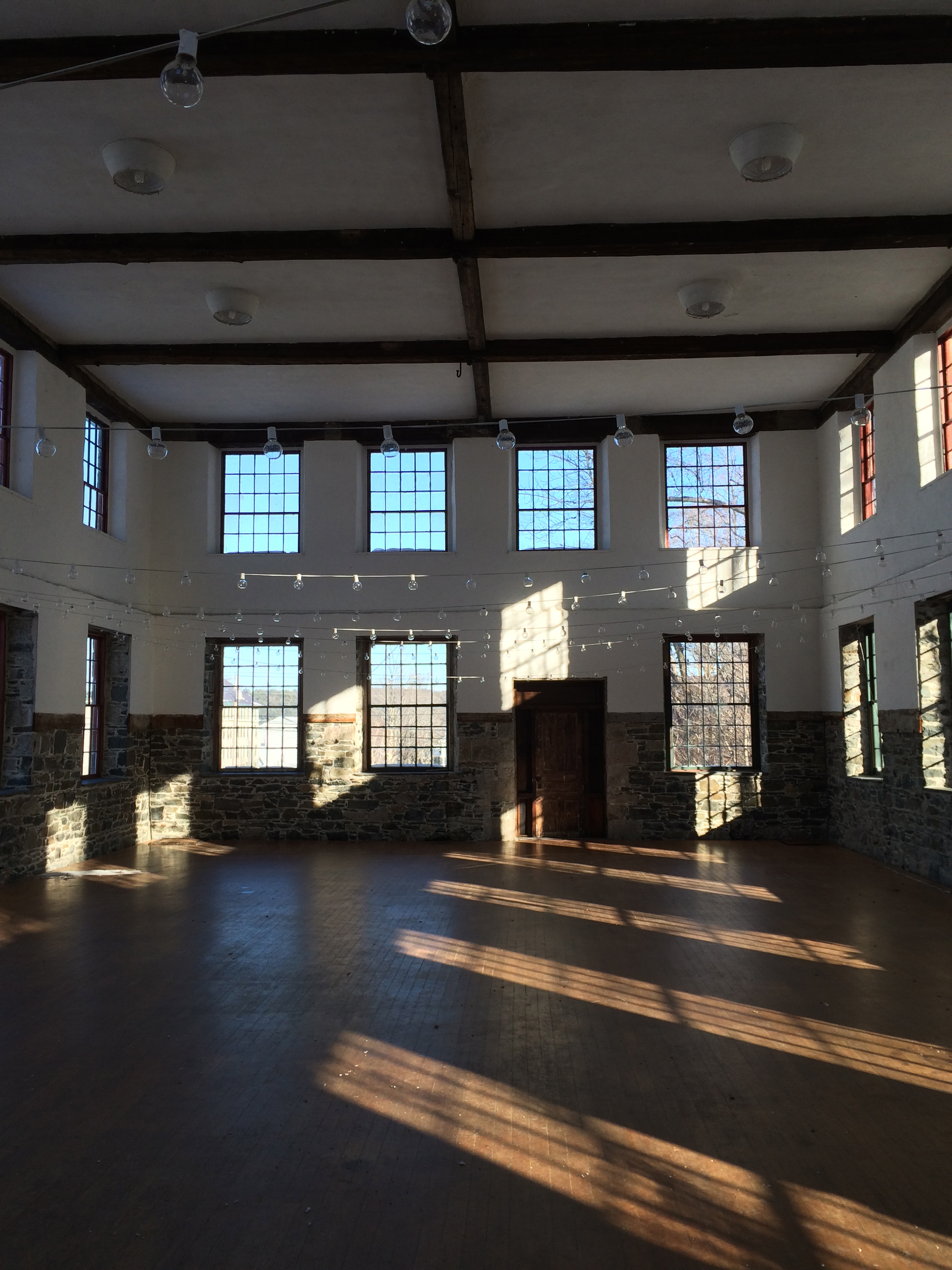
IMG_2076

Interior

IMG_2036

Snowshoes, briefly put aside in favor of respite indoors, line the interior wall.

Inside, homemade lunches, hot cocoa and coffee were available to those coming in from the cold:

IMG_2055

Chili, cheese & sour cream – a welcome winter trifecta

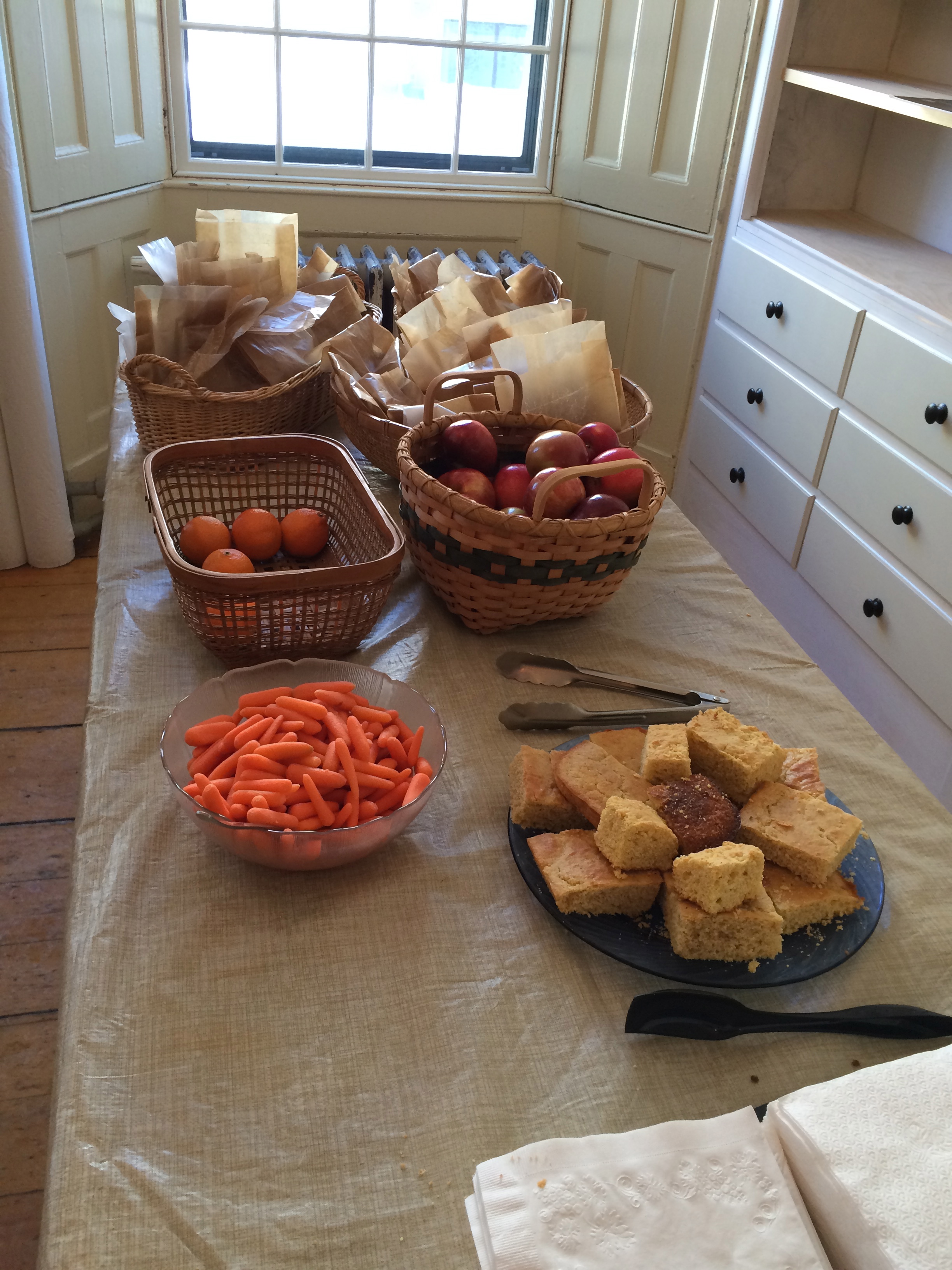
IMG_2057

Cookies, cornbread, fruits and veggies

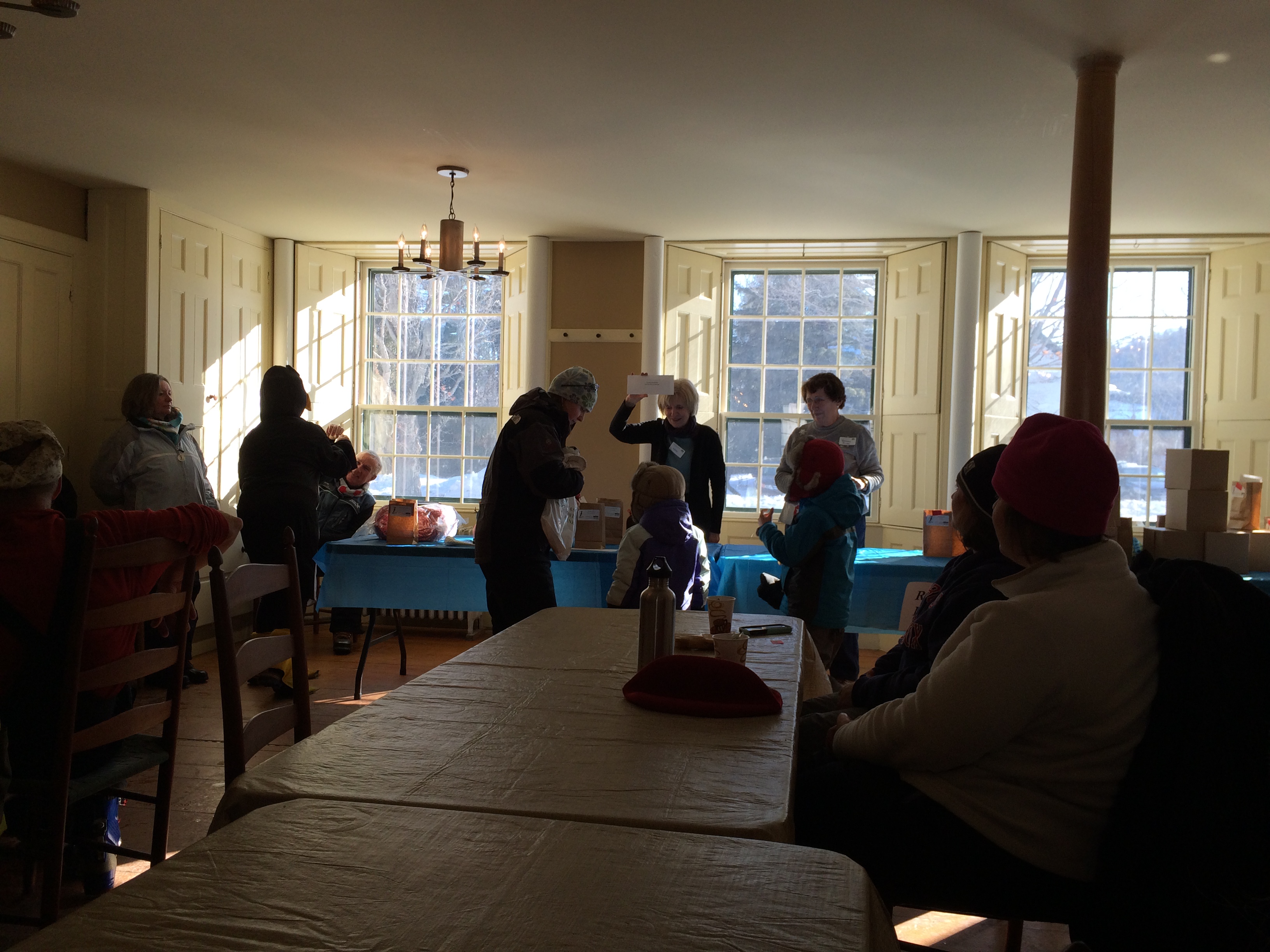
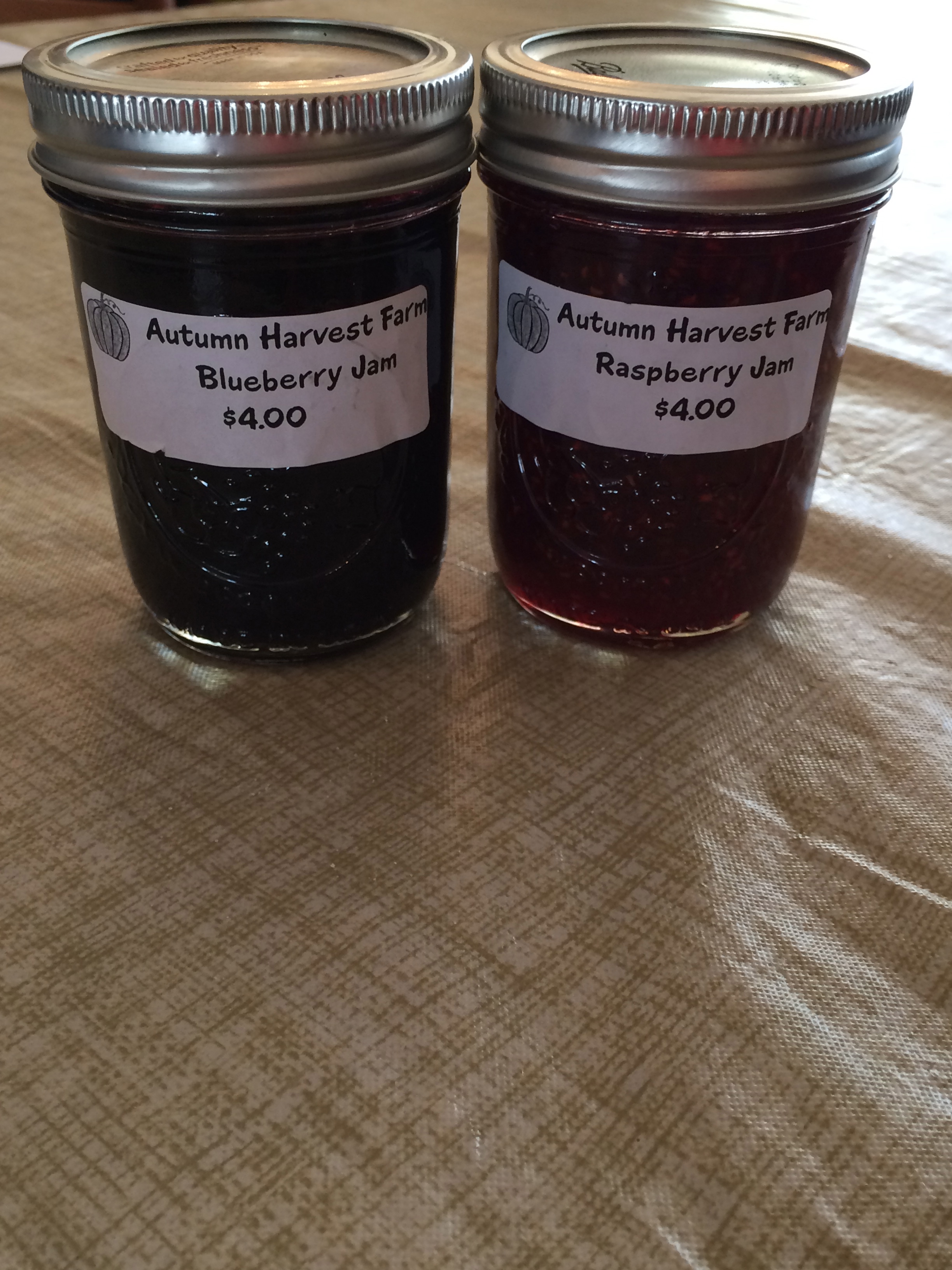
A raffle was held for the chance to win home-made mittens, scarves, jams, soaps, baskets, gift cards and other items:

IMG_2054

Announcing the winners

IMG_2044

We were the lucky recipients of some delicious berry jams

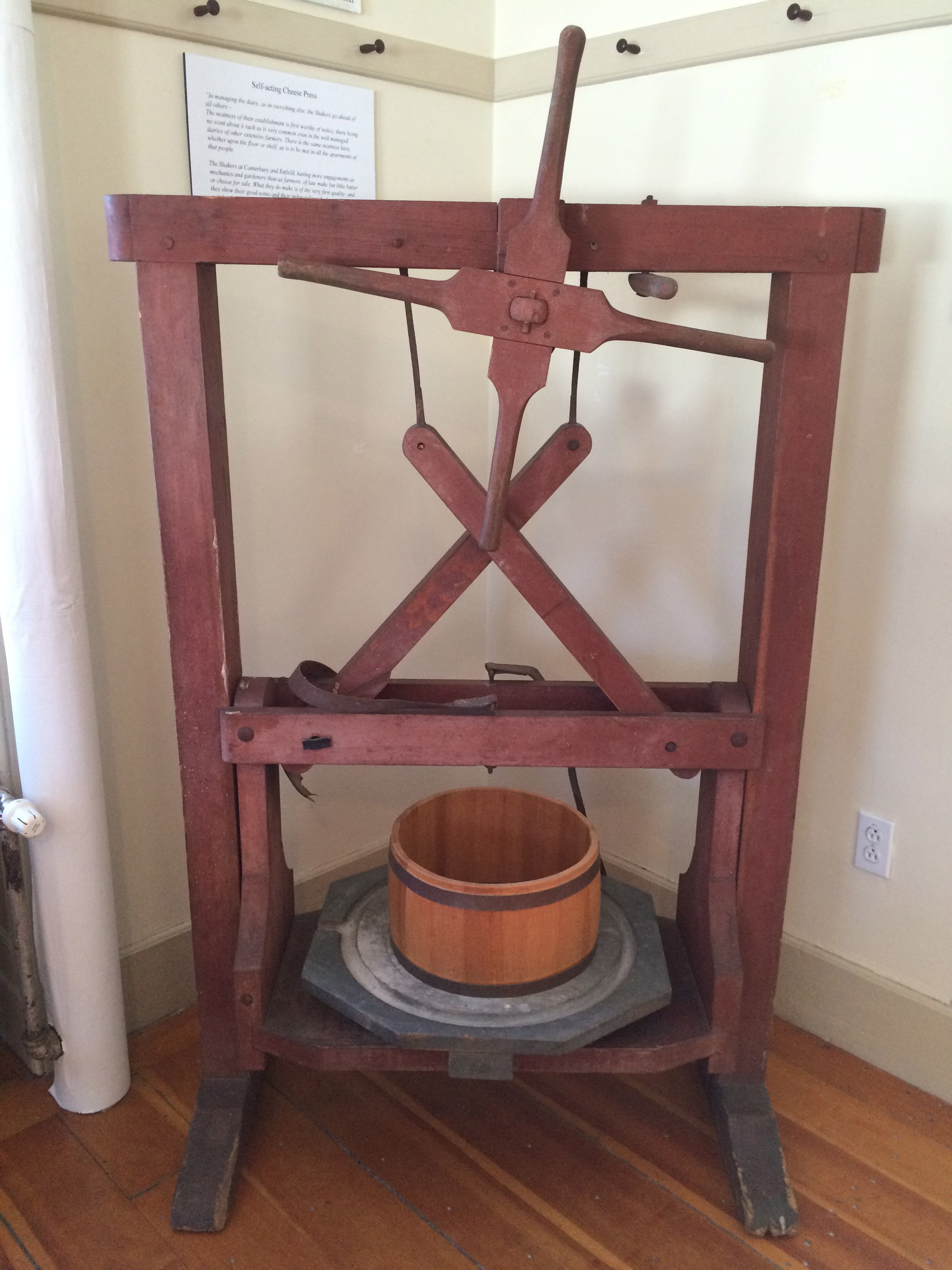
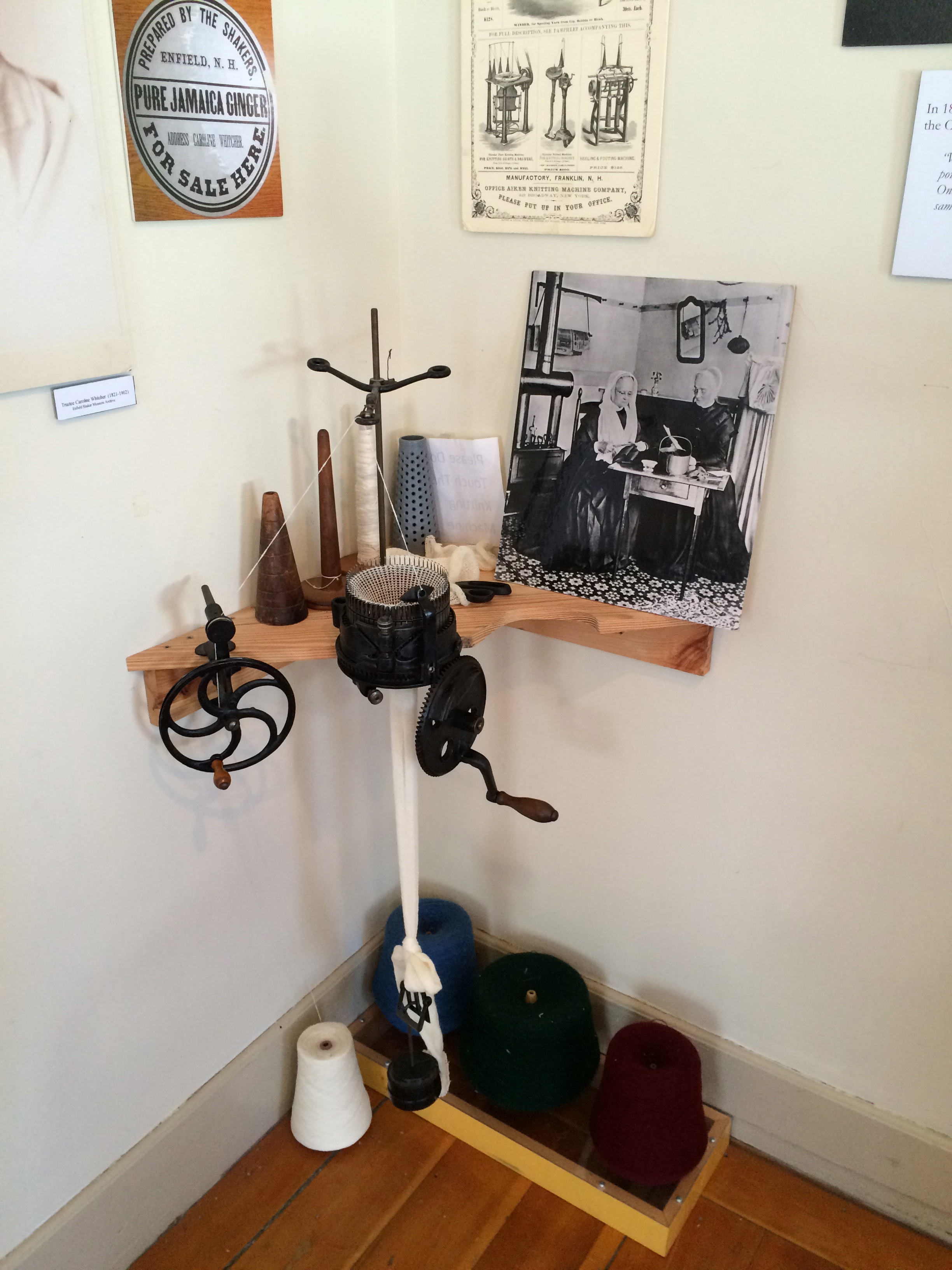
A post lunch, self-guided tour of the museum’s furniture, tools, clothing and other artifacts was in order.   It was interesting to contemplate the original use of some items prior to reading the provided information.

Here, a self-acting chess press

Here, a self-acting cheese press

An old knitting machine

An old knitting machine

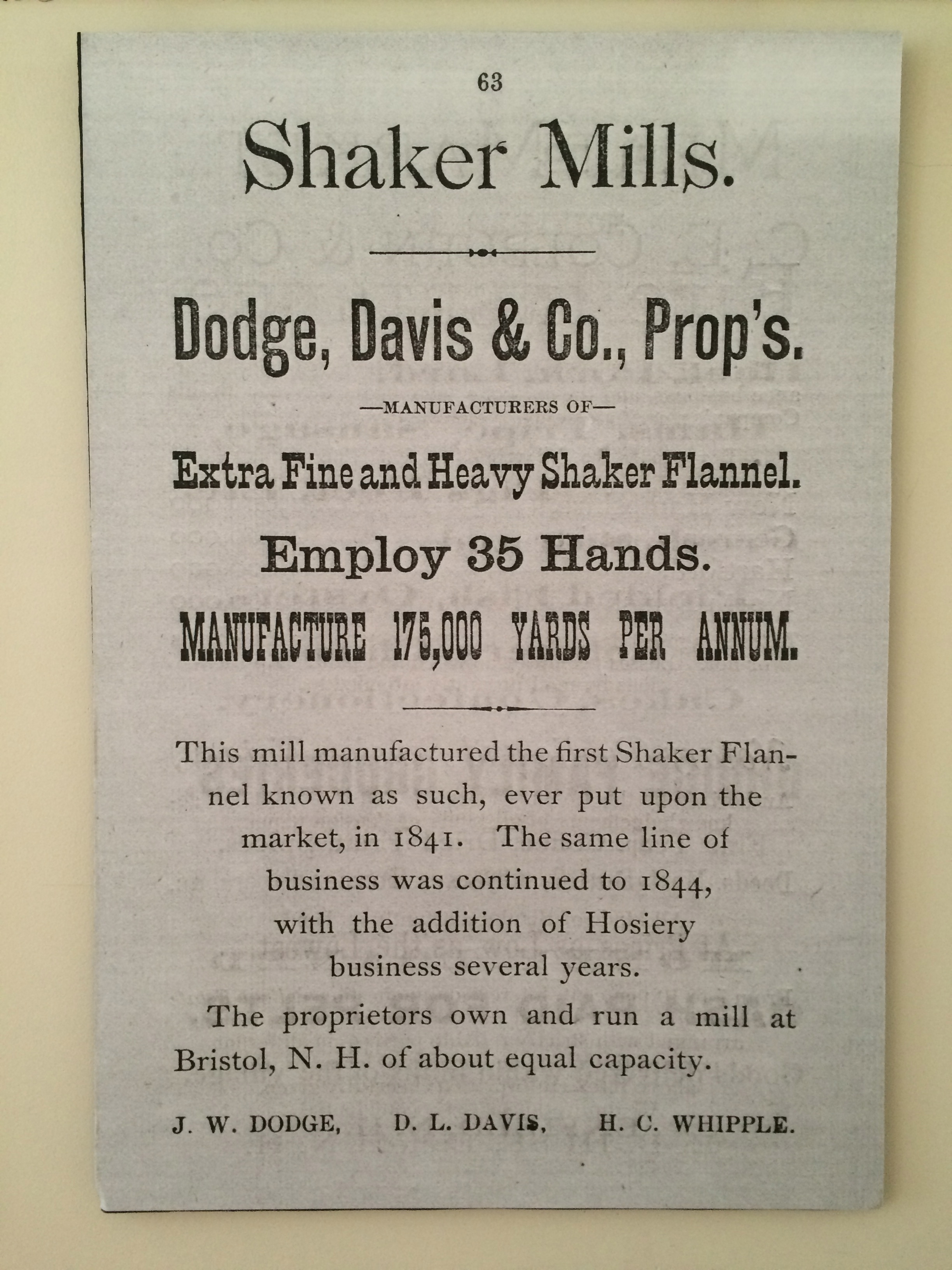
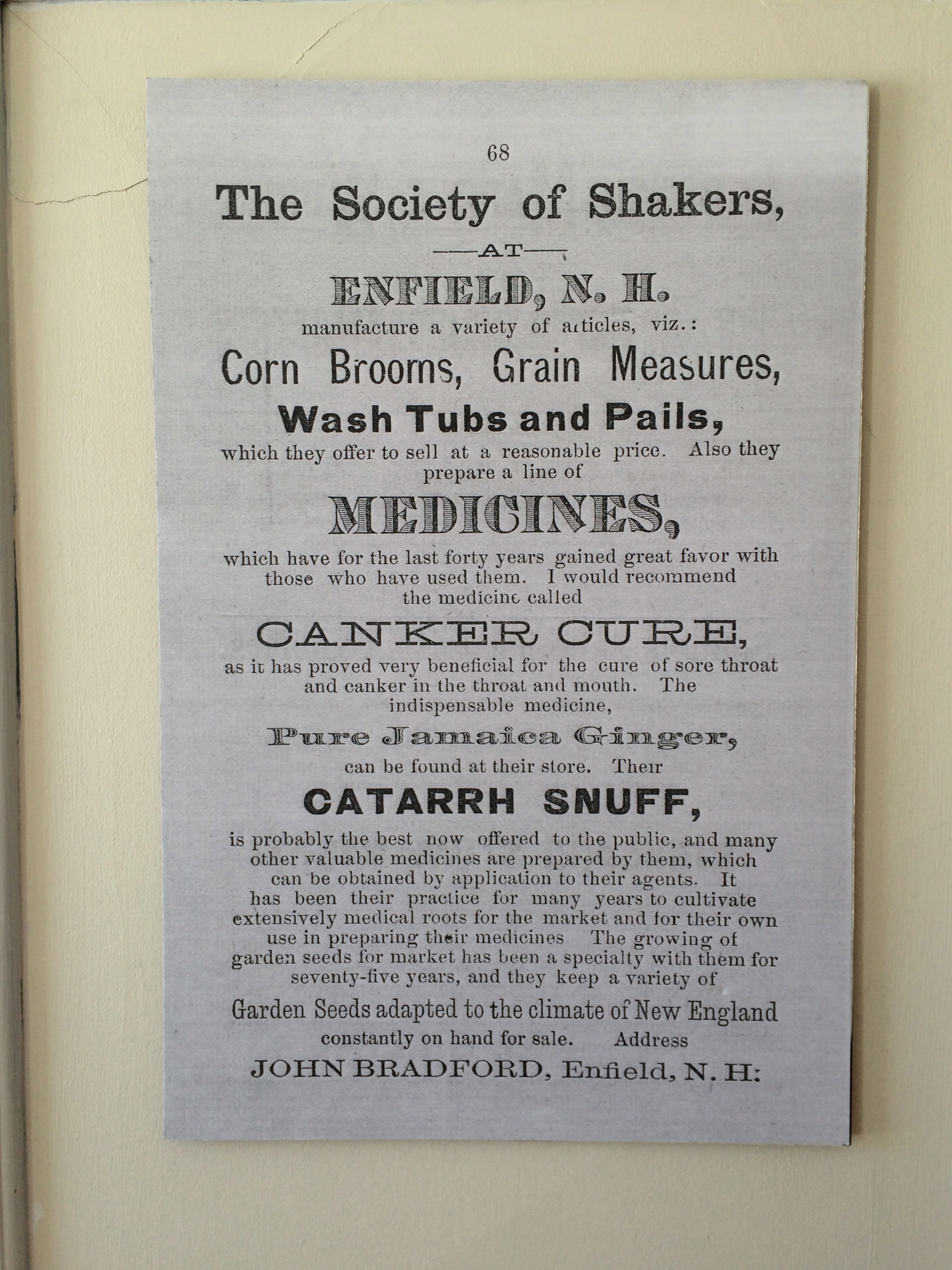
The Shakers produced a variety of goods including furniture, flannel, medicines and brooms, to name just a few.

IMG_1990

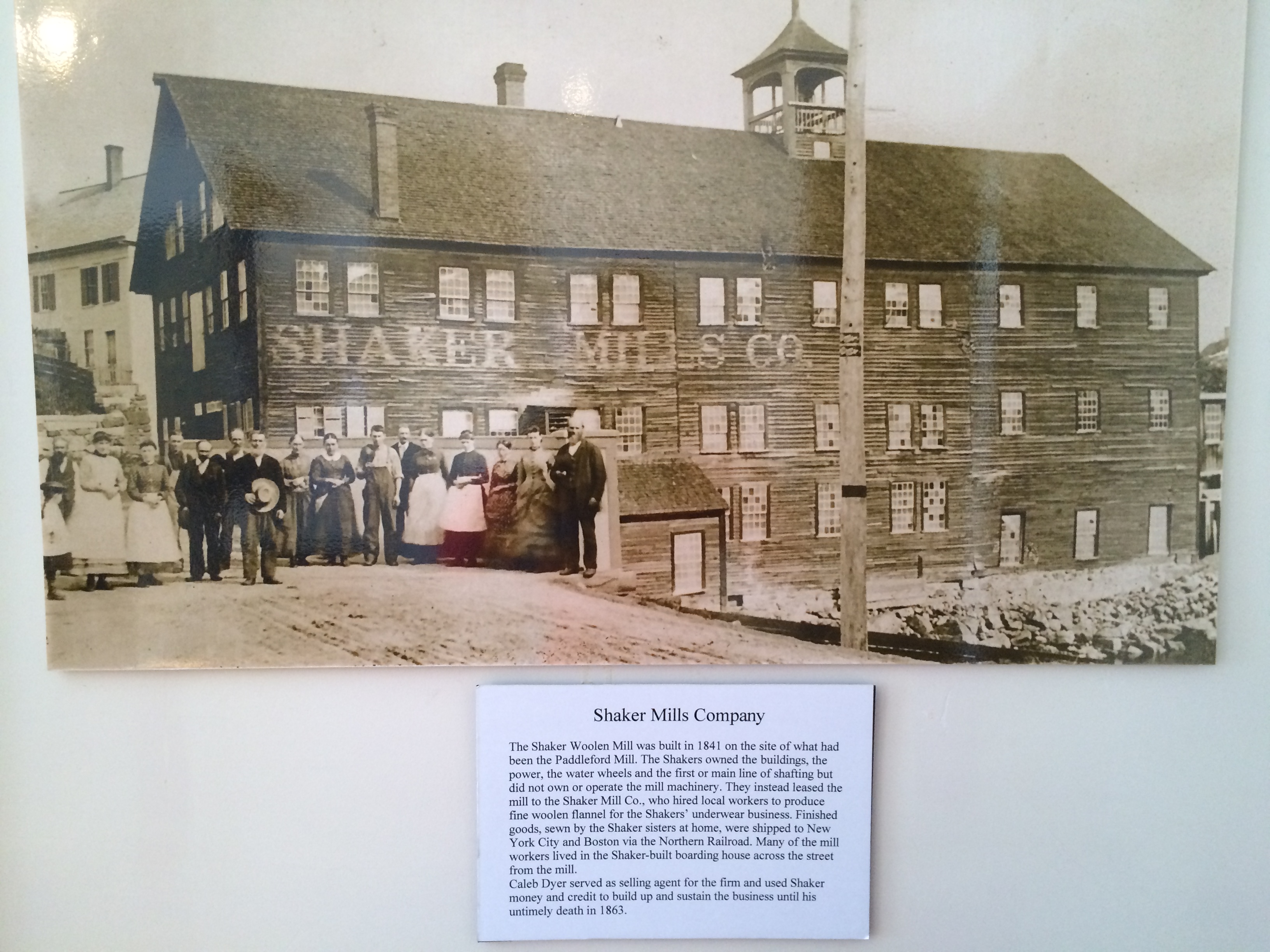
The Shaker Woolen Mill, built in 1841.

IMG_1992

IMG_1997

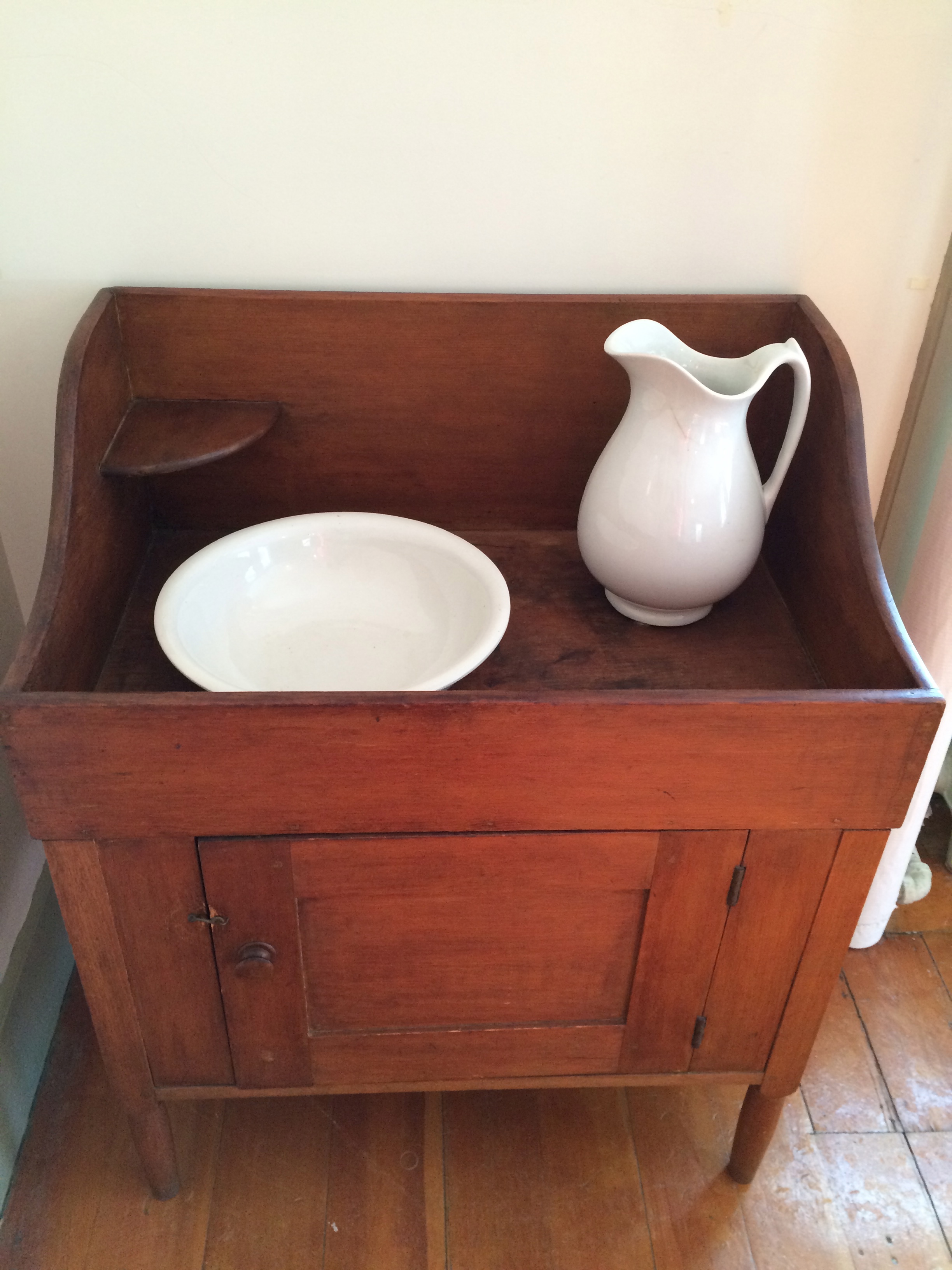
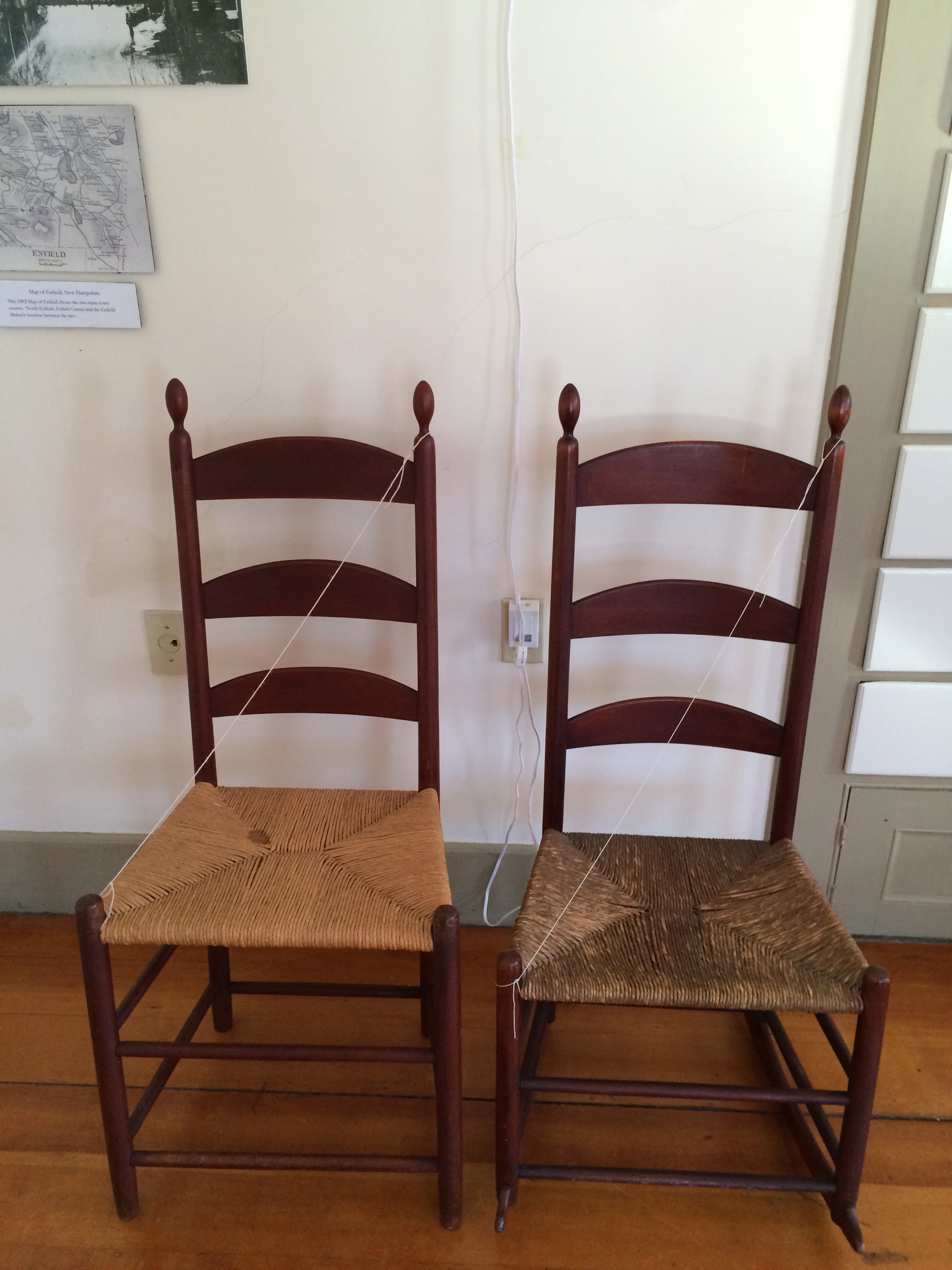
Shaker made wash basin and chairs:

IMG_1988

IMG_1986

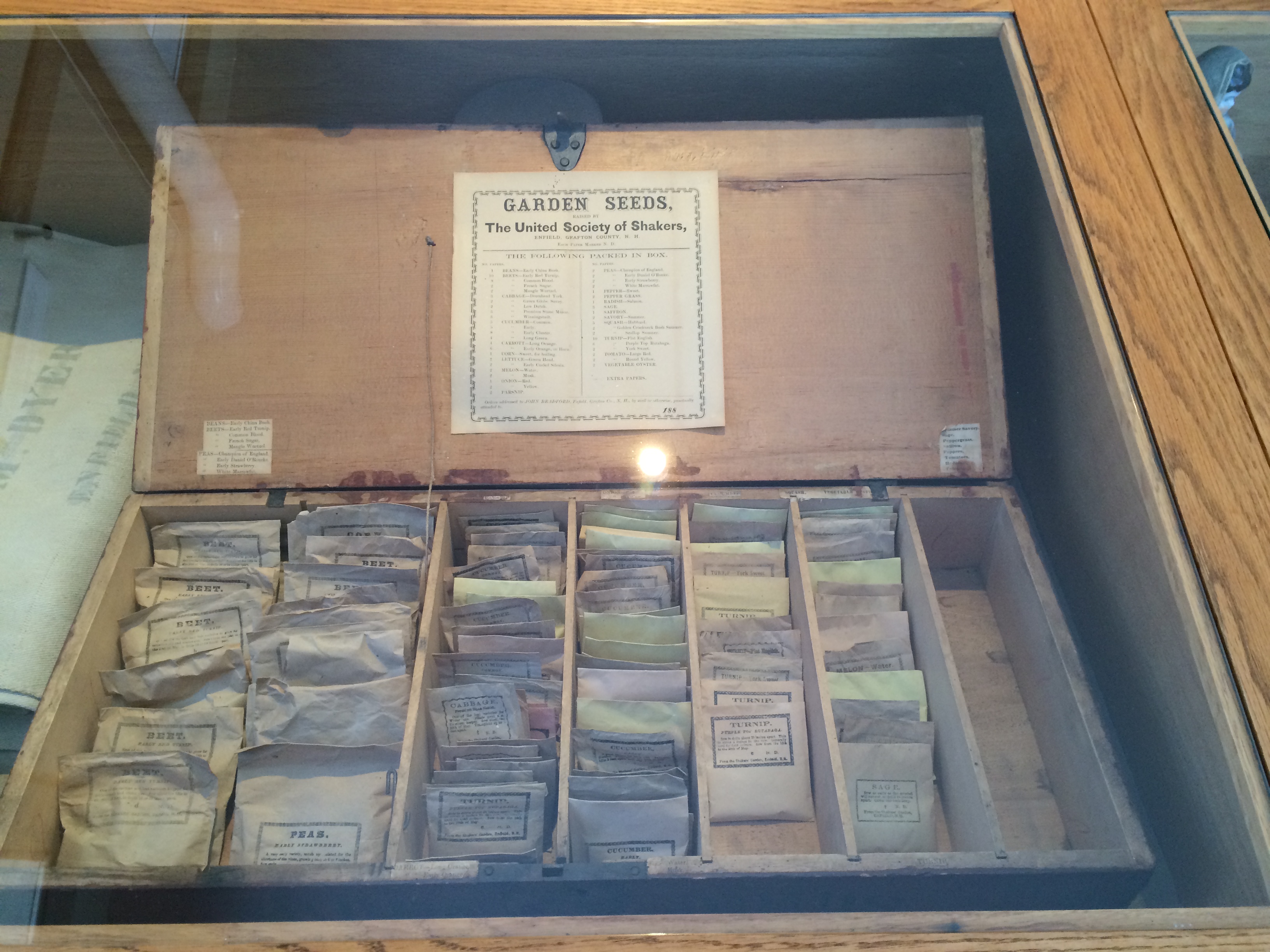
They were also skilled gardeners and the first, it is said, to sell seeds in small packets:

IMG_1999

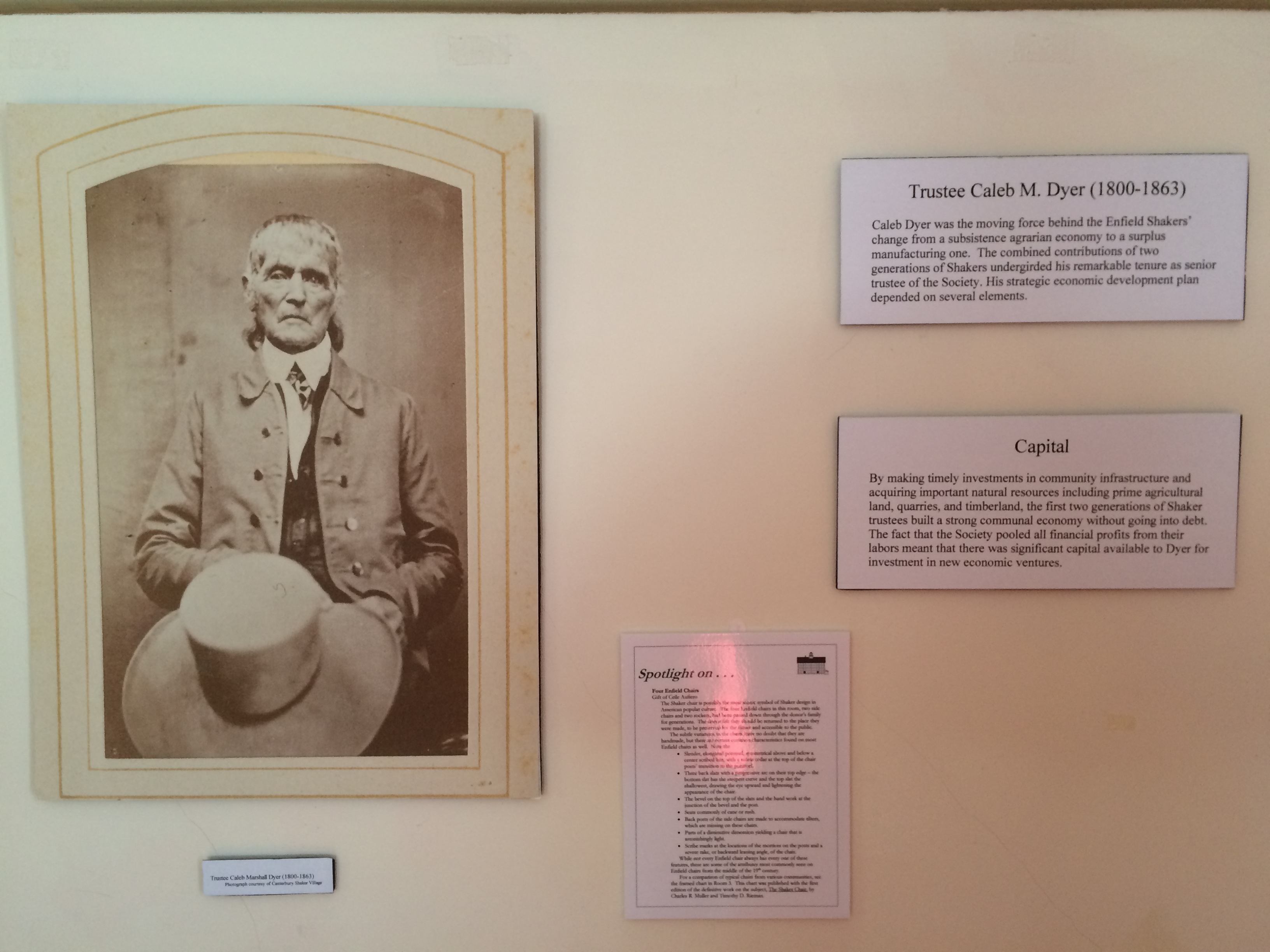
Caleb Dyer, the driving force behind the Enfield Shakers’ transition from a subsistence agrarian economy to a surplus manufacturing one:

Caleb Dyer (1800-1863)

Caleb Dyer (1800-1863)

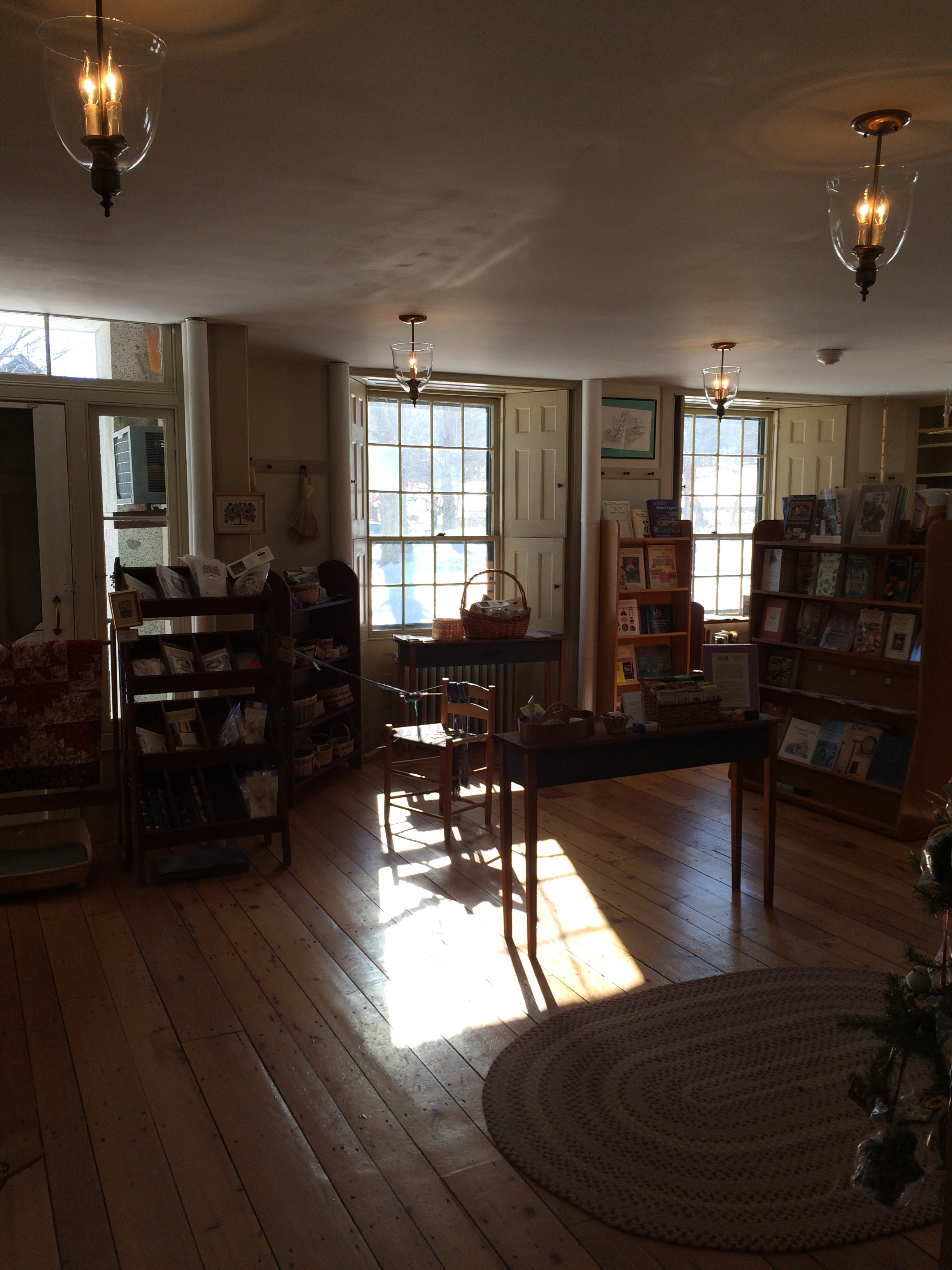
The museum’s shop has a host of offerings, many crafted in the traditional Shaker style:

IMG_1974

The Shaker Museum Shop

IMG_1982

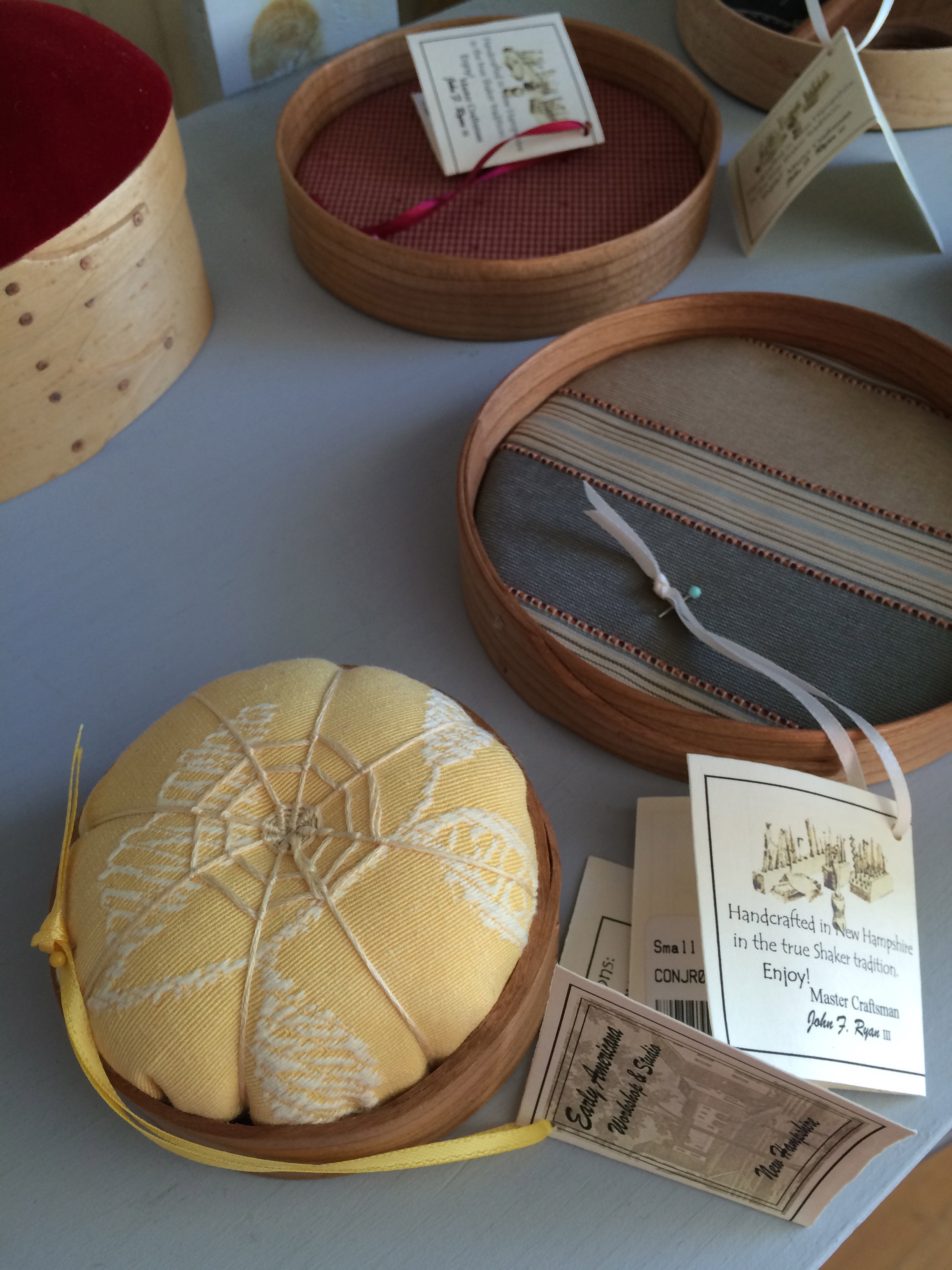
Pin cushions

IMG_1983

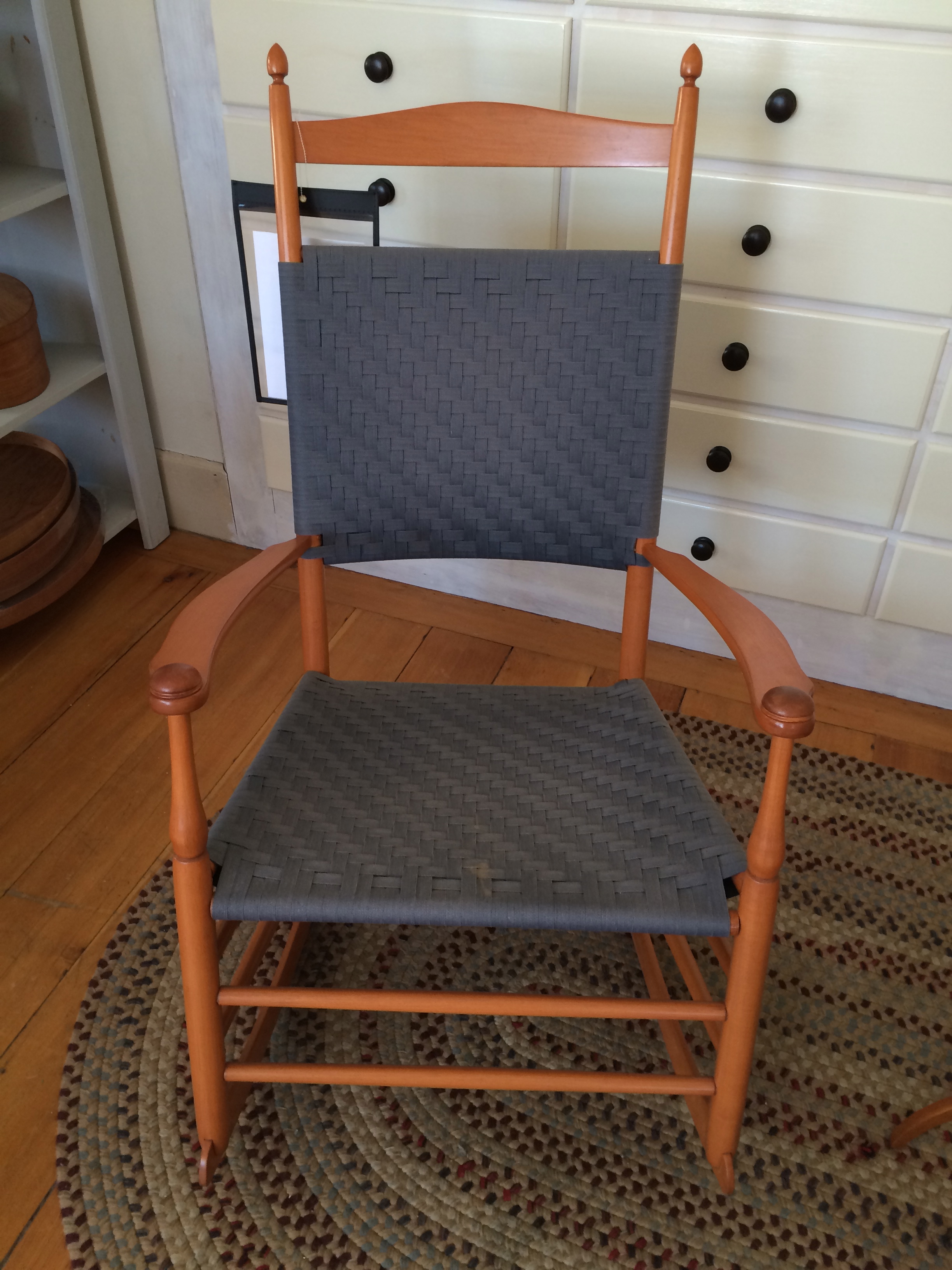
Shaker style rocking chair

IMG_1981

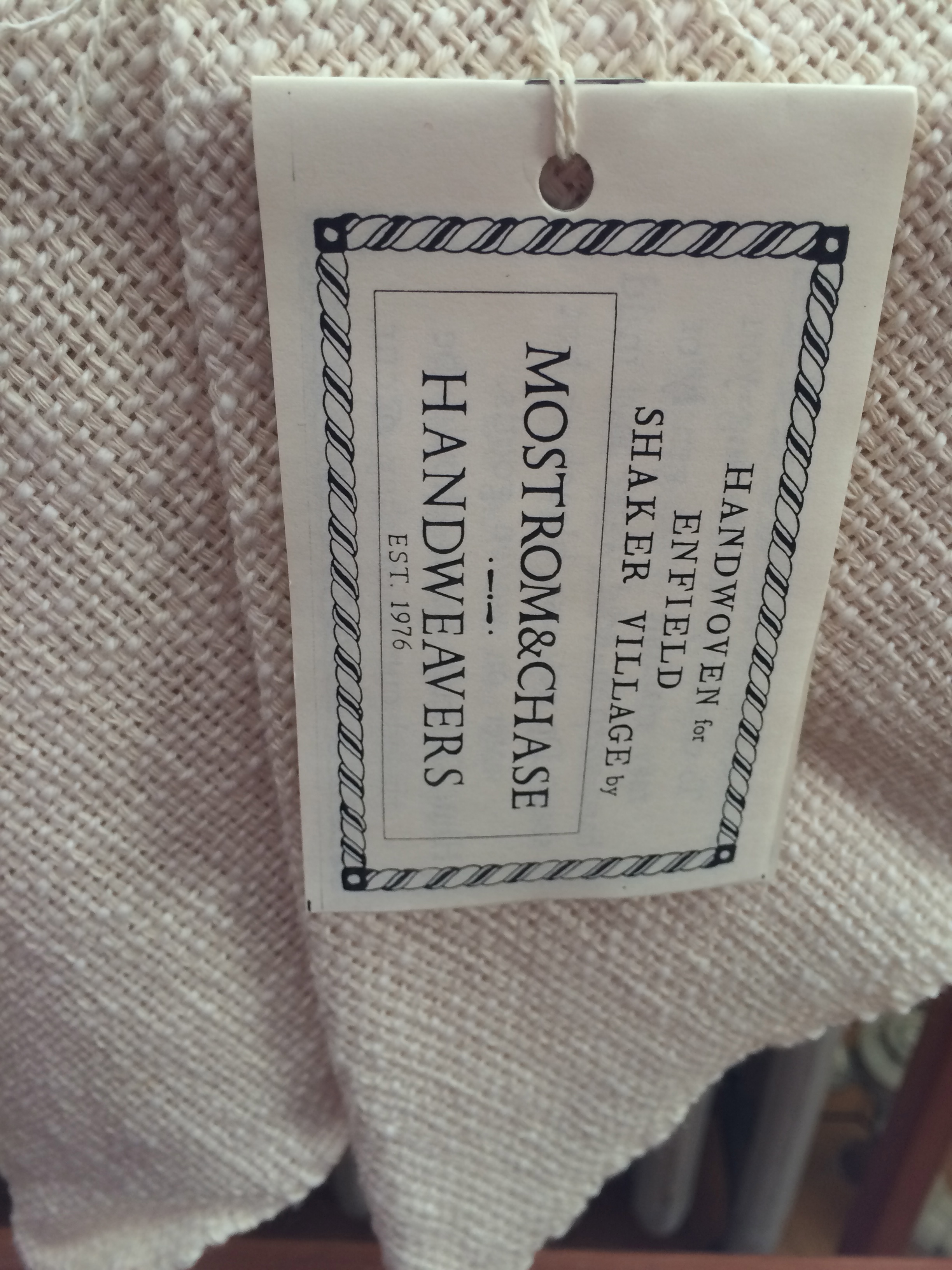
Handwoven goods

IMG_1977

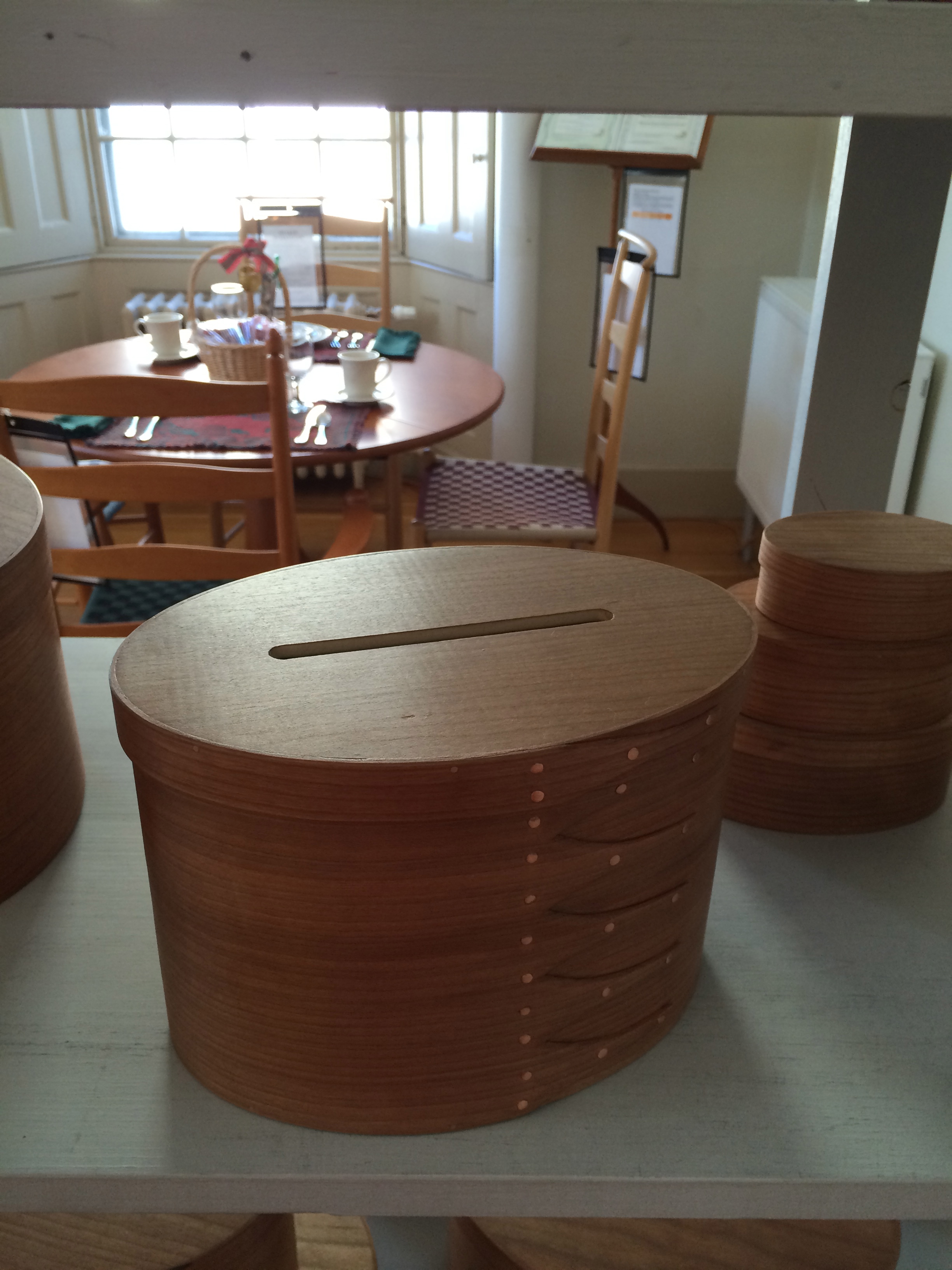
Wooden boxes

IMG_2061

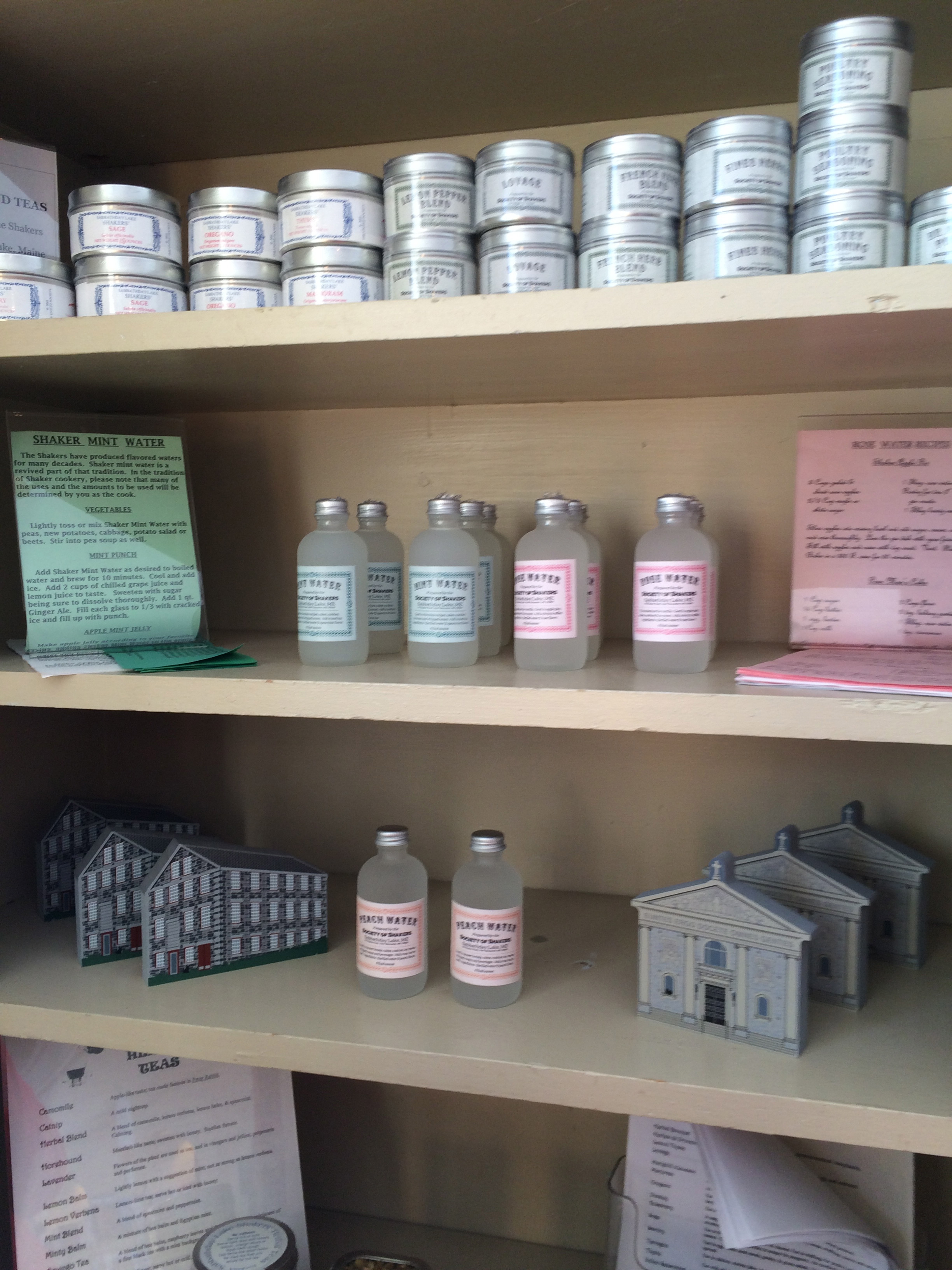
Shaker mint and other flavored waters

Framed postings featured prominently inside the museum lend salient insight into the Shakers’ creed and way of life:

IMG_2052

IMG_2049

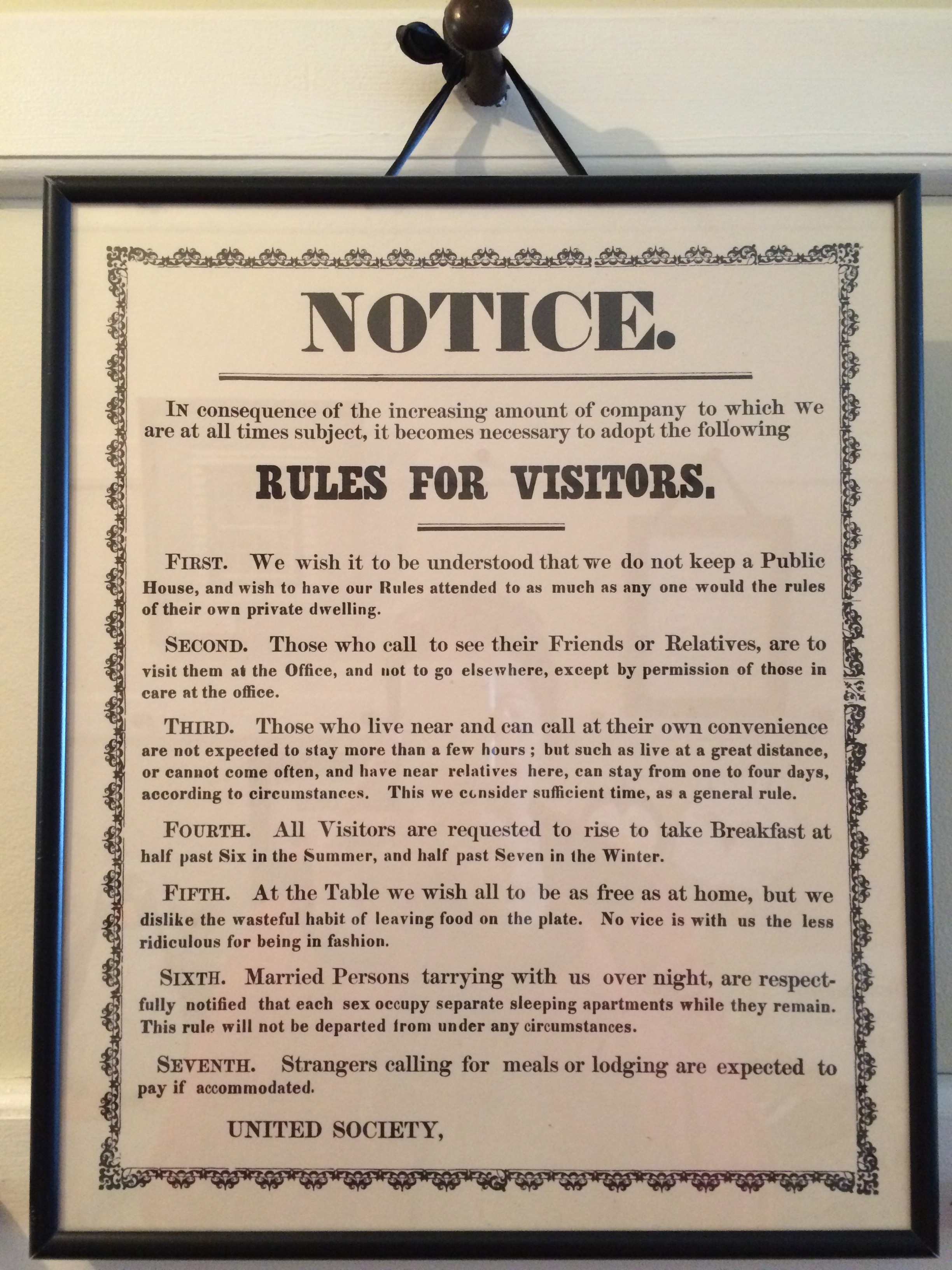
And a personal favorite – “Rules for Visitors”:

IMG_2047

The fifth rule in particular resonates


All in all, it was a brilliant day with many avid snowshoers and winter fun enthusiasts turning out for the event.  For those who may have missed the winter Snowshoe Fest,  the Museum also holds a Spring Shaker Forum as well as other special events throughout the year.  A detailed calendar is available on their website:

http://www.shakermuseum.org/calendarofevents.htm

And of course, there is always next winter!

IMG_1939

“THE RODALE BOOK OF COMPOSTING”

IMG_1917

“One of these fine days, the public is going to wake up and will pay for eggs, meats, vegetables, etc., according to how they were produced.”

 – J.I. Rodale, May 1942

The prescient words of J.I. Rodale, featured on the cover of Organic Gardening’s latest issue, inspired an overdue consultation of “The Rodale Book of Composting”, a source upon which we have relied regularly for best composting practices.  Novices and experts alike will find a copious amount of useful information, which is organized for easy reference by topic.  A handy list of compost materials (everything from apple pomace to wool wastes) along with their specific virtues is covered in one particularly helpful section of the book.

IMG_1904

Well thumbed copy of the “RBOC”

As expected and given the typical NH winter, wood ash is a material that has been accumulating in our compost pile by the bucketful over the past couple of months.  In fact, we’ve rather overdone it.  Per the “RBOC”, wood ash is a valuable source of potash for the compost heap, with hardwood ashes generally containing from 1 to 10 percent potash, in addition to 35 percent calcium and 1.5 percent phosphorous.  They should however be used judiciously as it is easy to create problematic nutrient imbalances with too much application.  On the plus side, it is a strong alkalinizing agent and will increase soil salinity.  The garden with particularly acidic soil and/or potassium would benefit from a dose of wood ash but it should be applied sparingly – no more than 2 pounds per 100 square feet.
What then, to do with a growing surplus of wood ash?  A few uses, gleaned from online and other sources:

1. Can be used to unclog drains

2. As a silver polish and precious metals cleanser

3. De-skunking a pet

4. Algae control

5. Bleaching agent and/or laundry detergent

6. As a dust bath for chickens

7. Melting ice

In all likelihood, #6 will be the use of choice, as our chicken bath is running a bit low.  An adventurous Newfie (or other similarly inclined pet) makes stashing a bit away in the event of #3 a wise decision as well.

IMG_1731